

For many brands, social media once revolved around visibility. Companies measured success by the number of followers they accumulated or how many impressions their posts received. Over time, however, marketers discovered that visibility alone rarely translates into meaningful business outcomes. What matters far more is whether audiences actually interact with content—commenting, sharing, saving, and participating in conversations.
This shift explains why a well-designed social media engagement strategy has become central to modern digital marketing. Interaction signals now influence how algorithms distribute content, how consumers evaluate brands, and how organizations build communities online. Research compiled in industry datasets on social media behavior shows that social platforms now drive more than 60% of product discovery across major networks such as YouTube, Instagram, and TikTok. Engagement therefore shapes not only visibility but also the decision-making journey that leads to purchases.
The environment has also become more competitive. Benchmark studies analyzing millions of posts reveal that average engagement rates vary widely by platform, with LinkedIn posts averaging around 2.8% engagement and TikTok posts roughly 2% across industries, while Facebook averages closer to 1.4%. These differences highlight the importance of structured strategy rather than random posting schedules.
In this guide, we explore how engagement strategies work, why they matter for long-term brand growth, and how organizations design systems that consistently spark conversations instead of simply publishing content. The goal is to move beyond vanity metrics and build a repeatable framework for creating genuine interaction with audiences.
Article Outline
- What Is a Social Media Engagement Strategy
- Why a Social Media Engagement Strategy Matters
- Framework Overview
- Core Components
- Professional Implementation
What Is a Social Media Engagement Strategy

A social media engagement strategy is a structured plan designed to encourage meaningful interaction between a brand and its audience across social platforms. Instead of focusing only on publishing content, it prioritizes conversations, community participation, and actions that demonstrate genuine interest from followers.
Engagement includes a wide spectrum of behaviors: comments, replies, shares, saves, direct messages, user-generated content, and participation in discussions. These signals indicate that audiences are not simply consuming information but actively responding to it. Academic research examining platform behavior consistently measures engagement through interactions such as likes, comments, and shares because these actions reflect deeper user involvement with content.
In practical terms, an engagement strategy connects three elements. The first is content design, meaning posts are intentionally created to invite reactions rather than simply broadcast information. The second is community management, where brands respond to conversations and build relationships with followers. The third element is data-driven optimization, which analyzes interaction patterns and adapts future content accordingly.
When these elements work together, social media transforms from a distribution channel into an interactive ecosystem. Instead of publishing isolated posts, organizations cultivate ongoing dialogue with audiences that strengthens brand perception and encourages long-term loyalty.
Why a Social Media Engagement Strategy Matters
Engagement is not merely a vanity metric. It directly influences how social platforms distribute content and how audiences interpret brand credibility. Algorithms on networks such as Instagram, TikTok, and LinkedIn rely heavily on interaction signals to determine whether content deserves wider visibility.
Benchmark studies analyzing more than a million social posts show that engagement levels vary significantly between platforms, with LinkedIn posts averaging about 2.8% engagement and TikTok posts around 2%. These differences reveal how strongly algorithms reward interactive content and why passive posts quickly disappear from feeds.
Consumer behavior also reinforces the importance of engagement. Surveys analyzing online discovery patterns show that social platforms now dominate early stages of the customer journey. In fact, social media content influences a majority of product discovery interactions, meaning that conversations happening inside comment sections, creator communities, and shared posts often shape brand perception before consumers ever visit a website.
Beyond visibility, engagement also builds trust. When audiences see real discussions around a brand—questions answered by community managers, users sharing experiences, creators collaborating with companies—it signals authenticity. This credibility becomes increasingly important as audiences grow skeptical of purely promotional messaging.
For organizations, the result is a measurable business advantage. Engaged audiences are more likely to return to content, recommend brands to peers, and participate in community-driven campaigns. Over time, these interactions compound into stronger brand recognition and more consistent organic reach.
Framework Overview
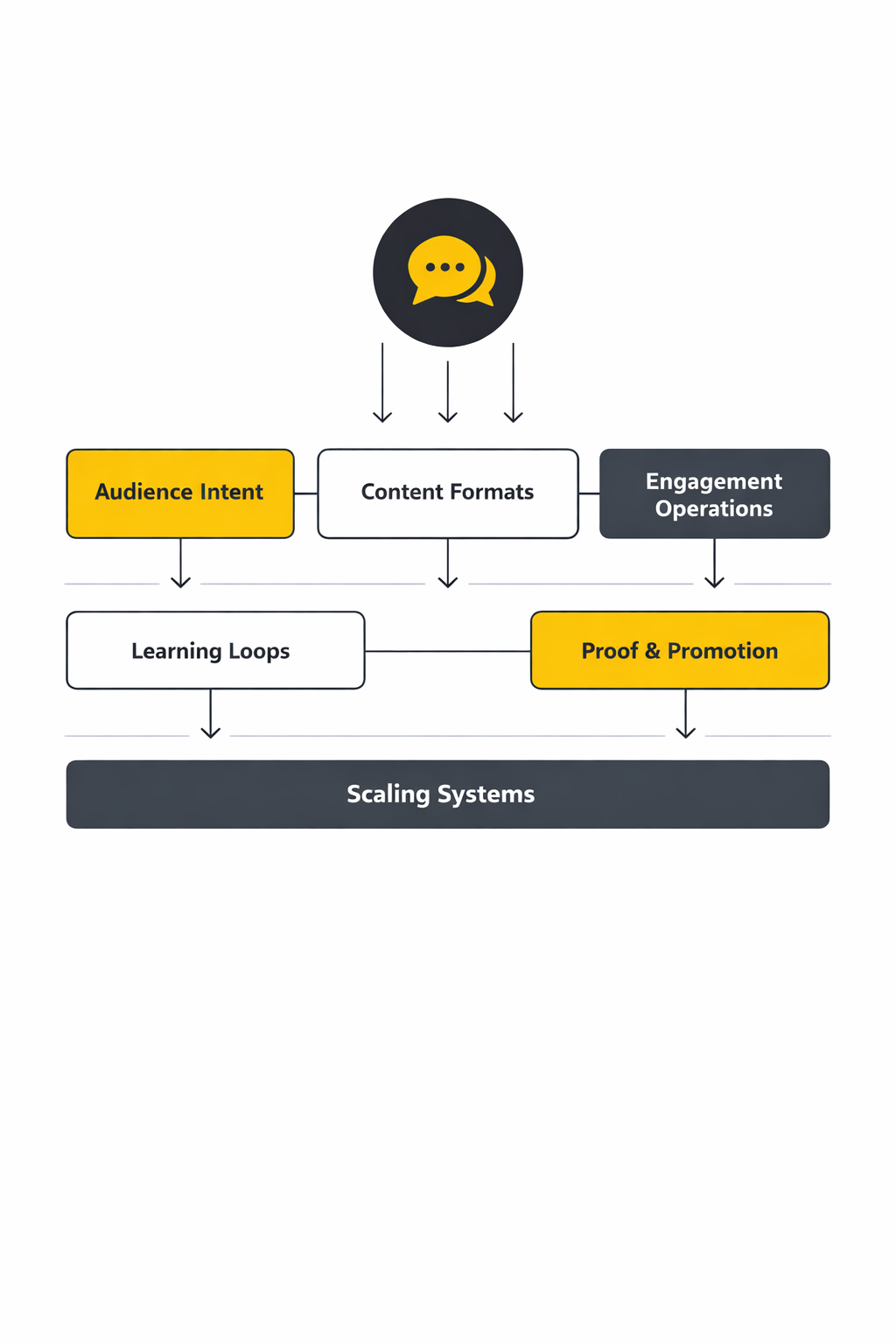
Building engagement consistently requires a framework rather than a collection of isolated tactics. A strategic framework organizes social media activity into interconnected stages that guide how brands attract attention, encourage participation, and nurture long-term relationships with their audiences.
The first stage focuses on audience insight. Brands analyze who their followers are, what motivates them to interact with content, and which formats spark conversations. Audience expectations differ dramatically across platforms; what encourages discussion on LinkedIn may fail completely on TikTok or Instagram.
The second stage centers on content architecture. Instead of publishing random updates, organizations create specific categories of posts designed for interaction—questions, polls, commentary, storytelling threads, and collaborative content with creators or customers.
The third stage involves conversation management. Engagement grows when brands treat social media as an ongoing dialogue rather than a one-way broadcast. Responding to comments, participating in discussions, and highlighting community contributions all strengthen the sense of connection between brand and audience.
The final stage is performance analysis. Engagement patterns reveal which topics resonate most strongly, which formats stimulate conversation, and which audiences are most active. These insights guide future content decisions and ensure the strategy continuously improves over time.
Core Components
Every successful social media engagement strategy relies on a combination of structural elements that work together to encourage interaction. Although the exact tactics vary by industry and platform, several core components consistently appear in high-performing strategies.
Audience Understanding
Effective engagement begins with understanding how audiences behave online. Demographics alone rarely explain interaction patterns. Instead, marketers examine motivations such as entertainment, learning, community belonging, or professional development. These motivations influence the types of conversations audiences are willing to join.
Interactive Content Design
Content designed for engagement differs from traditional promotional posts. Questions, opinion prompts, storytelling posts, and behind-the-scenes content often invite responses because they encourage audiences to share perspectives rather than passively consume information.
Platform-Specific Optimization
Each social network rewards different forms of interaction. Short-form video formats such as Reels and TikTok clips generate rapid responses and high share potential, while longer discussions tend to perform better on professional networks like LinkedIn.
Community Participation
Active participation from the brand itself significantly increases engagement. When organizations respond quickly to comments, acknowledge user contributions, and highlight community members, they transform passive followers into participants in a broader conversation.
Consistent Measurement
Measuring engagement correctly is essential for strategy refinement. Metrics such as engagement rate, comment frequency, share ratios, and conversation depth reveal whether audiences are interacting meaningfully or merely reacting superficially.
Professional Implementation
Turning engagement principles into real results requires operational discipline. Professional social media teams typically structure their engagement strategy around repeatable workflows that integrate planning, content creation, and community management.
The process usually begins with editorial planning. Teams map content themes weeks or months in advance to ensure that posts encourage interaction across multiple formats. These themes often combine educational insights, storytelling, and conversation starters designed to invite audience participation.
Next comes coordinated publishing and moderation. Instead of simply scheduling posts, professional teams monitor responses in real time. Responding to questions quickly, acknowledging comments, and guiding discussions help maintain momentum and prevent conversations from fading.
Finally, successful teams integrate analytics directly into their workflow. Engagement data reveals which formats inspire meaningful conversations and which topics fail to resonate. By continuously analyzing these patterns, organizations refine their approach and steadily improve audience participation over time.
When implemented correctly, a structured engagement strategy transforms social media from a content distribution channel into a living community. Brands that master this approach gain more than visibility—they build audiences that actively participate in their stories, discussions, and long-term growth.
HTMLStep By Step Implementation
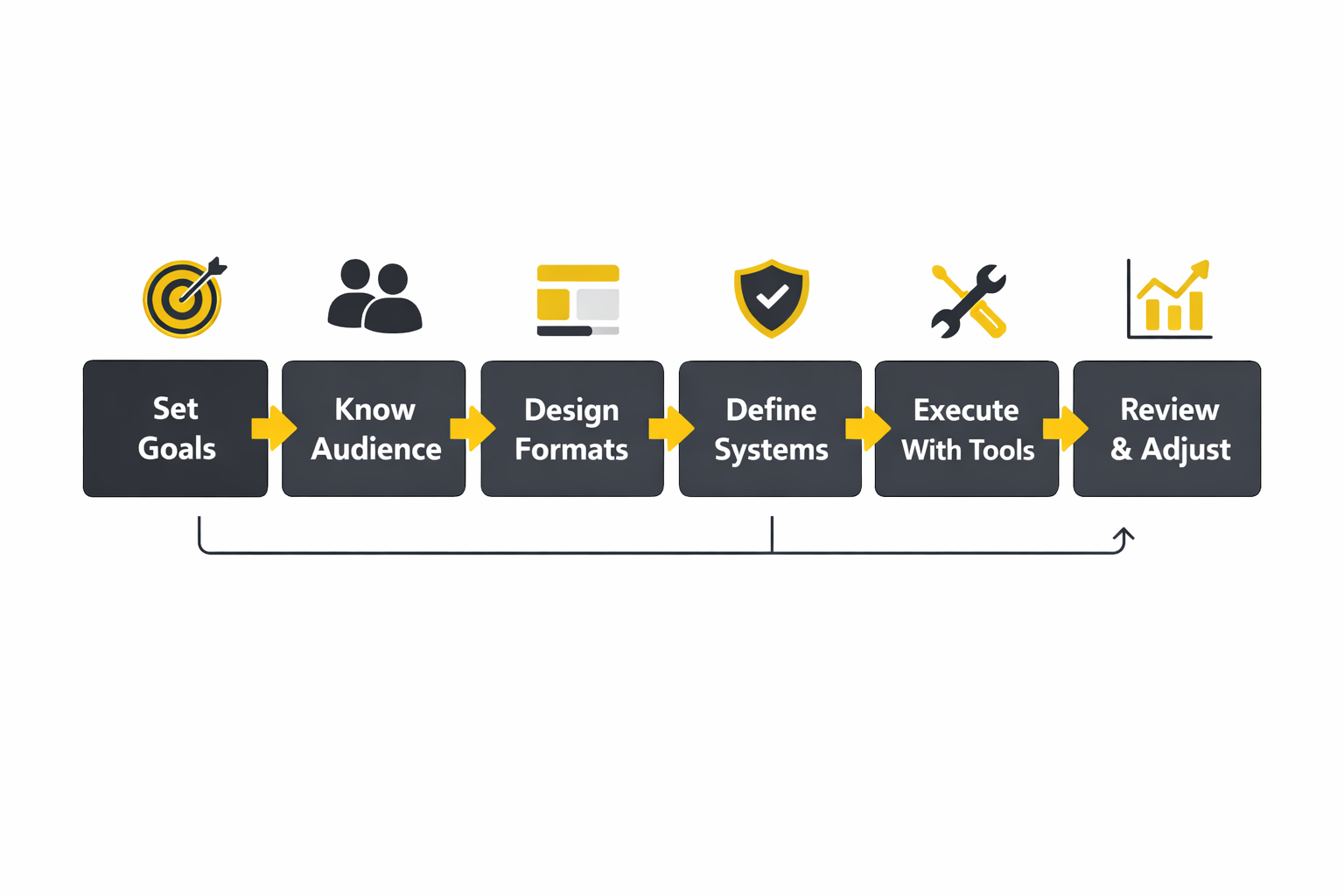
A social media engagement strategy feels simple when you read it on paper, and then reality hits: conversations are scattered across platforms, response expectations are high, and content production never really slows down. Implementation is where good ideas either become a system—or become “something we used to do.”
The most reliable way to implement engagement is to treat it like an operating model. You define who you’re trying to engage, what “good engagement” looks like on each platform, how the team will respond, and how you’ll keep improving without burning people out.
Step 1: Set the success conditions before you publish anything
Start by deciding what engagement must do for the business in the next 90 days. That might be reducing public frustration by answering questions faster, increasing meaningful comment threads on a priority product line, or building a creator-led community that makes your content feel less brand-first and more audience-first.
Define a small set of measurable signals that match that goal. If the goal is customer care, your signals will look like response time, resolution quality, and fewer repeat questions. If the goal is community growth, your signals will look like conversation depth and repeat participation from the same people over time.
Step 2: Map platform intent and write one “engagement promise” per channel
Every platform has a different social contract. TikTok is built for discovery and entertainment; LinkedIn rewards professional usefulness and perspective; Instagram often hinges on identity, aesthetics, and creator culture; YouTube communities can behave like fan clubs with long memories.
Write one sentence per platform that tells your audience what they can expect from you. For example: “We respond to product questions within a day and keep replies practical,” or “We use comments as a workshop and will ask you to shape what we publish next.” This sounds small, but it keeps your social media engagement strategy consistent when the calendar gets chaotic.
Step 3: Build a conversation architecture, not a content calendar
A calendar tells you what to post. Conversation architecture tells you why people would respond. Create 4–6 recurring “conversation formats” you can repeat without sounding repetitive, such as weekly questions, myth-busting threads, behind-the-scenes breakdowns, customer stories, creator collaborations, or live Q&A prompts.
The goal is to make participation effortless for the audience. When someone can answer in one sentence, vote quickly, share a personal take, or tag a friend, engagement becomes a habit instead of an exception.
Step 4: Design the inbox and routing rules like a customer-facing production line
If engagement includes replies, you need rules that protect speed and tone. Decide what gets answered publicly, what moves to DMs, what escalates to support, and what is ignored because it’s spam or bad-faith provocation.
Consumer expectation research consistently lands on a same-day baseline for brand replies, with many people describing a 24-hour-or-so response window as “normal”, and similar findings appearing in Emplifi’s consumer-brand engagement survey and coverage of that survey’s response-time expectations. Use that reality to set staffing coverage and triage rules that your team can actually sustain.
Step 5: Create reply playbooks that keep your voice human
A playbook is not a bank of robotic templates. It’s a tone guide and a set of “moves” your team can use to keep replies warm, clear, and consistent—especially under pressure. Include examples of how you apologize, how you ask clarifying questions, how you redirect to support, and how you handle public frustration without becoming defensive.
When this is done well, the team becomes faster without losing personality. That’s what turns engagement into trust.
Step 6: Lock in a weekly optimization ritual
Implementation fails when optimization is optional. Put one short weekly meeting on the calendar where you review what people asked, what triggered the best conversations, which questions repeated, and what should become content next week.
This is also where you decide what to stop doing. A mature social media engagement strategy improves as much by subtraction as it does by adding new tactics.
Execution Layers
Execution is easier when you separate your social media engagement strategy into layers. That way, your team can improve one layer without rewriting everything else, and you avoid the “we changed our whole strategy again” fatigue that audiences can feel.
Layer 1: Real-time engagement and moderation
This layer is your frontline. It includes comment replies, DMs, moderation decisions, and how you handle moments that are emotionally charged. It’s also where trust is won or lost in public.
If your brand operates at scale, the ability to manage comments programmatically and reliably becomes part of execution. LinkedIn’s community management capabilities and its comments API documentation reflect how serious platforms are about structured engagement workflows when teams need consistency.
Layer 2: Proactive community building
This layer is where you create reasons for people to come back even when they don’t have a problem to solve. It includes recurring formats, creator collaborations, spotlighting community contributions, and “inside the brand” storytelling that makes participation feel rewarding.
When you build this layer intentionally, customer care gets easier because your audience already believes you listen. You’re not trying to earn trust during a crisis; you’re maintaining trust you’ve already built.
Layer 3: Insight and cross-functional influence
This layer turns engagement into organizational intelligence. It’s how social stops being “just content” and becomes a feedback system for product, service, and messaging. When social teams can show repeated friction points, emerging sentiment, or language shifts, other departments start taking social seriously.
Frameworks for using listening as actionable intelligence are commonly described by social data platforms. Talkwalker’s guidance on how to operationalize social listening for marketing and insights is a useful reference point for how teams turn conversation data into decisions rather than dashboards.
Optimization Process
Optimization is not “post more” or “try new hooks.” It’s a disciplined loop that improves engagement quality while protecting team capacity. The strongest social media engagement strategy treats optimization as a process with inputs, decisions, and follow-through.
1) Collect signals that actually explain behavior
Vanity metrics can’t tell you why engagement happened. Focus on signals that explain audience intent: which questions drive long threads, which posts attract repeat commenters, which replies defuse tension, and which topics consistently trigger confusion.
If you run social customer care, track patterns in what people ask and how often they have to repeat themselves. Those patterns are usually a product, policy, or clarity problem—not a “social problem.”
2) Diagnose where engagement breaks
Engagement usually breaks in one of three places. Either the content doesn’t invite participation, the response system doesn’t keep up, or the audience doesn’t trust that participation will lead anywhere. Diagnose which one is happening before you change tactics.
When response speed is the issue, it helps to remember how consistently consumers describe responsiveness as a baseline expectation. The theme shows up across Sprout Social’s customer care research summaries, the Emplifi consumer survey, and trade coverage of those findings in outlets like Customer Experience Dive.
3) Run small experiments with clear “keep or kill” rules
Choose one variable at a time: format, posting cadence, opening question style, reply timing, or moderation threshold. Run it for two weeks, then decide whether it stays. Avoid changing everything at once, because you’ll never know what actually caused improvement.
If you’re tempted to add complexity, use one rule: only add a new tactic if it removes work elsewhere. If it adds work everywhere, it’s not optimization—it’s just more motion.
4) Document what works so success doesn’t depend on one person
When you find a format or reply approach that consistently sparks meaningful conversations, capture it in a short internal note. Include what the post looked like, what made it work, and how to repeat it without copying it.
This is how engagement becomes a repeatable system rather than a lucky streak.
Implementation Stories
Implementation stories are valuable because they expose the real friction: tool fatigue, inbox overload, inconsistent voice, and the uncomfortable moment when a brand realizes it’s talking at people instead of with them. The story below is built from a published case study so the context and operational details are grounded in reality.
American Honda: Turning social from “maintenance” into a two-way dialogue engine
The comment volume kept climbing, and the team could feel it slipping out of their hands. Conversations were piling up faster than they could clear them, and the pressure wasn’t private—it was visible to customers in public threads. Every missed reply created the same quiet damage: people assumed the brand either didn’t notice or didn’t care, and that assumption spreads fast on social.
Inside the team, the stress wasn’t just about workload. It was about losing the ability to do the work that makes social meaningful—community management, relationship building, and proactive conversation. That dynamic is described directly in the case study narrative of how American Honda approached rebuilding its social practice.
The backstory wasn’t a lack of effort. American Honda’s social team had a mandate to elevate the brand’s digital presence and make social a real engine of dialogue, not just a publishing channel. But their previous platform was described as clunky and maintenance-heavy, which meant time was spent troubleshooting instead of engaging. During periods when customers leaned more heavily on social for communication, the gap became even more obvious in day-to-day operations.
What made it harder was that social work doesn’t pause for internal limitations. Customers don’t care which tool you’re using, and they don’t lower their expectations because your workflow is messy. When the system can’t keep up, the brand pays the price in public.
The wall arrived when the team realized they were in survival mode. When you’re fighting to keep up with queues, you stop doing the proactive work that prevents queues from growing. Community management gets deprioritized, and the channel becomes transactional and tense. That breaking point is part of the “stalled practice” described in the Honda case study, where tool limitations and workflow drag crowded out relationship-building.
At that point, improvement can’t come from motivation. It has to come from redesigning the operating model. The team needed to turn social engagement back into the main job, not the leftover task after platform maintenance.
The epiphany was that the tool choice was really a workflow choice. Honda’s team looked for a system that was intuitive and supported day-to-day engagement without constant friction, so they could spend more time responding to customers and less time wrestling with the platform. They also looked for a partner relationship, not just software access, because implementation is where tools either become useful or become ignored. The case study describes how workflow features like queue management and tagging supported faster, more decisive action in daily operations.
That mindset shift matters for any social media engagement strategy. Engagement improves when you remove friction between a customer message and a helpful, human reply. The more steps between those two points, the more engagement dies in the gap.
The journey wasn’t a single switch-flip. Implementation meant the team had to rebuild habits: clearing queues consistently, tagging interactions in a way that preserved context, and creating repeatable routines for responding and reporting. It also meant aligning publishing and engagement so the brand could show up consistently across platforms while still being present in conversations. The Honda case study describes the day-to-day reality of living in the platform for both response work and content planning once the system was in place.
Over time, the team expanded how they used social internally. They began connecting social signals to broader organizational needs, using social insights to inform stakeholders beyond marketing. That’s the “social as a strategic asset” shift in its real form: social becomes a data source for decisions, not just a channel for posts.
Then came the final conflict: success creates more demand. When a brand becomes more responsive and more present, audiences talk more, ask more, and expect more. Volume rises, edge cases increase, and teams have to protect consistency so engagement doesn’t slip back into chaos. The Honda case study describes how ongoing workflow refinements and platform capabilities supported scaling without losing the ability to prioritize high-value interactions.
This is the part many teams miss. Implementation is not “done” when the tool is onboarded. Implementation is done when the team can handle a surge without breaking voice, speed, or decision-making.
The dream outcome is not a dashboard spike. It’s a social presence that feels dependable: people ask questions because they believe they’ll get an answer, and they join conversations because the brand makes participation worthwhile. In Honda’s case, the published results describe engagement growth, time savings, and operational efficiency improvements after the shift, alongside a broader impact of social becoming a stronger internal data source. That arc—from overwhelmed queues to strategic influence—is the clearest signal that implementation worked. Honda’s full case study
Build an operating model that matches your volume
If you’re receiving a manageable number of conversations, you can win with lightweight processes: clear responsibilities, a simple triage rule, and fast responses. If you’re dealing with large-scale engagement, you need case routing, tagging standards, escalation paths, and coverage planning across time zones.
When teams skip this step, engagement becomes random. One day feels great because someone had time. The next day feels silent because everyone is busy. An operating model is what makes “good engagement” predictable.
Use governance to protect speed, not to slow it down
Governance is often treated like bureaucracy, but good governance actually makes engagement faster. When a team knows what it’s allowed to say, what must be escalated, and how to handle sensitive topics, they can respond confidently without waiting for approvals every time.
This matters even more as platforms and public expectations keep shifting. Reports and guidance in the ecosystem, such as Hootsuite’s consumer-focused research on what people want from brands on social and Sprout’s research on how teams prove social impact, repeatedly reinforce the same practical truth: audiences reward brands that show up consistently, not brands that only appear when it’s convenient.
Scale engagement without burning out the humans doing it
The fastest way to destroy engagement is to exhaust the people responsible for it. Protect your team with rotation schedules, clear “end-of-day” handoffs, and boundaries around what gets answered immediately versus what can wait for the next coverage window.
Use listening and pattern tracking to reduce repetitive work. When the same questions keep coming up, turn them into a pinned post, a highlight, a short video, or a linkable answer you can reuse. Social listening frameworks, like the operational guidance described in Talkwalker’s social listening guide, are useful here because they connect monitoring to action instead of passive reporting.
Make improvement inevitable with one weekly loop
Choose a single weekly loop that your team never skips: review the top conversation themes, identify what created the healthiest threads, decide which questions deserve content next week, and update your reply playbook with anything you learned under pressure.
When that loop exists, the strategy stays alive. Without it, even a great social media engagement strategy slowly turns into a posting habit—and posting is not the same thing as engaging.
HTMLStatistics And Data
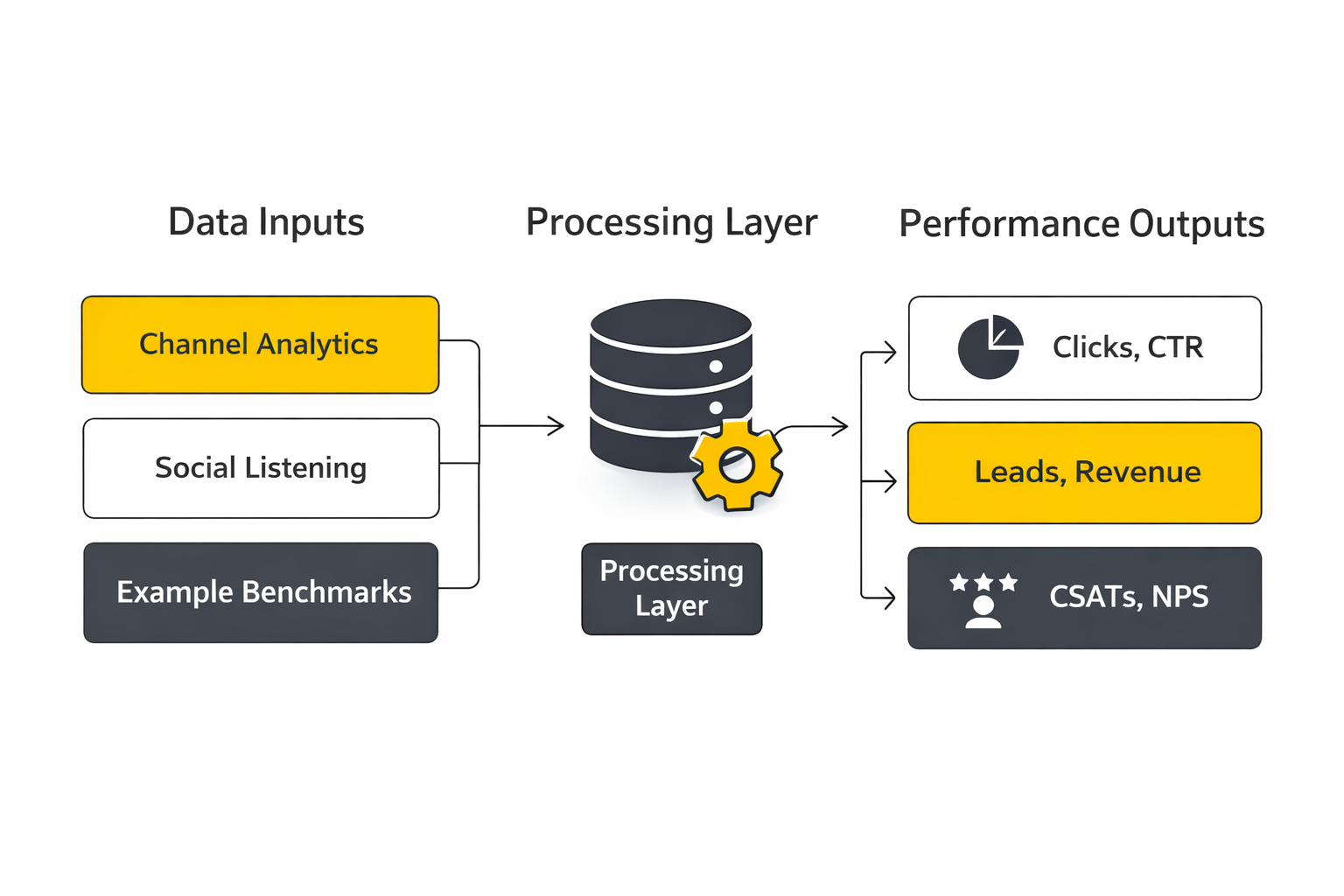
If your social media engagement strategy is built on “more posts = more results,” the numbers will eventually embarrass you. The best social teams track a smaller set of signals, but they track them relentlessly, and they compare them to real benchmarks so they don’t mistake noise for progress.
One of the clearest data points in the last two years is that volume isn’t the lever people think it is. The 2025 Sprout Social Impact of Social Media Report highlights a shift where publishing volume went down from 2023 to 2024 while engagement still climbed by nearly 20%, which is a polite way of saying: your audience is not begging for more posts, they’re rewarding better posts.
At the same time, platforms are not giving out engagement evenly. Rival IQ’s 2025 Social Media Industry Benchmark Report analysis points to year-over-year engagement drops across major networks (including sharp declines on X), and Socialinsider’s 2026 social media benchmarks page shows how even small shifts in engagement rate can signal bigger distribution changes, especially on platforms where organic reach is volatile.
And if engagement includes replies, the “data” isn’t just likes. Consumer expectations around response speed are now a measurable part of performance. Sprout’s customer care research notes that 73% of consumers expect a response within 24 hours or sooner, and Sprout repeats the same core finding in its broader business impact guidance on why social customer care matters. Emplifi’s consumer survey adds real consequences: waiting longer than 24 hours risks losing a third of customers.
Performance Benchmarks
Benchmarks are helpful only when you respect the fine print. Different tools calculate “engagement rate” differently (by followers, reach, impressions, or per post), and comparing mismatched formulas can make you chase the wrong fix. A professional social media engagement strategy uses benchmarks as guardrails, then uses internal trends to make decisions.
What to benchmark (and what to ignore)
Benchmark the metrics that reflect audience intent, not just visibility. That usually means engagement rate (with a consistent formula), comment rate, share rate, saves/bookmarks (where available), and click behavior when the post is designed to drive action.
Ignore benchmarks that encourage shallow behavior. A spike in likes with no comments, no saves, and no clicks can be fine for awareness, but it’s a weak signal for loyalty. If you can’t explain what the audience did next, you don’t really have a benchmark, you have a dopamine chart.
Platform reality: use ranges, not single “magic numbers”
When you look for one universal engagement number, you end up with misleading averages. Hootsuite publishes 2025 benchmark-style comparisons that illustrate how dramatically performance varies by network and industry context, which is why their social media benchmarks overview presents platform differences rather than pretending there is one universal “good” rate.
Rival IQ’s benchmarks add another useful lens: year-over-year movement. Their 2025 benchmark report summary highlights broad engagement declines across platforms, which means your strategy can improve while your raw engagement rate still dips, simply because the algorithmic environment changed.
Customer care benchmarks are now engagement benchmarks
If your brand receives DMs or tagged complaints, response time and resolution quality are part of engagement performance. Sprout’s customer care research shows the expectation is mainstream: most consumers want a response within 24 hours, echoed again in Sprout’s business impact guidance. Emplifi makes it even more direct: taking longer than 24 hours can cost you a meaningful chunk of customers.
So the benchmark isn’t “reply fast because it sounds nice.” The benchmark is “reply fast because people treat silence as a decision.”
Analytics Interpretation
Analytics interpretation is where a social media engagement strategy becomes honest. The job isn’t to report numbers. The job is to explain what changed, why it changed, and what you’re going to do differently next week.
The three questions that make analytics useful
First: Did engagement rise because more people saw the post, or because the post gave people a better reason to act? These are different problems with different fixes.
Second: Was engagement concentrated in low-effort actions, or did it show depth? Comments that include questions, stories, disagreements, or tagged friends usually signal stronger community energy than likes alone.
Third: What was the audience trying to do? If the comments are full of “Where do I buy this?” you’re looking at commercial intent. If the comments are full of “This happened to me too,” you’re looking at identity and belonging.
How to avoid misreading declines
Sometimes performance drops because your content got worse. Other times, it drops because the environment shifted. Rival IQ’s 2025 benchmark summary is useful here because it shows broad engagement declines across platforms, which can help you separate “our strategy broke” from “the ecosystem tightened.”
This is why trend lines matter more than single posts. If your engagement rate is down but your comment quality is up, your strategy might actually be getting healthier even as distribution gets harder.
Turning insights into decisions (without overcomplicating it)
Pick one insight, then convert it into one operational change. If questions drive your best threads, build recurring Q&A formats. If certain topics create saves and shares, make them a weekly series and stop burying them among random posts.
And if your reporting keeps circling back to “we need more content,” revisit the uncomfortable data point from the last two years: Sprout’s 2025 Impact of Social Media Report shows engagement can rise even when publishing volume falls, which is a strong hint that the real lever is relevance and originality, not sheer output.
Case Stories
Case stories matter because they show what analytics looks like when it’s messy, emotional, and happening in public. The two stories below are grounded in published case studies and award documentation, so the performance details and operational moves are traceable.
eos: When the dashboard says “this is bigger than a campaign,” and the team has to keep up
The holiday launch was supposed to be a moment, not a wildfire. Then the demand surged so fast that the campaign didn’t feel like marketing anymore—it felt like the internet had decided the product was scarce, and scarcity spreads like a rumor. The team watched engagement stack up across platforms and realized the story was escaping the plan, which is thrilling until you remember you still have to steer it.
In the same window, eos saw a scale of performance that wasn’t subtle: the brand’s published results include a nationwide sellout before Black Friday, plus performance lifts like a 374% increase in LikeShop clicks, a 426% increase in Pinterest outbound clicks, and a 950% increase in YouTube video views (March 2024 to February 2025, compared to the prior year). Those numbers are exciting, but they also create pressure: now the audience expects the brand to act like this level of energy is normal.
The backstory is that eos wasn’t walking into the season blindly. The company describes months of planning around a “Sweet Candy Cane Shop” theme, plus content production and creator partnerships meant to support a limited-edition holiday line. This wasn’t a lucky post; it was a structured rollout designed to build on a broader expansion into body care, with a strategy that treated community interest as the main fuel.
They also knew different platforms needed different behaviors, and they leaned into that reality. The case study describes Instagram leaning on still images and scent recommendations, while TikTok leaned into playful formats like GRWM and the “product hunt” energy audiences love. That cross-platform intent map is what kept the strategy from becoming one generic message sprayed everywhere.
The wall showed up when the community started creating its own storyline faster than the brand could respond. Fans weren’t just commenting—they were making their own videos hunting for the product and tagging eos, sometimes in stores where it wasn’t even officially stocked. That kind of UGC is gold, but it’s also chaos: it can amplify confusion, create supply anxiety, and trigger waves of “Where is it?” questions that overwhelm the team.
And because the content was tied to real-world availability, one wrong assumption could turn enthusiasm into frustration. If the team had treated this like a normal campaign, they would have reported the numbers after the fact and missed the window where real-time decisions mattered most.
The epiphany was that the team didn’t need “more posts.” They needed clearer signal detection and faster iteration. The case study explains that eos leaned on custom dashboards for a real-time view of what content was driving excitement, plus sentiment and keyword surfacing to understand what people were actually saying as the moment evolved. That shift—using analytics to steer, not to summarize—turned the dashboard into a decision tool instead of a retrospective report.
Once you see the conversation clearly, you can stop guessing. You can decide what to amplify, what to clarify, and what to respond to immediately before misinformation becomes the loudest voice in the thread.
The journey became a tight loop: monitor what’s spiking, identify what’s driving it, double down on the formats that the community is already rewarding, and adjust messaging fast enough to stay aligned with what fans are asking for. eos describes using scheduling structure while staying flexible for last-minute pivots, which is exactly what high-performing engagement requires when the audience is moving faster than the calendar. They also highlight the role of community insights to track sentiment and stay aligned with what fans loved most.
And because the campaign was audience-driven, the content didn’t feel like brand monologue. It felt like the community was inside the launch, shaping what mattered, and that’s one of the cleanest signals that a social media engagement strategy is actually working.
The final conflict is that the better you listen, the more people talk to you. Growth in engagement creates growth in expectations, and the team has to manage not only the marketing moment but also the customer reality around availability and access. The case study describes how audience reactions created surprising pivots and sustained demand, which means the team had to keep pace without losing message clarity or burning out the humans behind the replies.
That’s where analytics protects the team. When you can see what’s happening early, you can route effort toward the conversations that matter most, instead of trying to respond to everything equally and failing at both speed and quality.
The dream outcome wasn’t just a spike. It was a campaign that converted attention into action, which is why the published results include performance lifts across clicks, views, reach, and follower growth, alongside a sellout window that made the success unmissable. eos describes a +120% increase in profile reach and a +500% increase in follower growth year over year tied to the holiday period, and that kind of momentum is what happens when analytics is used as steering, not decoration.
It’s also a reminder that the best engagement is a collaboration between brand and audience, with data acting as the translator between what people feel and what the team should do next.
Chick-fil-A: A listening spike so loud it forced a product decision
It started as a condiment change, and then the internet turned it into a referendum. Social channels filled with messages, and the volume wasn’t the normal “people don’t like change” grumbling—it had the energy of a movement, with hashtags and repeat commenters showing up daily. The brand wasn’t just losing engagement; it was accumulating public frustration in a measurable way.
The analytics didn’t whisper. Sprinklr’s published customer story describes a 923% increase in weekly mentions and sentiment collapsing to 73% negative after the sauce switch. The Shorty Awards documentation adds scale and specificity, describing 6,000+ inbound messages and 17,000 social mentions around the change, with the brand treating the data as a signal, not an annoyance.
The backstory is simple and very human: people get attached to small rituals. Chick-fil-A swapped an Original BBQ sauce for a different version, believing the new flavor would pair well with other menu items, and the change hit a nerve. What looks trivial inside a company can feel personal to customers, especially when the product is tied to habit and memory.
That emotional attachment is why engagement became intense. It wasn’t “a trending topic.” It was customers insisting the brand recognize what they valued, loudly enough that executives couldn’t pretend it was a niche complaint.
The wall was that standard brand responses would have made it worse. A generic corporate post would have read like dismissal, and silence would have read like contempt. The brand also needed a process to handle thousands of inbound messages without turning customer care into chaos.
This is where analytics becomes operational. Listening data validated the scale and the direction of sentiment, giving internal teams the leverage to treat the issue as real and urgent rather than anecdotal noise.
The epiphany was that the engagement itself showed the path forward. Customers weren’t just angry; they were telling the brand exactly what would fix it. The Shorty Awards case write-up describes how social listening and analysis were escalated quickly to internal menu and PR teams, and the decision to bring the product back became a business response to measurable public feedback.
That’s the moment a social media engagement strategy stops being “marketing” and becomes governance: you listen, you decide, and you act in public.
The journey included turning the announcement into an engagement engine rather than a press release. The Shorty Awards documentation describes launching the news across customer touchpoints on October 11, 2016, including a “Mean Tweets”-style video and large-scale one-to-one responses to people using the hashtag. Sprinklr’s story also describes responding to or reviewing more than 5,000 messages in the first three days, which is not “a cute campaign,” it’s a serious operational commitment.
They also used surprise-and-delight kits to reward vocal fans, turning critics into storytellers who spread the comeback narrative. That’s engagement with a purpose: converting frustration into advocacy by proving you listened.
The final conflict is that success creates more conversation, and more conversation increases the risk of inconsistency. Sprinklr’s story notes a 188X increase in Chick-fil-A and BBQ sauce mentions on the day the sauce was returned, which is the kind of spike that breaks weak workflows. If the team hadn’t been prepared to manage volume and tone, the “win” could have turned into a second wave of dissatisfaction.
But the team stayed in the thread, handled the message volume, and kept the brand voice consistent enough that the audience felt respected rather than managed.
The dream outcome is a measurable sentiment reversal. Sprinklr’s published results describe sentiment flipping from 73% negative to 92% positive after the return campaign, which is a rare and clean example of analytics-driven engagement changing the emotional direction of a conversation at scale. It’s also proof of why listening belongs in your engagement strategy: without measurement, brands often underestimate how fast frustration spreads and how much loyalty you can recover when you respond with real action.
Even though this story is historical, it remains a useful blueprint: when sentiment shifts sharply, the right analytics setup helps you see it early enough to change the outcome.
Professional Promotion
Promotion is part of a modern social media engagement strategy, but professional promotion doesn’t mean boosting everything. It means amplifying what already earned real human response, then using paid distribution to scale conversations that are actually worth scaling.
When amplification helps engagement (and when it harms it)
Amplify posts that already show quality signals: thoughtful comments, saves, shares, and questions that create conversation. Promotion works best when it extends momentum that exists, not when it tries to manufacture interest from scratch.
Promotion harms engagement when it forces the wrong audience into the comment section. If the targeting is off, you get irrelevant reactions, low-quality comments, and a thread that feels like a billboard instead of a community space.
Use promotion to support buying intent, not just reach
Engagement and commerce are closer than most teams admit, especially when the offer is clear and time-sensitive. Emplifi’s consumer research notes that 60% of consumers made a social purchase due to a discount or promotion, and coverage of the same research describes how promotional offers were a key driver for social purchases in recent behavior windows, including consumer purchase behavior tied to promotions.
That doesn’t mean “discount everything.” It means your promotion strategy should match the audience’s reason for engaging. If the thread is full of “Where do I get this?” your best promotion is clarity, availability, and a clean path to purchase.
A simple professional workflow for promoted engagement
Step one: run organic posts designed to start conversation, not just announce news. Let the audience show you what they care about before you spend.
Step two: promote only the posts that prove they can hold attention. If the thread is active and the questions are relevant, you have something worth amplifying.
Step three: assign engagement coverage for promoted posts. If you pay to scale a conversation, you’re also paying to create more inbound questions. Sprout’s customer care research makes it clear that people expect responsiveness: a large majority want replies within 24 hours, and Emplifi’s survey shows the business risk of slow responses when stakes are high: long delays can cost customers.
Creator-led promotion is often the cleanest engagement multiplier
When you promote creator content that already resonates, you borrow clarity and trust instead of trying to buy attention with brand polish. TikTok’s trend and advertising guidance consistently frames creator voices and community participation as levers for amplification, including in its What’s Next 2025 trend report.
Professional teams treat this as a system: a small pool of creator partners, clear usage rights, and a repeatable method for amplifying the best-performing creator assets rather than endlessly reinventing campaigns.
HTMLFuture Trends
The next phase of any social media engagement strategy will feel less like “content planning” and more like “attention engineering.” Feeds are getting noisier, AI-generated content is becoming cheaper to produce, and platforms are pushing formats that keep people inside the app longer. If you want engagement that lasts, you’ll need to build systems that reward real participation and make your community feel like the signal in a sea of noise.
AI content is raising the value of recognizable humans
As low-effort, mass-produced content spreads, audiences are becoming more selective about what they trust. Hootsuite’s Social Media Trends 2026 leans into this shift, describing how brands will need to move fast while still feeling authentic and human. The practical takeaway is simple: build recognizable voices, not interchangeable “brand posts.”
Community spaces are becoming the new “search layer” for buying decisions
People increasingly validate products through communities, not just through polished brand messaging. The Digital 2026 overview from We Are Social highlights how digital behavior keeps evolving in ways that make social platforms central to discovery and decision-making. Digital 2026 Global Overview Report analysis
For your engagement strategy, that means comment sections, creator communities, and discussion-driven platforms are not just “nice to have.” They’re where trust gets formed.
Direct relationships will matter more than algorithm luck
Distribution volatility is pushing teams to create direct channels where their most engaged followers can opt in and stay connected. That can be newsletters, broadcast channels, or community hubs, but the point is the same: your best fans should not be trapped in the feed.
Measurement is shifting from vanity engagement to business proof
Leadership teams increasingly expect social to prove impact, not just report activity. Sprout Social’s 2025 Impact of Social Media Report and its supporting overview on proving social’s value reinforce the same direction: engagement needs to tie into outcomes like customer care performance, revenue influence, and cross-functional insights.
Strategic Framework Recap

A social media engagement strategy works when it’s built as an ecosystem, not a posting habit. If you want a clean recap you can actually use, keep it to five connected layers.
1) Audience intent
Know why people show up on each platform and what kind of participation they’re willing to give. Engagement rises when you meet the audience in the mode they’re already in, instead of forcing one “brand voice” everywhere.
2) Content designed for participation
Build recurring formats that invite replies, questions, and shared identity. The best formats feel like a conversation starter, not an announcement.
3) Engagement operations
Centralize intake, define triage, assign ownership, and protect response quality. If your engagement includes customer questions, responsiveness becomes a performance metric, not a vibe. Many consumers describe a same-day response expectation as normal, and Sprout summarizes this directly in its customer care research.
4) Learning loops
Turn recurring questions into reusable assets, and turn conversation patterns into next-week content. This is where strategy compounds.
5) Proof and promotion
Track signals that show depth, not just surface reactions. Promote what already earns meaningful participation, then staff the comment section like it matters, because it does.
FAQ – Built for This Complete Guide
What makes a social media engagement strategy different from a content strategy?
A content strategy answers “what do we publish,” while a social media engagement strategy answers “how do we get people to participate, and how do we respond when they do.” It’s built around conversations, community behavior, and repeat interaction, not just output.
Which engagement metrics matter most when you want real community, not vanity likes?
Prioritize depth signals: questions in comments, saves/bookmarks, shares with context, and repeat participation from the same people. Those signals usually predict a healthier community than likes alone, especially as platforms evolve.
How fast should brands respond to comments and DMs?
It depends on your volume and industry, but many consumers expect replies within about a day. Sprout’s summary of social customer care expectations notes that a majority of consumers want a response within 24 hours, so coverage planning should reflect that baseline when engagement includes support questions.
Should one engagement playbook work across TikTok, Instagram, LinkedIn, and YouTube?
Use one voice and one set of escalation rules, but don’t force one format everywhere. Each platform has different participation habits, and engagement rises when you design for the native behavior of the channel.
What’s the simplest way to start building a social media engagement strategy with limited time?
Pick one platform, create two recurring conversation formats, and commit to consistent replies during a defined window each day. Then add a weekly review where you convert the most common questions into next week’s content.
Why does engagement sometimes drop even when content quality feels the same?
Because the ecosystem changes. Benchmarks show platform-level shifts and volatility, which can pull down average engagement even when your strategy improves. That’s why trend context from sources like Hootsuite’s Social Media Trends 2026 can help you interpret dips without overreacting.
How do creators and UGC fit into engagement without feeling forced?
Start with collaboration formats where the creator’s audience genuinely benefits, and build a series instead of a one-off. When the community sees continuity and shared purpose, the collaboration feels like a partnership, not an ad.
Is moderation really part of engagement, or just a safety task?
Moderation is an engagement lever because it determines whether thoughtful people feel safe participating. If spam and hostility dominate, quality participation leaves first, and the community slowly collapses into noise.
How should teams adapt engagement strategy as AI content becomes more common?
Lean harder into recognizable human voices, original stories, and community-led formats. The direction is reflected in trend research like Social Media Trends 2026, where brands are pushed to move quickly while staying authentic.
What tools are essential for a professional social media engagement strategy?
At minimum: a centralized inbox, basic listening, and clean reporting. Markework is not a social tool, but it’s useful for solving a different problem: finding skilled marketing professionals who can run engagement systems well. Markework emphasizes direct communication and no project fees, which matters when you want to move fast without platform commissions eating into budgets.
When does it make sense to bring in freelancers or specialists?
When engagement volume starts affecting response quality, when you need platform-native content production at speed, or when you want to scale creator collaborations and analytics without burning out your internal team. The talent market is active, with marketplaces showing large volumes of open marketing freelance roles, such as 11,000+ open marketing freelance jobs listed on Upwork.
Work With Professionals
If you’ve built the strategy and you can see the path, the frustrating part is usually execution bandwidth. You might know exactly what your community needs, but you still have to plan formats, publish consistently, respond quickly, and keep analytics honest. That’s a lot to carry alone, especially when engagement starts to grow and the inbox gets louder.
There’s also a bigger opportunity hiding inside that workload: companies are actively hunting for marketers who can run engagement like a system. Large marketplaces show thousands of open marketing freelance opportunities at any given time, and the volume is visible in places like Upwork’s marketing freelance job listings. If you can deliver a real social media engagement strategy, you’re not selling posts. You’re selling momentum and trust.
Markework is built for that reality. It positions itself as a marketing marketplace where companies and freelancers connect directly, with no middleman and no project fees, and a workflow designed around messaging and negotiation without a commission layer. If you want more remote marketing work without losing a percentage of every project to platform cuts, it’s worth building your profile and getting visible to teams that are hiring right now.
HTML Filip Konecny Enterprises