

Some social campaigns feel like they “just happen” — a post takes off, comments pour in, and suddenly the brand looks everywhere at once. But when you trace the best-performing work backward, you usually find the same thing: a clear objective, a sharp audience insight, strong creative built for the platform, and measurement that feeds the next cycle.
That’s what this guide is for. It breaks successful social media campaigns into a repeatable system you can run whether you’re building awareness, driving sign-ups, or converting attention into revenue — without relying on luck, viral roulette, or vague “post more” advice.
The stakes are real. Social platforms now sit in the middle of discovery and decision-making, and research shows more people are using social media for product research than just a couple years ago, moving from 27% in 2023 to 32% on average across markets in 2025 in McKinsey’s consumer research. That shift changes what “good” looks like in social content — your campaign isn’t only competing with other ads; it’s competing with the audience’s research behavior.
Article Outline
- What Is a Successful Social Media Campaign?
- Why Successful Social Media Campaigns Matter
- Framework Overview
- Core Components
- Professional Implementation
What Is a Successful Social Media Campaign?

A successful social media campaign is a coordinated set of messages, creatives, and actions designed to move a specific audience toward a specific outcome — on purpose, within a defined time window. It’s not “content that performs well.” It’s a structured effort where every asset plays a role: grabbing attention, earning trust, inviting interaction, and guiding the next step.
That definition matters because social has gotten massive and crowded. The latest global reporting from Kepios shows 5.24 billion active social media user identities at the start of 2025, and the broader Kepios tracker shows 5.66 billion social media “user identities” by October 2025. When the feed is that full, “posting” is table stakes — campaigns are how you create a noticeable signal.
In practice, most successful social media campaigns fall into a few recognizable types:
- Awareness campaigns: Build memory and familiarity so the brand is recalled when a need appears.
- Demand campaigns: Turn attention into measurable actions (leads, trials, purchases, bookings).
- Community campaigns: Create participation loops (UGC prompts, challenges, discussions, advocacy).
- Product and launch campaigns: Coordinate a moment across formats, creators, and paid distribution.
- Lifecycle campaigns: Retention, reactivation, and customer education that reduce churn and increase LTV.
You can run any of these with organic distribution, paid media, creators, or a mix — but the “successful” part comes from alignment: one objective, one audience, one core idea, and measurement that matches the goal.
Why Successful Social Media Campaigns Matter
Social isn’t a side channel anymore. It’s where people discover products, compare options, and look for reassurance before they buy — and that puts social campaigns directly on the revenue path, not just the “brand vibe” path.
Money follows attention. The digital advertising market reached $259 billion in revenue in 2024 in IAB and PwC’s reporting, and within that, social media advertising revenue totaled $88.8 billion in 2024. When spend is that concentrated, it’s a signal that brands aren’t treating social as optional — they’re treating it as a core growth engine.
Behavior is shifting in ways that reward campaigns built for platform reality. Short-form video and creator-led formats are pulling more time and more budgets. Google’s own analysis using Sensor Tower data highlights that more than half of Instagram ads ran in Reels in 2025, up from 35% in 2024. That doesn’t mean every campaign must be Reels-first — but it does mean a modern campaign has to respect where attention actually lives.
There’s also a trust and quality problem — and campaigns are one of the best ways to solve it. Edelman’s brand trust research shows trust now competes with classic purchase drivers like cost and quality in what people consider when choosing brands. Edelman’s 2025 Trust Barometer special report on brand trust maps that shift clearly. The point for marketers is simple: the feed doesn’t reward “more claims.” It rewards proof, usefulness, and consistency.
Finally, campaigns reduce wasted effort. Random posting often produces random results — which makes planning feel risky and measurement feel muddy. A campaign, by contrast, gives you a hypothesis you can test: one promise, one audience, one offer, one creative direction, one measurement plan. Even when results disappoint, you learn something specific instead of guessing what went wrong.
Framework Overview
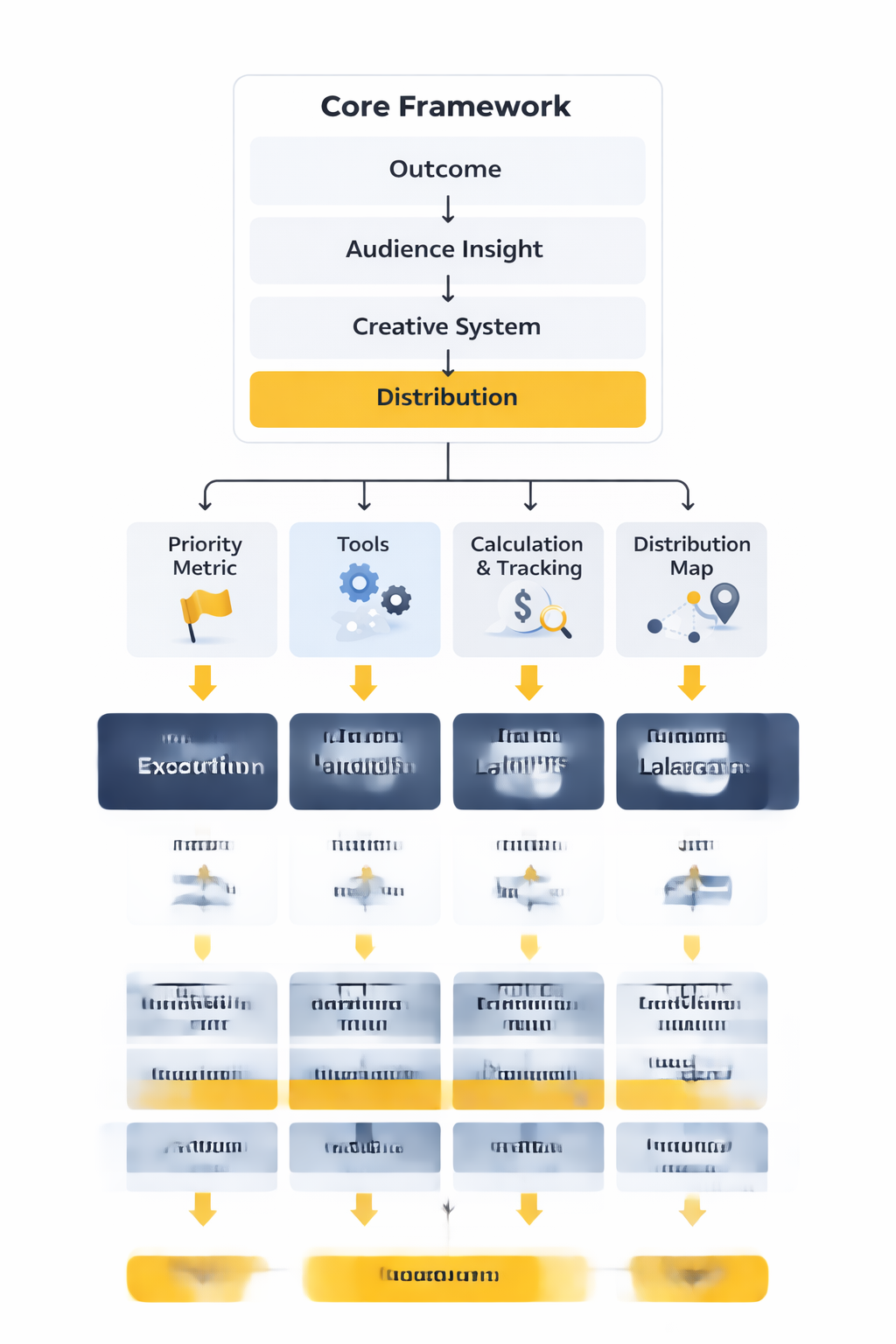
The fastest way to build successful social media campaigns is to stop treating them as “a batch of posts” and start treating them as a loop. A loop makes your work compound: every campaign teaches you what to do next, what to stop doing, and where to double down.
Use this five-part framework as the backbone:
- Outcome: One measurable goal that defines success (and what you’ll ignore).
- Audience insight: A real reason this specific audience should care right now.
- Creative system: A core idea expressed across platform-native formats.
- Distribution: A plan for reach (organic cadence, paid structure, creators, partnerships).
- Learning: Measurement that feeds decisions, not just reporting.
This structure also fits how modern ad ecosystems are evolving. WPP Media’s latest forecasting expects global advertising revenue to reach $1.14 trillion in 2025, with continued growth projected into 2026 — a reminder that competition is increasing, and the brands that win are the ones that learn faster than the feed changes.
One note before we go deeper: the framework is intentionally channel-agnostic. A campaign on LinkedIn, TikTok, Instagram, and YouTube will look different in execution — but the underlying mechanics of attention, trust, and conversion don’t change. What changes is how you express the idea, and how you measure progress.
Core Components
Most campaign failures don’t come from “bad creativity.” They come from missing a core component — usually clarity, relevance, or measurement. Here are the building blocks that consistently show up in successful social media campaigns, regardless of industry.
One Objective That Forces Tradeoffs
A campaign with three goals usually has none. Pick the primary objective and make it painful to ignore: awareness (reach and recall), consideration (site visits, saves, watch time), conversion (leads, purchases), or retention (repeat actions). This is where you decide what you will not optimize for, so the algorithm and the team aren’t tugging in different directions.
Audience Definition That Goes Beyond Demographics
Age and location don’t explain motivation. Define your audience by situation: what they’re trying to do, what they’re afraid of, what would make them switch, and what proof they need before taking action. If you can’t describe the audience’s “before state,” you’ll struggle to write messaging that feels personal in the feed.
A Single Core Message With Multiple Angles
Think of the campaign like a headline with variations. One big promise stays consistent, while angles rotate: speed, simplicity, status, savings, safety, belonging, or curiosity. This prevents the common trap where every post sounds like a different brand.
Creative Built for Behavior, Not for a Brand Deck
Platform-native doesn’t mean low quality. It means the creative respects how people consume: fast hooks, clear payoffs, readable on mobile, and designed for sound-off and scroll speed. Research on media preferences also points to how strongly social formats have become “primary video.” Deloitte’s digital media research found 47% of Gen Z and 35% of millennials said their favorite video content is social media videos and live streams — a strong signal that your campaign creative is competing with entertainment, not just other ads.
Trust Signals That Remove Friction
Trust is often the difference between attention and action. Build in proof: outcomes, guarantees, transparent pricing, clear demos, credible creators, customer voices, and straightforward FAQs (where the platform allows it). This is also where brand safety and audience skepticism come into play; Kantar’s Media Reactions work highlights how consumers can feel negatively toward overly targeted ads and have concerns around personal data in social feeds. Kantar’s US Media Reactions 2024 summary captures that tension.
Measurement That Matches the Objective
If your goal is awareness, obsessing over last-click conversions will make you kill good creative too early. If your goal is conversion, celebrating views without cost-per-result discipline will make you feel busy while revenue stays flat. A campaign becomes professional when the metrics actually reflect the job you hired the content to do.
Professional Implementation
Professional execution is less about having a huge team and more about having a dependable operating rhythm. The brands that run successful social media campaigns repeatedly tend to work the same way: plan tightly, produce in systems, launch with clear hypotheses, and review performance on a schedule that matches the platform speed.
Scope the Campaign Like a Product Release
Define what ships, when it ships, and what “done” means. That includes the number of creative concepts (not just assets), the formats required per platform, the landing experience (if any), and who owns approvals. If you can’t describe the campaign in one sentence and one calendar view, it’s too fuzzy to execute cleanly.
Build an Asset System, Not a Pile of Posts
Instead of producing 20 unrelated pieces of content, build a small set of modular building blocks: hooks, demo clips, testimonials, before/after frames, objections, and CTAs. Then recombine them into variations. This approach makes iteration faster and keeps the campaign message coherent even as you test different creative angles.
Decide How Distribution Works Before You Publish
Clarify the role of organic, paid, and creators. If you’re using paid media, define the testing structure and budget logic up front. If you’re using creators, define what stays on their channels versus your brand channels, and how you’ll reuse content legally and ethically. If you’re relying on organic, define the cadence and community management responsibilities so momentum doesn’t die in the comments.
Make Learning a Habit, Not a Postmortem
Successful social media campaigns improve during the run, not just after they end. Set a review cadence (daily for fast-moving paid tests, weekly for broader creative and messaging decisions), decide what thresholds trigger action, and document learnings in plain language. You’re not collecting data for a slide deck — you’re collecting evidence to choose the next creative, the next audience segment, and the next offer.
In Part 2, we’ll turn this framework into a step-by-step planning process you can use to design campaigns quickly, choose the right formats per platform, and avoid the most common strategic mistakes that quietly kill performance.
Step-by-Step Implementation
Successful social media campaigns don’t come from a “big idea” alone. They come from a sequence of decisions that keeps the idea intact while turning it into real assets, real distribution, and real learning. The steps below are designed to make execution feel predictable, even when the platform environment changes week to week.
Step 1: Lock the Outcome and the One Thing You’ll Measure First
Start by choosing a single primary outcome for the campaign: awareness, consideration, conversion, or retention. Then choose the first metric you’ll use to judge whether you’re moving in the right direction (for example, incremental conversions, qualified leads, or ad recall). If you plan to run paid, it’s worth baking in an incrementality mindset early; Meta’s conversion lift guidance explains how test-and-control measurement isolates what ads actually caused.
Step 2: Define Who It’s For and Why They Should Care Right Now
Write a one-paragraph “audience moment” instead of a persona. Describe what the audience is trying to accomplish this week, what’s stopping them, and what kind of proof makes them trust a recommendation. If your campaign is built around video (and many are), remember you’re competing with entertainment, not just ads; IAB’s 2025 video ad spend reporting shows digital video growing rapidly and being held to performance expectations, which means your creative must earn attention quickly and then keep it.
Step 3: Write the Core Message as a Single Promise
Create one sentence that states the promise clearly, without qualifiers. Then create three supporting angles that reinforce the promise from different perspectives (speed, confidence, savings, simplicity, status, or belonging). This gives you variation without losing coherence, which is exactly how successful social media campaigns avoid sounding like a new brand every time a new post goes live.
Step 4: Build a Creative System, Not One “Hero” Asset
Plan creative as a set of modular components you can recombine: hooks, demonstrations, objections, proofs, and calls to action. The first week of the campaign should include multiple versions of each component, because the platform will tell you which combinations are actually resonating. When your team treats creative like a system, optimization becomes an upgrade path instead of a panic response.
Step 5: Map Distribution Before Production
Decide where the campaign will live (organic, paid, creators, partners) before you finalize formats and scripts. For paid, outline the structure: prospecting vs retargeting, budget split, and what you’ll test first. If measurement reliability matters, consider your tracking approach early; Meta’s Conversions API documentation describes sending events directly to improve measurement and optimization signals.
Step 6: Launch With a Testing Plan You Can Actually Run
Pick a small number of tests that match your campaign stage: message angle tests early, format tests next, and audience tests once you have a winning message. Keep the test count low enough that you can interpret results without guessing. If you’re advertising on TikTok, it helps to plan measurement beyond last-click thinking; TikTok’s measurement overview highlights lift studies and attribution approaches designed for a discovery-driven platform.
Step 7: Run a Weekly Learning Loop and Make One Real Change
Set a weekly review where you decide what to scale, what to cut, and what to iterate. Force yourself to make one meaningful change each week: a new creative angle, a new proof point, a refined landing experience, or a tighter retargeting sequence. The goal isn’t to “report” the campaign — it’s to make the next seven days better than the last seven days.
Execution Layers
One reason successful social media campaigns feel effortless from the outside is that they’re built in layers. Each layer has a different job, and mixing them up is how campaigns become messy: great creative with no distribution plan, big reach with no trust signals, or strong engagement that never turns into business outcomes.
Layer 1: Strategy Layer
This is where you define outcome, audience moment, and the single promise. It also includes the decision that keeps everything honest: what you will not optimize for. If you don’t set tradeoffs here, the campaign will drift later, because every stakeholder will try to optimize for their favorite metric.
Layer 2: Creative Layer
This is where the promise becomes scroll-stopping assets. Your creative layer should include a clear hook, a simple payoff, and proof that makes the promise believable. For video-heavy campaigns, remember that the platform rewards clarity and pacing; Deloitte’s 2025 Digital Media Trends highlights how social platforms and creators are reshaping how audiences spend entertainment time, which raises the bar for what “competing content” looks like.
Layer 3: Distribution Layer
Distribution decides whether the campaign is discoverable. Organic distribution relies on cadence, community engagement, and consistency. Paid distribution relies on structure and measurement integrity, because the platform can’t optimize toward what you can’t measure reliably.
Layer 4: Experience Layer
This is the “after the click” and “after the comment” layer: landing pages, product pages, messaging flows, customer support handoffs, and the human experience of the campaign. If this layer is weak, your campaign becomes a leak — attention comes in, frustration flows out, and the metrics lie about why results softened.
Layer 5: Learning Layer
This is where you connect signals to decisions. Platform analytics tell you what’s happening; incrementality and attribution help you understand what the campaign caused. The more your learning layer improves, the less your team needs luck to repeat results.
Optimization Process
Optimization should feel like steering, not thrashing. The simplest way to keep it professional is to follow a consistent order: fix measurement first, improve creative second, adjust distribution third, and only then make deeper strategic changes. That order prevents you from “changing everything” when the real issue is one broken link in the chain.
1) Validate Measurement Before You Change Creative
Before you declare a creative “bad,” confirm your tracking and events. Make sure the right events fire, the naming is consistent, and the platform is receiving the data it needs to learn. If you’re using Meta, a more rigorous measurement approach can include lift testing; Meta’s conversion lift best practices explain how to structure tests that measure incremental impact.
2) Improve Hooks and Proof (Not Just the CTA)
Most underperforming social ads aren’t failing because the CTA is weak. They’re failing because the hook doesn’t earn the first two seconds, or the proof doesn’t earn trust. Optimize in this order: hook clarity, payoff clarity, proof strength, and only then CTA wording.
3) Scale Winners by Adding Variations, Not by Forcing One Asset Forever
When a creative concept wins, resist the temptation to run it unchanged until fatigue kills it. Instead, keep the concept but rotate angles: new objections, new proof, new opening lines, and new demonstrations. This is how successful social media campaigns keep consistency without becoming repetitive.
4) Refine Audience and Budget After Creative Stabilizes
Once you have clear creative winners, then you can tighten targeting, expand audiences, or shift budget toward the segments that respond best. If you change audience and creative at the same time, you won’t know what caused performance changes. Clean iteration is less exciting than chaotic iteration, but it’s the only kind you can learn from.
5) Add Experimentation to Reduce Guesswork
If your platform supports lift tests or incrementality testing, use them periodically, especially when budgets increase. Discovery-heavy platforms can produce misleading “in-platform” success signals; TikTok’s measurement guidance emphasizes lift and attribution tools precisely because last-click alone often under-credits influence.
Implementation Stories
The fastest way to make implementation feel real is to watch what happens when major brands hit a wall and change their operating approach. The two stories below are drawn from platform case studies, so the tactics and results are documented by the companies involved and the platforms running the measurement.
McDonald’s Turned TikTok Into a Sales Engine Under Pressure
The pressure wasn’t theoretical — it showed up in the numbers and in the boardroom conversations. McDonald’s saw consumer behavior shifting toward TikTok discovery, and the brand faced a familiar modern fear: if attention moves and you don’t follow, you don’t just lose reach, you lose relevance. The campaign response was bold enough to make headlines inside marketing teams: McDonald’s increased TikTok ad spend by 42% in Q1 2024 versus total spend in 2023.
The backstory is that McDonald’s already had scale, familiarity, and decades of brand memory. But scale doesn’t guarantee attention in a feed that rewards native storytelling and creator-style formats. The brand needed to prove TikTok wasn’t just “brand fluff” — it had to connect to business outcomes in a way leadership could respect.
The wall was that traditional campaign playbooks don’t always translate cleanly to TikTok. Polished assets can feel out of place, and broad messaging can disappear inside an entertainment-first environment. Even with budget, a campaign can stall if it doesn’t earn watch time, engagement, and repeat exposure.
The epiphany was to treat TikTok as a primary channel, not a repurposing channel. The case study describes a deliberate move into high-impact formats designed for attention capture, including premium placements like TopView. Instead of treating the platform as “another distribution lane,” the campaign treated it as a place where creative and delivery mechanics work together.
The journey became a structured approach: build platform-native creative, use formats that maximize visibility, and align optimization with the outcomes TikTok is designed to drive. The campaign design prioritized Video Views, Engagement, and Reach — signals that keep the content discoverable and help the platform learn what works. That approach mirrors what high-performing teams do: earn attention first, then turn attention into measurable business movement.
The final conflict was managing scale without wasting spend. When budgets rise quickly, inefficiencies become expensive, and teams can confuse “visibility” with “impact.” That’s where measurement planning matters — whether the goal is incremental sales lift, store visits, or changes in brand consideration, the campaign has to translate signals into decisions instead of just celebrating views.
The dream outcome is what the case study title itself is trying to prove: that TikTok can drive sales, not just awareness. McDonald’s positioned the platform as a core growth lever and backed the claim with a campaign approach designed to maximize reach and engagement at scale. Even without copying every tactic, the story demonstrates a principle that holds for successful social media campaigns: when the channel becomes central, execution gets serious, and the organization learns faster.
Durex Used Lift Measurement to Prove Impact Beyond Direct-to-Consumer
The tension hit at the moment many retail brands recognize: you can generate attention all day, but proving retail impact is where campaigns get judged. For Durex, the challenge wasn’t only to create engaging TikTok creative — it was to show that TikTok could move outcomes even when the purchase happens through retail dynamics. The platform case study frames the result clearly through measurable lift, not vague buzz: ad recall increased by 11.24% with broad targeting and 10.34% with interest-based targeting.
The backstory is that Durex operates in a category where trust, discretion, and brand familiarity matter. That creates a unique creative constraint: you can’t rely on shock alone, and you can’t rely on product specs alone. To win, the campaign has to feel culturally fluent while still being safe, clear, and credible.
The wall was that retail-focused brands often struggle to connect social performance metrics to commercial impact. Clicks and view-throughs can look great while the business remains unconvinced. Without lift measurement, teams can get stuck arguing about attribution instead of improving the work.
The epiphany was to treat measurement as part of the creative strategy, not a reporting step at the end. The case study emphasizes the use of a Sales Lift Study to evaluate impact, which changes the internal conversation from “did we get likes?” to “did this campaign move something that matters?” That shift is what makes optimization feel purposeful instead of performative.
The journey focused on testing audience approaches and validating which strategy produced stronger commercial signals. The case study describes interest-based targeting delivering a Sales Lift Study result that translated into stronger ROAS performance compared to broad targeting. Instead of assuming one approach would win, the campaign treated targeting as an experiment tied to measurable outcomes.
The final conflict was balancing brand and performance goals without splitting the campaign into disconnected parts. Retail brands often need both: brand reinforcement and performance validation. The case study highlights that results showed strength across both brand and performance metrics, which is exactly the kind of alignment that prevents internal stakeholders from pulling the campaign in opposite directions.
The dream outcome is a template retail marketers can reuse: document brand lift, document sales lift, and let the results guide the next cycle. The case study reports a 15% higher ROAS linked to the lift outcome for the interest-based strategy, reinforcing that measurement can be the engine of learning, not just the scoreboard. For successful social media campaigns, this is the deeper lesson: when proof is built into the plan, scaling becomes easier and debates get shorter.
Run a Cadence That Forces Decisions
Set a weekly meeting that ends with decisions, not commentary: which concept to scale, which to cut, and which variable to test next. Keep a simple log of what changed and why, so you don’t repeat tests accidentally. Over time, this turns your campaign history into an internal playbook your team can actually use.
Standardize Naming and Asset Organization
Give every campaign, ad set, and creative concept a consistent naming system. It sounds boring, but it’s the difference between “we think this worked” and “we know why this worked.” When you can trace results back to concept, hook, proof, and audience, optimization becomes a craft instead of a guess.
Protect Measurement Integrity as the Campaign Scales
When budgets increase, weak measurement becomes expensive. Validate events, confirm cross-channel reporting, and use lift testing periodically if the budget and stakes justify it. The more your measurement improves, the faster your team can iterate without falling into endless attribution debates.
Plan a Creative Refresh Schedule Before Fatigue Shows Up
Don’t wait until performance collapses. Plan refreshes into the calendar: new hooks every week, new proof every two weeks, and a new creative concept when the current one starts to saturate. This is how successful social media campaigns stay consistent without becoming repetitive — and it keeps the team in control of momentum instead of reacting to decline.
Statistics and Data
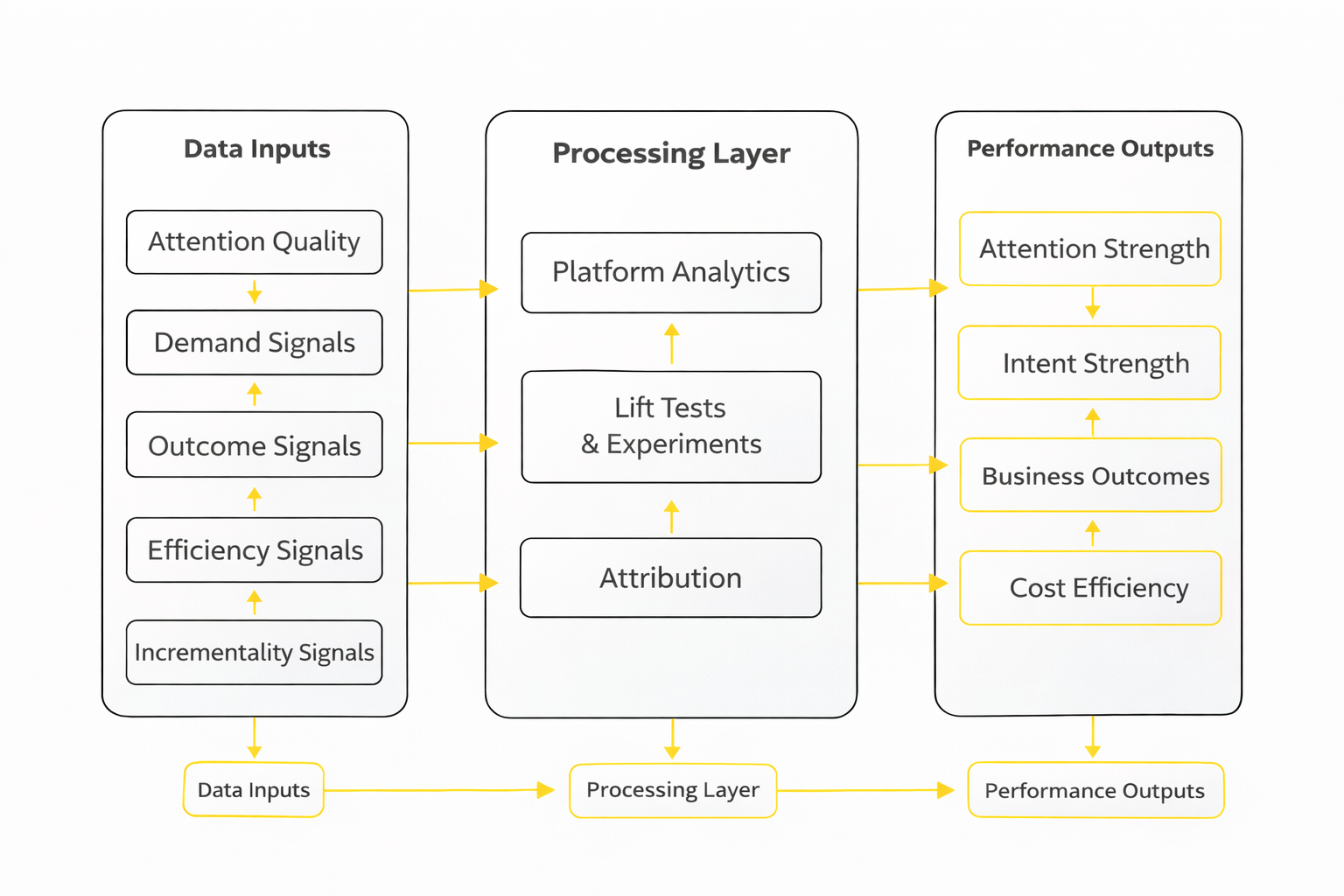
Analytics is where successful social media campaigns stop being a “good feeling” and start being a repeatable system. The goal isn’t to drown in dashboards. The goal is to collect the handful of signals that tell you (1) whether the campaign is earning attention, (2) whether that attention is turning into intent, and (3) whether intent is turning into outcomes you can defend in a meeting with finance.
One reason measurement matters so much right now is simple: budgets are still flowing into social, and leadership expects proof. The IAB and PwC internet advertising revenue reporting shows social media advertising revenue totaling $88.8 billion in 2024, up by $23.8 billion versus 2023. When spend grows that sharply, the teams that win are the ones who can connect creative decisions to measurable impact, not just engagement screenshots.
At the same time, “social performance” increasingly includes creators as a distribution channel, not a nice-to-have add-on. Coverage of the IAB’s creator economy research highlights creator ad spending projected at $37 billion in 2025, with analysis noting how quickly budgets are shifting toward creator-led formats. If creators are part of your campaigns, your measurement needs to track their contribution with the same seriousness you apply to paid media.
The data you actually need (and what it tells you)
- Attention quality: watch time, completion rate, saves, shares, and engaged view rate. These tell you whether the message is landing or just being scrolled past.
- Demand signals: clicks, landing page views, add-to-cart, sign-ups, and messaging starts. These tell you whether interest is forming.
- Outcome signals: purchases, qualified leads, subscriptions, or retention actions. These tell you whether the campaign is doing its job.
- Efficiency signals: CPM, CPC, CPA/CPL, and ROAS (when appropriate). These tell you whether you can scale without wasting budget.
- Incrementality signals: lift tests and controlled experiments when budget allows. These tell you what the campaign actually caused, not just what it was present near.
If you’re building a measurement culture inside your team, it helps to anchor around incrementality rather than purely last-click logic. Meta’s measurement documentation frames Conversion Lift as a way to measure the incremental effect of ads and optimize spend, which is often the difference between “we think it helped” and “we can prove it helped.”
Performance Benchmarks
Benchmarks are useful when you treat them like guardrails, not grades. They help you spot problems early (a broken hook, weak targeting, fatigue, or tracking issues), but they should never replace your campaign-specific baseline. The best benchmark is your own last campaign, measured consistently.
When you do look outward, use sources with large datasets and clear methodology. The Emplifi report is useful here because it draws from thousands of ad accounts and breaks results down across platforms; the 2025 benchmark report references 7,838 Facebook ad accounts and 7,997 Instagram ad accounts, giving you a more stable view than anecdotes.
Organic engagement benchmarks (set expectations, then build for your niche)
Engagement benchmarks can keep teams honest about platform reality, especially when stakeholders expect every post to perform like a viral hit. Rival IQ’s industry benchmark reporting can be a helpful reference point because it looks across industries and platforms; the 2024 report outlines broad engagement-rate patterns and channel shifts across millions of posts. Rival IQ’s 2024 benchmark PDF is the cleanest primary source version.
- Use engagement benchmarks to diagnose: If your engagement collapses while reach stays stable, creative relevance is usually the issue. If reach collapses first, distribution (cadence, format fit, or platform changes) is usually the issue.
- Don’t over-index on averages: Industry medians hide outliers, and outliers are often the brands doing something structurally different (strong community, strong creator flywheel, or exceptional narrative discipline).
Paid performance benchmarks (focus on ranges, then compare against your own history)
For paid media, the most practical approach is to track ranges by platform and objective, then compare week-over-week trends inside the same campaign. Emplifi’s paid benchmarks provide directional context across CTR, CPC, and spend patterns; the 2025 report discusses how platform performance varies and notes Facebook’s strength in CTR and CPC patterns in late 2024. The paid benchmarking sections in the Emplifi 2025 report are a strong starting point.
- CTR (click-through rate): best used as a “creative resonance” health check. A falling CTR often signals hook fatigue or mismatched targeting before it shows up in CPA.
- CPC (cost per click): best used as a friction check. If CPC rises while CTR stays stable, competition or auction pressure may be increasing.
- CPM (cost per thousand impressions): best used as an auction temperature gauge. CPM spikes can happen seasonally; interpret them with calendar context.
- CPA/CPL: best used as the scale decision metric. If CPA rises while everything else looks fine, look at landing experience and conversion friction.
If you operate in Europe and need broader market context, the IAB Europe AdEx benchmark reporting can also help calibrate expectations around the overall digital advertising environment. The 2024 AdEx benchmark report captures how digital growth and spend continue shifting, which matters when you’re interpreting changes in CPMs and auction pressure.
Analytics Interpretation
Most reporting fails because it describes what happened, but never explains why it happened or what to do next. Interpretation is the part that turns data into better creative and smarter distribution.
The interpretation order that keeps you sane
- Start with measurement integrity: confirm events, UTMs, attribution windows, and platform signals. If tracking is wrong, everything downstream becomes storytelling.
- Then check attention quality: watch time and engaged views usually explain results earlier than clicks do, especially on discovery platforms.
- Then check intent: clicks and landing page behavior tell you if the campaign promise matches what people expected after the tap.
- Only then check efficiency: CPM/CPC/CPA. Efficiency metrics are symptoms; attention and intent are usually the causes.
Patterns that show up in successful social media campaigns
Pattern 1: Great views, weak outcomes. This often means the creative is entertaining but not directional, or the promise is vague. If watch time is strong but clicks and conversions are weak, tighten the “why this matters to you” moment and add clearer proof.
Pattern 2: Strong CTR, weak conversion rate. This usually means the ad promise is strong but the landing experience isn’t matching it. The fix is often less “new targeting” and more “make the post-click experience feel like the same conversation.”
Pattern 3: Strong conversion rate, weak scale. This usually means you’re speaking to a small segment with high intent, but your creative isn’t broad enough to expand. The fix is to create new angles that speak to adjacent segments without changing the core promise.
Pattern 4: Volatile week-to-week results. This is often an operations problem: too many simultaneous changes. Meta’s measurement framing around incrementality is helpful because it reinforces disciplined testing; Conversion Lift is designed to isolate incremental impact, which helps teams avoid false confidence from noisy attribution.
Cross-media interpretation (when social is part of a bigger mix)
Some of the most profitable campaigns don’t look like “the best” inside a single platform dashboard. They look average in-platform while driving incremental reach, brand equity, or search behavior across the broader mix. That’s why measurement methods like cross-media studies and search lift can be so useful when budgets grow.
Google’s marketing coverage has highlighted search lift effects from video campaigns; for example, a Think with Google write-up notes that Samsung’s campaign launch saw a 6% lift in brand searches driven by YouTube. The practical takeaway is that “social and video” can create demand that shows up later in search and direct traffic, so your analytics interpretation should include those downstream signals when possible.
Case Stories
Numbers become useful when they’re attached to real decisions made under real pressure. The stories below show how brands used measurement and analytics to make campaigns sharper and easier to defend internally.
Deutsche Telekom Turned Euro 2024 Hype Into Measurable Growth on TikTok
It started with a brutal reality: Euro 2024 was coming, and the attention economy was going to crown a “default” destination for fans. If Deutsche Telekom didn’t own a meaningful slice of that conversation, MagentaTV would feel like a utility, not a ritual. They were officially partnered with the tournament, but sponsorship doesn’t automatically translate into scroll-stopping relevance. They needed a campaign that could prove it moved both brand and subscriptions.
The backstory made the challenge harder. Deutsche Telekom is massive, and MagentaTV had the rights to broadcast every minute of match time, yet younger audiences increasingly live inside creator-driven feeds. The brand also had multiple agencies, projects, and objectives that needed to align, which is where campaigns often lose coherence. In other words, they had the assets to win, but also the complexity to trip over themselves.
The wall hit when traditional broadcast-style assets couldn’t carry the whole load. The brand needed TikTok-native energy, not just repackaged TV excitement. They also needed a way to keep momentum across the tournament lifecycle instead of spiking for opening week and fading. And they needed proof that the effort didn’t just create views, but created meaningful business impact.
The epiphany was to build the campaign like a layered ecosystem rather than a single media plan. The case study describes a three-pillar approach combining exciting football content, spotlighting MagentaTV as the streaming destination, and enhancing linear programming with creator-hosted livestream episodes to bridge the gap between traditional broadcast and Gen Z habits. That structure made the creative feel native while keeping the brand promise consistent. It also created multiple “ways in” for different viewer motivations.
The journey was driven by full-funnel distribution and constant measurement. The plan used high-impact placements like TopView and Top Feed, Spark Ads for native-looking amplification, TikTok Pulse for contextual adjacency, and a heavy livestream cadence with no fewer than 22 live campaigns. A test-and-learn approach fed insights back into creative and media planning, so optimization happened during the run, not after the fact. The result was a campaign that behaved like a system: build, observe, refine, scale.
Of course, the final conflict was keeping performance stable while the tournament noise peaked. Big cultural moments are crowded, and attention is expensive, so creative fatigue and message drift are constant threats. They also had to ensure creator content outperformed polished TVC-style assets, because the platform rewards authenticity. Even when you’re winning, tournament cycles can punish slow iteration.
The dream outcome shows why the campaign belongs in a conversation about successful social media campaigns. The case study reports 226 million video views, +32% follower growth, and a Brand Lift Study showing +2.2% brand awareness and +7.7% ad recall. It also reports creator content delivering 33% higher average watch time versus TVC ads, which is exactly the kind of evidence that makes a campaign easier to scale and easier to defend.
Alpro Used Cross-Media Measurement to Prove TikTok’s Role in a Multi-Channel Campaign
The stress point wasn’t a creative crisis — it was a measurement crisis. Alpro ran a comprehensive campaign across eight media channels, including TV and digital, and faced the classic question: if TikTok gets a slice of the budget, what does it actually contribute? Without a defensible answer, TikTok stays “experimental,” and experimental channels get cut first when budgets tighten. They needed proof that TikTok was doing real work in the mix.
The backstory is that Alpro isn’t selling a novelty product; it’s selling a habitual breakfast behavior. That’s a high bar because habits require repeated exposure, consistent messaging, and enough cultural relevance to keep the brand in the mental shortlist. They also needed to reach younger, digitally native audiences without cannibalizing the impact of TV. This is where teams often get stuck: the channel plan gets built, but nobody can clearly explain interaction effects.
The wall showed up in the usual place: attribution uncertainty. TV can drive broad reach, but it’s hard to connect it to precise outcomes without studies. TikTok can drive strong engagement, but skeptics will dismiss it as “just views” unless measurement links it to brand equity or incremental reach. And when the campaign spans multiple channels, internal stakeholders can argue endlessly about what deserves credit.
The epiphany was to treat measurement as part of campaign design, not a report at the end. The case study describes a two-pronged measurement approach using a Brand Lift Study and a Cross-Media Measurement Study, with Kantar as the external measurement partner. That meant TikTok’s role could be evaluated alongside TV rather than judged by last-click logic. It reframed TikTok from “another platform” to “a lever that changes the whole system’s performance.”
The journey paired creator credibility with premium placements and iterative learning. The campaign combined Top Feed and In-Feed ads with both brand and creator assets, then used test-and-learn to optimize delivery and creative combinations. This is the practical version of what we’ve been building in the framework: multiple creative angles, controlled distribution, and learning that happens fast enough to matter. Instead of hoping the mix worked, they designed the mix to be measurable.
The final conflict was making sure the TikTok investment wasn’t “nice to have,” but “hard to replace.” Multi-channel campaigns often suffer when a channel can’t prove it drives incremental reach or equity, because leadership will default to legacy spend. They also needed to ensure TikTok complemented TV rather than duplicating it, which is where incremental reach and equity impact are the key signals. Measurement had to be strong enough to survive scrutiny.
The dream outcome is unusually clear. The Cross-Media Measurement Study in the case study reports that with 10% of the media budget, TikTok contributed to 36% of the incremental impact on brand equity, and delivered 13% incremental reach beyond TV for the 18–44 group. It also reports a 6.9% increase in ad recall in brand lift results, reinforcing that creator-plus-brand asset combinations can make campaigns more memorable when the mix is built intentionally.
Professional Promotion
Professional promotion is how you use analytics to scale what’s working without turning the campaign into a fragile house of cards. It’s not “boost the post.” It’s a deliberate escalation plan: promote the right creative, to the right audience, with the right measurement, at the right moment.
Promote after proof, not before it
In successful social media campaigns, promotion is the reward for evidence. Start with small tests to identify which hook-and-proof combinations earn attention and intent, then scale budgets only when the creative shows repeatable strength. Benchmark datasets can keep you honest about what “normal” looks like across platforms; Emplifi’s benchmark reporting is useful here because it ties conclusions to large samples of ad accounts. The 2025 Emplifi report provides that broad context for paid performance.
Structure budgets so learning compounds
- Testing budget: runs creative and audience experiments with clear thresholds and short review cycles.
- Scaling budget: backs proven concepts with variations to prevent fatigue.
- Protection budget: keeps retargeting and high-intent sequences stable so results don’t swing wildly.
Measure incremental impact when the stakes justify it
When spend is meaningful, you want more than platform attribution. Lift measurement can answer the question leadership actually cares about: what did this campaign cause that wouldn’t have happened otherwise? Meta’s documentation explains Conversion Lift as a methodology to measure the incremental effect of ads, which can make promotion decisions far more confident than chasing noisy week-to-week ROAS swings.
Turn analytics into a campaign storyboard stakeholders can understand
The fastest way to get future budget is to tell a clean performance story: what you tested, what you learned, what you scaled, and what changed because of it. Use outcome metrics first, then explain the creative and distribution decisions that produced them. That’s how analytics becomes promotion fuel — not just a postmortem document that nobody reads.
Future Trends
The next wave of successful social media campaigns will be built for a world where discovery, trust, and conversion happen inside the same scroll. The “campaign” won’t feel like a campaign to the audience. It will feel like a helpful stream of answers, proof, and participation that shows up exactly when they need it.
Social search becomes a default discovery habit
People increasingly search inside social apps because it’s faster, more visual, and loaded with real-world context. When two-thirds of U.S. consumers say they’ve used social search, the implication is simple: campaign creative needs to answer “what is it,” “is it worth it,” and “how does it work” in-platform, not just on a landing page.
That’s why modern campaigns look more like mini knowledge bases: comparison clips, “how it works” demos, creator walkthroughs, and customer stories that remove uncertainty. Brands that treat social posts as searchable assets (with clear language, consistent naming, and repeatable proof) will compound results over time.
Creator media stops being a tactic and becomes a budget line
Creators are now a primary distribution network, not a bonus channel. The IAB projects U.S. creator ad spend reaching $37 billion in 2025, and that growth forces campaigns to evolve. It’s no longer enough to “hire an influencer.” The teams that win will build creator systems: repeatable briefs, clear proof requirements, fast approvals, and a method for turning creator output into scalable paid amplification.
Short-form video becomes the default ad inventory
Short-form formats aren’t just popular with audiences; they’re increasingly where ad delivery happens. New market intelligence reporting notes more than half of Instagram ads ran in Reels in 2025, up from 35% in 2024. That shift means your campaign system needs strong hooks, fast proof, and creative refresh discipline, because you’ll be competing in the most crowded part of the feed.
Social commerce moves from “experimental” to “expected” for younger buyers
As platforms tighten shopping integrations, friction drops and impulse increases. Research-based reporting from Sprout Social highlights that 48% of Gen Z consumers plan to make more purchases through social media in 2025 compared to 2024. That doesn’t mean every brand should push hard into in-app checkout, but it does mean campaigns should shorten the path from curiosity to confidence with clearer offers, clearer FAQs, and creator-led proof.
Trust will be won in comments, DMs, and speed of response
As feeds fill with AI-assisted content and recycled trends, audiences will lean harder on signals that feel human: responsiveness, transparency, and community behavior. The brands that scale will operationalize trust by treating engagement like customer experience, not “social activity.” When the inbox gets slower, campaign performance usually follows.
Platform demographics keep shifting, so targeting assumptions expire faster
Even if your creative stays strong, audience composition changes underneath you. Pew Research Center’s latest reporting on U.S. platform usage shows continued shifts in where adults spend time and how usage varies by age and other demographics. Pew’s 2025 overview is a useful reality check when a campaign that worked last year suddenly needs new placement choices and new creative formats.
Strategic Framework Recap

At this point, you’ve seen the full system: strategy, tools, implementation, analytics, and scaling. The easiest way to keep it all usable is to remember the campaign as a loop, not a checklist.
1) Outcome
Pick one primary goal and the first metric you’ll use to judge direction. A campaign with three primary goals usually becomes a campaign with three watered-down messages. Clarity here makes everything downstream easier.
2) Audience Insight
Define the audience moment: what they want right now, what’s stopping them, and what proof they need to believe you. Campaigns win when they feel like they “get it,” not when they merely broadcast.
3) Creative System
Build modular creative: hooks, demos, objections, proof, and CTA. Scale concepts, not single assets. Refresh predictably before fatigue forces a reset.
4) Distribution
Decide how the campaign earns reach (organic cadence, paid structure, creators, partners) before you ship assets. Distribution is not a last-minute “boost.” It’s part of campaign design.
5) Learning
Use analytics to make decisions, not to decorate reports. Validate measurement first, then interpret attention quality, then intent, then outcomes. The teams that win don’t guess better; they learn faster.
FAQ – Built for the Complete Guide
1) What makes successful social media campaigns different from “posting consistently”?
Consistency helps, but campaigns create coordination. A campaign aligns one objective, one audience moment, one core message, and a clear measurement plan across multiple assets. That structure is what turns activity into momentum.
2) How long should a campaign run before I decide if it worked?
Long enough to collect stable signals, short enough to iterate while it still matters. For paid campaigns, early signals can appear quickly (attention and intent), but outcome signals often lag. A practical approach is to set weekly decision points so you’re always improving the next seven days, not judging the whole effort too early.
3) Should I use the same creative on every platform?
Keep the core promise consistent, but express it in platform-native formats. People behave differently on LinkedIn than TikTok, and a campaign that feels natural in one place can feel forced in another. Same message, different execution.
4) What metrics matter most for successful social media campaigns?
The metrics that match your objective. Awareness campaigns need attention quality and recall proxies, demand campaigns need intent and conversion signals, and retention campaigns need repeat actions. If the metric doesn’t represent the job the campaign was hired to do, it becomes noise.
5) How do I avoid creative fatigue when scaling?
Scale the concept, not the exact asset. Keep the winning idea, then rotate hooks, proof, and angles on a refresh calendar. Fatigue usually happens when the audience sees the same opening and the same claims too many times.
6) Do I need creators for a campaign to be successful?
No, but creators can make campaigns more believable and more scalable because they provide human context and trust. If you use creators, treat it like a system: clear briefs, clear proof requirements, fast approvals, and a plan for repurposing winning content.
7) What’s the best way to test campaign ideas without wasting budget?
Start small and test one major variable at a time. Early tests should focus on the message angle and hook, because if those fail, everything else becomes expensive. Once you have a winning concept, then test audiences and placements with cleaner confidence.
8) Why do campaigns sometimes look great in-platform but weak in business results?
Common reasons include mismatched promises (the ad sets expectations the landing experience can’t fulfill), weak proof (people enjoy the content but don’t trust it), or measurement blind spots (tracking gaps or attribution limits). The fix is usually measurement validation plus a tighter attention-to-intent bridge.
9) How can I make social campaigns work for B2B without feeling cringe?
Focus on clarity and usefulness: short demos, real objections answered, simple frameworks, and customer stories that feel specific. B2B audiences still scroll like everyone else; they just reward credibility faster and punish fluff harder.
10) What’s the simplest campaign structure I can run as a freelancer or small team?
Pick one offer, one audience segment, and one core message. Produce 6–10 creative variations built from the same modular components, publish consistently for organic support, and run a small paid test to identify winners. Then scale the winners with variations and tighten measurement so you can explain what worked and why.
11) How do I connect social campaign performance to revenue when attribution is messy?
Use multiple lenses: platform conversions, cross-channel analytics, and periodic incrementality tests when budget allows. Even without perfect attribution, consistent measurement setup plus disciplined experimentation will reveal patterns strong enough to guide scaling decisions.
12) What should I do if a campaign underperforms in the first week?
Don’t change everything at once. First validate measurement and links, then fix hooks and proof, then adjust distribution. Most early underperformance is a creative resonance problem, not a “throw away the whole strategy” problem.
Work With Professionals
If you’ve made it this far, you already know the hard part about successful social media campaigns: the ideas aren’t the bottleneck. Execution is. Keeping a pipeline of fresh creative, staying consistent with measurement, responding fast in the inbox, and learning weekly is what separates “a good month” from a system you can rely on.
That’s also where many marketers get stuck personally. You can build great campaigns, but your client pipeline still feels unpredictable. You spend as much time chasing work as you do doing the work, and the feast-or-famine cycle makes it hard to scale your career.
That’s why MARKEWORK exists. It’s a focused marketplace built specifically for marketing work, with access to thousands of job listings, direct communication without a middle layer, and a structure designed to keep deals moving instead of getting trapped behind platform gates.
The best part is what it doesn’t do. There are no project fees, commissions, or transaction charges, so you’re not watching a platform skim value off the work you earned. You connect, negotiate, and run the relationship directly, and the platform stays out of your contracts and payments. The pricing is straightforward monthly plans that keep costs predictable while you build momentum.
If your goal this year is simple—more clients, better-fit projects, and the freedom to focus on delivery—this is a clean way to stack the odds in your favor. Build a profile that shows your proof, apply to work that matches your strengths, and turn your campaign skills into a steady pipeline instead of a constant hustle.
 Filip Konecny Enterprises