

“Social media management cost” sounds like a simple line item until you’re the one trying to defend it. One person says it’s “just posting,” another says you need a full team, and the finance side wants a number that doesn’t change every month.
This first section sets the ground rules: what you’re actually paying for, why the cost structure is so easy to underestimate, and a framework you can use to compare options (in-house, freelancer, agency, or hybrid) without guessing.
Article Outline
- What Social Media Management Cost Really Means
- Why Social Media Management Cost Matters
- Framework Overview
- Core Components
- Professional Implementation
What Social Media Management Cost Really Means

Social media management cost is the full price of running a brand’s social presence in a way that’s reliable, measurable, and repeatable. That includes the obvious work (planning content, publishing, responding, reporting), but it also includes the behind-the-scenes pieces that prevent chaos: approvals, brand guardrails, escalation paths, account security, and consistent performance analysis.
When people underestimate the cost, it’s usually because they’re pricing “posts,” not the operating system around those posts. A post is the output. The real cost is the process that makes the output steady and safe: the calendar, the review loop, the community playbook, and the measurement that ties activity back to business outcomes.
It also helps to separate two different categories that often get mixed together:
- Operating cost: labor, tools, content production, analytics, workflows, and governance.
- Growth spend: paid amplification, creator partnerships, and campaign bursts that scale reach beyond organic distribution.
That distinction matters because the “base” social media management cost should be predictable month to month, while growth spend can flex based on launches, seasonality, and pipeline targets.
Why Social Media Management Cost Matters
If your social budget is fuzzy, everything downstream gets fuzzy too: hiring decisions, platform priorities, content cadence, reporting expectations, and the quality bar your team can realistically hit. You don’t just risk overspending. You risk spending in the wrong place and still missing outcomes.
The easiest trap is paying for activity while starving the pieces that make activity effective. For example, a team might fund daily posting but underfund community coverage, so comment sections become a liability. Or they pay for a premium tool stack but don’t allocate time for analysis and iteration, so reporting becomes a monthly ritual instead of a feedback loop.
There’s also a strategic reason social media management cost deserves a framework: the “right” number depends on how social fits into your broader marketing mix. Many organizations are operating in a budget environment where marketing spend is under pressure, with 2025 marketing budgets reported as flat at 7.7% of company revenue in Gartner’s CMO Spend Survey coverage, which increases the need to justify every ongoing program with clarity and discipline. Gartner’s 2025 CMO Spend Survey press release
Finally, cost clarity is what makes comparison fair. A freelancer quote, an agency retainer, and an in-house salary are not apples-to-apples until you account for what each option includes (and what it quietly assumes you’ll supply).
Framework Overview
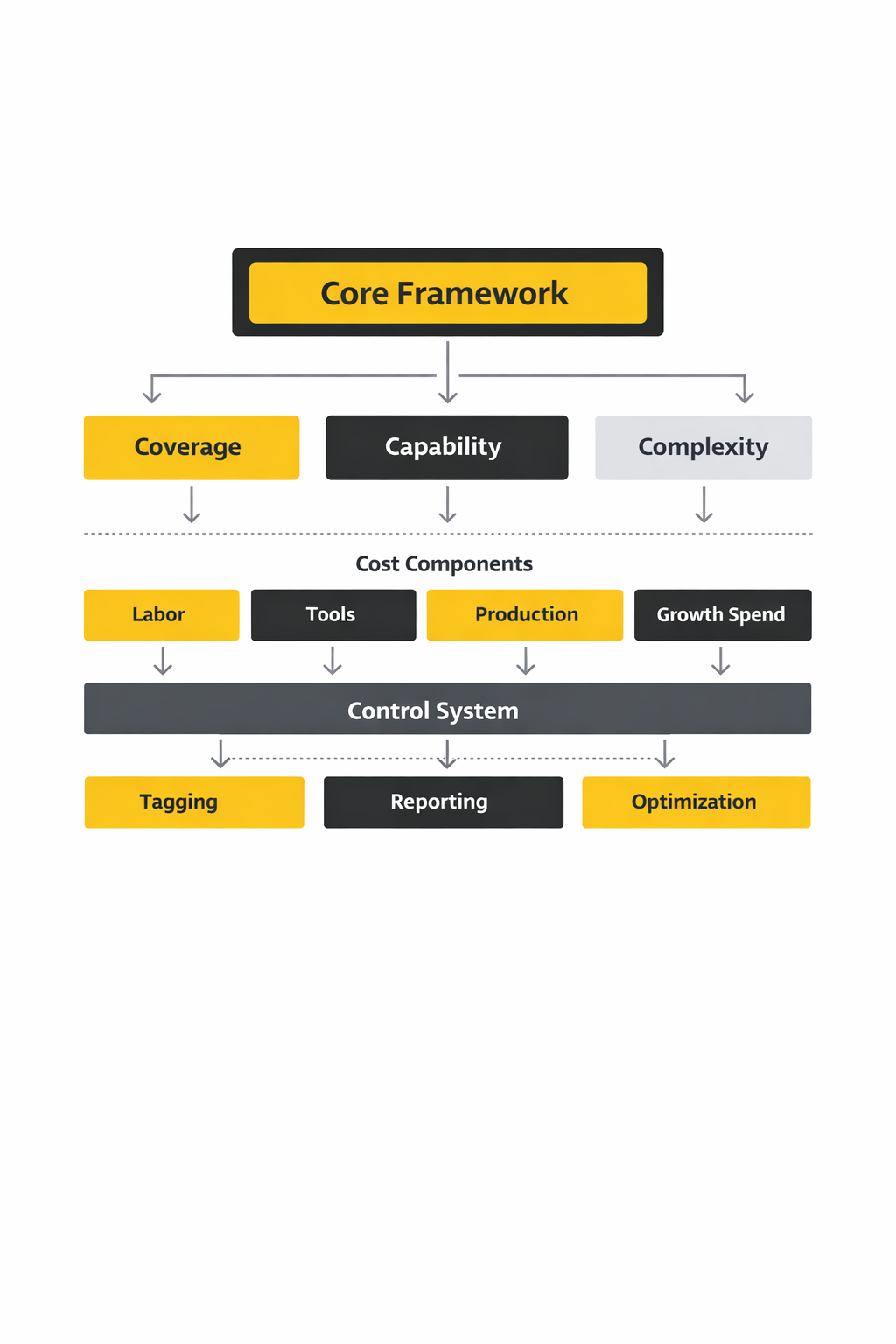
To budget social media management cost without guesswork, use a five-part framework. The goal isn’t to produce a “universal” price. It’s to create a consistent way to scope, compare, and control costs across different implementation models.
- 1) Coverage: which platforms, how often you publish, and what community response expectations you’re committing to.
- 2) Capability: the level of work required (basic posting vs. full content production, brand voice development, social customer care, creator management, and performance optimization).
- 3) Complexity: approvals, compliance, stakeholder count, language/region requirements, and how many products or business units you support.
- 4) Cost components: labor, tools, production, and growth spend (paid and creators).
- 5) Control system: reporting cadence, KPI ownership, testing budget, and governance that prevents churn and rework.
Run every quote, hiring plan, or internal estimate through these same five parts. If the “coverage” and “capability” aren’t explicit, you’ll end up comparing numbers that represent totally different realities.
Core Components
Most social media management cost breakdowns miss the point by listing services instead of showing what actually drives spend. These are the components that determine whether your cost stays stable or balloons unexpectedly.
Labor Costs
Labor is usually the largest and least forgiving piece, because it scales with cadence, response time, and content quality. Even when a tool automates scheduling, the hard work still lives in planning, creative direction, approvals, community nuance, and analysis.
For external talent, market rates are a useful anchor. Upwork’s marketplace pricing pages commonly show social media manager hourly ranges, with typical rates shown around $14–$35/hr for social media managers and $15–$45/hr for social media marketers, depending on experience and scope. Upwork social media manager cost range Upwork social media marketer cost range
For in-house planning, salary benchmarks help you translate headcount into a monthly operating figure. Indeed’s salary tracker (updated in February 2026) shows an average base salary for social media managers in the US, which is useful for a directional estimate before you layer in taxes, benefits, and management overhead. Indeed social media manager salary data
Tooling and Platform Stack
Your tool stack determines how efficiently your team can operate. It can reduce labor time, but it also becomes a fixed recurring cost that scales by seats, channels, and feature tier (publishing, inbox, analytics, listening, governance).
As a reality check, many teams start with a scheduling-and-reporting platform, then add deeper analytics or customer care capabilities as volume grows. Pricing varies widely, but it’s not unusual for established platforms to start in the low hundreds per month and scale with seats. For example, Sprout Social’s pricing page lists plans starting at $199 per month on annual billing, which is a helpful reference point when you’re estimating baseline software spend. Sprout Social pricing
Some tools price by channel rather than only by seats. Buffer’s support documentation explains its per-channel pricing approach, which is worth considering if you manage many brand accounts across multiple platforms. Buffer plan and pricing model overview
Design tooling often becomes its own budget line once you move beyond templated posts. Canva’s pricing page is a straightforward reference for how design subscriptions typically scale from individual to team usage. Canva pricing
Content Production and Creative Operations
Production is where social media management cost becomes “real” for leadership, because it’s visible and it’s variable. A simple text-and-image cadence has a different cost curve than short-form video, multi-platform storytelling, creator collaborations, and evergreen asset libraries.
Two factors drive production cost more than anything else:
- Originality: creating net-new assets vs. adapting existing brand materials.
- Format intensity: video editing, motion, on-camera work, and location shooting tend to multiply time and coordination needs.
Production cost is also where rework hides. If approvals are unclear or stakeholders treat content as a committee project, you end up paying twice: once to create, and again to redo.
Growth Spend
Paid and creator programs are often described as “social,” but they behave like investment levers rather than operating costs. They can scale outcomes, but only if you have the fundamentals in place: strong creative, clean targeting logic, and reporting that connects spend to performance.
Even if you’re focused on organic management, leadership will often ask, “What would it cost to amplify this?” Keeping growth spend as a distinct line makes your budget more honest and your performance reviews more fair.
Governance, Risk, and Quality Control
This is the cost category that rarely gets budgeted until something goes wrong. Governance includes account access management, security practices, documented brand voice, response protocols, and escalation paths for sensitive issues.
The practical reason it belongs in your cost model is simple: governance reduces expensive surprises. The cost of one preventable incident can exceed months of disciplined process.
Professional Implementation
Once you understand the components, implementation becomes a decision about trade-offs: speed vs. control, expertise vs. continuity, and predictable monthly cost vs. flexible capacity.
In-House Team
In-house is strongest when social is core to brand identity, customer experience, or product launches, and you need tight alignment with internal stakeholders. You gain context, speed on internal decisions, and consistent voice. The trade-off is that capacity is capped by headcount, and specialist needs (video, design, paid social, community coverage) can create hiring pressure.
Freelancers
Freelancers are ideal when you want flexibility, specialist skills, or coverage for a defined scope. The biggest budgeting mistake here is assuming the hourly rate equals the full social media management cost. You still need a system for briefs, approvals, brand guardrails, and performance review. Without that, you’ll spend less per hour but more in rework and inconsistency.
Agency Retainers
Agencies can deliver breadth quickly: strategy, production, reporting, and sometimes paid and creator operations. They’re often the easiest way to buy a “team” without building one. Costs vary heavily by scope, but Clutch’s pricing guide provides a useful benchmark for social media marketing projects, including an average monthly cost derived from reviewed projects. Clutch social media marketing pricing guide
The key to making an agency retainer cost-effective is specificity: define deliverables, turnaround times, revision limits, and what “community management” actually means (hours covered and response expectations). If those aren’t written down, the retainer number becomes a negotiation every month.
Hybrid Model
Hybrid tends to be the most stable model for many brands: keep strategy, brand voice, and community ownership close to the business, then outsource specialized production bursts, paid amplification, or analytics support. The advantage is that your base social media management cost stays predictable while you add or reduce capacity without reorganizing the team.
In Part 2, the framework becomes more concrete: how to scope coverage and capability into packages, how to avoid hidden costs, and how to choose the model that fits your goals without paying for complexity you don’t need.
Step-by-Step Implementation
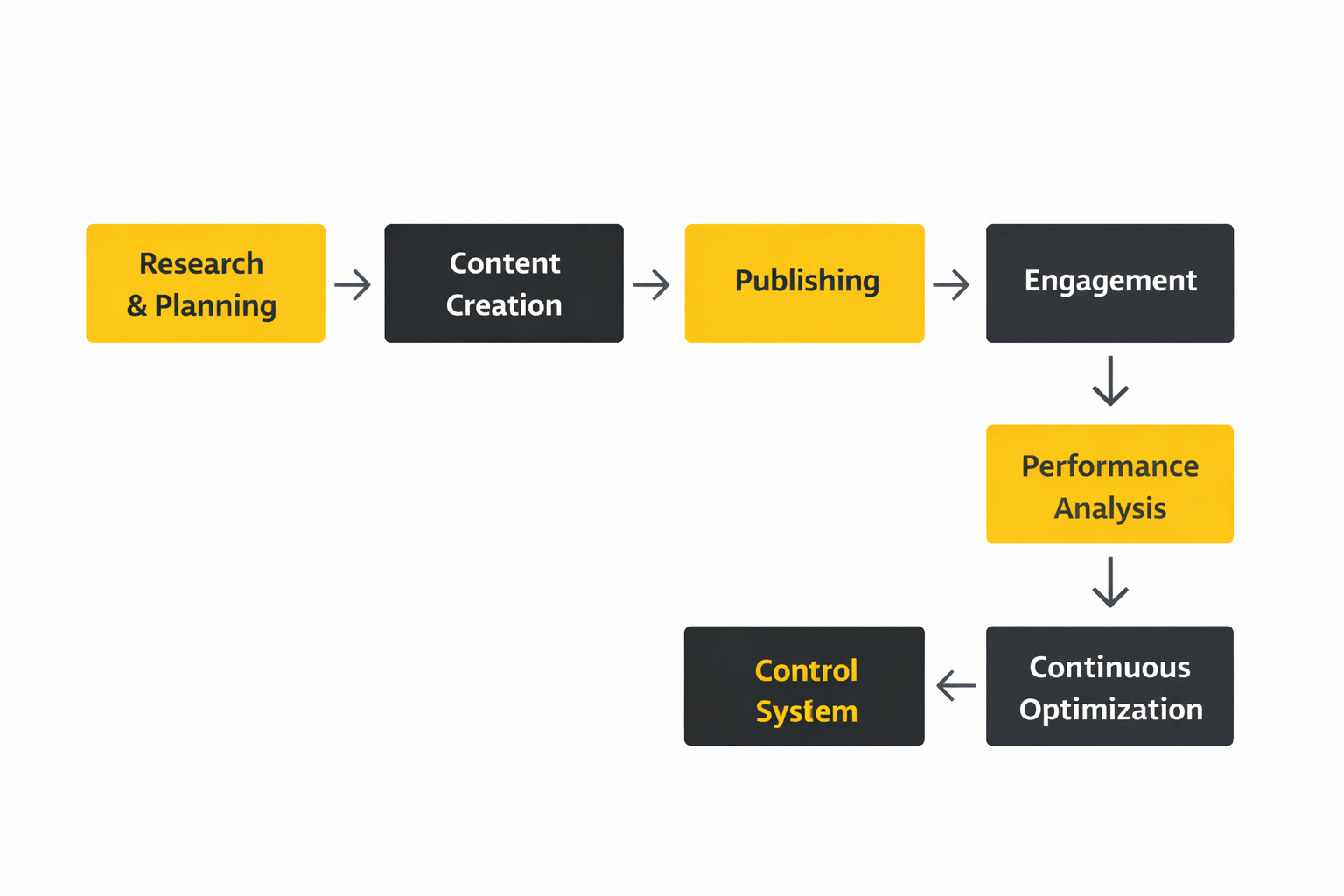
When social media management cost spirals, it’s rarely because someone chose the “wrong platform.” It’s usually because implementation skipped the boring parts: clear ownership, repeatable workflows, and measurement that makes decisions easier instead of harder.
This step-by-step approach is built to keep costs stable while you increase output quality. It works whether you’re running a solo brand account or managing a global portfolio with multiple teams.
Step 1: Lock the Scope Before You Touch Tools
Start with one page that states what you will do and what you will not do. List the platforms you’ll actively manage, the cadence you’ll publish at, the community coverage window, and how fast you intend to respond. If you can’t explain the scope in a few lines, you’ll struggle to price it—and you’ll struggle even more to control it.
Keep it honest about customer expectations. A meaningful share of consumers expect fast replies on social, with research coverage showing 32% expecting a DM response within an hour, which mirrors the underlying findings summarized from the Emplifi Social Pulse 2025 survey and is reinforced in the same dataset’s breakdown featured by MarketingCharts.
Step 2: Map the Workflow That Produces Each Post
Write the workflow as a sequence, not a wish. It should answer: who briefs the work, who creates it, who reviews it, who approves it, who publishes it, and who checks performance after it goes live. Your goal is to eliminate rework loops that quietly double labor time.
If approvals involve multiple stakeholders, define a single “final approver” and a deadline for feedback. Without that, social becomes a never-ending negotiation—and cost rises because work keeps getting redone.
Step 3: Set Community Management Rules Before Volume Hits
Community work is where social media management cost becomes unpredictable. A calm week looks cheap; a spike week becomes expensive if your team has no triage rules.
Create a simple playbook: what counts as urgent, what must be escalated, what can be templated, and what can be ignored. Then decide how you’ll measure service quality: response time, resolution time, and the percentage of cases handled within your own SLA.
Step 4: Configure Tagging So Reporting Isn’t Manual
Most “we can’t prove ROI” problems start with messy data. Tag content by format (video, carousel, static), by theme (product, education, culture), and by campaign. Tag inbound messages by topic and urgency. Once the structure is consistent, reporting becomes a quick pull, not a monthly spreadsheet project.
This is also how you protect cost. When performance is visible and comparable, you can stop investing in content types that aren’t pulling their weight.
Step 5: Put a Dollar Value on Time Saved
Implementation should pay for itself. If a tool or workflow reduces weekly effort, translate it into money and treat that as your baseline business case.
For example, the Forrester Total Economic Impact study for Sprout Social (2025–2026) models a composite organization that achieved a 60% time savings on scheduling, publishing, listening, replying, and planning, with risk-adjusted benefits quantified over three years. That kind of time-to-money translation is exactly what makes social media management cost defensible in budget reviews.
Execution Layers
The fastest way to blow up your budget is to treat “social” as one blob of work. Professional teams run social in layers, because each layer has a different cost curve and a different failure mode.
Layer 1: Strategy and Priorities
This layer decides what you will talk about, who you’re trying to reach, and what success looks like. Without it, you end up posting to fill a calendar, which creates activity without progress—and cost without clarity.
Layer 2: Content System
This is your repeatable engine: content pillars, templates, a reuse library, and production rules that match your budget. The goal is to reduce the “blank page” tax so your team spends more time improving work and less time reinventing the process.
Layer 3: Publishing and Governance
Publishing is not just scheduling. It’s approvals, access control, brand safety, and an audit trail you can trust when something goes wrong. Governance looks expensive until you’ve lived through a mis-post, an account access problem, or a public comment thread that escalates faster than your team can react.
Layer 4: Community and Customer Care
Community is where you earn trust—or lose it. It also determines staffing pressure, because response expectations can be faster than many teams assume, as shown in the shared findings from Emplifi’s 2025 consumer-brand engagement research and coverage highlighting that a sizable portion of users expect near-real-time replies. Marketing Dive’s summary
Layer 5: Analytics and Decision-Making
Analytics isn’t a dashboard. It’s a decision habit. Your reporting needs to answer: what should we do more of, what should we stop doing, and what should we test next. If reporting doesn’t drive decisions, it becomes a cost center instead of a control system.
Layer 6: Experimentation
This layer prevents stagnation. It’s where you run controlled tests on formats, hooks, posting times, and community prompts. The point isn’t to chase trends. The point is to learn cheaply, then scale what works with confidence.
Optimization Process
Optimization is what keeps social media management cost from creeping upward over time. Without it, teams slowly add more work to “be safe,” content expands into too many formats, and community standards drift because no one is measuring response quality.
The Weekly Loop That Keeps Costs Stable
- Monday: Review last week’s performance in 30 minutes. Identify the top two performers and the top two underperformers, then decide what to repeat and what to cut.
- Mid-week: Run a small test. Keep it narrow: one variable (hook, format, caption style, creative framing) so the result means something.
- Friday: Check community and service metrics: response time, SLA compliance, and what topics drove the most inbound volume. If volume is rising, adjust templates and triage rules before you add headcount.
Cost Controls You Can Measure
Cost control becomes straightforward when you track a few operational metrics that connect directly to labor hours.
- Time to produce: How many hours does a post really take, from brief to publish? Track it by format so you know what you can afford.
- Revision rate: If the same content goes through multiple cycles, the process is broken. Fix approvals before you “fix” creatives.
- Inbox volume by theme: If one recurring topic drives a large share of questions, create a pinned answer, a highlight, or a recurring explainer post to reduce inbound load.
- SLA compliance: If customers expect fast replies, but your team can’t meet the standard, you either adjust the promise or redesign the system. The expectation data summarized from MarketingCharts and the underlying Emplifi Social Pulse 2025 report makes this a budgeting issue, not just a “community” issue.
How to Prove Tools Are Paying Back Their Cost
When leaders challenge your tool budget, don’t defend features. Defend time saved.
A clean example of how to frame it appears in the Forrester TEI study for Sprout Social, which quantifies time saved on core social workstreams and models ROI. You can use the same logic even if your stack is different: calculate hours saved per week, multiply by fully burdened hourly cost, and compare it to subscription costs.
Implementation Stories
Implementation is where theory meets pressure. These stories are useful because they’re not abstract—they show what happens when a brand faces volume, risk, and global scale, then chooses a system that protects both performance and cost.
3M: Building a Global Moderation System Without Hiring a Giant Internal Center
Start at a point of high drama: Social conversations were slipping through the cracks. Different regions handled moderation differently, and the gaps were visible in the customer experience. The pressure wasn’t just about speed—it was about consistency, brand risk, and the uncomfortable feeling that the operation couldn’t scale.
Backstory: 3M is enormous and complex, with operations across many countries and a massive product footprint. The team responsible for media technology and governance had to protect brand reputation while enabling regional teams to engage customers in real time. Over time, the mix of full-time staff, contract workers, and agencies created fragmented practices that were hard to coordinate.
Wall: The wall was scaling moderation across dozens of countries and multiple languages without losing control. Hiring a large internal global service center was difficult to scale across regions, while leaning on a global agency came with a price tag that didn’t feel sustainable. On top of that, inconsistent moderation meant the brand couldn’t reliably learn from customer conversations or build repeatable improvements.
Epiphany: The breakthrough came when the team treated moderation as a system problem, not a staffing problem. Instead of defaulting to “hire more people,” they looked for a model that could standardize workflows and expand language coverage without building everything from scratch. The reasoning behind that choice is described directly in 3M’s customer story, including why an internal build or agency approach didn’t fit their scale.
Journey they went on: The implementation work focused on foundations: centralizing FAQs, documenting escalation paths, running brand training, and putting approval workflows in place. They also built crisis management rules with keyword-based escalations and scenario planning so sensitive situations didn’t rely on luck. Over time, they expanded capabilities, adding ad comment moderation and stronger reporting, while integrating the platform with other marketing technology to reduce tool fatigue.
Final conflict: AI introduced a new kind of risk: faster output can also mean faster mistakes if governance is weak. The team leaned into AI translations to speed multi-language workflows, while keeping human review for compliance and legal needs. That balance—speed with safeguards—is exactly where cost control and brand protection meet.
Dream outcome: The measurable results were dramatic: 90% reduction in case response time and a 75% reduction in SLA, with their average community management SLA reported as less than 11 hours in the same story. 3M’s published results and implementation narrative This is what “social media management cost” looks like when implementation is treated as operations: a scalable system that improves service and reduces inefficiency at the same time.
Uber: Treating Social Customer Care Like a Global Operations Problem
Start at a point of high drama: Millions of messages can turn any social channel into a high-stakes service environment. When customers raise safety concerns or urgent issues, the difference between a fast triage and a slow one isn’t cosmetic—it’s operational risk. Uber’s scale meant small inefficiencies could quickly compound into visible service breakdowns.
Backstory: Uber operates across thousands of cities and dozens of countries, and that kind of growth demands a system that can keep a consistent brand voice while supporting local realities. Social wasn’t just marketing; it was a channel where customers spoke up in real time. Over time, the need for proactive listening and better routing became more than a “nice upgrade”—it became a requirement for safe, scalable care.
Wall: The wall was clear: global growth plus rising expectations meant response time pressure would keep increasing. The company needed to publish and manage content across hundreds of handles, listen for critical issues, and serve more customers faster—without turning the solution into endless headcount growth. If the system couldn’t triage and route issues quickly, the organization would always be reacting late.
Epiphany: The shift happened when Uber approached the problem as a unified workflow: publishing, listening, routing, and service needed to operate as one connected system. That logic is described in Uber’s customer story, including the operational requirements they set for a global solution. The goal wasn’t simply “better social”—it was consistent service at scale.
Journey they went on: Uber expanded capabilities across time: implementing social management for global publishing, adding insights for proactive listening and rapid-response routing, and scaling seats for community managers as volume grew. They also used automation and AI to triage and prioritize inbound volume, then ramped to a large global agent footprint with a focus on proactive customer service. The story describes the scale explicitly, including roughly four million inbound messages per year across major platforms. Implementation timeline and scale details
Final conflict: Scaling doesn’t remove complexity; it amplifies it. Every new region adds languages, cultural nuance, and operational constraints that can break brittle processes. The ongoing challenge was maintaining speed and safety while the business continued to expand and volumes shifted unpredictably.
Dream outcome: Uber reported a 33% reduction in first response time, an 8% improvement in case response SLA, and an 89-second reduction in average case handling time, while also saving agents more than 4,000 hours since launch of the service component described in the same story. Uber’s published results This is a strong reminder that smart implementation can reduce labor pressure—one of the biggest drivers of social media management cost—without lowering the bar on customer experience.
The Implementation Checklist That Prevents Cost Creep
- One owner for outcomes: One person is accountable for performance and cost control, even if work is distributed across creators, community managers, and agencies.
- One source of truth for approvals: A single workflow that makes it obvious what is pending, what is approved, and what needs revision.
- Written service standards: Response windows, escalation rules, and tone guidelines aligned with real expectation data from sources like the Emplifi Social Pulse 2025 research and its summaries. One-hour DM expectation coverage
- Tagging that makes reporting fast: If your team can’t generate a clean performance snapshot quickly, the system will drift and budget waste will hide.
- A standing optimization cadence: Weekly performance review, monthly strategic recalibration, and quarterly scope checks so the operation doesn’t slowly expand without budget adjustments.
What “Good” Looks Like After 30 Days
After the first month, you should be able to answer these questions without digging through inboxes or exporting spreadsheets:
- Can we ship consistently? Content moves from brief to publish without last-minute drama.
- Do we meet our service promise? Response times and SLA compliance are visible, even if you’re still improving them.
- Do we know what’s working? Performance is organized by tags, formats, and themes, so decisions are grounded in patterns.
- Is cost behavior predictable? You can explain why the monthly social media management cost is what it is—and what would make it go up or down.
Why This Matters for the Next Phase
Once implementation is stable, your budget conversation gets easier. Instead of arguing over vague deliverables, you can talk about levers: more coverage hours, higher production intensity, deeper analytics, or stronger governance. That’s where the next part goes—turning a stable system into a performance engine without losing control of cost.
Statistics and Data
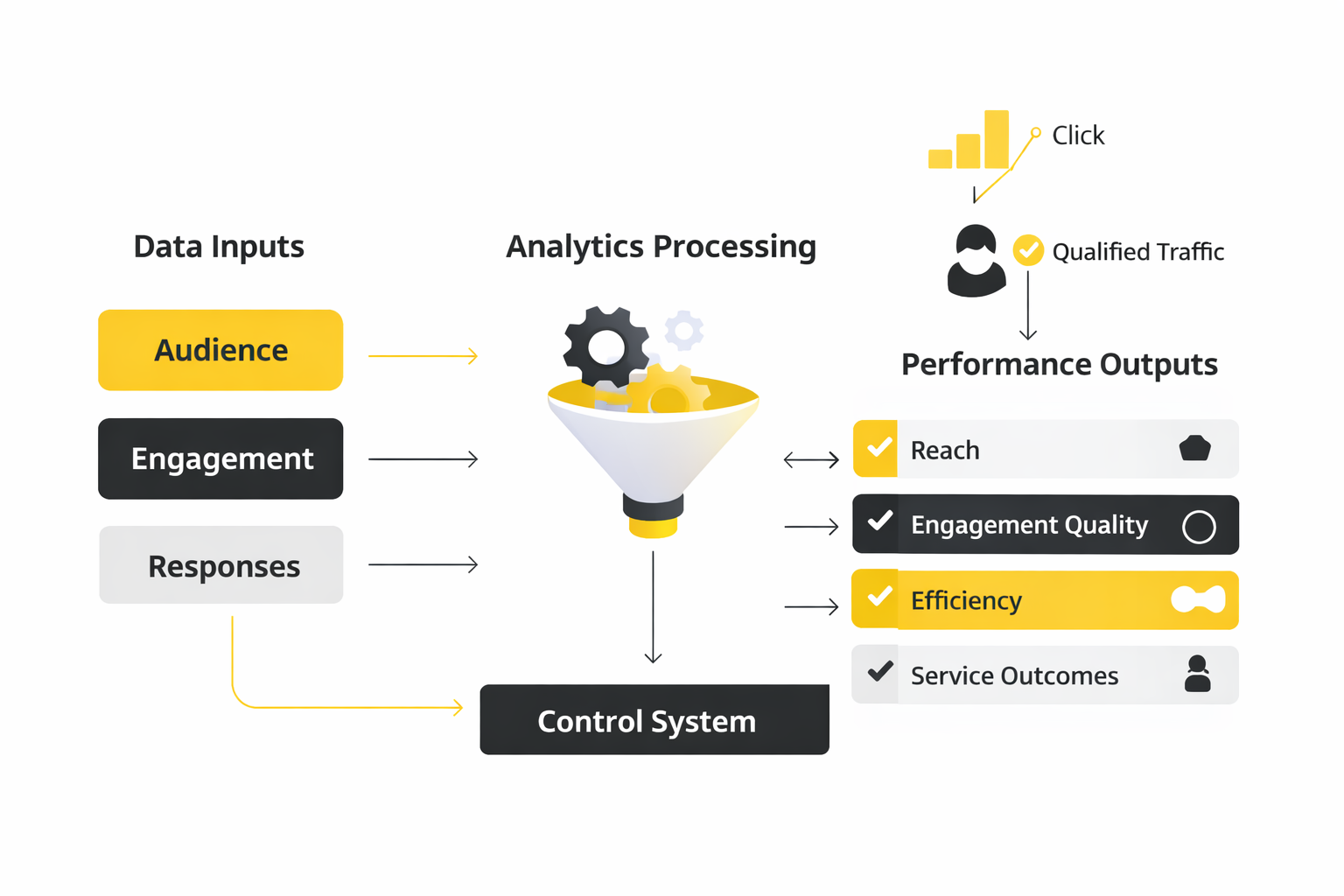
Analytics is the part of social that turns opinions into decisions. It’s also the fastest way to keep social media management cost under control, because it shows you where time and budget are actually going, not where everyone thinks they’re going.
To make data useful, treat it like a budget tool. The numbers you track should answer three practical questions: what work is paying off, what work is quietly wasting time, and what needs to change before the next month’s cost locks in.
Operational Data That Explains Cost
- Inbound volume: Number of DMs, comments, and mentions that require a response. This is the clearest predictor of staffing pressure.
- First response time: How fast you acknowledge a customer. Fast response is not a vanity metric when roughly one-third of consumers expect replies to tags and DMs within one hour, a figure echoed in independent coverage and summaries. One-hour DM expectation coverage Parallel summary
- Resolution time: How long it takes to actually solve the issue. If this climbs, your team isn’t just slower; it’s doing more work per case.
- Case handling time: Minutes spent per interaction. This metric is where automation, templates, and knowledge bases either save money or fail to.
- Revision rate: How many cycles content goes through. High revision rates are a hidden tax that inflates labor costs without improving outcomes.
Performance Data That Justifies Spend
- Reach and impressions: Useful for diagnosing distribution, especially when platform dynamics change and organic visibility shifts.
- Engagement rate: Best used as a directional signal, not a trophy. Cross-referencing benchmarks matters because methodologies differ. The Rival IQ 2025 benchmark report and Socialinsider’s 2026 benchmark roundup show very different baselines by platform, and that’s exactly why you should compare like-for-like inside your own reporting.
- Shares and saves: Increasingly useful “intent” signals when the goal is content that travels. Dash Social’s benchmarks highlight shares rising sharply on major platforms, including shares up 31% on TikTok and 86% on Instagram.
- Traffic and assisted conversions: The metrics leadership trusts most, especially when you can connect social content themes to downstream results.
- Brand sentiment and topic trends: Most valuable when it feeds decisions beyond marketing, like product feedback and service issue detection.
Performance Benchmarks
Benchmarks are only helpful when you use them to make a decision. They’re not a performance grade; they’re a way to set realistic expectations and prevent wasted effort that drives up social media management cost.
Organic Engagement Benchmarks
Engagement rates vary wildly by platform and how they’re measured. The most reliable way to use benchmarks is to pick one methodology, stick with it for a full year, and only compare against sources that use a similar definition.
- Multi-industry platform medians: The Rival IQ 2025 Social Media Industry Benchmark Report analyzes millions of posts and shows engagement trends shifting downward across major platforms year over year, a useful reminder that “more work” doesn’t always buy “more engagement.”
- Cross-platform snapshot: Socialinsider’s 2026 benchmarks summarize average engagement rates across major networks and highlight that TikTok and Instagram behave very differently from Facebook, which matters when you’re deciding where your production budget should go.
- Format-level guidance: Dash Social’s Instagram benchmark highlights carousels leading on reach and engagement and provides concrete reference points for format choices. Dash Social’s 2025 Instagram benchmark takeaways
Customer Care Benchmarks That Drive Staffing Cost
Customer expectations are a cost driver because they set the minimum service standard your brand will be judged against in public.
- One-hour expectation pressure: The Social Pulse research shows roughly one-third of consumers expect replies to tags and DMs within one hour, and coverage of the same finding reinforces how mainstream that expectation has become. Marketing Dive summary Social Media Today summary
- 24-hour “minimum acceptable” standard: Sprout Social’s Index-based reporting notes nearly three-quarters of consumers expect a response within 24 hours or sooner, which is a baseline expectation many brands treat as non-negotiable for social care.
- What people value most: Hootsuite’s consumer trends coverage highlights that quick responses are one of the most appealing things brands can do on social, which helps explain why community coverage becomes a budget priority once you scale. Consumer trends summary referencing Hootsuite’s report
Productivity Benchmarks That Justify Tool Spend
Tools should be evaluated like any other operational investment: how much time do they save, and how does that translate into cost control?
- Time savings model: The Forrester Total Economic Impact study for Sprout Social (2025–2026) quantifies time savings on core activities like publishing, engagement, and planning, and it provides a structure for translating time saved into a financial case.
- ROI framing for leadership: The same TEI findings are summarized publicly with specific quantified benefits like reduced reporting time and time savings tied to publishing and scheduling. Public summary of the Forrester study’s quantified benefits
Analytics Interpretation
Numbers are easy. Interpretation is the hard part, and it’s where most teams either gain control of social media management cost or lose it.
A clean interpretation habit keeps you from chasing vanity outcomes and accidentally funding work that looks busy but doesn’t move anything forward.
Three Interpretation Rules That Keep You Honest
- Rule 1: Tie every metric to a decision. If a number won’t change what you do next week, it’s not a KPI. It’s trivia.
- Rule 2: Separate distribution problems from creative problems. If reach drops platform-wide, better creative might not solve it. That’s why broad benchmarks like Rival IQ’s platform trend analysis can help you avoid blaming your team for algorithm shifts.
- Rule 3: Interpret engagement by intent, not volume. A “like” is lightweight. A share is someone betting their reputation on your content. Dash Social’s reporting on shares growing quickly is a useful signal that intent metrics are becoming more important for performance strategy. Dash Social benchmark release
The Cost Lens: Turning Analytics Into Budget Control
If you want analytics to protect your budget, interpret results through cost behavior:
- What content format is expensive but underperforming? If a format takes three times longer to produce and performs worse than simpler formats, you’ve found a direct cost leak.
- What inbound topics are creating repetitive work? If one topic drives a large chunk of messages, solve it upstream with pinned content, a highlight, or a recurring explainer. That reduces inbound volume and lowers staffing pressure.
- Where is the team doing “invisible work”? Rework, duplicated replies, and manual reporting rarely show up in dashboards unless you track them. The TEI style approach helps because it quantifies time saved as a measurable benefit. Time-savings measurement model
A Simple Scorecard That Leaders Actually Understand
Keep your reporting tight enough that a busy stakeholder can read it in two minutes.
- Growth: Reach, impressions, follower growth rate (only if audience growth is a true goal).
- Engagement quality: Shares, saves, comments, and engagement rate, benchmarked against your own last quarter and trusted external baselines. Cross-platform engagement baselines
- Service: First response time, resolution time, and SLA compliance, tied to expectation data. One-hour expectation benchmark 24-hour expectation benchmark
- Efficiency: Hours spent, posts produced, revision rate, and reporting time, with a month-over-month trend line.
Case Stories
Analytics feels optional until the pressure hits. These stories show how measurement and operational discipline can change cost behavior, not just performance.
AkzoNobel UK: The Moment Response Time Became a Reputation Risk
Start at a point of high drama: Customers were waiting, and the clock was visible. Hours without a reply felt like a public admission that no one was listening. The longer the silence, the more the frustration spread, and every delay raised the risk that a single complaint would turn into a thread everyone could see.
Backstory: AkzoNobel UK supports well-known brands and serves customers who don’t separate “marketing” from “service.” People ask questions, report issues, and expect a useful answer, quickly. Over time, social became one of the places customers naturally went first, because it was faster than traditional channels when it worked.
Wall: The team hit the wall when response time became unpredictable. Even with good intentions, volume spikes and scattered workflows made it hard to keep pace. And when response times stretch into hours, the cost isn’t just staffing time; it’s the compounded cost of dissatisfaction, repeat follow-ups, and reputational drag.
Epiphany: The breakthrough was treating response time as an operational metric with the same seriousness as any other service KPI. That meant centralizing work, tightening workflows, and making measurement unavoidable. The point wasn’t to “look good” on a dashboard; it was to redesign the system so performance didn’t depend on heroics.
Journey they went on: The team focused on operational visibility: measuring response time consistently and using those metrics to guide process changes. They used tooling and workflows to reduce delays, coordinate responses, and gain clearer insight into customer needs across the journey. As the system stabilized, the team could respond faster without increasing chaos or relying on individual effort to carry the load.
Final conflict: Improving speed is easy for a week and hard for a year. New peaks in volume, team changes, and shifting customer expectations can break fragile systems. The team had to keep refining workflows so speed improvements didn’t collapse the moment pressure returned.
Dream outcome: The published case study reports the average response time dropping from 5 hours and 42 minutes to 70 minutes, framed as an 80% decrease in a single year, with even faster response times during weekday work hours. AkzoNobel UK response time story This is what analytics-driven cost control looks like: response time improves because the operation improves, not because the team simply works harder.
Jackson Hewitt: When Thousands of Locations Needed One Voice
Start at a point of high drama: The feedback was everywhere, all at once. Reviews came in from thousands of locations, and every unanswered complaint risked turning into a local reputational problem. The team could feel the weight of scale: one brand, but thousands of public conversations happening without a single consistent system.
Backstory: Jackson Hewitt has a huge footprint, and that footprint creates a unique social challenge: customers don’t experience “headquarters,” they experience the location they visited. Reviews and social feedback shape trust, and trust is fragile when service experiences vary. Over time, managing that feedback became less about marketing polish and more about operational responsiveness.
Wall: The wall was time. Responding thoughtfully across thousands of locations can devour human hours, and inconsistent replies create brand risk. If the team tried to brute-force it with manual processes, social media management cost would climb without guaranteeing better outcomes.
Epiphany: The turning point was realizing that the operation needed central visibility and controlled consistency. That meant pulling feedback into one place, standardizing approved responses, and using automation carefully to remove repetitive work without sounding robotic. The goal wasn’t to “automate customer care.” It was to protect quality while cutting the time tax.
Journey they went on: The published story describes centralizing Google review responses from over 5,200 locations, enabling the team to see feedback in one dashboard and generate personalized replies using AI supported by a library of pre-approved responses. With clearer visibility, the team could measure performance, manage consistency, and reduce the manual effort of handling the same patterns again and again. That shift changes the economics: fewer minutes per case means fewer labor hours burned across the year.
Final conflict: At this scale, the danger is losing authenticity. Customers can tell when responses are generic, and a templated approach can backfire if it feels dismissive. The team had to balance speed with brand voice, using guardrails to keep replies human while still benefiting from efficiency gains.
Dream outcome: The story reports an 80% reduction in average case-handling time while maintaining a consistent brand voice across locations. Jackson Hewitt example and outcome This is a cost story as much as a service story: when handling time drops, social media management cost becomes easier to predict and easier to justify.
Professional Promotion
This isn’t about promoting a product. It’s about promoting your social program internally so it keeps the budget it deserves. When leadership sees social as “posts,” they negotiate your budget like a discretionary expense. When they see it as a measurable operating system, the conversation shifts.
Position Social Analytics as a Cost-Control System
Make the argument simple: analytics reduces waste. It prevents overspending on formats that don’t perform, highlights rework that inflates labor costs, and protects service standards that would otherwise require reactive hiring.
Expectation data is your ally here because it turns community coverage into a real business requirement. It’s hard to dismiss response time when consumer expectation data consistently points to replies within 24 hours and when a substantial share of people want answers far sooner. One-hour DM expectation
Use a Two-Minute Executive Readout
Send a short monthly update that does three things:
- States what changed: “Shares rose,” “response time dropped,” “revisions fell,” “inbound volume spiked.”
- Explains why it matters: Tie changes to customer experience, pipeline support, or risk reduction.
- Declares the next decision: “We’re reallocating production time,” “we’re tightening triage,” “we’re testing a new format,” “we’re adjusting coverage hours.”
Defend Budget With Time Saved, Not Opinions
When budget questions come up, translate time into money. This framing is easy to defend because it’s operational. The TEI model is useful because it shows how time savings on planning, publishing, and engagement can be quantified and reviewed like any other efficiency gain. Time savings framework in the TEI study Quantified benefits summary
If you consistently show what you stopped doing, what you improved, and what that saved, your social media management cost stops looking like a guess and starts looking like a controlled investment.
Future Trends
The next 12–24 months will make social media management cost feel more like operations than “marketing support.” Budgets are staying tight, expectations are rising, and the work is spreading across content, community, customer care, and analytics in a way that’s hard to separate.
These trends are the ones most likely to change what you pay for—and how you defend it.
- Budget pressure will force productivity-first decisions. Many teams are being asked to grow outcomes without growing headcount, especially with marketing budgets reported as flat at 7.7% of company revenue in 2025. That reality pushes social teams toward tighter systems, fewer wasted formats, and clearer measurement.
- Human + AI workflows will replace “AI-only” fantasies. Customers are increasingly skeptical of AI-only service experiences, with recent reporting on a YouGov survey for Pega highlighting low confidence in how businesses use generative AI in customer interactions. This will influence community management and social care budgets: the money will shift toward agent augmentation, better routing, and quality control rather than replacing people outright.
- Response-time expectations will keep pulling social into customer care. Consumer research continues to show aggressive expectations for quick replies, including the Social Pulse findings showing a sizable share expecting responses within an hour. The cost implication is simple: if you promise speed, you must staff and tool for it.
- Benchmarks will matter more because organic distribution is getting harder to “feel.” When performance becomes volatile, teams need grounded baselines to avoid overreacting. The Socialinsider 2026 benchmarks and the Rival IQ 2025 benchmark report both show meaningful shifts in engagement behavior across major platforms, which is exactly why “we’ll just post more” is becoming a more expensive and less reliable strategy.
- Cost control will shift from “how many posts” to “how fast we learn.” The teams that win won’t necessarily publish the most. They’ll build tighter feedback loops: cleaner tagging, faster reporting, and weekly experimentation that improves output without adding labor.
Strategic Framework Recap

When you zoom out, social media management cost becomes easier to understand as an ecosystem. Every expense sits in one of a few predictable places, and the smartest teams keep the system balanced so one area doesn’t silently inflate the others.
- Coverage: The platforms you manage, your publishing cadence, and how quickly you respond.
- Capability: The level of work you’re committing to (strategy, production intensity, social care, creator ops, reporting depth).
- Complexity: Approvals, compliance, stakeholder count, regions, and product lines that add coordination overhead.
- Cost components: Labor, tooling, production, and growth spend (paid and creators).
- Control system: Tagging, reporting cadence, optimization habits, and governance that reduces rework and prevents “surprise scope.”
Use the framework as a decision tool, not just a budgeting tool. If marketing budgets remain flat, productivity has to come from better systems and sharper priorities, not simply adding output. The budget context in Gartner’s CMO Spend Survey coverage is a helpful reality check for why this discipline matters now.
FAQ – Built for This Complete Guide
What actually drives social media management cost the most?
Labor and rework. Tools matter, but the biggest drivers are production time, revision cycles, community coverage expectations, and how many stakeholders are involved. If your approvals loop is messy, your real cost inflates even if your monthly tool stack stays the same.
Is there a “normal” monthly cost range for social media management?
There’s no universal number because cost depends on scope and expectations. A practical way to ground the conversation is to start with market rates for the talent model you’re considering, then layer in tooling and production. For example, marketplace rate ranges like social media manager hourly bands are useful as directional anchors before you define deliverables and service levels.
What’s cheaper: in-house, freelancer, or agency?
It depends on how much capability you need and how much coordination you can handle internally. In-house can be cost-effective when social is core and you need tight alignment. Agencies can be cost-effective when you need a full team fast. Freelancers can be cost-effective when scope is narrow and your workflow is clear. Pricing guides like Clutch’s social media marketing cost benchmarks can help you sanity-check retainer expectations, but your scope definition still determines the real value.
What should always be included in a social media management package?
At minimum: planning, publishing, basic community monitoring, and reporting that’s frequent enough to inform decisions. If you’re promising quick customer replies, you also need a defined inbox workflow and coverage window, because response expectations are not hypothetical. The expectation signals summarized in Emplifi’s Social Pulse findings make community coverage a real cost driver.
How many platforms should a small team manage without breaking the budget?
As a rule, fewer platforms with higher consistency beats spreading thin across every network. If you can’t maintain cadence and community standards on a platform, it becomes an expensive distraction. Use benchmarks to prioritize where your audience actually engages, then scale selectively. Cross-platform behavior differences in Socialinsider’s 2026 benchmarking can help inform that decision.
When do tools become necessary instead of “nice-to-have”?
When manual work becomes the bottleneck: approvals are chaotic, reporting takes hours, or message volume makes response time unpredictable. If a tool reduces time spent on scheduling, engagement, and planning, that time savings can be translated directly into cost control, using the financial framing shown in the Forrester TEI study model.
Why does social media management cost keep rising over time?
Scope creep. Teams add platforms, formats, stakeholders, and coverage expectations without redesigning workflow. The fix is budget gates: if you add something, define what will be reduced, templated, or automated elsewhere.
How do you price community management and social customer care?
Price it like service: by coverage hours, expected response window, volume assumptions, and escalation complexity. Customer trust in AI-only support is shaky, so “we’ll automate it” is rarely enough on its own. The consumer skepticism described in recent reporting on AI customer service trust is one reason many brands keep humans in the loop.
Will AI reduce social media management cost?
AI can reduce cost when it cuts handling time and removes repetitive work (drafting first replies, tagging, summarizing threads, routing). It increases cost when it encourages more output without strategy and forces more cleanup. The best path is augmentation: speed up humans while keeping quality guardrails.
What metrics should leadership care about the most?
Metrics tied to decisions: content performance (reach and engagement quality), efficiency (hours, revisions, reporting time), and service (first response time, resolution time, SLA). Engagement benchmarks from sources like Rival IQ’s platform analysis help set realistic expectations, while response-time expectation signals from Emplifi’s consumer research help define service standards.
How do you avoid overpaying for social media management?
Force clarity: write scope, deliverables, revision limits, and coverage expectations down in plain language. Then measure time saved and outcomes improved. If reporting is manual and slow, you’re often paying twice: once for execution and again for interpretation.
What’s the fastest way to get started without making expensive mistakes?
Start with a minimum viable stack and a minimum viable scope. One or two platforms, a consistent cadence, a simple approval path, and a weekly optimization loop. Expand only when the system is stable and you can explain what added scope will cost and why it’s worth it.
Work With Professionals
If you’ve made it this far, you already know the uncomfortable truth: social media management cost isn’t hard because the work is mysterious. It’s hard because the work is judged publicly, changes fast, and gets pulled into everything—brand, growth, customer care, hiring, even product feedback—often without the budget changing to match.
That’s exactly why strong marketers can build a real career here. Companies don’t just want “someone to post.” They want operators who can run the system: define scope, build workflows, manage tools, protect brand voice, and prove impact with clean reporting—without letting costs drift.
When you’re ready to turn that skill into consistent client work, Markework is built around a simple idea: remove the friction that makes freelancing feel like a grind. The platform is positioned as a focused marketplace where you can build a profile, browse opportunities, and connect directly with teams that need marketing talent—without commissions or per-project fees. Markework’s marketplace overview
Instead of paying a middle layer to “manage” the relationship, the model is straightforward: predictable monthly plans and direct communication, so you keep control of scope, timelines, and pay. The pricing page spells it out clearly with no project fees and no commissions, plus access to thousands of listings and the ability to message companies directly.
The best part is momentum. When a marketplace has real activity, you can stop hunting for random gigs and start building a pipeline. Markework publicly shows 1,000+ active listings and locks the full list behind an account, which is exactly the kind of environment where specialists can get discovered and close faster.
If you want more freelance clients in social, growth, SEO, lifecycle, content, paid, or analytics, build a profile that makes your value obvious in 30 seconds: your niche, your outcomes, your rates, and your process. Then apply with intention—only to work where you can actually win and deliver. And when you land the project, use the same framework from this guide to keep results high and scope clean, because the marketers who control cost are the ones clients keep.
 Filip Konecny Enterprises