

Every brand wants attention. Very few know how to earn it consistently.
Publishing randomly, chasing trends without strategy, or delegating content to whoever has “a bit of time” rarely leads to measurable growth. What separates brands that dominate feeds from those that disappear after a few posts is not luck — it is structure, systems, and expertise.
This is where a social media content agency becomes more than an outsourced creative team. It becomes the strategic engine behind visibility, engagement, and long-term brand positioning.
Article Outline
- What a Social Media Content Agency Really Does
- Why a Social Media Content Agency Matters for Modern Brands
- The Strategic Framework Behind High-Performing Content
- Core Components of an Effective Content Operation
- How Professional Implementation Drives Sustainable Results
What a Social Media Content Agency Really Does

A social media content agency is a specialized partner that plans, produces, distributes, and optimizes digital content across social platforms with a clear business objective in mind. Its purpose is not simply to “post regularly.” It is to align content strategy with revenue goals, audience psychology, and platform mechanics.
Unlike a freelance designer or an in-house assistant juggling multiple tasks, a dedicated agency operates as an integrated unit. Strategists define positioning and messaging. Creative teams transform ideas into scroll-stopping visuals and narratives. Analysts measure performance and refine direction based on data.
The result is cohesion. Messaging feels intentional. Campaigns connect to broader brand objectives. Content evolves with the audience instead of repeating the same ideas month after month.
Most importantly, a social media content agency bridges the gap between brand identity and audience behavior. It understands not just what a company wants to say, but how people actually consume content on each platform.
Why a Social Media Content Agency Matters for Modern Brands
Organic reach is competitive. Attention spans are short. Algorithms reward consistency, engagement, and clarity of message. In this environment, casual content creation is expensive — not in direct cost, but in missed opportunity.
When brands manage social channels without a structured approach, they often face predictable challenges:
- Inconsistent brand voice across platforms
- Unclear messaging that confuses potential customers
- Irregular posting cycles that weaken audience retention
- Difficulty translating engagement into measurable business results
A social media content agency addresses these gaps with systems rather than guesswork. Instead of reacting to trends, it builds a content roadmap. Instead of chasing vanity metrics, it defines performance indicators aligned with lead generation, sales pipelines, or brand authority.
This matters because social platforms are no longer secondary marketing channels. For many audiences, they are the first touchpoint with a brand. That first impression influences trust, credibility, and purchase decisions long before a sales conversation begins.
Brands that treat social presence as strategic infrastructure — not an afterthought — position themselves for sustainable growth rather than short bursts of attention.
The Strategic Framework Behind High-Performing Content
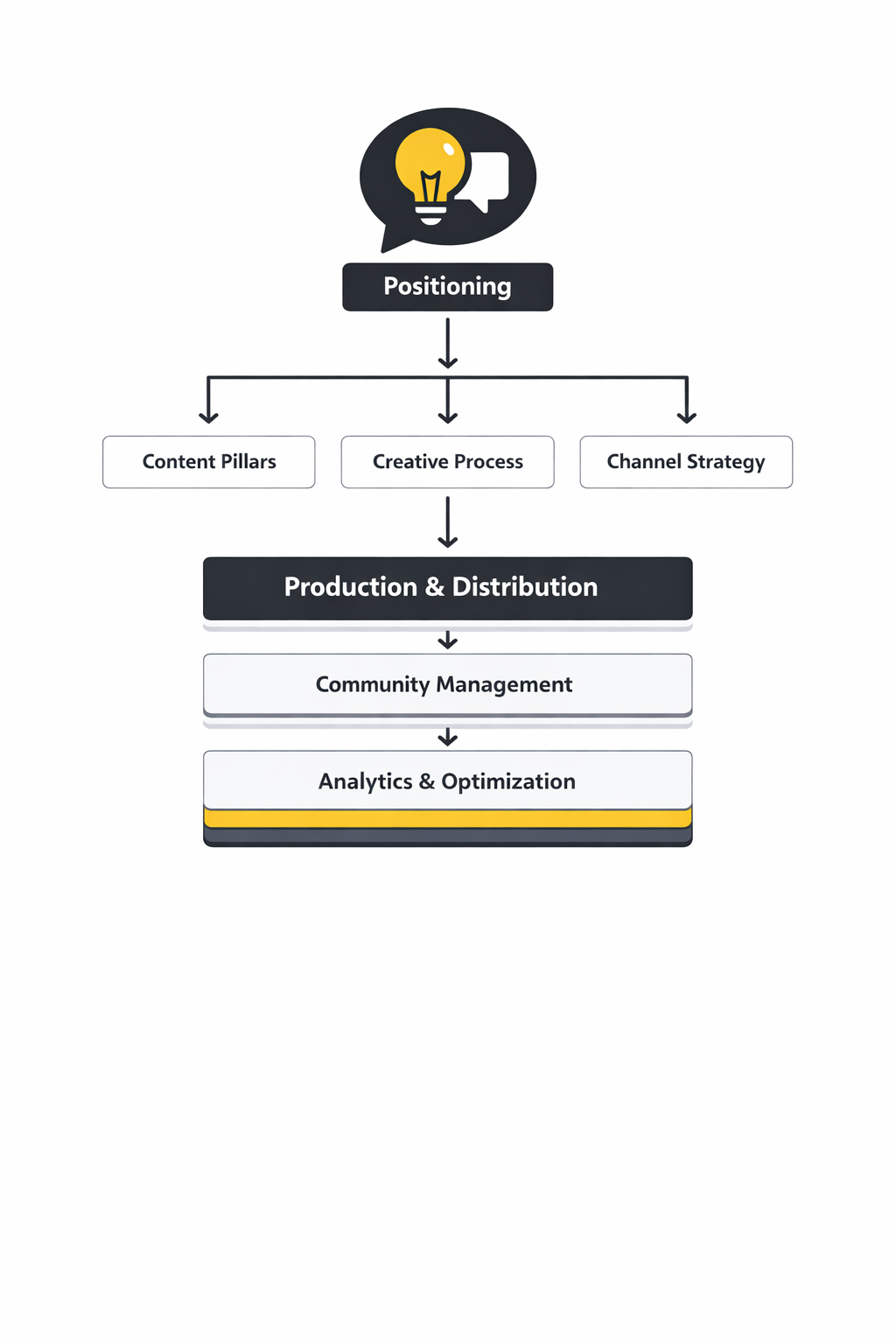
Behind every effective social presence is a structured framework. A professional social media content agency does not rely on inspiration alone. It follows a repeatable process that ensures clarity, alignment, and adaptability.
The framework typically begins with positioning. Who is the brand speaking to? What unique perspective does it bring to the market? Without this foundation, even beautifully designed content struggles to create lasting impact.
Next comes content architecture. This defines core themes, content pillars, and narrative angles. Instead of random topics, the brand communicates through recurring themes that reinforce authority and relevance.
Distribution strategy follows. Each platform has distinct expectations, formats, and audience behaviors. A framework adapts content to fit these environments while maintaining a consistent brand identity.
Finally, measurement and iteration close the loop. Performance insights are not viewed as a final score, but as feedback. They guide refinement in messaging, creative direction, and timing — creating a cycle of continuous improvement.
This structured approach transforms content from isolated posts into a coordinated ecosystem.
Core Components of an Effective Content Operation
To understand how a social media content agency delivers consistent results, it helps to break down the essential components that support execution.
Strategic Planning
Every campaign begins with a documented plan. Objectives, target segments, messaging priorities, and timelines are clearly defined. This reduces reactive decision-making and aligns creative work with business outcomes.
Creative Production
High-quality visuals, compelling copy, and platform-native formats are developed with intention. Creative production balances brand consistency with experimentation, ensuring content remains recognizable yet fresh.
Editorial Consistency
A content calendar ensures predictable output. Audiences begin to expect value at consistent intervals, which strengthens brand familiarity and trust over time.
Performance Analysis
Metrics are interpreted within context. Engagement trends, audience growth patterns, and conversion signals inform future decisions. The goal is not simply to report numbers, but to understand what they reveal about audience behavior.
When these components operate together, content becomes more than communication. It becomes an asset that compounds in value.
How Professional Implementation Drives Sustainable Results
Execution determines whether strategy remains theoretical or translates into measurable growth. Professional implementation is where many internal teams struggle — not due to lack of ambition, but due to limited time, fragmented expertise, or competing priorities.
A social media content agency introduces discipline into execution. Deadlines are respected. Creative standards are maintained. Performance reviews occur regularly rather than sporadically.
Equally important is perspective. External specialists often identify positioning opportunities or messaging gaps that internal teams may overlook. This outside viewpoint adds clarity and strategic depth.
Over time, structured implementation builds momentum. Audience trust increases. Brand authority strengthens. Content production becomes efficient rather than stressful. Instead of constantly asking what to post next, brands operate within a proven system that evolves intelligently.
In a digital landscape where attention is earned daily, not annually, partnering with a social media content agency can shift social presence from reactive activity to strategic advantage.
Step By Step Implementation
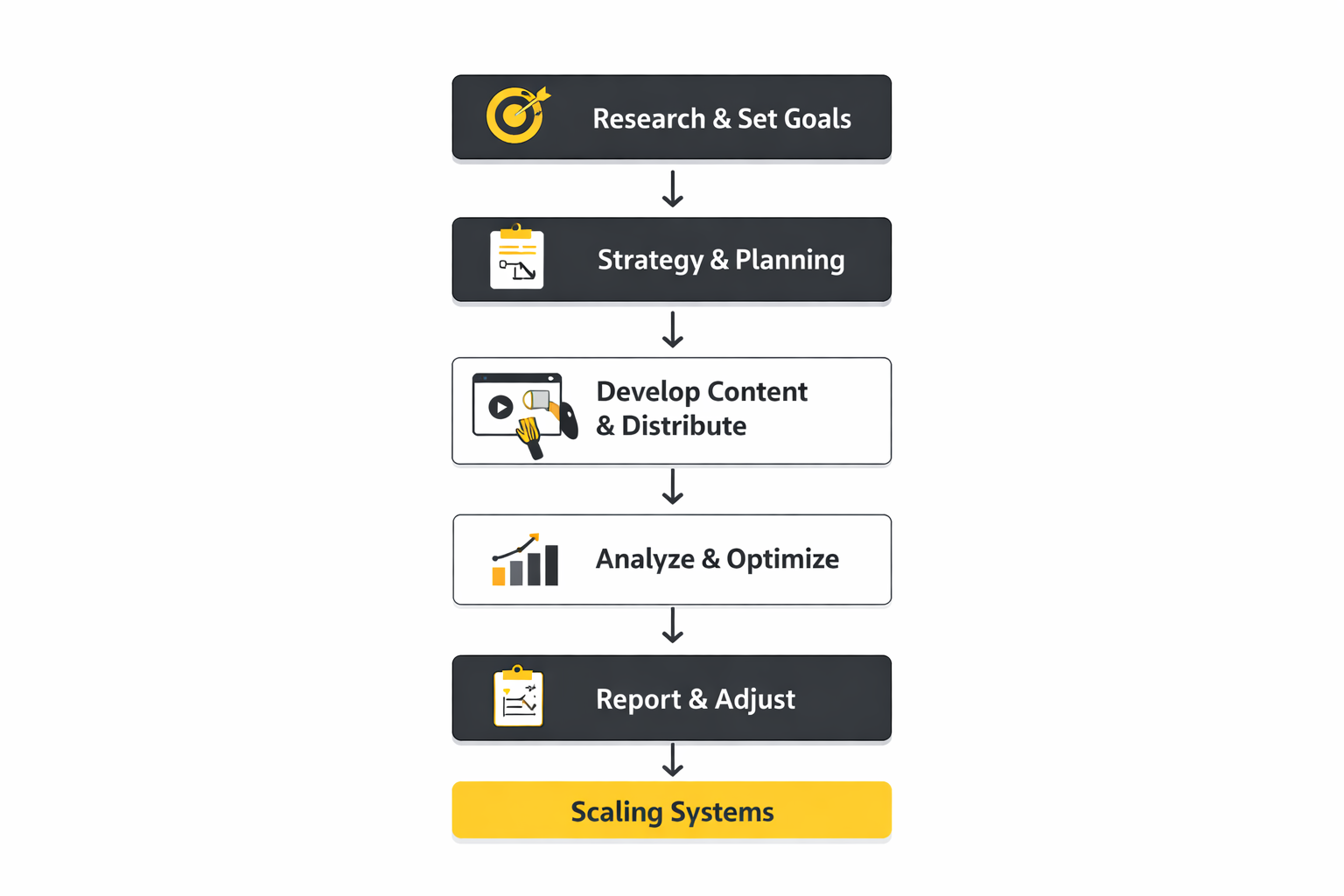
The fastest way to make a social media content agency valuable is to make outcomes predictable. That doesn’t happen from talent alone. It happens when the work moves through a repeatable pipeline that protects quality, prevents bottlenecks, and still leaves room for creative surprise.
This implementation sequence is designed for real teams: multiple stakeholders, multiple platforms, and limited patience for “let’s brainstorm later.” Each step builds on the last, so you don’t end up optimizing a process that was never stable in the first place.
Step 1: Set the North Star and the guardrails
Start with one primary outcome the business can actually feel. For one brand, that might be qualified demo requests. For another, it’s reducing support load by resolving issues in public threads before they become tickets. The goal is to make the work measurable without turning social into a spreadsheet contest.
Then set guardrails that keep you out of trouble: approved claims, do-not-touch topics, and how fast the brand commits to responding. Consumer expectations are not gentle here—Sprout Social’s 2024 annual filing cites Index findings showing nearly three-quarters of consumers expect a response within 24 hours or sooner, and many will switch to a competitor if ignored.
A social media content agency that agrees on outcomes and guardrails upfront avoids the most expensive failure mode: producing “great content” that no one can defend, measure, or scale.
Step 2: Build the briefing system before you build the content
Briefs are where speed comes from later. A good brief doesn’t just say what to post—it makes decisions easy: audience, angle, format, proof points, and the one action you want people to take next.
If you want a simple operational benchmark, treat the comment section as input, not noise. Duolingo’s team famously framed this mindset as “the comment section is our social brief,” in a deep look at their social-first approach shared with Adweek’s coverage of Duolingo’s strategy.
In practice, that means your social media content agency sets up a weekly “brief intake” ritual: community insights, support themes, product moments, and sales objections that content can answer.
Step 3: Design content architecture that can’t collapse
Instead of planning post-by-post, build a small set of repeatable formats your audience can recognize. Think series, recurring hooks, and consistent creative containers that can carry new ideas without starting from scratch every time.
This is also where you decide what gets templated and what stays custom. Templates protect consistency and production speed, while custom work is reserved for moments that deserve it: launches, high-stakes announcements, or cultural opportunities worth taking a risk on.
When the architecture is clear, creativity stops being fragile. It becomes a system.
Step 4: Set approval lanes that protect speed
Approval is where timelines go to die—unless you define lanes. Some content should ship fast with lightweight review. Other content needs deeper scrutiny. The mistake is treating everything the same and forcing “big launch” approval on everyday posts.
A practical model is three lanes: rapid (low risk), standard (most posts), and high-risk (claims, partnerships, regulated topics). The point isn’t bureaucracy—it’s reducing the hidden tax of rework.
Even creative platforms are now publishing structured guidance on how to stop approval loops from spiraling, like Canva’s breakdown of a five-step marketing approval workflow designed to move faster without sacrificing quality control.
Step 5: Operationalize the calendar like a product roadmap
Your calendar is not a list of posts. It’s a commitment to a cadence your audience can rely on and your team can sustain. This is where a social media content agency earns trust internally: predictable throughput, clear ownership, and fewer last-minute scrambles.
Work management platforms popularized this for a reason: teams need one place where planning, production, and review connect. Asana’s template guidance highlights how a centralized calendar helps teams assign, schedule, review, and approve work in one place to reduce bottlenecks and improve cross-team collaboration, as described in Asana’s social media calendar template documentation.
Once the cadence is stable, you can finally optimize without guessing.
Execution Layers
Execution is easier when you separate the work into layers. Each layer has different skills, different risks, and different failure modes. A strong social media content agency treats these layers like a stack—so when something breaks, you know exactly where to fix it.
Layer 1: Strategy and priorities
This layer decides what matters this month and what does not. It translates business goals into creative direction: the themes you’ll own, the audiences you’re building for, and the tradeoffs you’re willing to accept.
When this layer is weak, teams compensate with volume and trend-chasing. When it’s strong, content feels coherent even across different formats and platforms.
It’s also where you define what success looks like beyond likes—social ROI, brand lift signals, and measurable downstream behaviors. Research-backed discussions of proving social value show up in reports like Sprout Social’s 2025 Impact of Social Media Report, which focuses on how leaders evaluate and defend social investment.
Layer 2: Production system
This layer is where your content becomes real: scripting, design, editing, and packaging for platform-native formats. The goal is to make quality repeatable without turning everything into the same bland template.
AI can help here, but only when it supports craft instead of replacing judgment. The most useful pattern is draft fast, then edit hard. Hootsuite’s research shows how widely teams are already using AI for editing and refinement—Hootsuite’s Social Trends 2025 report includes detailed AI usage breakdowns across tasks like editing, rewriting, and idea development.
A social media content agency that treats AI as an assistant—not an author—gets the speed without the credibility risks.
Layer 3: Publishing and community
This layer is the public face of execution: timing, context, and the human feel of responses. It’s also where small mistakes can become very visible very quickly.
Community management isn’t a side task. It’s an extension of the brand voice, and it often becomes the fastest feedback loop in marketing. When your team has response commitments, you need workflows that make them achievable—especially when consumers expect timely replies, as shown in the expectation data referenced in Sprout Social’s published Index-related figures.
The best agencies build “engagement windows” and escalation rules so the brand stays present without burning out the team.
Layer 4: Measurement and learning
This layer turns performance into decisions. It’s not reporting for reporting’s sake. It’s answering: what should we repeat, what should we stop, and what should we test next?
When measurement is weak, teams fall into superstition—posting more of whatever “felt good.” When it’s strong, creative direction evolves with evidence, and stakeholders stop treating social as a black box.
Vendor-neutral research also shows social suites expanding beyond publishing into broader workflows and use cases, including AI-enabled processes, in analyses like Forrester’s discussion of social suites maturing with new AI workflows.
Optimization Process
Optimization is where a social media content agency quietly outperforms. It’s not one big “campaign refresh.” It’s a rhythm of small improvements that compound: tighter hooks, smarter distribution, clearer CTAs, better creative efficiency, and faster learning cycles.
The trick is to optimize in the right order. If you optimize too early, you’re polishing chaos. If you optimize too late, you’re leaving growth on the table.
1) Stabilize the system before you chase growth
Start by stabilizing production and approvals. Are briefs consistent? Are assets easy to find? Do stakeholders know when they are supposed to review? If the answer is “kind of,” fix that first.
This is the boring work that saves the brand later. It also reduces the organizational friction that often blocks AI and automation adoption; McKinsey’s research on AI at work highlights issues like talent gaps and resourcing constraints as major blockers, and even flags complex approval processes as a contributor in its 2025 report on unlocking AI’s potential at work.
When stability is in place, optimization becomes safe and measurable.
2) Tighten creative feedback loops
Don’t wait a month to learn what the audience responded to. Build weekly reviews that look at patterns: which hooks earned saves, which formats triggered real comments, which topics drove meaningful clicks, and where drop-off happened.
Then make the review output practical: update the briefing template, adjust your series lineup, and define one test for the next cycle. The goal is to make learning visible, not personal.
Consumer preference research also reinforces that trust and authenticity shape how people react to brand content. Emplifi’s consumer study on engagement in 2025 frames trust and genuineness as central to how consumers expect brands to show up, explored in Emplifi’s Social Pulse consumer-brand engagement report.
3) Improve speed without losing quality
Speed is a competitive advantage when it comes from process, not panic. The strongest teams use automation to eliminate manual chores while keeping creative decisions human.
Time savings can be meaningful when the stack is implemented well. A commissioned economic study found large operational gains for a composite organization using a social suite, including significant time savings across scheduling, publishing, listening, and replies, documented in The Total Economic Impact of Sprout Social (2025–2026).
The value for a social media content agency isn’t the number itself—it’s what that recovered time becomes: better creative, stronger community care, and more experimentation.
4) Scale what works, then retire what doesn’t
Scaling is not copying and pasting the same post. It’s turning a winning pattern into a reusable system: a series, a template, a repeatable narrative angle, or a distribution play that consistently earns attention.
At the same time, retire content that consistently underperforms. Keeping it “because we always post that” is how teams stay busy while results stall.
Optimization is ruthless in a kind way: it removes waste so the good work can breathe.
Implementation Stories
Implementation is easiest to understand when you see it under pressure—when the stakes are public, the timelines are tight, and the internet is ready to judge in real time.
Duolingo’s Writer’s Room Moment and the Cost of Going Viral
It started with the kind of attention that feels like winning—until it doesn’t. Duolingo’s social presence kept landing in feeds, comment threads exploded, and every new post raised the bar for the next one. Then the pressure shifted from “this is fun” to “don’t mess this up,” because when millions expect a punchline, silence feels like failure.
Inside the team, the real drama wasn’t about getting views. It was about sustaining a voice that felt spontaneous while still protecting the brand from the internet’s sharp edges. When the audience is that big, one wrong joke doesn’t disappear—it multiplies.
The backstory is that Duolingo didn’t build its modern voice by playing it safe. The company leaned into a social-first approach where community signals matter, and the brand mascot became a character people reacted to like a celebrity. That approach was profiled in Adweek’s deep dive on Duolingo’s marketing strategy, which describes a sizable marketing org and a mindset that treats culture as part of the brief.
As momentum grew, the operational load grew too: more comments to manage, more internal questions, and more scrutiny. Virality looks effortless on the outside, but internally it can feel like running a newsroom on a treadmill.
Then the wall hit: burnout risk and brand risk at the same time. The social lead who helped shape Duolingo’s tone spoke openly about the anxiety and mental health strain that came with constant virality and public backlash cycles, detailed in The Wall Street Journal’s profile on Duolingo’s departing social media manager. The team could not simply “post less” without changing expectations, but posting the same way forever also wasn’t sustainable.
They needed an epiphany that wasn’t about creativity—it was about operations. If spontaneity was the product, then the process had to protect the people making it. That meant making decisions faster, reducing approval drag, and building a structure that could absorb experimentation without turning every post into a high-stakes debate.
The journey looked like a writer’s room model and clearer internal rules: tighter briefs, faster creative cycles, and explicit permission to experiment while learning from mistakes. Reporting and community signals weren’t treated as vanity metrics; they were treated as inputs that shaped what came next, a philosophy echoed in interviews and coverage like Technical.ly’s discussion of Duolingo’s streamlined decision-making and approvals. Over time, the system made creativity safer to repeat.
The final conflict was inevitable: the internet doesn’t grade on effort. Duolingo faced moments where jokes landed poorly or controversy arrived fast, and leadership had to balance brand sentiment with engagement-style content. Even the broader business conversation around Duolingo’s social era has included debates over tone and long-term sustainability, reflected in reporting like Business Insider’s coverage of the pressure behind Duolingo’s social success.
The dream outcome wasn’t “never make mistakes.” It was building a social operation that could create culture moments without sacrificing the team’s health or the brand’s credibility. For any social media content agency, that’s the real lesson: the best creative strategy in the world still needs an execution system that can survive success.
Ryanair’s Rulebook for Speed, and the Discipline Behind the Chaos
Ryanair’s social presence looks like it was made in five minutes—and that’s exactly why it works. The posts feel native, fast, and fearless, the kind of content that makes other brands wish they could loosen up. But when the spotlight is on you daily, speed becomes dangerous unless there’s a hidden structure keeping you from stepping on a landmine.
The high-drama moment is simple: when an airline becomes a meme factory, every post risks becoming tomorrow’s headline. Social audiences reward boldness, but they also punish missteps, especially for brands that operate in heavily scrutinized industries.
The backstory is that Ryanair didn’t stumble into this voice by accident. Leadership has talked openly about what they will and won’t do, and how constraints shape the strategy. In a sit-down covered by Skift’s interview with Ryanair CEO Michael O’Leary, the conversation frames their approach as deliberate rather than random.
Behind the scenes, that deliberateness matters because airlines face constant operational realities: delays, cancellations, and customer frustration that can flare up instantly online. A brand can’t “just be funny” when service issues can spike at any moment. The social operation needs a way to pivot without breaking voice or losing control.
The wall arrived when scale met scrutiny. Viral content brought attention, but attention also brought more expectations and more risk. Without a system, speed turns into inconsistency, and inconsistency turns into reputational damage.
The epiphany was that constraints create freedom. When you pre-define what is off-limits, who escalates issues, and what kinds of jokes fit the brand, the team can move quickly inside a safe lane. That’s the difference between reckless posting and controlled agility.
The journey for a social media content agency trying to replicate this is operational: build a response playbook, define a “fast lane” approval path, and create templated formats that keep output consistent without forcing everything through heavyweight review. The broader industry shift toward more mature, workflow-driven social operations is reflected in research like Forrester’s analysis of social suites expanding into workflow and AI-enabled use cases.
The final conflict is that discipline is invisible, so stakeholders often try to copy the chaos without copying the rules. Brands imitate the tone, forget the guardrails, and then act surprised when the internet bites back. The process is the protection, and you can’t skip it.
The dream outcome is a social operation that feels fast without being fragile. Ryanair’s example shows a principle any social media content agency can use: when your constraints are clear, your creativity can move at internet speed without turning every post into a crisis meeting.
Professional Implementation
Professional implementation is where strategy becomes a durable operating system. It’s the difference between a month of great posts and a year of consistent growth with sane workloads.
The goal for a social media content agency is not to create more work. It’s to create fewer surprises: fewer last-minute approvals, fewer asset hunts, fewer “we forgot to post,” and fewer reports that take longer than the campaign itself.
Implementation standards that make execution sustainable
- One source of truth: one calendar, one asset library, one place to see status, owners, and deadlines.
- Defined lanes: rapid, standard, and high-risk content paths, each with clear approvers and turnaround times.
- Weekly learning loop: a performance review that produces decisions, not just numbers.
- Community SLAs: realistic response commitments that match consumer expectations, including the 24-hour window highlighted in publicly referenced Index expectation figures.
- AI guardrails: AI supports drafting and editing, while humans validate claims and protect voice—usage trends and task breakdowns are outlined in Hootsuite’s Social Trends 2025 report.
When these standards are in place, the agency can scale output without scaling stress. Creativity becomes repeatable, measurement becomes trusted, and stakeholders stop treating social like a gamble.
Statistics And Data
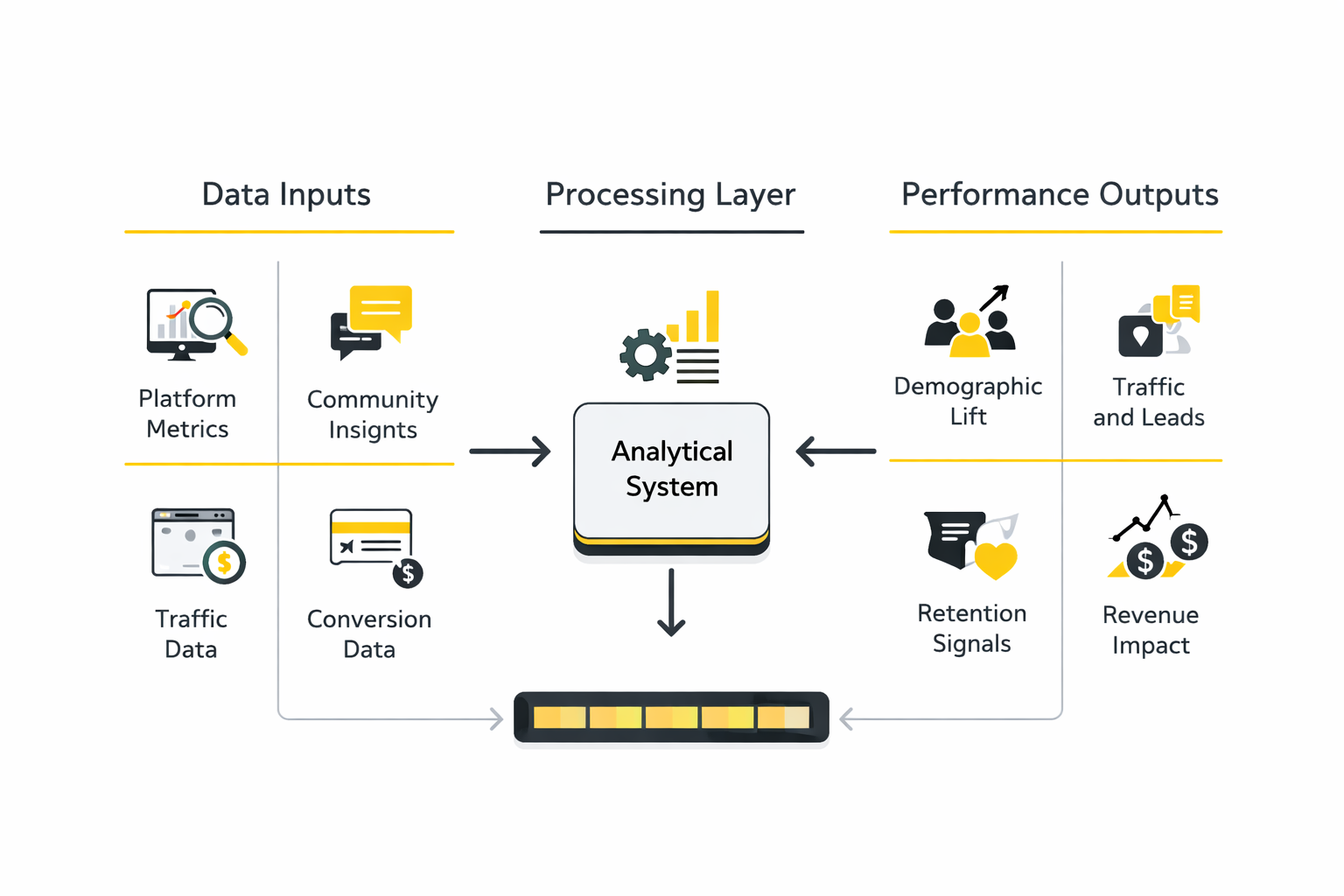
Numbers don’t make content better by themselves. What they do is remove the “I think” from decisions that can get expensive: what to post next, which formats to double down on, and whether your social media content agency is actually moving the business forward.
The trick is to treat data like navigation, not judgment. If the dashboard says a series is slipping, that’s not a failure — it’s a signal. If impressions spike but comments get quieter, that’s not “good” or “bad” — it’s an audience behavior change you need to adapt to.
To keep the data useful, you need two things: benchmarks (so you know what “normal” looks like) and interpretation (so you know what actions to take).
Performance Benchmarks
Benchmarks are guardrails, not goals. They help you answer a simple question without spiraling: are we underperforming, average, or unusually strong for our category and size?
Engagement rate is the benchmark most teams grab first, but it’s also the easiest to misunderstand. Different datasets use different denominators (per follower, per reach, per impressions), and different industries behave differently. The best way to use engagement benchmarks is as a range — and to compare yourself to the same definition over time.
Instagram benchmarks that are actually usable
Across major 2025 datasets, median brand engagement on Instagram tends to land in the ~0.36% range in Rival IQ’s benchmark reporting, while broader summaries often place “healthy” performance closer to the ~0.55% level for carousels in Socialinsider’s Instagram benchmarks and roughly 0.45%–0.6% in Adobe Express’ 2025 engagement guidance.
That gap is not a contradiction — it’s a reminder that format mix matters. If your calendar is carousel-heavy, your ceiling looks different than if you mainly publish single images or recycled Reels.
TikTok benchmarks and why the range is wide
On TikTok, benchmarks can look surprisingly high compared to other platforms. Socialinsider’s 2026 benchmark snapshot reports TikTok engagement around 3.70% on average, while Brandwatch frames typical brand engagement in 2024 as roughly 3%–5%. Dash Social’s industry cuts show how much context changes outcomes, with publishing brands leading at 5.2% engagement rate in its TikTok benchmarks.
If you only remember one thing: TikTok rewards creative fit more than follower size. That’s why a social media content agency usually benchmarks TikTok performance by content type and series, not by the account as a whole.
Collaboration benchmarks for modern reach
Collaborations have become a quiet growth lever, especially on Instagram. Emplifi’s 2025 benchmarks show collaborative posts rising to 4.1% of brands using them by Q4 2024, and extra-small brands seeing a 3.4x engagement lift versus regular posts.
This is one of those benchmarks that matters because it changes what “good” looks like. If competitors are collaborating and you aren’t, your baseline comparison is outdated.
Customer care benchmarks that impact revenue
Even when your content is the priority, response speed still shapes brand trust. Consumers increasingly treat social as a service channel, and expectation data shows little patience for silence. Three-quarters of respondents in Sprout’s Index research expect a reply within 24 hours or less, and broader customer service roundups echo similar expectations, including Freshworks’ statistic that 76% of customers expect a 24-hour response on social media.
For a social media content agency, this matters because community management and content performance aren’t separate. A campaign can be strong and still lose trust if questions pile up unanswered under the post.
Analytics Interpretation
The biggest analytics mistake is treating metrics like trophies. The goal isn’t to “get more likes.” The goal is to understand what the metrics reveal about attention, intent, and trust — and then turn that understanding into better creative and smarter distribution.
Separate leading metrics from lagging metrics
Leading metrics tell you early if something is catching: hook retention, saves, shares, completion rate, and comment quality. Lagging metrics tell you what the catch turned into: website sessions, sign-ups, demo requests, branded search growth, and support deflection.
A social media content agency typically reviews leading metrics weekly to guide creative decisions, then reviews lagging metrics monthly to connect the work to real outcomes.
Normalize before you conclude
Raw numbers lie when the context shifts. A week with lower engagement might still be a win if impressions doubled and the audience reached was new. A spike in engagement might be meaningless if it came from one polarizing post that didn’t match the brand’s goals.
This is why benchmark ranges are useful. When your Instagram engagement lands near the median levels tracked by Rival IQ but your saves per reach are climbing, the right move might be to keep the direction and improve distribution — not to rewrite the whole strategy.
Interpret the “why,” not just the “what”
If carousel engagement holds while comments decline, that can mean your audience is consuming more privately. Socialinsider’s broader benchmark reporting notes comment decreases on major platforms, including declines on TikTok and Instagram, which supports what many teams feel anecdotally: people interact differently now, even when they still care.
The action is not “post more.” The action is to adjust creative to spark response where it matters: stronger prompts, clearer opinions, and formats built for sharing.
Make reporting actionable for humans
Dashboards should end with decisions. What are the three themes to push next month? Which two formats are losing lift? What test are you running next week? This is also where a social media content agency earns stakeholder trust — by showing not only performance, but what it means and what will change because of it.
Case Stories
Real analytics value shows up when a team is under pressure and the data becomes a lever — not a retrospective.
Lemonade’s Data-Fueled Pivot From “Nobody Cares About Insurance” to Cultural Relevance
The comments were dead, and the silence was louder than any negative feedback. Lemonade’s team could post perfectly polished insurance content and still feel invisible in feeds built for entertainment. Worse, when customers did show up, they expected fast answers — and every missed reply chipped at trust.
Inside the brand, everyone knew the uncomfortable truth: insurance isn’t a naturally social category. People don’t wake up excited to engage with renters coverage, and most brands in the space blend together. Lemonade had already built a reputation for being different, but social still had to prove it could build emotional connection instead of just “being present.”
Then they hit the wall: they couldn’t outspend the internet for attention, and they couldn’t rely on occasional viral moments to justify the effort. If the content didn’t consistently earn engagement, it would never get internal priority. And if customer messages weren’t handled quickly, the brand voice would feel hollow no matter how clever the posts were.
The shift came when they treated social like an experiment lab and analytics like the scientific method. Their team used structured tagging, cross-channel performance visibility, and sentiment signals to understand what themes and formats actually moved people. Sprout’s case study describes how Lemonade positioned the platform as the hub for publishing, reporting, and community management, and how the team used it to spot what resonated and what didn’t in Lemonade’s published story.
The journey wasn’t a single “new strategy deck.” It was a sustained pivot toward entertaining, culturally aware content — paired with tight measurement so creative risks weren’t just guesses. Over the year from November 2024 to November 2025, their refreshed approach delivered a 758% increase in impressions and a 1,373% increase in engagements, giving the team proof that relevance can be engineered when feedback loops are fast. They also tightened customer care operations, reaching 99% of messages actioned within 24 hours in Q3 2025, a major jump from the 66% response rate the year before.
Then the final conflict arrived: success raises the stakes. When engagement grows that fast, the audience expects the next post to be just as good, and internal stakeholders start watching every metric like a scoreboard. Creative teams can panic and become conservative right when boldness is working, and support teams can get overwhelmed if message volume rises alongside reach.
The dream outcome was not “more likes.” It was a brand that could build trust in public, prove value internally, and move fast without losing discipline. Lemonade’s results show what a social media content agency is really selling when it invests in analytics: the ability to take creative risks with a safety net, and the ability to scale trust as performance scales.
Professional Promotion
Analytics is also how a social media content agency protects the relationship with a client or stakeholder. When expectations are high and attention is scarce, the fastest way to lose confidence is to report numbers without meaning.
Professional promotion is not about hyping results. It’s about making the value obvious, in a way that aligns with what the business actually cares about.
Promote results like someone who owns the budget
- Start with outcomes: what changed that the business can feel (qualified traffic, response time, brand demand signals).
- Show the mechanism: what patterns drove the change (formats, themes, collaborations, distribution timing).
- Prove it with context: show performance against benchmark ranges like Rival IQ’s industry benchmarks and platform snapshots like Socialinsider’s benchmarks.
- End with decisions: what you’ll repeat, what you’ll stop, and what you’ll test next.
When reporting is structured this way, promotion stops sounding like marketing fluff. It sounds like leadership: clear, grounded, and ready to scale.
Future Trends
The next wave of growth for any social media content agency won’t come from posting more. It will come from building systems that survive three shifts happening at the same time: platforms are rewriting what they reward, audiences are changing how they trust content, and AI is accelerating both creation and confusion.
Here are the trends that will shape what “good” looks like over the next 12–24 months.
Trend 1: “Proof of real” will matter as much as creative quality
As AI-generated images and videos flood feeds, platforms are experimenting with labels and provenance signals, but implementation is messy and often inconsistent. The result is a new creative tax: brands will need to earn trust visually and operationally, not just with polished posts. The discussion around provenance standards like C2PA and the uneven way platforms handle that metadata shows why authenticity will become a competitive advantage, covered in The Verge’s reporting on AI labels and provenance.
Trend 2: AI-native video creation will change the volume of content on the internet
When platforms make AI video creation easy inside their own ecosystems, the amount of “good enough” content skyrockets. That raises the bar for brands: your content must feel more human, more specific, and more intentional to stand out. Meta’s launch of an AI-powered video feed and creation tools points to where this is heading, detailed in Reuters’ coverage of Meta’s AI video feed.
Trend 3: Social becomes a service channel by default
More audiences now treat social media as the fastest way to ask questions, complain, or get help. That means your content strategy and your community operations are the same system, not separate departments. Expectation data shows people want timely responses and will lose patience when ignored, summarized in Sprout Social’s customer service metrics overview and echoed in Freshworks’ customer service statistics roundup.
Trend 4: Social commerce keeps growing, but looks different across platforms
Shopping inside social platforms is becoming more normalized, but the winners vary by platform and region. Momentum around TikTok Shop is one of the clearest examples, with forecasts and platform comparisons discussed in EMARKETER’s 2026 social commerce FAQ. A social media content agency that plans for commerce needs creative built for trust: demos, comparisons, creator partnerships, and community-led validation.
Trend 5: Platforms reward fast culture, but punish fragile workflows
The brands that win in 2026 will be the ones that can move quickly without breaking brand standards or burning out teams. That means a stronger operating system: faster approvals, templated production, and clear “safe lanes” for experimentation. The trend toward agility and chaos culture is highlighted in Hootsuite’s Social Media Trends 2026 page, and practical marketer-focused trend guidance appears in Sprout Social’s 2026 trends roundup.
Trend 6: The “traffic era” gets harder, so brands must build ecosystems
If discovery shifts toward AI summaries and closed-platform consumption, fewer clicks will reach websites, even when content is valuable. That pushes brands to build more direct relationships and keep value inside social experiences: native education, community, creators, and owned channels like email. Concerns about declining referral traffic in an AI-search world are explored in The Guardian’s reporting on publishers and AI summaries.
Strategic Framework Recap

If you strip away the tools, the trends, and the platform drama, a social media content agency still succeeds for one reason: it turns creativity into a system that compounds.
Here’s the full framework you’ve built through this guide, in one clean loop:
- Positioning: a clear point of view that makes the brand recognizable and worth following.
- Architecture: content pillars and repeatable series that prevent “starting from zero” every week.
- Production: modular creation workflows that protect quality while increasing output sustainably.
- Distribution: platform-native packaging plus partner and creator amplification that helps content travel.
- Community: audience relationship-building with response discipline that matches modern expectations.
- Measurement: benchmarks and interpretation that turn performance into decisions, not opinions.
- Optimization: small improvements that compound instead of constant reinvention.
This ecosystem approach is what keeps results stable when algorithms shift and attention gets more competitive. It also makes it easier to integrate emerging trends like AI content creation and authenticity signals without losing the human feel audiences still reward, a tension discussed across trend reporting like Sprout Social’s 2026 trends roundup and coverage of provenance challenges in The Verge’s reporting on AI labels.
FAQ – Built for This Complete Guide
What does a social media content agency actually do?
A social media content agency plans the strategy, produces platform-native creative, manages publishing and community workflows, and uses analytics to improve performance over time. The real value is consistency: predictable execution, clearer measurement, and faster learning loops.
How do I know if I need an agency or an in-house team?
If your biggest problem is bandwidth and production consistency, an agency can stabilize output quickly. If your biggest problem is deep product knowledge and constant internal collaboration, in-house may fit better. Many brands use a hybrid: in-house owns strategy and approvals, while an agency runs production and distribution systems.
What metrics matter most for a social media content agency?
It depends on the goal, but most teams track leading signals (retention, saves, shares, meaningful comments) alongside lagging outcomes (site actions, sign-ups, demo requests, customer care resolution). Response speed is increasingly important as social becomes a service channel, reflected in expectation summaries like Sprout Social’s customer service metrics overview.
How fast can I expect results after hiring a social media content agency?
Operational improvements can show up in weeks (cleaner planning, steadier cadence, fewer approvals bottlenecks). Audience growth and business impact typically take longer because you’re building familiarity and trust. The most reliable early win is a tighter feedback loop: fewer guesses, more evidence-driven decisions.
Should we post daily to grow faster?
Not always. Frequency helps when the quality is stable and the strategy is clear. If daily posting causes rushed creative and inconsistent voice, it can flatten performance. Many teams grow faster by building a few repeatable series and improving distribution, rather than flooding feeds.
How do we handle AI content safely without losing trust?
Use AI to speed up drafts, editing, and variations, but keep humans responsible for claims, tone, and brand standards. As provenance and labeling debates continue, trust will increasingly hinge on how “real” your content feels, not just how polished it is, a challenge highlighted in The Verge’s reporting on AI labels and provenance.
What platforms should we prioritize in 2026?
Prioritize where your audience already behaves like buyers or advocates, and where your team can produce platform-native content consistently. Trend guidance and platform shifts are summarized in sources like Sprout Social’s 2026 trends roundup and Hootsuite’s Social Media Trends 2026 page.
How do we avoid approval bottlenecks as we scale?
Create approval lanes. Low-risk content should have a fast path, while high-risk content gets deeper review. Keep feedback in one place, tie it to specific versions, and define turnaround expectations. The goal is to protect speed without losing governance.
Is social commerce worth it for most brands?
It’s worth testing if your product benefits from demo-style content, creator validation, or impulse-friendly offers. Platform differences matter, and growth forecasts around TikTok Shop and platform commerce dynamics are discussed in EMARKETER’s 2026 social commerce FAQ.
Why is traffic from social and search feeling harder lately?
Discovery is shifting toward closed-platform consumption and AI summaries that reduce referral clicks. That forces brands to build more value natively on-platform and invest in owned channels. The broader “traffic era” concern is covered in The Guardian’s reporting on AI summaries and declining referrals.
What should the first 30 days with an agency look like?
Week 1 is alignment: goals, guardrails, voice, and the measurement plan. Weeks 2–3 are production stabilization: briefs, templates, calendar cadence, and approvals. Week 4 is the first learning loop: what worked, what didn’t, and what gets tested next.
How do we know a social media content agency is performing well?
You’ll see consistency and clarity: fewer last-minute scrambles, tighter creative direction, and reporting that produces decisions. Performance should improve, but so should the operating system—because that’s what sustains results when trends and platforms change.
Work With Professionals
Most marketers don’t struggle because they lack skills. They struggle because they’re stuck in the worst part of the game: chasing clients, pitching into silence, and watching great work get buried under “maybe later.”
If you’re building a career as a marketing freelancer—or you run a small shop that wants steadier deal flow—there’s a simpler path: position yourself where companies are already looking, and make it easy for them to say yes.
markework.com is built for that kind of momentum. It’s a marketing marketplace where you can create a profile, connect directly with clients, and negotiate without a middle layer. The platform highlights “no middleman” and “no project fees,” plus direct messaging and simple monthly plans, explained on markework.com’s homepage.
Instead of spending your energy begging for attention, you can spend it building proof: a focused profile, clear positioning, and a portfolio that matches what clients actually hire for—performance, paid social, SEO, lifecycle, and content, all listed as core categories on markework.com.
That’s the difference between freelancing as a grind and freelancing as a system. When your visibility is consistent and your pipeline is predictable, you stop negotiating from desperation. You start choosing projects that fit your strengths, your schedule, and the kind of work you want to be known for.
Build the profile once. Keep the relationship direct. Let the marketplace do the heavy lifting while you focus on outcomes clients can feel.
 Filip Konecny Enterprises