

Most brands don’t struggle because they “aren’t on social.” They struggle because their social presence isn’t connected to a business outcome anyone can defend in a budget meeting.
The best social media marketing companies fix that. They translate messy platform reality—short-form video, creator partnerships, paid targeting, and always-on community care—into a system your team can run, measure, and scale.
This first part builds the foundation: what these firms actually do, why it matters now, and the decision framework you’ll use to evaluate them.
Article Outline
- What Are the Best Social Media Marketing Companies?
- Why Choosing the Right Partner Matters
- Framework Overview
- Core Components
- Professional Implementation
What Are the Best Social Media Marketing Companies?

The best social media marketing companies are not “posting agencies.” They’re growth partners that design and run a social engine—creative, distribution, community, and measurement—so your social presence reliably produces pipeline, revenue, retention, or defensible brand lift.
In practice, that usually means five responsibilities bundled into one operating model:
- Strategy and positioning: turning business goals into platform-native bets (what you’ll be known for, who you’ll win, and how you’ll prove it).
- Content and creative production: building a repeatable system for ideas, scripts, shoots, edits, and publishing—not random “content days.”
- Paid social amplification: ensuring your best creative reaches the right people with the right frequency, and that spend is accountable.
- Community and social care: managing replies, DMs, escalation, and reputation—because social is also customer experience.
- Analytics and learning: tying platform signals to business outcomes so you can scale what works and kill what doesn’t.
The keyword is system. If an agency can’t show you how the system runs week to week—who does what, what gets shipped, and how decisions get made—you’re not hiring one of the best social media marketing companies. You’re hiring busywork.
Why Choosing the Right Partner Matters
Social is where attention sits, and attention is now a business input. In DataReportal’s Digital 2025 reporting, social platforms account for hours of daily behavior in key demographics, which means your buyers are forming impressions long before they fill out a form.
At the same time, money is following behavior. Global social ad investment was projected to reach $247.3B in 2024, and the broader ad market has been tracking toward the $1T+ milestone. If you’re competing in any serious category, you’re competing inside that attention auction.
Then there’s the operational shift: social isn’t just marketing anymore. It’s commerce, customer care, and creator ecosystems colliding. The U.S. creator economy alone was projected to reach $37B in 2025, which is a polite way of saying that “ads” and “influencers” are now the same budget conversation.
Finally, measurement has become sharper—and less forgiving. The IAB/PwC Full Year 2024 Internet Ad Revenue Report highlighted how fast social ad revenues rebounded, which matters because finance teams now expect social to behave like a performance channel. If your agency can’t speak that language, you’ll feel it during budget reviews.
So the risk isn’t “choosing an agency you don’t like.” The real risk is choosing a partner that can’t build a durable system—one that survives platform changes, creative fatigue, and inevitable internal scrutiny.
Framework Overview
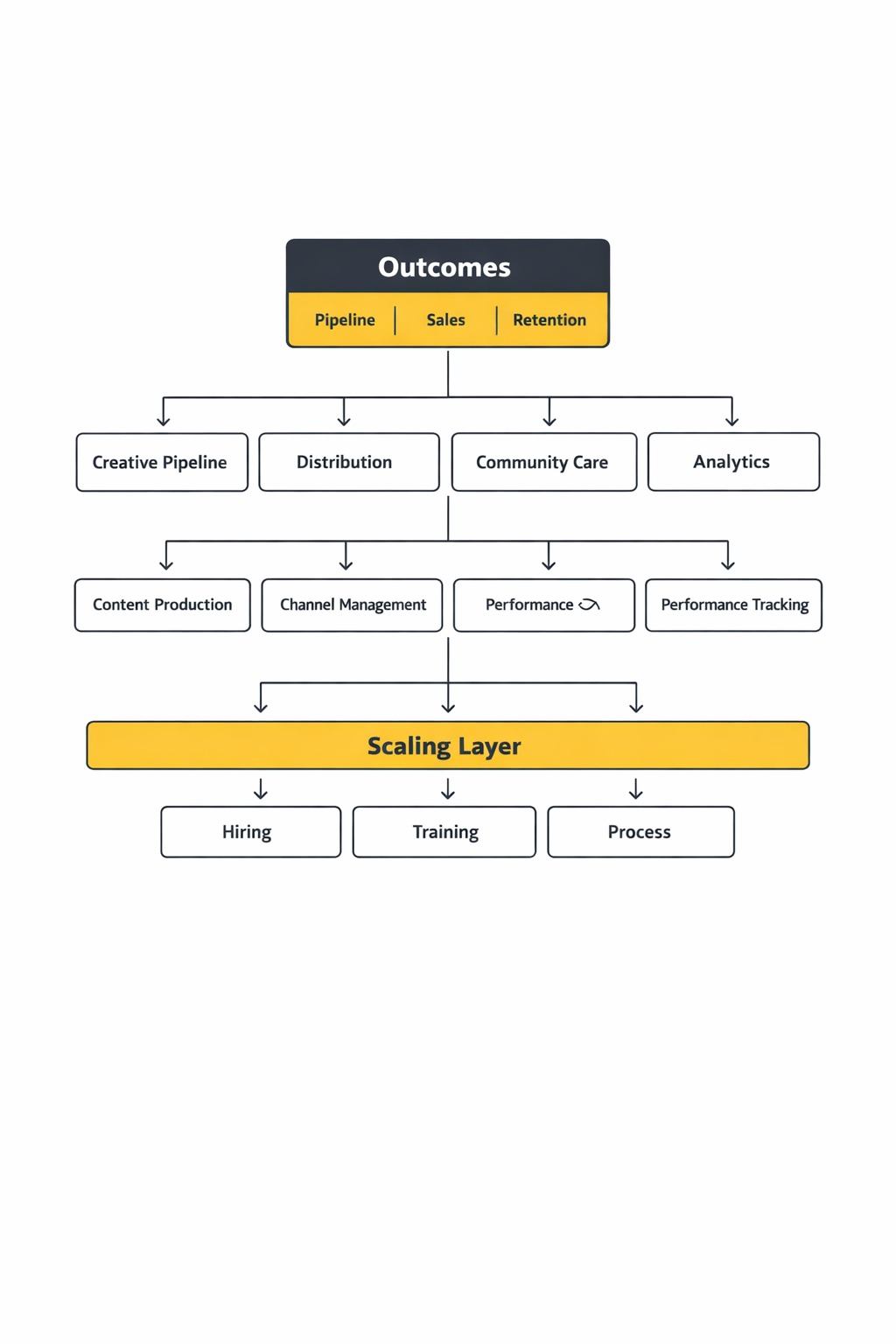
To evaluate the best social media marketing companies, you need a framework that’s brutally practical. This one uses three layers that stack in order:
- Outcomes: what business result social must drive (pipeline, sales, retention, share-of-voice, recruiting, trust).
- System: the operating model that produces that outcome (creative pipeline, distribution, community, and learning loops).
- Proof: evidence the agency can run the system for a brand like yours (case studies, process artifacts, and measurement maturity).
Here’s the punchline: most agency pitches start with tactics (“we’ll do TikTok, Reels, and LinkedIn”). The best ones start with a system and show you how tactics plug into it.
Core Components
1) Strategy That Can Survive Reality
A strong social strategy is specific enough that a creative team can execute it and measurable enough that leadership can defend it. That means clear audience definition, a point of view your brand can own, and a prioritization of platforms based on real behavior—not trend anxiety.
Many teams over-index on “posting more” when the real lever is “posting with a point.” The best social media marketing companies will push you to decide what you want to be remembered for, then build a content thesis that makes that memory more likely.
2) A Creative System (Not Random Content)
Creative is the performance lever on modern social. But “more creative” isn’t the same as “more output.” The agencies worth hiring run a pipeline: ideation rules, production templates, editing standards, and weekly shipping deadlines.
If your category is crowded, novelty matters. The Social Media Trends 2025 report from Talkwalker highlights how listening, creative disruption, and micro-virality shape what breaks through. A serious partner turns those ideas into repeatable briefs and clear creative tests.
3) Community and Social Care as a First-Class Function
Social is a public inbox. People ask questions, complain, request refunds, and form opinions about your responsiveness in real time. That’s why the best social media marketing companies build moderation, response playbooks, and escalation paths—so community management doesn’t collapse under pressure.
This is also where trust gets built quietly. When your replies are fast, human, and consistent, your content performs better because the brand feels “alive,” not staged.
4) Paid Social and Creator Partnerships That Scale What Works
Organic reach is unpredictable; paid distribution is how you turn winners into repeatable outcomes. A mature agency treats paid social as a learning engine: amplify top creative, segment audiences intelligently, and rotate messaging before fatigue sets in.
Creator partnerships are part of this same system now. The IAB’s 2025 creator economy analysis makes it clear that creator investment is no longer experimental. The best agencies don’t just “find influencers”—they build partner tiers, usage rights, whitelisting rules, and measurement that connects creator spend to business impact.
5) Measurement, Attribution, and Decision Hygiene
If you can’t measure it, you can’t scale it—and you can’t protect it when budgets tighten. A serious partner connects platform metrics to outcomes: trackable journeys, consistent tagging, weekly learnings, and clear definitions for what success means.
This matters even more as social ad economics grow. The IAB/PwC Full Year 2024 report quantified how sharply social ad revenue jumped year over year, which is a signal that competition and scrutiny are rising together. The agencies that win are the ones with clean reporting and ruthless prioritization.
Professional Implementation
Even a great strategy fails if implementation is sloppy. The best social media marketing companies tend to follow a predictable rollout that protects quality while speeding up learning.
Step 1: Discovery That Produces Decisions
Real discovery isn’t a workshop where everyone nods and nothing changes. It produces decisions: priority audience segments, brand voice boundaries, platform focus, and which outcomes social must drive first. If discovery doesn’t end with a one-page “what we will do / won’t do,” you’re heading toward chaos.
Step 2: A 30–60 Day Pilot Built for Learning
The pilot phase should feel like controlled speed. You ship enough creative to test patterns, but you keep variables limited so results actually mean something. A good partner defines test themes (hooks, formats, offers, creators), not a pile of unrelated posts.
Step 3: Scale Through Systems, Not Heroics
Once winners emerge, scale is about operational maturity: content calendars tied to creative themes, clear production lanes, and predictable distribution rules. This is where agencies either become invaluable—or get exposed—because scaling requires coordination, not inspiration.
Step 4: Weekly Cadence and Accountability
Look for an agency that runs a tight weekly operating rhythm: what shipped, what performed, what was learned, what changes next week, and what the team needs from you. If you only get a monthly report, you’re paying to learn too slowly.
Step 5: Fit Checks That Prevent the Wrong Hire
Before you shortlist anyone as one of the best social media marketing companies for your business, confirm these basics:
- Proof of process: they can show artifacts (brief templates, reporting examples, creative testing cadence) without hiding behind buzzwords.
- Category fluency: they understand your buyer journey and constraints (regulated industries, long sales cycles, seasonality, or high AOV).
- Creative horsepower: they can produce platform-native work consistently, not just “campaign peaks.”
- Measurement maturity: they can explain how they connect social activity to outcomes—without hand-waving.
- Communication: you know exactly how decisions get made and how quickly you’ll move.
Next, you’ll use this framework to compare vendors in a way that’s fair, evidence-based, and focused on outcomes—not charisma.
Step-by-Step Implementation
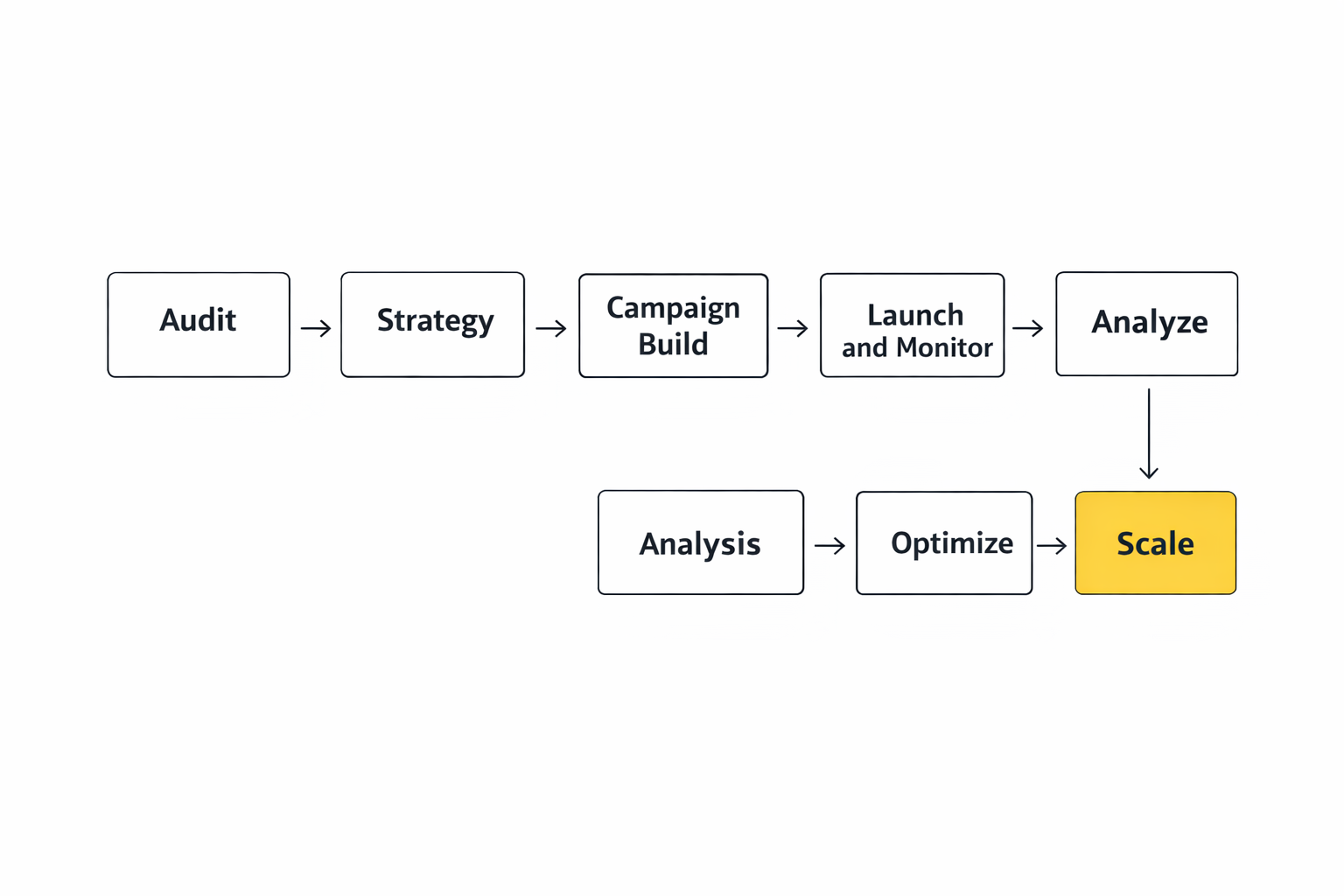
When you hire one of the best social media marketing companies, the first real test isn’t the pitch deck—it’s whether implementation turns into momentum inside the first month. The goal is to build a repeatable system that ships creative on schedule, tracks outcomes cleanly, and improves every week without burning the team out.
Step 1: Lock the Measurement Foundation Before You Ship Creative
Start by wiring conversion signals so every optimization later has something trustworthy to stand on. For Meta-heavy mixes, teams typically implement the server-to-server layer using Conversions API best practices from Meta for Developers and validate event quality inside Meta’s tooling, because broken deduplication can quietly inflate performance and distort decisions.
For TikTok, the equivalent move is connecting web, app, or offline events through TikTok’s Events API documentation so campaign learning doesn’t collapse when browsers block tracking. If you plan to prove incrementality, this step makes it far easier to run controlled measurement later using TikTok Conversion Lift Study workflows.
Step 2: Standardize Naming and UTM Rules So Reporting Doesn’t Turn Into Guesswork
Clean reporting comes from boring consistency. The best social media marketing companies usually create a shared naming sheet for campaigns, ad sets, creatives, and UTMs, then enforce it through templates so no one “just types something” five minutes before launch.
UTMs matter most when stakeholders need answers quickly without arguing over definitions. A practical reference point is a GA4-focused UTM guide like UTM parameters in Google Analytics 4, paired with a simple internal rule: no UTM, no launch. Once that’s in place, weekly performance conversations stop sounding like opinions and start sounding like evidence.
Step 3: Build a Creative Pipeline With a Visible Shipping Schedule
Implementation usually fails because creative production is treated like an art project instead of an operating system. A strong partner turns content into a pipeline: recurring ideation windows, approved formats, a defined review loop, and a shipping cadence that’s realistic for your team.
Creative fatigue is not a theoretical risk—it’s predictable. TikTok’s own guidance in TikTok Performance Fundamentals (2024) emphasizes maintaining creative longevity and avoiding fatigue, which is another way of saying you need a refresh plan, not just a launch plan.
Step 4: Launch With Controlled Variables, Not Chaos
Early launches should be designed to teach you something specific. Instead of testing ten unrelated ideas, the best social media marketing companies structure tests around a small set of hypotheses: hook styles, creator versus brand-led delivery, offer framing, and landing-page alignment.
On TikTok, one real-world example of disciplined execution shows up in Quay’s collaboration with Monks, where the case study notes creative refreshes every 7–14 days. That kind of operational detail is what separates “we post content” from “we run a learning engine.”
Step 5: Install a Weekly Learning Loop With Hard Decisions
A weekly loop is where implementation becomes performance. Each week should end with clear calls: what to scale, what to pause, what to rebuild, and what the next test will prove.
This is also where teams protect themselves from false confidence. Measurement research like WARC’s Future of Measurement 2025 highlights how experiments and incrementality testing can reveal flaws in platform-only attribution, which is exactly why strong teams pair platform dashboards with controlled tests when budgets get serious.
Execution Layers
Execution looks simple from the outside—publish, boost, report—but the best social media marketing companies run it in layers so quality stays high as volume increases. Each layer has its own owner, tools, and definition of “done,” which prevents the most common failure mode: everyone doing everything, and nothing shipping on time.
Layer 1: Creative and Content Operations
This layer owns ideas, scripts, production, editing, and approvals. The main deliverable isn’t “content”—it’s a calendar that reflects a point of view and a predictable output schedule, so the brand isn’t reinventing itself every Monday.
Layer 2: Community, Social Care, and Escalation
This layer owns response playbooks, escalation paths, and service-level expectations. When it’s done well, customer trust improves quietly because people feel heard, and the brand becomes safer to engage with publicly.
Layer 3: Paid Distribution and Retargeting
This layer scales what works and gives creative a fair chance to perform. It also protects budget by controlling frequency, audience overlap, and retargeting logic so spend doesn’t pile onto the same users until performance collapses.
Layer 4: Measurement and Incrementality
This layer answers the question leadership actually cares about: “Did social create outcomes that wouldn’t have happened otherwise?” Tools like Conversion Lift Study exist because last-click models routinely miss assisted behavior like search lift, delayed conversions, and cross-device journeys.
Optimization Process
Optimization is where teams either get sharper every week or slowly drift into random changes that feel productive but don’t compound. A clean process turns performance into a series of small, confident moves rather than dramatic resets.
1) Diagnose the Bottleneck Before You “Fix” Anything
If performance dips, the first question isn’t “should we change targeting?” It’s “where is the system leaking?” Sometimes the leak is creative fatigue. Sometimes it’s tracking quality. Sometimes it’s a landing page that can’t convert the demand social is generating.
This is why implementation begins with plumbing like Meta Conversions API best practices and stable data connections like TikTok Events API. Without clean inputs, every “optimization” risks becoming a confident mistake.
2) Refresh Creative on a Schedule, Not Just When Things Break
Most teams wait too long, then panic-refresh everything at once and lose learnings. High-performing partners schedule refreshes so creative stays ahead of fatigue and each new batch is informed by specific winners and losers.
Quay’s TikTok case study is unusually explicit here: the brand refreshed creatives every 7–14 days, which is a practical rhythm many performance-first teams adopt because it keeps ads feeling current without turning production into chaos.
3) Use Incrementality to Defend Budget and Guide Expansion
When spend grows, leadership pressure grows with it. Incrementality testing gives you a way to show that social isn’t just collecting credit—it’s creating lift.
TikTok’s measurement approach in Conversion Lift Study splits audiences into exposed and control groups, which helps quantify what would have happened without ads. That kind of proof is increasingly valuable in a measurement landscape where Nielsen’s marketing ROI blueprint (2025) highlights a confidence gap between feeling able to measure ROI and actually measuring it holistically.
4) Turn Learnings Into Rules, Not Notes
If learnings live only in a slide deck, they disappear the moment the team changes. The best social media marketing companies translate learnings into rules: new creative brief templates, updated audience exclusions, revised landing-page requirements, and a tighter definition of what qualifies as a “test.”
Implementation Stories
Implementation stories are useful when they show the messy middle: pressure, constraints, and the specific operational moves that created measurable lift. The examples below stick to published case study details and the outcomes those teams shared publicly.
Quay and Monks: Proving Incremental Lift Before Scaling Spend
The pressure wasn’t subtle: Quay wanted to scale on TikTok without sacrificing its cost-per-acquisition targets. That’s the kind of moment where teams either slow down out of fear or spend more and hope the dashboard keeps looking good. Quay needed proof strong enough to justify growth, not just numbers that looked flattering in attribution reports.
Quay already had momentum on TikTok, but the backstory in the case study makes the challenge clear—this wasn’t a “brand new channel experiment.” The brand aimed to reach lower-funnel users and drive conversions from search to purchase while scaling, supported by its agency Monks. The real constraint was accountability: keeping performance stable while increasing exposure.
The wall showed up where it usually does: attribution can make almost any channel look effective if you count the right clicks. Quay wanted to validate whether TikTok was driving incremental outcomes across the journey, not merely picking up credit after the fact. Without that validation, scaling budget would have been a gamble disguised as confidence.
The breakthrough was choosing an incrementality method built to answer the hard question. Quay and Monks ran a Conversion Lift Study with TikTok, splitting audiences into treatment and control groups to measure true lift. Instead of debating models, they engineered a test that could settle the argument.
The journey became operational discipline, not creative chaos. The case study describes running multiple campaign types and keeping the work performance-focused, while refreshing creatives every 7–14 days to stay relevant. That cadence matters because it turns creative into a system: predictable inputs that feed predictable learning.
Then the campaign had to survive the part nobody talks about: scaling tests without losing signal. When teams run too many changes at once, lift results become hard to interpret and optimizations turn into superstition. Quay’s approach avoided that trap by pairing methodical campaign structure with a measurement framework designed to isolate incremental impact.
The outcome was the kind of proof that changes budget conversations. The study results reported a 417% lift in search, a 70% lift in add-to-cart actions, and a 54% lift in purchases for the treatment group, alongside surpassing ROAS targets. That’s what it looks like when implementation turns into evidence—and evidence turns into permission to scale.
Domino’s Spain: Using a Major Event to Measure Full-Funnel Impact
Euro 2024 created the kind of moment brands love and teams fear. Demand spikes fast, attention shifts hourly, and if the strategy is sloppy, you spend money when people are excited and still fail to move sales. Domino’s wanted to know whether TikTok could do more than entertain during the tournament—whether it could influence measurable business outcomes.
The backstory in TikTok’s write-up frames the motivation clearly: Domino’s used the Eurocup as the proving ground to explore TikTok’s influence on sales. The brand leaned into the reality that big events reshape behavior, and it built campaigns around that behavioral wave. It wasn’t a generic always-on plan; it was a timed test where results would be obvious if the execution worked.
The wall was measurement across the funnel. Brands can usually see impressions and clicks, but tying event-driven attention to app installs, search behavior, and completed payments is where teams get stuck. If all you can “prove” is views, you can’t defend the spend once the event ends.
The turning point was treating measurement as part of the creative and media design. Domino’s ran a full-funnel strategy combining brand and performance formats, optimized for web conversions and app installs, then validated impact with a Conversion Lift Study. That study design created a clear comparison between people exposed to ads and those who weren’t, allowing the team to talk about lift instead of attribution credit.
The journey required coordination: the media plan needed to hold brand top-of-mind while still driving conversion growth during key matches. The case study describes measuring incremental search behavior alongside app and web conversion events, which is exactly the kind of multi-surface measurement event campaigns need. Instead of picking one metric and calling it success, they measured the chain of behavior that leads to purchases.
Then came the final complication: event intensity isn’t evenly distributed. Interest peaks around certain matches, and performance can swing wildly if spend and creative don’t keep pace with those peaks. The case study notes the surge in search activity during the final, a reminder that timing and measurement have to be resilient when attention compresses into a few high-stakes windows.
The outcome made the impact legible in business terms. The results reported a 14% lift in app install conversion rate, a 6% lift in brand-related searches, and a 9% lift in web and app complete payments. That’s the dream outcome for event-driven marketing: not just attention during the moment, but measurable behavior that leads to sales.
Professional Implementation Checklist
If you want the benefits of the best social media marketing companies without becoming dependent on them, implementation needs to be documented and repeatable. This checklist is the “make it real” layer teams use to keep execution clean as volume grows.
- Tracking is verified: server-side and browser events are deduped and validated using references like Meta Conversions API best practices and TikTok Events API.
- UTM rules are enforced: every link ships with standardized UTMs, supported by a GA4 reference such as UTM parameters in Google Analytics 4.
- Creative refresh is scheduled: you have an agreed cadence and a production plan that can sustain it, grounded in real execution patterns like Quay’s 7–14 day creative refresh cycle.
- Weekly learning loop exists: every week ends with scale/stop/fix decisions, and when budget debates get serious, the team can lean on controlled measurement frameworks like Conversion Lift Study and broader measurement guidance like Future of Measurement 2025.
- Owners are defined by layer: creative ops, community care, paid distribution, and measurement each have a named owner so execution doesn’t collapse into endless handoffs.
With that checklist in place, implementation stops being a launch phase and becomes an operating system—exactly the difference clients feel when they work with the best social media marketing companies.
Statistics and Data
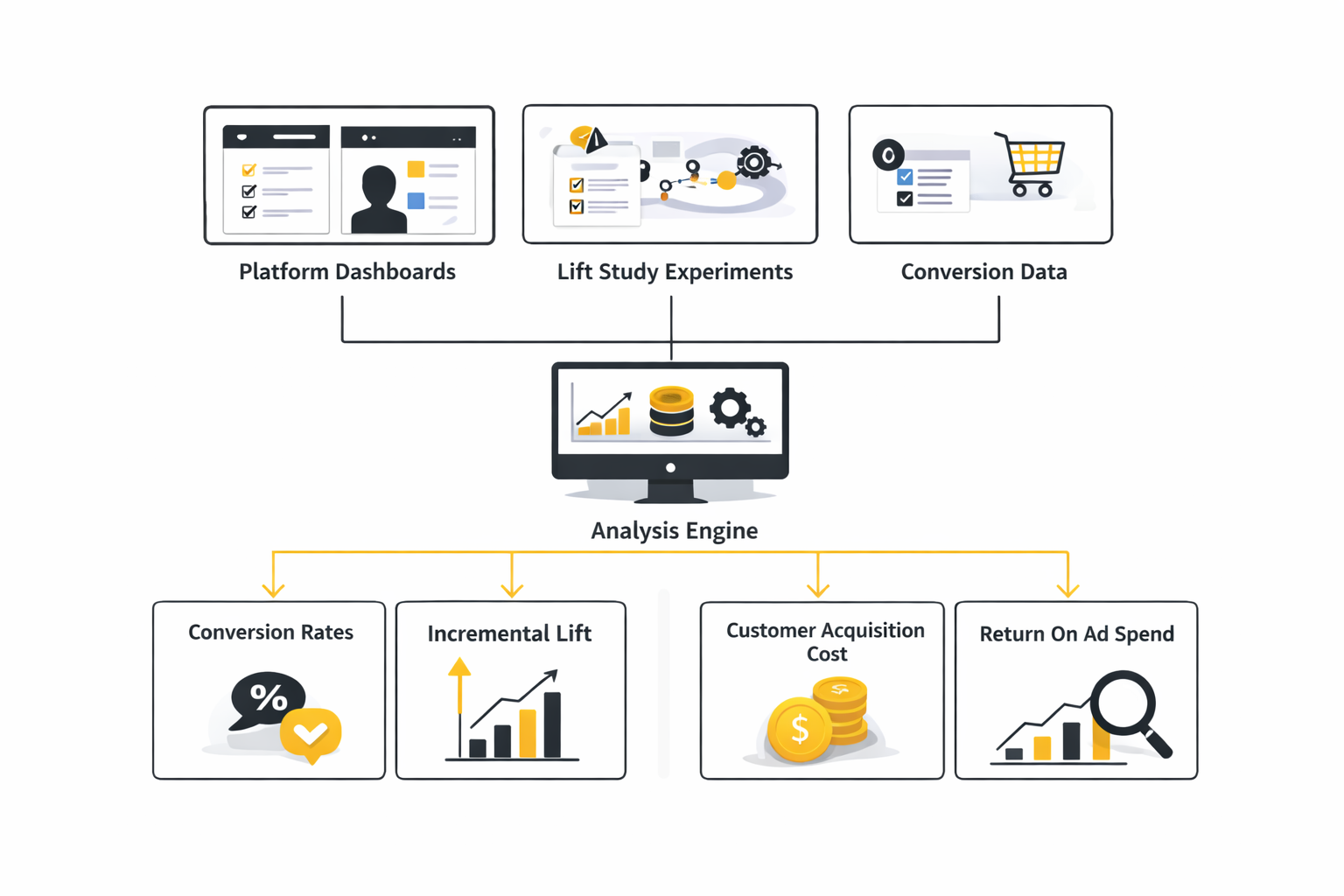
If you’re evaluating the best social media marketing companies, the “data conversation” is where the truth shows up fast. Great teams don’t just report platform metrics—they connect social activity to measurable business outcomes, and they’re transparent about what’s certain, what’s directional, and what still needs testing.
The scale alone explains why this is now a board-level channel. The IAB/PwC Internet Ad Revenue Report (Full Year 2024) puts U.S. digital ad revenue at $259B in 2024, with social media advertising reaching $88.8B. When billions are moving through a single line item, “nice content” isn’t enough—leaders want proof.
That pressure is colliding with a measurement reality: spend is rising faster than certainty. Forecasts like WARC’s Global Ad Spend Outlook 2024/25 highlight the broader acceleration in advertising investment, and brands are responding by tightening how they attribute results, validate incrementality, and defend budgets.
At the platform level, the stakes are massive. Meta disclosed $196.175B in advertising revenue for 2025 in its SEC filing exhibit with full-year results, which is another reminder that social performance is now inseparable from the broader paid media ecosystem. This is exactly why the best social media marketing companies obsess over clean tracking, experimentation, and decision-ready dashboards—not vanity metrics.
And it’s not only about ads. Consumer behavior has shifted the expectations bar for brands. Sprout Social’s research shows nearly three-quarters of consumers expect a reply within 24 hours, reflected in its social media customer service statistics and reinforced again in a newer write-up tied to the 2025 Sprout Social Index context. Emplifi’s survey adds detail on direct messages, noting that 32% of consumers expect a DM response within one hour in its consumer-brand social engagement 2025 survey page.
Performance Benchmarks
Benchmarks are useful when you treat them like street signs, not finish lines. The best social media marketing companies use benchmarks to spot problems early (creative fatigue, posting cadence issues, community care gaps), then build targets that reflect your category, creative resources, and sales cycle.
Organic Engagement Benchmarks That Actually Help
If your organic engagement is sliding, it usually isn’t because your audience “stopped caring.” It’s more often a mismatch between what you publish and how the platform currently distributes attention. Reports like the Rival IQ 2025 Social Media Industry Benchmark Report are useful here because they track engagement across millions of posts and billions of interactions, helping you separate a platform-wide dip from a brand-specific issue.
Emplifi’s annual benchmarks add another angle by comparing formats and reach engagement. Its 2025 Social Media Benchmarks Report highlights how short-form video formats continue to play a central role in brand posting patterns and engagement behavior across major networks.
- Use-case target: Use Rival IQ-style medians to sanity-check whether your engagement trend is “you” or “the market,” then use Emplifi’s format breakdowns to decide what to produce next.
- What strong teams do: They set two targets—one for consistent baseline content, another for “hero moments” that are allowed to be fewer but bigger.
Paid Social Benchmarks That Don’t Lie to You
Paid benchmarks get dangerous when they’re oversimplified into a single CTR or CPA number. The best social media marketing companies use benchmarks more like guardrails: if you’re outside a reasonable range, you investigate; if you’re inside it, you focus on lift and scalability.
For context on how much money is flowing through these systems, the IAB/PwC 2024 digital advertising revenue summary helps frame why platform optimization has become so competitive. More spend usually means higher competition for the same attention, which is why creative strategy and measurement discipline matter more than “tweaking targeting.”
Creator Marketing Benchmarks (Because This Is Now a Budget Line)
Creator campaigns used to sit off to the side as a brand experiment. That era is over. IAB projects creator economy ad spend will reach $37B in 2025 in its Creator Economy Ad Spend & Strategy Report (2025), building on $29.5B in 2024.
For execution, this matters because creator content typically demands a different measurement approach than polished brand creative. The best social media marketing companies treat creators as a media channel with governance: deliverables, usage rights, amplification rules, brand safety checks, and a way to measure incremental value rather than just engagement.
Customer Response Time Benchmarks (The Quiet Growth Lever)
Brands often underestimate how much revenue leaks through slow social responses. Sprout’s customer care stats show the baseline expectation has stabilized around responses within 24 hours, while Emplifi’s work shows how intense DM expectations can be, including one-hour response expectations for a meaningful share of consumers.
- Use-case target: If you can’t hit fast response times consistently, set honest service levels publicly and route urgent issues to support channels that can.
- What strong teams do: They measure “time to first response” and “time to resolution,” then connect those metrics to churn risk and repeat purchases.
Analytics Interpretation
Dashboards don’t create clarity—interpretation does. The best social media marketing companies translate analytics into decisions that someone can act on in the next meeting: what to scale, what to cut, and what to test next week.
The Three Most Common Analytics Traps
- Confusing movement with improvement: A higher CTR can still mean lower revenue if the traffic is unqualified or the landing page can’t convert.
- Trusting attribution too literally: Last-click often undercounts influence, especially when social creates demand that later converts through search or email. This is why incrementality methods like TikTok’s Conversion Lift Study overview exist in the first place.
- Optimizing only for platform-native metrics: Platforms reward behaviors that keep people in-app. Your business rewards margin, retention, and repeat customers. Those don’t always line up.
A Practical Decision Tree the Pros Use
When performance shifts, strong teams diagnose in order instead of guessing. First, they check measurement health (events firing, deduplication, attribution windows). Then they check creative signals (hold rate, thumb-stop behavior, comments quality). Only after that do they adjust audiences, bids, or budgets.
This approach matches the broader industry push toward unified measurement. Nielsen’s Marketing ROI Blueprint 2025 focuses on turning fragmented data into decision-ready insights, which is exactly what you want from a partner managing high-stakes social budgets.
What “Good” Looks Like in a Weekly Analytics Review
- One story, not ten charts: a clear narrative about what changed and why it likely changed.
- Incrementality where it matters: controlled tests when budget decisions need proof, supported by frameworks like lift studies and experimentation.
- Creative learning captured: documented wins and losses, tied to specific hooks, formats, and offers—not vague opinions.
Case Stories
Stories are only useful if they reveal the messy middle: the doubt, the constraints, the experiment, and the measurable shift. The examples below come from published measurement case studies and reports, so you can trace the claims back to the original sources.
Waldo’s and Entropy: When Branding Had to Prove It Could Move Sales
The quarter was tense. Waldo’s wanted to grow e-commerce, but the media mix was built to reward direct-response certainty, not brand influence. Every proposal for “branding” felt like asking for budget with a hope-and-pray spreadsheet.
The pressure sharpened because the internal question wasn’t creative—it was credibility. If Waldo’s couldn’t prove that video exposure created incremental business impact, the channel would stay boxed into short-term performance tactics. The team needed a way to settle the argument with evidence strong enough to survive scrutiny.
The backstory matters because Waldo’s wasn’t chasing vibes. The company is described as one of Mexico’s most recognized discount retail chains, and it was actively pushing its e-commerce channel forward. That meant any strategy had to translate to real sessions, carts, and completed payments, not just views.
They also weren’t starting from zero. The business already had a working mix, but it didn’t include brand campaigns, which created the uncomfortable hypothesis: maybe the upper funnel was the missing piece. The problem was that nobody wanted to fund a missing piece they couldn’t measure.
The wall hit when attribution couldn’t answer the question cleanly. A dashboard can show correlations all day, but it can’t reliably prove what would have happened without the spend. If leadership believed branding was “nice but optional,” this initiative would die before it learned anything.
Waldo’s needed a test design that could isolate impact across regions, not a report that re-labeled existing demand as “social-driven.” Without a controlled approach, every win would be dismissed as seasonality or coincidence. And without buy-in, creative and media teams would be forced back into safe, incremental work.
The epiphany was treating measurement as the centerpiece, not the afterthought. Waldo’s implemented a GeoLift experiment, activating a Video Views campaign in selected regions and comparing results against control areas, documented in TikTok’s published case study Waldo’s GeoLift. That structure made the conversation about causality instead of credit.
They didn’t stop there. The plan paired incrementality measurement with creative built for native attention, leaning into discovery, affordability, and product assortment to match the brand’s value positioning. It also layered perception measurement through a Brand Lift Study so the team could see both emotional movement and transactional movement in the same initiative.
The journey became a deliberate attempt to prove that branding and performance don’t have to compete. The campaign prioritized reach and video attention, then watched how that exposure translated into sessions, add-to-cart behavior, and payments. Instead of chasing the fastest click, it tested whether familiarity could unlock more efficient downstream behavior.
Still, things can go wrong in experiments. Regional differences can muddy the signal, and creative that works nationally can underperform in specific markets. Even a good test can fail if the team changes too many variables mid-flight or if the measurement window doesn’t match the customer’s buying rhythm.
That’s why the final conflict is always discipline. The team had to keep the experiment clean enough to trust, while still running a campaign that felt alive to real people. It’s a balancing act the best social media marketing companies handle well because they plan experiments like product launches, not like last-minute ad tests.
The dream outcome is proof that changes budget decisions. Waldo’s case study reports a lift in orders, add-to-cart sessions, and completed payments, including a reported +9% lift in orders (95% confidence) alongside additional lifts across the funnel. That’s the kind of evidence that turns “branding” from a debate into a lever.
Professional Promotion
Promotion isn’t just ads and posts—it’s how you earn belief inside the company so your social strategy can scale without constant fights. The best social media marketing companies don’t only deliver results; they package the results in a way that makes leadership want to invest again.
How Great Teams Promote Results Internally
Inside a business, the fastest way to lose momentum is to present social as a collection of disconnected metrics. A stronger move is a short weekly narrative: what changed, what it means for revenue risk or upside, and what the team will do next. When you align that narrative with finance-friendly measurement language—incrementality, confidence, unified ROI—you meet executives where they already live.
This is where frameworks like Nielsen’s ROI blueprint report (PDF) become surprisingly useful. The goal isn’t to bury stakeholders in methodology; it’s to show that your decisions are disciplined enough to trust when budgets tighten.
How the Best Social Teams Promote Results Externally Without Looking Cheesy
Externally, the winning play is specificity. A vague “we grew engagement” post doesn’t persuade anyone, but a well-framed story about experimentation, creative learning, and measurable lift does—especially when it points to credible sources like the IAB creator economy report or a published incrementality case study like Waldo’s GeoLift. It signals that your team isn’t guessing; it’s operating with evidence.
- Client-facing promotion: share “what we learned” and “what we changed” before sharing “what we won.”
- Talent and hiring promotion: showcase the operating system—creative pipeline, testing cadence, measurement approach—because great people want to join teams with clarity.
- Partner and vendor promotion: highlight the quality of measurement, since serious partners care about rigor more than hype.
In practice, this is what you’re buying when you pay for the best social media marketing companies: not just outputs, but the credibility loop that turns social into a growth engine the whole business can rally behind.
Future Trends
The best social media marketing companies are already planning for a world where attention is cheaper to manufacture but harder to earn. The next phase of social isn’t just “more AI content.” It’s a reshaping of trust, distribution, and measurement—because audiences can feel when something is mass-produced, and leadership can feel when reporting is built on shaky attribution.
Human proof will beat polished perfection. TikTok’s Next 2026 trend hub and the downloadable TikTok Next 2026 Trend Report (PDF) both point to a cultural shift toward what feels real, unforced, and emotionally resonant. That doesn’t mean “low quality.” It means content that looks like it came from a person who actually uses the product, not a brand committee trying to sound cool.
Creators become the distribution layer brands rent, then learn to build. Creator marketing has stopped being an experiment, reflected in IAB’s expectation that creator economy ad spend will hit $37B in 2025. At the same time, CreatorIQ’s research into creator marketing behavior in The State of Creator Marketing 2025–2026 (PDF) shows how brands are formalizing creator programs with governance, measurement, and long-term partnerships.
Social search becomes the new “first click.” More buyers will discover products through in-app search and creator recommendations before they ever touch Google. That’s a big reason trend summaries like HubSpot’s 2025 social media trends report emphasize discovery behavior shifting inside social platforms.
Measurement gets tougher, and that’s good for disciplined teams. As budgets grow, leadership wants proof that social creates incremental outcomes, not just attributed ones. TikTok’s experimentation framing around Conversion Lift Study reflects the wider push toward controlled testing and defensible lift.
Customer expectations tighten, not loosen. The fastest-growing brands will treat social as customer experience, not just marketing. Consumer expectations around response speed are documented in Sprout Social’s social media customer service statistics and Emplifi’s 2025 consumer-brand social engagement survey, which makes community management a performance lever, not a nice-to-have.
AI helps teams ship faster, but trust becomes the moat. Reports like Hootsuite’s Social Media Trends 2026 point to AI’s growing role in production and the cultural pushback that follows. The winners won’t be the brands that generate the most. They’ll be the ones that still feel human at scale.
Strategic Framework Recap

Choosing among the best social media marketing companies gets easier when you stop judging agencies by vibes and start judging them by systems. The framework you’ve built across this guide can be summarized in three layers that stack in order:
- Outcomes: the business result social must drive (pipeline, sales, retention, share of voice, trust, recruiting).
- System: the operating model that makes outcomes repeatable (creative pipeline, distribution, community care, analytics, learning loop).
- Proof: evidence the team can run the system for a brand like yours (process artifacts, case studies, measurement maturity, clarity on ownership).
If a partner can’t clearly explain how work moves from idea to shipped creative to measured business impact, you’re not hiring one of the best social media marketing companies. You’re hiring hope with a monthly invoice.
FAQ – Built for the Complete Guide
1) What actually makes an agency one of the best social media marketing companies?
It’s the ability to run a repeatable system that ships platform-native creative, scales distribution responsibly, manages community like customer experience, and proves impact with measurement leadership can trust. “Pretty posts” don’t qualify.
2) How do I compare agencies without getting tricked by vanity metrics?
Ask for their weekly operating cadence, sample reporting, and how they connect platform performance to outcomes you care about. If they can’t explain how they validate lift beyond attribution, push them toward incrementality methods like lift studies and experimentation.
3) How long does it take to see results after hiring?
Most teams can improve clarity and consistency in the first 30 days if tracking and workflow are set up properly. Durable performance usually shows up after multiple creative cycles, because the learning loop needs enough volume to reveal repeatable patterns.
4) Should we prioritize organic or paid?
Both, but with a clear job for each. Organic builds trust and narrative; paid turns winners into predictable outcomes. The spending scale in social advertising, highlighted in the IAB/PwC Full Year 2024 report, is a reminder that paid is often the lever that makes performance repeatable.
5) What’s a realistic budget range for working with top-tier teams?
It depends on scope: creative volume, paid spend management, community coverage, and analytics depth. A good partner will separate fees for creative production, media management, and tools, then define what “done” looks like each week so budget matches output.
6) What are the biggest red flags in an agency pitch?
Overpromising exact outcomes, refusing to show process artifacts, pushing “platform hacks” instead of a system, and reporting that avoids business impact. If the strategy is a list of platforms, you’re about to buy busywork.
7) How do the best social media marketing companies handle creator campaigns?
They treat creators like a media channel with governance: clear briefs, usage rights, amplification rules, brand safety checks, and measurement that goes beyond likes. The shift toward formal creator investment is reflected in IAB’s projection of $37B creator ad spend in 2025.
8) What KPIs should I track weekly?
Track what you can act on: creative performance signals, spend efficiency, conversion quality, and customer care health. Also track response speed, because consumers expect fast replies as shown in Sprout Social’s customer service expectations and Emplifi’s DM response findings.
9) How do we know if social is driving incremental sales, not just stealing credit?
Use controlled measurement when decisions matter. Lift studies and experiments help quantify what would have happened without the channel, which is why TikTok provides frameworks like Conversion Lift Study.
10) What tools do serious teams rely on most?
A social management hub for publishing and engagement, a listening layer if you need consumer intelligence, platform-native tracking plus server-side signals, and an analytics layer that connects social to revenue outcomes. The tool matters less than whether the workflow is disciplined and measurable.
11) Is it better to hire a full-service agency or specialist partners?
If you need speed and coordination, full-service can reduce friction. If you already have strong internal ops, specialists can outperform in narrow areas like creator programs or paid experimentation. The best choice is the one that keeps ownership clear and prevents process gaps.
12) What should we demand in the first 30 days?
A documented operating cadence, clean tracking validation, a creative pipeline with a shipping schedule, and reporting that produces decisions. If you don’t have those, you’re paying to drift.
Work With Professionals
If you’ve ever felt the whiplash of chasing clients—one month overloaded, the next month empty—you’re not alone. The hardest part of being a marketing freelancer isn’t the work. It’s the pipeline. And when you’re constantly hunting, you can’t build the kind of repeatable systems that make you truly valuable.
Here’s the uncomfortable truth: demand is not the problem. There are more open marketing contracts than most people can realistically respond to, with platforms like Upwork showing 12,102 open marketing jobs available to apply for. The problem is access, friction, and fees that punish you for trying to grow.
MARKEWORK is built around the opposite idea: a focused marketing marketplace where you can connect directly without getting taxed on every project. Their platform positioning is explicit—“no middleman, no project fees”—and their pricing page repeats it clearly: no commissions and no project fees. Instead of taking a cut of your earnings, it runs on predictable subscriptions and token-based activity, so you keep control of the deal you negotiate.
It also doesn’t feel empty. The marketplace shows meaningful volume, with 1,007 active listings visible on the work board, and the membership plans highlight access to thousands of job listings. That’s the difference between “I hope something shows up” and “I can build a real pipeline.”
Imagine what changes when you stop paying project fees and stop losing time to platforms that gate communication. You can price confidently. You can focus on the craft that gets results. You can build relationships with companies that come back again and again—because you’re not fighting the marketplace; you’re using it.
If you’re ready to land more marketing contracts without sacrificing a percentage of every win, start here and build momentum the simple way: create a profile, browse listings, and message directly.
 Filip Konecny Enterprises