

A social media specialist isn’t “the person who posts.” Done well, this role is where brand voice, customer insight, creative production, and performance marketing collide—fast.
With billions of people spending time on social platforms every day, the work is less about being everywhere and more about making the right moves in the right places, consistently. The latest global snapshots still put social usage in the billions, which is exactly why brands treat social as a primary growth channel, not a side project.
Article Outline
- What Is a Social Media Specialist
- Why It Matters
- Framework Overview
- Core Components
- Professional Implementation
What Is a Social Media Specialist

A social media specialist is the person responsible for turning a brand’s goals into day-to-day social execution—content, community, and outcomes. That can mean building a content system that doesn’t burn out after two weeks, running experiments that prove what actually drives clicks or sales, and protecting the brand when conversations get messy.
In practice, the role sits at the intersection of creative and analytical work:
- Creative: shaping a voice people recognize, producing content people want to save and share, and turning product details into stories.
- Strategic: deciding what to post (and what not to), which platforms deserve focus, and how social supports the wider marketing plan.
- Operational: calendars, approvals, asset workflows, creator coordination, and keeping momentum when priorities change.
- Performance: reading results, learning quickly, and improving the next week’s work without guessing.
And yes—posting is part of it. But posting without a system is just activity. A real social media specialist builds a repeatable machine that can survive leadership changes, product launches, trend cycles, and the occasional algorithm mood swing.
Why It Matters
Social media matters because it’s where attention, trust, and purchasing decisions are increasingly shaped in public. In many categories, people don’t “discover” brands through ads first—they see a creator talk about it, watch a product demo, read comments, then decide whether the brand feels real.
The scale is the obvious reason, but the more important reason is leverage. When social works, one strong idea can travel further than a month of safe content. Recent global reporting still places social media user identities in the billions, which is why brands keep reallocating effort and budget toward formats that earn attention instead of renting it.
On the paid side, the budgets are enormous and still growing. If you’ve ever wondered why expectations are so high, it’s because social ad spend is now projected in the hundreds of billions globally, with forecasts putting social at over a quarter of all ad spend in 2025 and around $306.4B in spend. That scale changes what “good” looks like.
On the organic side, platform behavior is still remarkably concentrated. In the U.S., survey data continues to show that YouTube and Facebook remain among the most widely used platforms by adults—useful context when someone insists you must prioritize the newest app “because everyone is there.” Those platform usage patterns are measurable, not vibes.
Most importantly: social is now a live feedback loop. Comments, DMs, stitches, duets, quote-posts—your market research shows up whether you ask for it or not. A strong social media specialist turns that chaos into signal, then into better creative, better offers, and clearer positioning.
Framework Overview
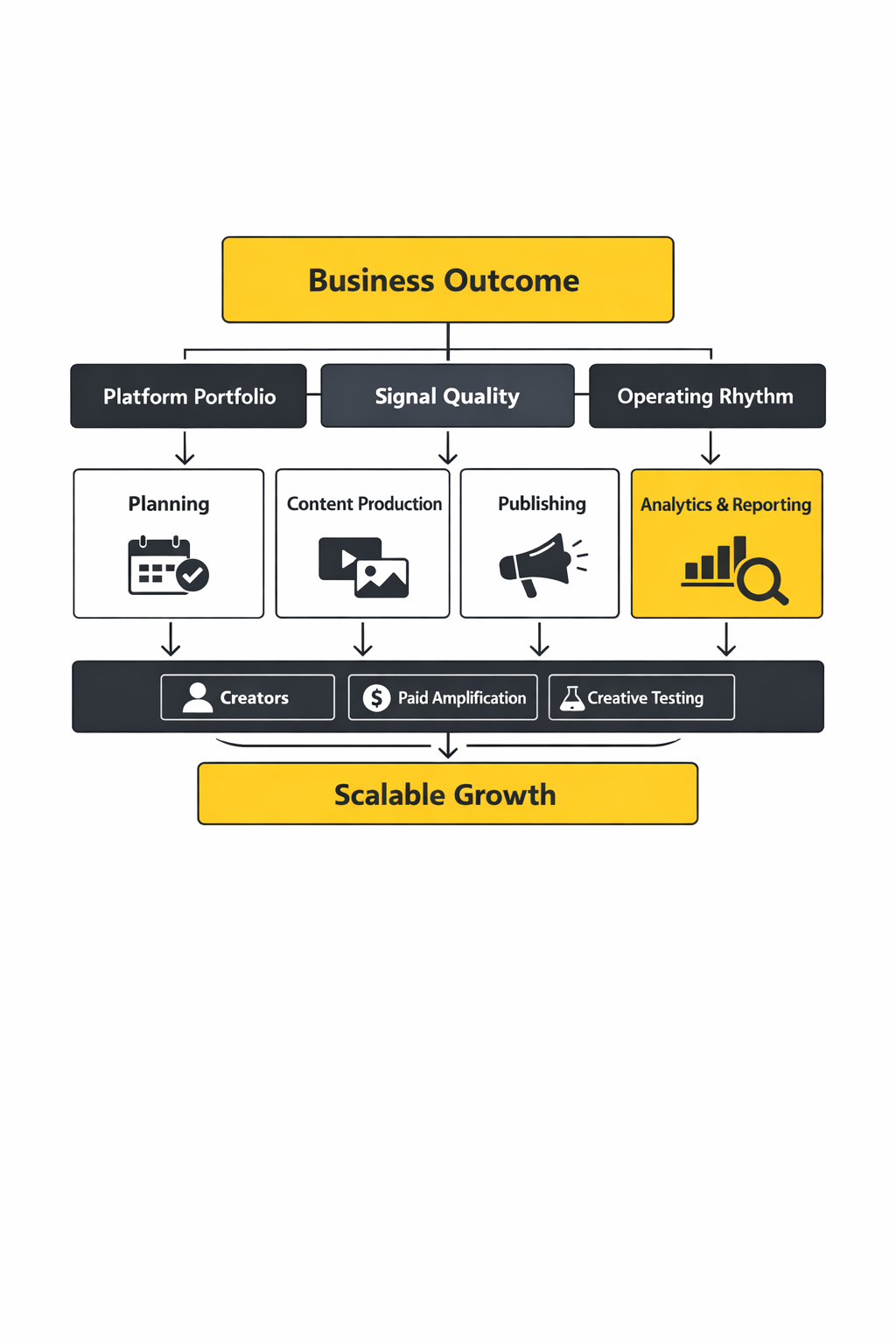
To keep the work grounded (and avoid the “post more” trap), this article uses a simple framework you can run repeatedly:
- Position: what you stand for, who you’re for, and what you’re willing to sound like in public.
- Content System: a sustainable engine—formats, series, templates, and a calendar built for consistency.
- Distribution: the deliberate plan for reach—platform choices, creators, partnerships, and paid support where it makes sense.
- Community: conversation as a growth lever—customer care, social listening, and relationship-building.
- Measurement: learning loops—what you track, how you interpret it, and how it changes decisions next week.
This framework is designed to help a social media specialist operate like a professional: clear priorities, visible impact, and fewer frantic pivots based on one post that “didn’t do well.”
Core Components
Most brands don’t fail at social because they lack ideas. They fail because the basics aren’t engineered. These are the core components a social media specialist builds and maintains.
1) Strategy That Survives Reality
A workable strategy can be explained in one minute and defended in one page. It picks a focus (not every platform), defines what success means, and sets boundaries. It also acknowledges that social is not just broadcasting—it’s perception, service, and proof.
When stakeholders pressure you to chase everything, a useful anchor is audience behavior data. If you’re targeting the U.S. market, platform usage splits by age and platform are well-documented, which helps you decide where focus is rational instead of trendy.
2) A Content Engine, Not a Content Wishlist
Professionals don’t rely on inspiration. They build repeatable formats: weekly series, product demos, customer stories, founder POV, behind-the-scenes, and timely reactions—each tied to a purpose (reach, trust, clicks, conversions).
One reason this matters is volume pressure: algorithms reward consistency, and brands are competing not just with competitors but with creators. In 2025, research and industry reporting increasingly emphasizes video and creator-led content as a major force reshaping attention and ad budgets. That shift is visible in broader media consumption trends.
3) Community and Customer Care as a Growth Channel
Community is where trust is built in the open. It’s also where deals are lost—silence in the comments reads like indifference. A social media specialist treats replies, moderation, and escalation paths as part of the marketing system, not a distraction from “real work.”
Consumer expectations here are not subtle. Large-scale survey work from social platforms and social management research regularly highlights that people want responsive, personalized support on social. That expectation shows up clearly in recent multi-thousand respondent research.
4) Measurement That Changes Decisions
Social metrics are easy to collect and easy to misread. The job is to connect what happened to what it means:
- Attention: did we earn views from the right people, or just rack up impressions?
- Engagement quality: saves, shares, and meaningful comments versus empty reactions.
- Intent: clicks, profile actions, DMs, and qualified traffic.
- Outcomes: leads, sign-ups, trials, purchases, and assisted conversions.
It also means understanding where money is flowing. In the U.S., digital ad revenue reached $259B in 2024, and social-related categories contributed major growth within that ecosystem. Those revenue shifts explain why leadership cares about performance clarity.
Professional Implementation
Professional implementation is where most “good ideas” go to die—usually in messy workflows, inconsistent publishing, unclear ownership, or reporting that arrives too late to matter. A social media specialist who’s trusted inside an organization tends to operate with three visible habits: disciplined planning, clean execution, and fast learning loops.
Build a Lightweight Operating System
This is the minimum structure that prevents chaos:
- A weekly cadence: plan, produce, publish, review—same rhythm every week.
- Clear approvals: who signs off on brand, legal, product claims, and sensitive topics.
- Asset hygiene: a shared library for hooks, CTAs, b-roll, templates, and brand-safe visuals.
- A decision log: what you tried, what you learned, and what changed because of it.
When this operating system exists, social stops feeling like a fire drill and starts feeling like a channel you can scale.
Pick Platforms Like a Portfolio Manager
Instead of treating every platform equally, treat them like a portfolio:
- Primary platform: where you expect consistent growth and where the audience concentration is strongest.
- Secondary platform: where you repurpose intelligently and test new formats.
- Experimental platform: low-commitment tests with clear success criteria.
For many brands, this approach aligns better with real usage data than “we need to be everywhere.” For example, U.S. adult adoption remains very high on YouTube and Facebook. That reality should influence where your team puts its best creative.
Use Paid Social as an Amplifier, Not a Crutch
Paid social is most powerful when it scales what’s already working organically: proven hooks, proven creative formats, and messages that already resonate. With social ad spend projected at roughly $306.4B in 2025, the teams who win are the ones who treat creative testing and measurement like core infrastructure. That spend level rewards discipline more than bravado.
What Comes Next
In the next parts of this article, we’ll go deeper into the practical work: building a content system that doesn’t collapse under production load, setting up measurement that leadership trusts, and translating platform chaos into predictable client outcomes—especially if you’re operating as a freelancer or agency social media specialist.
Step-by-Step Implementation
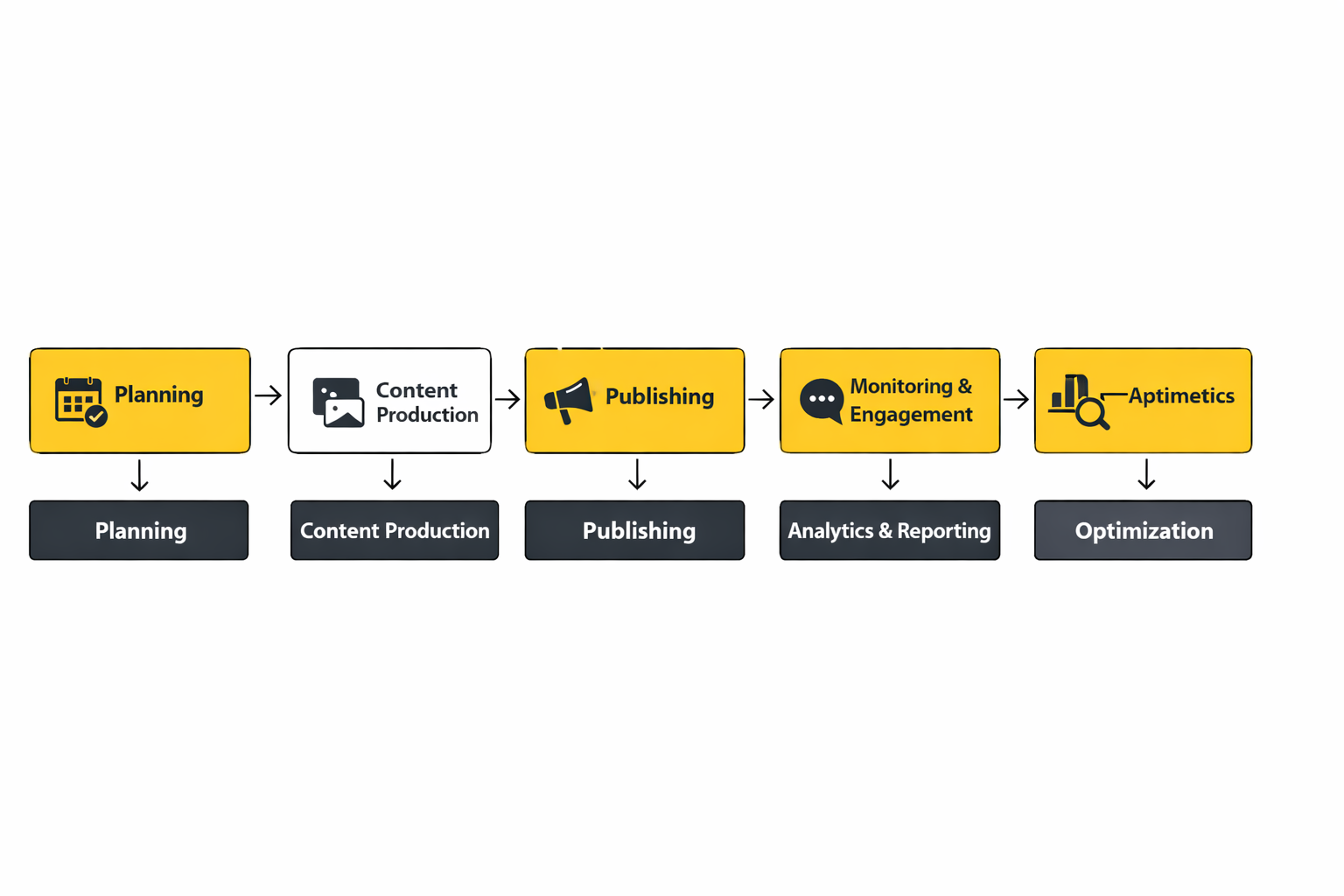
The fastest way to spot an amateur social media specialist is this: they start with posting. The professional starts with signals, constraints, and a repeatable cadence, then builds content on top of that foundation.
This implementation path is designed to work whether you’re a solo freelancer managing three clients or an in-house specialist working across product launches, customer care, and paid campaigns.
Step 1: Decide what “success” means in one sentence
Write a single sentence that connects social to a real business outcome, and make it specific enough that someone could disagree with it. “Grow brand awareness” is too soft; “increase qualified demo requests from mid-market buyers using LinkedIn video and retargeting” is something you can actually build around.
When you do this, you also set boundaries. A social media specialist who can say “no” to random requests (politely, with reasons) protects the strategy from turning into an endless list of posts.
Step 2: Pick the platform portfolio before you pick formats
Choose a primary platform, a secondary platform, and one experimental channel. This keeps your energy focused while still giving you room to test new surfaces without wrecking consistency.
If you’re doing paid on those platforms, align early on measurement expectations and the tracking approach, because the plumbing affects what you’ll be able to prove later. When teams need more reliable signals, the official server-side options are the starting point: Meta Conversions API, TikTok Events API, and LinkedIn Conversions API.
Step 3: Set up tracking you can defend
Before you publish a single campaign post, decide how links will be tagged and how results will be read. A social media specialist who can’t separate “platform performance” from “site outcomes” ends up arguing about engagement instead of showing impact.
Keep it simple: consistent UTMs across every outbound link, built on GA4 campaign URL guidance. If stakeholders want dashboards, plan your connectors and permissions up front so reporting doesn’t become a monthly emergency, using Looker Studio’s connector and access requirements as a sanity check.
Step 4: Build a content map that doesn’t rely on motivation
Create a content map with three to five themes that match how people decide to trust and buy in your category. Then design repeatable series for each theme, so you’re not reinventing the wheel every Monday.
For paid social, don’t overthink the first version. Start with a set of creative variations that are easy to iterate, because platforms increasingly reward testing and adaptation rather than one “perfect” ad. For TikTok, the platform’s own guidance is built around repeatable principles that show up in top-performing ads. TikTok’s Creative Codes is one of the clearest examples of “build a system, not a one-off.”
Step 5: Create the weekly operating rhythm
Most consistency problems are scheduling problems in disguise. A weekly rhythm prevents the “we’ll post when we have time” trap and keeps production aligned with learning.
- Monday: decide the week’s priorities, lock the top two goals, and finalize the posting plan.
- Tuesday–Wednesday: production days for the highest-effort content and the most reusable assets.
- Thursday: publish, engage, and run small tests (hooks, thumbnails, captions, formats).
- Friday: review results and write a short decision log: what you’ll repeat next week, what you’ll cut, what you’ll adjust.
If you rely on scheduling, keep a native fallback plan for the platforms you prioritize. For Meta scheduling, a lot of teams default to Meta Business Suite tools when third-party publishing gets weird.
Step 6: Define your community response standard
Decide what “good” community care looks like before the next spike of comments hits. Your tone, response windows, escalation rules, and moderation boundaries should be documented so you’re not improvising during a reputational moment.
When your brand is big enough to need structured routing and unified listening, stories like Uber’s social care operations show why social becomes a service channel, not just a content channel.
Step 7: Build the first learning loop
Your first learning loop is not a 30-page report. It’s a one-page summary that ties results to decisions: what happened, why it likely happened, and what you’ll change next.
And when performance questions get serious, move beyond attribution arguments into experimentation. Both major platforms and measurement teams increasingly point advertisers toward incrementality and lift studies because they answer a cleaner question: did the ads create outcomes that wouldn’t have happened otherwise? Meta’s overview of Conversion Lift and TikTok’s guidance on Conversion Lift Study map to that same idea.
Execution Layers
A social media specialist can run implementation more smoothly by thinking in layers. Layers keep you from optimizing the wrong thing. They also make it easier to explain to stakeholders why you’re spending time on “unsexy” work like tracking, governance, and workflows.
Layer 1: Foundation
This is where you define the rules of the game: voice, approvals, publishing permissions, crisis paths, and brand safety boundaries. Foundation work doesn’t look productive in the moment, but it prevents public mistakes and internal chaos later.
If you’re running paid, foundation includes the signal strategy too. That’s where server-side tracking and platform measurement tools start to matter, especially when you want your reporting to remain stable as privacy and browser behavior evolves. The platform documentation is your baseline: Meta Conversions API and TikTok Events API.
Layer 2: Content System
This is the repeatable engine: series, templates, production checklists, and a calendar that doesn’t collapse under real deadlines. The goal is to build content that can scale, not content that depends on one person having a “creative day.”
For TikTok-style creative, the system usually works best when you treat content like iterations rather than masterpieces. Frameworks like Creative Codes are useful here because they translate creative into reusable principles you can test.
Layer 3: Distribution
Distribution is where you decide how content finds people: organic publishing, creator partnerships, community sharing, paid amplification, and retargeting. Without distribution decisions, social becomes a lottery ticket—sometimes you get lucky, but you can’t build predictable outcomes.
If creators are part of your plan, treat it like a channel, not a tactic. The creator economy is now large enough that it’s tracked like a standalone line item in industry reporting. IAB’s creator ad spend report is a good reminder that creator partnerships have operational and measurement requirements, not just creative ones.
Layer 4: Community
Community is the layer where you earn trust in public. It’s also where the brand’s “real personality” shows up, because responses and moderation patterns are hard to fake at scale.
When community becomes mission-critical, listening and routing stop being optional. Teams that operationalize social care tend to build unified workflows that connect listening to response and escalation, like the system described in Uber’s social care case story.
Layer 5: Measurement and Learning
This layer turns activity into improvement. It includes dashboards, tagging discipline, experimentation, and the habit of writing down decisions so learning doesn’t disappear when the week gets busy.
For higher-stakes decisions, this layer also expands beyond platform dashboards into structured measurement approaches: lift studies, incrementality testing, and even marketing mix modeling when budgets and complexity justify it. If you’re exploring MMM, Google’s Meridian documentation and the broader overview of Meridian’s release show how modern measurement is shifting toward privacy-durable models.
Optimization Process
Optimization should feel like a calm loop, not a panic reaction to yesterday’s post. A professional social media specialist optimizes with hypotheses, controlled tests, and a clear definition of what they’re trying to move.
1) Start with a hypothesis you can disprove
“Short videos perform better” is not a hypothesis. “A cold-open product demo with a clear problem statement will drive more qualified clicks than a lifestyle montage” is something you can test and learn from.
Keep hypotheses tied to one change at a time: hook, format, creator, offer, landing page, or audience targeting. If you change everything, you learn nothing.
2) Test in the smallest way that still teaches you something
You don’t need massive budgets to test creative direction, but you do need discipline. Run lightweight experiments weekly, then promote winners into your next batch so testing becomes compounding, not random.
For TikTok performance work, the platform explicitly pushes a test-and-learn mindset, including experimentation approaches and budget considerations. TikTok’s test, learn, and scale guidance is useful because it frames experimentation as part of performance hygiene, not an advanced luxury.
3) When decisions get expensive, switch to incrementality
Attribution is a helpful directional tool, but it’s not the same thing as proving incremental value. When budgets grow or stakeholders demand clarity, lift studies become the grown-up conversation: what did the ads cause that wouldn’t have happened otherwise?
Meta makes this logic explicit with Conversion Lift testing and a deeper explanation in Conversion Lift help. TikTok mirrors the same goal with Conversion Lift Study documentation and their broader explainer on why CLS exists.
4) Build reporting that drives decisions, not slides
Your reporting should answer three questions: what moved, why it likely moved, and what we’re doing next. Anything else is noise.
Use consistent tagging so you can compare weeks without reinventing analysis every time. This is where GA4 campaign tagging standards quietly become one of the highest-leverage skills a social media specialist can have.
5) Turn results into creative feedback, fast
Optimization dies when insights arrive too late. Build a habit of translating results into creative instructions: what to keep, what to change, and what to try next.
If you’re using automated creative enhancements, treat them as testable options, not set-and-forget magic. Meta’s own explanation of Advantage+ creative features makes it clear these tools generate variations—your job is deciding which variations align with brand and performance goals.
Implementation Stories
Implementation becomes real when there’s pressure: budgets questioned, performance uncertain, and a team expected to “just make it work.” This story is useful because it’s not about a clever post. It’s about measurement, confidence, and making decisions you can defend.
DSB’s Moment of Truth With Lift Testing
The meeting didn’t feel like a brainstorm. It felt like a cross-examination. The team was being asked a question that’s hard to answer with standard dashboards: was paid social actually creating incremental outcomes, or was it just taking credit for people who would have converted anyway?
DSB is a large transport operator, and marketing decisions don’t happen in a vacuum. When budgets get reviewed, “we got clicks” isn’t a satisfying explanation, especially when leadership wants clarity on what the spend truly caused. That’s why the setup described in DSB’s Meta success story is centered on lift testing rather than surface metrics.
Then the wall hit: the team could see conversions in the platform, but confidence was shaky. Stakeholders wanted a cleaner view of impact, and the usual attribution debates weren’t getting them there. Without a stronger method, every future budget discussion would come with the same doubt. The story points to a structured approach using a conversion lift study to measure incremental effect. The DSB case page is explicit about the measurement method.
The turning point was choosing to test, not argue. Instead of trying to “win” an attribution debate, they moved the conversation into experimental measurement. That shift changes the tone in the room, because you’re no longer defending a dashboard—you’re running a controlled approach designed to answer a business question. Meta’s own description of Conversion Lift frames the method around incremental impact, which is exactly what skeptical stakeholders care about.
The journey wasn’t glamorous. It meant designing the study, committing to the discipline of test and control, and aligning internally on what results would count as meaningful. It also meant accepting that measurement is part of campaign planning, not something you tack on after the creative is live. The Meta overview of Conversion Lift testing shows how this is meant to be built into campaign measurement rather than treated as a separate “science project.”
The conflict showed up the way it always does: real-world complexity. Marketing teams want speed, while experimental measurement requires structure and patience. Even when you do everything right, stakeholders still ask hard questions about interpretation, and you still need to cross-check what the study means for future decisions. That’s why it helps to have both the success story and the methodology guidance side-by-side, like DSB’s case story alongside Meta’s lift explanation.
The dream outcome wasn’t a vanity screenshot. It was confidence. The team could walk into planning discussions with a measurement approach designed to answer “did this work?” in a way that leadership recognizes, and that changes how social is treated inside the organization. When a social media specialist can bring that kind of clarity, they stop being “the posting person” and start being part of how strategy gets funded.
Create a one-page playbook for every platform you run
- What we post: the formats and series that matter most.
- What we measure: the few metrics that map to the goal, plus how we read them.
- How we tag: the UTM standard built on GA4 campaign parameters.
- How we respond: response windows, tone rules, and escalation triggers.
Use checklists to prevent “small” mistakes that go public
A checklist is not bureaucracy. It’s the difference between moving fast safely and moving fast recklessly. Before anything big goes live, your checklist should include approvals, link testing, tagging validation, and a quick scan of scheduled posts so nothing conflicts with the moment.
For paid campaigns, add a measurement checklist too: pixel status, event setup, and whether you’re using server-side signals where appropriate. The official references exist for a reason: Meta Conversions API and TikTok Events API.
Match the measurement method to the decision you’re making
If you’re deciding between two hooks, you don’t need a complicated model. If you’re deciding whether a channel deserves more budget, you need stronger proof.
- Creative decisions: fast iteration and repeatable tests, guided by platform best practices like TikTok’s test-and-learn approach.
- Channel value decisions: incrementality and lift studies, using methods described in Meta Conversion Lift and TikTok Conversion Lift Study.
- Budget allocation across many channels: MMM can be the next step when the business is ready for it, with modern tooling like Google Meridian.
Keep the work human, even when the system is tight
The point of structure isn’t to make social robotic. The point is to protect creativity and speed by removing preventable friction.
When the system is working, your team spends less time hunting for assets, defending numbers, and re-litigating decisions. And that’s when a social media specialist has room to do the work that actually moves the needle: sharper creative, clearer positioning, and a learning loop that compounds week after week.
Statistics And Data
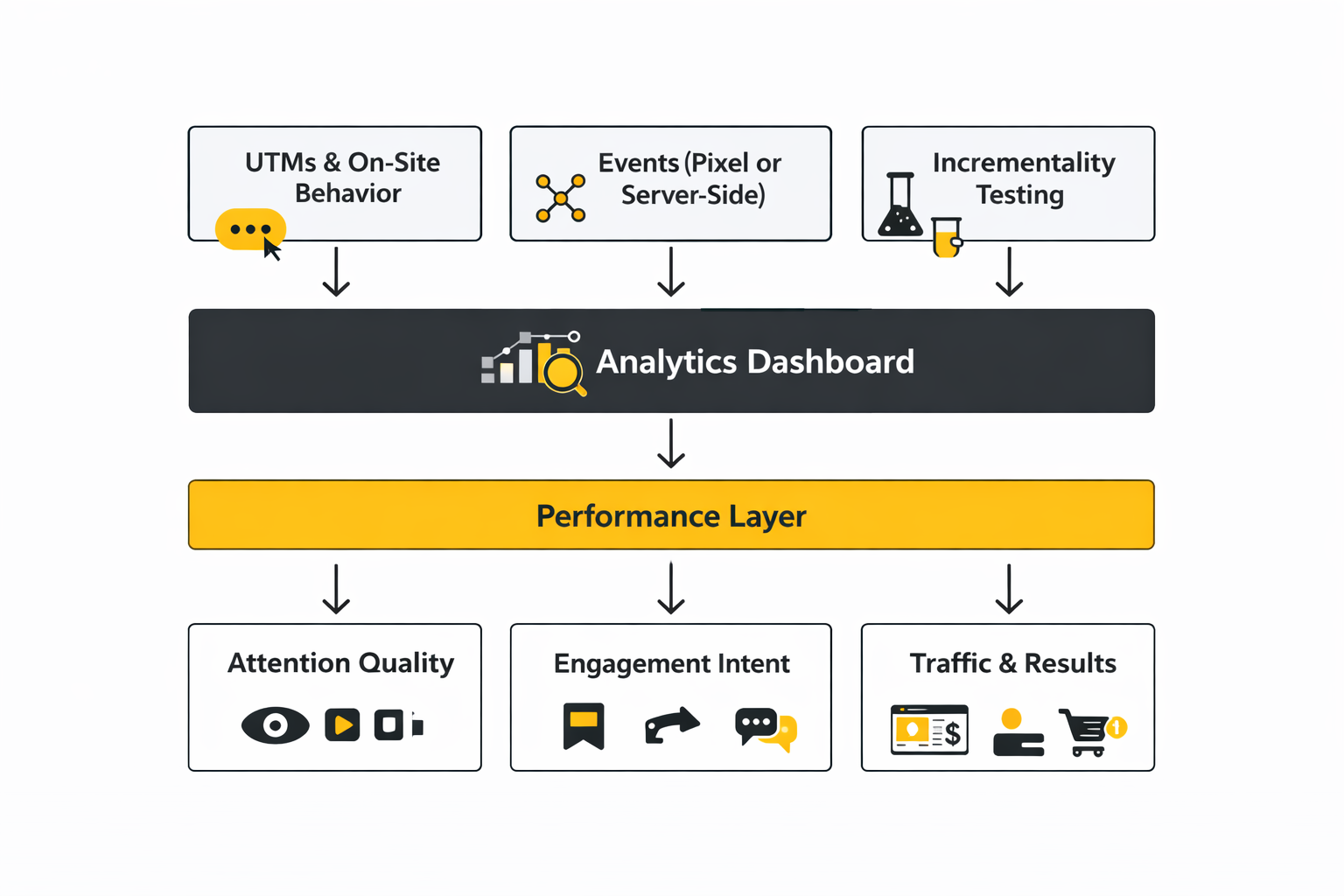
When someone hires a social media specialist, they usually think they’re hiring creativity. What they’re really hiring is judgment: knowing what to measure, what to ignore, and when a “good-looking” metric is quietly hiding a bad business outcome.
It helps to anchor the role in a few hard realities. Social isn’t a niche channel anymore, and budgets reflect that. Social ad spend in 2025 has been forecast at $306.4B globally, and the same figure shows up when the forecast is summarized for planners and buyers. That “$306.4B” number is repeated in WARC-linked coverage, which matters because it signals how aggressively brands are competing for attention.
In the U.S., digital advertising revenue hit a record $259B in 2024, with the same headline supported in the published report itself in the IAB/PwC PDF and echoed in independent coverage. Multiple outlets pulled the same topline figure from the release.
Time is the other anchor. Typical internet users still spend roughly a couple of hours per day inside social platforms, and the best reporting on this tends to converge around the low-to-mid two-hour range. Recent GWI-backed figures summarized in DataReportal put daily social time around 2 hours 21 minutes, and GWI’s own dashboard framing lands in the same neighborhood. The point isn’t the exact minute—it’s the implication: a social media specialist is competing inside a massive attention market where people scroll fast and decide faster.
Performance Benchmarks
Benchmarks are useful when they help you set expectations and spot anomalies. They become dangerous when they turn into “chase the number” goals that ignore what your business actually needs.
To make benchmarks practical, treat them like guardrails rather than targets. If you’re far below typical engagement for your industry, something is likely broken (creative fit, frequency, audience match, or distribution). If you’re far above typical engagement but leads and sales don’t move, you might be entertaining the wrong people.
Engagement Rate Benchmarks: Use Them, But Don’t Worship Them
Different benchmark providers use different methods (per follower, per impression, per reach), so comparisons only make sense when you keep the methodology consistent.
- Cross-platform averages: A broad analysis across industries can help you sanity-check performance. Hootsuite has published platform-level averages based on analysis of over one million posts.
- Industry medians: Rival IQ’s benchmarks are widely used because they break results down by industry and platform, and they show how quickly “normal” can shift year to year. Their 2024 benchmark report is the cleanest reference point for industry medians.
- Year-over-year platform movement: Socialinsider has published a newer read across 2025 behavior patterns, including engagement shifts by platform. Their 2026 benchmarks page summarizes 2025 engagement movement.
A good social media specialist uses these three inputs the same way a trader uses market context: not to predict the future perfectly, but to avoid making decisions in a vacuum.
Paid Performance Benchmarks: Focus on Signal Quality First
Paid performance “benchmarks” are notoriously slippery because they change with creative, auction competition, seasonality, and tracking setup. That’s why the first benchmark to care about is whether your measurement is trustworthy.
If you’re relying purely on browser-based tracking, you’re building your reporting on a surface that keeps getting less stable. The major platforms have made their preferred direction explicit through official server-side event options: Meta Conversions API, TikTok Events API, and LinkedIn Conversions API.
Once signal quality is solid, the next “benchmark” becomes consistency: can you produce repeatable results with a repeatable creative system? TikTok’s own performance guidance pushes teams toward structured creative iteration rather than one-off hero ads. Their test-and-learn framing is basically an optimization benchmark in disguise.
Analytics Interpretation
Analytics interpretation is where a social media specialist stops being a content producer and becomes a decision-maker. The skill isn’t pulling charts. The skill is reading what the charts imply about behavior, intent, and the next action you should take.
Start With the Question, Not the Dashboard
Before you open any tool, decide what question you’re answering. “How did the post do?” is a weak question. “Did this creative attract the right audience and move them closer to the next step?” is the kind of question that leads to decisions.
This is also why campaign tagging discipline matters so much. If links aren’t tagged consistently, you can’t separate “platform performance” from “site performance” without guesswork. The most boring upgrade in social is often the most profitable one: consistent UTMs built on GA4 campaign parameter standards.
Four Signals That Tell You What’s Really Happening
- Attention quality: Views and impressions only matter when they come from the right audience and hold long enough to communicate the message. If view volume climbs but retention collapses, your hook is pulling curiosity without delivering relevance.
- Engagement intent: Saves, shares, and thoughtful comments usually signal stronger intent than quick reactions. If comments shift from “lol” to questions about pricing, shipping, or setup, your content is moving people closer to purchase.
- Traffic quality: Clicks are easy to buy and easy to misunderstand. If traffic spikes but on-site behavior is weak, your creative may be promising something the landing experience can’t fulfill.
- Outcome truth: When budgets and stakes rise, attribution debates get loud. That’s the moment to switch from arguing to testing.
When It’s Time To Use Incrementality Instead of Attribution
Attribution is fine for day-to-day steering, but it doesn’t answer the most important question: would this have happened anyway?
That’s why platforms increasingly push lift studies as the measurement “gold standard” for proving impact. Meta positions this clearly with Conversion Lift testing, and TikTok makes the same point with Conversion Lift Study guidance.
If you want the simplest mental model: attribution tells you who touched the sale; incrementality tells you what you actually caused. Even measurement vendors and performance teams keep reinforcing that distinction because it changes budget decisions. Incrementality explanations from performance platforms focus on isolating true effect, and the same theme shows up when marketers talk about strengthening measurement stacks. Measurement trend reporting highlights lift testing and MMM as common upgrades.
Case Stories
Stories are where analytics stops being theory. These are real examples where social choices—especially measurement and interpretation—changed what happened next.
Duolingo’s “Comment Section Is the Brief” Moment
The brand didn’t just post. It performed. One day, a bizarre, high-drama narrative took over the feed, and suddenly people who don’t care about language learning were arguing, joking, and watching like it was a season finale. The attention looked chaotic from the outside, but it was the kind of chaos that brands secretly want: cultural oxygen.
The backstory is that Duolingo spent years building a social-first identity that feels more like internet culture than corporate marketing. Their team treated social as a living feedback loop, not a broadcast channel, and they built a style that could react quickly without losing the brand’s core personality. That approach has been profiled in detail in a deep look at how the brand tuned its social-first operating model.
Then the wall showed up in a familiar way: when a brand gets famous for being funny, it risks being dismissed as “just memes.” That’s a trap for any social media specialist, because it can create pressure to chase laughs while the business still needs retention, growth, and product trust. Even cultural wins can create internal skepticism if the value can’t be explained in business language.
The epiphany was reframing the work: the brand’s social team didn’t need to prove they were serious by becoming boring. They needed to prove their chaos had intent. Their own leadership has repeatedly emphasized that product value and retention are the real engine, while social is a way of staying culturally present and connected to the audience. That tension between “viral” and “valuable” comes through clearly in coverage tying social moments back to business reality. The company’s public commentary around cultural moments and what actually matters is a useful read.
The journey was operational, not mystical. They listened obsessively, treated comments as a creative brief, and built content that felt native to each platform rather than repurposed from a campaign deck. They also created a working environment where younger cultural fluency wasn’t treated as fluff but as a real strategic input. The way their social leadership is described in broader culture reporting shows how intentional this approach is inside the team. A profile of how Gen Z leadership shows up in social work captures the mindset behind the method.
The final conflict was that every big social moment creates a hangover: audiences move on, critics call it a stunt, and internal teams ask what the spike “did.” If you can’t translate cultural momentum into a repeatable system—formats, feedback loops, and measurement—you end up chasing bigger and weirder moments just to feel the same impact. That’s how brands burn out their own voice.
The dream outcome wasn’t “a viral post.” It was a durable operating model: a brand voice that can adapt, a listening habit that drives creative, and an internal narrative that social is a strategic channel with real feedback value. For a social media specialist, that’s the real win—building a system that keeps working after the moment passes.
Bolt’s Full-Funnel Measurement Reality Check
The tension wasn’t creative. It was confidence. The team could run brand campaigns and performance campaigns, but the uncomfortable question kept floating around: are we actually creating incremental results, or are we just watching dashboards take credit?
The backstory is that full-funnel marketing often looks impressive on slides but gets messy in measurement. When you run both awareness and conversion activity, attribution can over-credit the last touch and under-credit what created demand in the first place. That’s how teams end up cutting the very work that makes the performance work possible.
The wall was the usual one: plenty of platform metrics, not enough clarity that a finance team would treat as proof. That’s why Bolt’s TikTok case work focused on lift methodology rather than surface KPIs. The structure of the study and the intent—measuring incremental impact across brand and performance together—are laid out in TikTok’s Bolt success story.
The epiphany was choosing to test instead of debate. A lift study forces the team to align on what “impact” means before the campaign runs, and it replaces opinion fights with a method. TikTok has been explicit about why this matters, calling incrementality the measurement gold standard in its own explainer. The platform’s Conversion Lift Study framing makes the logic hard to ignore.
The journey required discipline: clear test design, clean event setup, and a willingness to accept results even if they’re inconvenient. Lift studies don’t just validate performance—they sometimes reveal that what felt efficient was mostly capturing demand created elsewhere. That’s uncomfortable, but it’s also how budgets get smarter.
The final conflict is what happens after the test: people try to turn one lift study into a universal truth. A professional social media specialist treats it as a learning input, then repeats tests over time as creative, targeting, and market context change. Incrementality is not a trophy—it’s a practice.
The dream outcome is a team that can spend with confidence. When measurement is built to answer the real question, social stops being “a channel we hope works” and becomes “a system we can fund and scale.”
Professional Promotion
Analytics isn’t just for optimization. It’s also how a social media specialist earns trust, wins bigger scopes, and gets paid like a growth partner instead of a posting machine.
Turn Metrics Into Proof People Can Repeat
Most portfolios fail because they show outputs (posts, visuals, follower counts) instead of outcomes and reasoning. The upgrade is simple: document decisions, not just deliverables.
- Show the goal: one sentence that ties social to a business outcome.
- Show the hypothesis: what you believed would work and why.
- Show the measurement setup: how links were tagged and how outcomes were tracked, grounded in GA4 tagging standards.
- Show the learning loop: what changed after results came in.
This makes your work legible to decision-makers. It also makes it harder for someone to undervalue you, because you’re presenting strategy and iteration, not just content production.
Report Like You Want a Renewal
A strong monthly report doesn’t try to impress. It tries to make the next decision easy. The clean structure is:
- What we did: the few moves that mattered.
- What moved: attention, engagement intent, traffic quality, and outcomes.
- What we learned: one to three insights that change next month’s plan.
- What we’ll do next: the next set of tests and the reason for each.
When budgets are meaningful, add a line about how you plan to validate impact beyond attribution if needed, using methods like Conversion Lift testing or TikTok’s lift approach. That single sentence signals maturity.
Position Yourself as a Measurement-Safe Creative Operator
The market is full of people who can make content. Fewer people can make content and prove what it did. If you want better clients and better retainers, the positioning is clear: you’re a social media specialist who can build a creative system, run a testing loop, and defend results without hand-waving.
That’s how you shift from “can you post for us?” to “can you run social as a growth channel?” And once you’re in that second category, you’re no longer competing on price—you’re competing on outcomes and confidence.
Advanced Strategies
Once the basics are stable, the job of a social media specialist shifts from “make good posts” to “build repeatable growth.” Advanced strategy is mostly about leverage—finding the few moves that create outsized impact, then making those moves scalable without breaking brand safety or measurement.
Right now, the highest-leverage moves tend to sit in three places: creator distribution, measurement you can defend, and operational systems that keep quality high as volume rises. Creator investment is no longer a side tactic—U.S. creator ad spend was projected to reach $37B in 2025, which is why brands increasingly treat creators like a channel, not a campaign.
Creator Licensing That Scales Like Paid Media
One of the most reliable “scale levers” is taking creator content that already works organically and licensing it into paid—especially for performance. This is where creator partnerships stop being a brand-only play and start functioning like a creative supply chain for ads.
- Why it works: creator-native delivery often earns attention faster than brand-native delivery, which matters in fast-scroll environments.
- How to operationalize it: build a library of creator concepts, hooks, and proofs, then test variations using a disciplined cycle that matches platform guidance like TikTok’s performance creative best practices.
- How to avoid chaos: clear usage rights, brand guardrails, and a fast approval loop so scaling doesn’t turn into legal panic.
Automation With Constraints
Automation is most useful when you treat it like a tool, not a religion. A social media specialist can scale faster by using platform automation where it’s strong, while protecting the parts that should stay human: brand voice, offer clarity, and creative intent.
For Meta campaigns, automated creative variation is explicitly framed as a way to generate versions your audience is more likely to interact with. Advantage+ creative features are a good example of “automation that still needs taste,” because you’re choosing what inputs the system is allowed to remix.
Measurement That Survives Bigger Budgets
As spend rises, “the dashboard says it worked” stops being persuasive. The advanced move is shifting measurement toward methods that answer the real business question: what did we actually cause?
- Lift testing: platforms increasingly position lift studies as the cleanest way to validate incremental impact, like Meta Conversion Lift.
- MMM: when you need budget allocation clarity across many channels, modern MMM tooling is becoming more accessible—Google’s Meridian is positioned as an open-source MMM built for privacy-durable measurement, with additional guidance in the Meridian playbook PDF.
Scaling Framework
Scaling is not “posting more.” Scaling is increasing output, distribution, and measurable impact while keeping quality and brand safety steady. The simplest scaling framework a social media specialist can run is built around five assets you deliberately grow over time.
Asset 1: A Creative System
Scaling starts when creative becomes a system: repeatable formats, predictable production, and a pipeline that generates enough variations to test without draining the team. Your goal is to produce more “testable units,” not more random posts.
Platforms practically beg advertisers to treat creative like iterative testing. TikTok’s guidance on testing and scaling performance campaigns is built around steady iteration rather than one-off hero creative. Their “test, learn, scale” approach is essentially a scaling blueprint.
Asset 2: A Distribution Engine
Distribution becomes an engine when you combine organic publishing, creator partnerships, and paid amplification into one coordinated plan. Creators matter here because they expand reach and credibility without forcing the brand to do all the talking.
When creator marketing is treated as a structured channel, it becomes easier to scale responsibly. The creator economy is now tracked like a major spend category, with the IAB framing creator investment as a core strategy rather than an experimental line item. That projected $37B U.S. creator ad spend figure explains why more brands are building creator programs that look like operations, not vibes.
Asset 3: Signal Quality
Scaling without solid signals creates fake confidence. If measurement is fragile, you’ll scale the wrong thing and learn too late. The advanced move is upgrading your signals early so reporting remains stable as volume and spend increase.
That includes aligning on server-side event strategies for paid social where relevant. The platforms have made the “preferred direction” clear through official documentation like Meta Conversions API and TikTok Events API.
Asset 4: Governance and Brand Safety
As you scale, you increase risk: more posts, more people involved, more chances to make a public mistake. Governance is what keeps scale from turning into a crisis.
Research on social media crisis dynamics consistently points to speed, transparency, and empathy as key elements of effective response strategies. Recent crisis-response framework updates reinforce how quickly user narratives can shape brand perception, which is why escalation paths and response standards are not optional at scale.
Asset 5: A Learning Loop That Compounds
Scaling is only sustainable when learning compounds. That means you don’t just report results—you turn results into rules. Rules become playbooks. Playbooks become consistent output that improves over time.
If the business needs deeper budget allocation clarity, this is where MMM becomes relevant as the learning loop grows beyond platform dashboards. Meridian’s public release and the technical documentation in Google for Developers make MMM feel less like an enterprise-only tool and more like a modern measurement option.
Growth Optimization
Growth optimization is how you scale without gambling. A social media specialist doing this well treats growth like a set of controllable levers: creative volume, distribution mix, audience targeting, offer clarity, and measurement strength.
Increase Creative Velocity Without Lowering Quality
Velocity doesn’t come from working harder. It comes from designing a pipeline that produces variations quickly: new hooks, new openings, new proofs, and new CTAs that fit the same core message.
- Build “hook banks”: keep a shared list of openings that earn attention, then rewrite them for different formats.
- Standardize proof: testimonials, demos, “before/after,” and comparisons that make the value obvious fast.
- Use platform-native creative rules: align production with guidance like TikTok’s performance creative best practices so your iteration is grounded in how people actually consume ads.
Shift From One Channel to a Distribution Mix
Scaling rarely comes from one platform alone. It comes from a distribution mix where each channel has a job.
- Organic: builds the brand voice and social proof layer.
- Creators: expand reach and credibility in a way brands struggle to replicate.
- Paid: amplifies winners and makes outcomes more predictable.
Creator spend growth is one reason this mix is becoming standard. The IAB’s creator economy reporting frames creators as a core advertising surface with significant planned spend. The IAB’s 2025 creator ad spend PDF is a practical reference for why “creator distribution” is now a serious scaling tool.
Use Automation to Scale Testing, Not to Replace Thinking
Automation can help you scale the number of tests you run, but it won’t choose your strategy for you. Treat automation as a way to explore combinations faster, then keep what works and discard what doesn’t.
On Meta, creative optimization features are explicitly built to generate variations that are more likely to drive interaction. Advantage+ creative documentation is a useful anchor when you’re deciding what to let the system change versus what must stay fixed for brand and offer clarity.
Strengthen Measurement Before You Scale Spend
Before you increase spend, make sure your measurement stack can handle the scrutiny that comes with bigger budgets. This is where the social media specialist becomes a growth operator: you’re preventing “we spent more and now we don’t trust the numbers” scenarios.
- Signal plumbing: make sure events are flowing correctly using the official server-side guides like Meta Conversions API.
- Budget decisions: when you need clarity beyond attribution, lift testing becomes a cleaner way to validate incremental impact. Conversion Lift exists for exactly this moment.
- Multi-channel allocation: when the business is ready, MMM becomes a budget optimization tool rather than a reporting exercise, which is how Meridian is positioned.
Scaling Stories
Scaling stories are messy because scaling is messy. These examples matter because they show the real tension: when a brand commits to scale, it has to deal with cost, quality, creator supply, and the risk of turning strategy into a blunt instrument.
Unilever’s “Influencer-First” Scale Shock
It landed like a thunderclap across the industry. Creators saw the headline and immediately knew what it meant: demand was about to spike, rates would shift, and brand deals would get more competitive overnight. Marketers inside other large companies felt the pressure too, because when a global advertiser moves, everyone recalibrates.
The backstory is that big brands have been wrestling with fragmented attention for years. Traditional media keeps getting less predictable, and social platforms keep becoming the center of gravity for culture and discovery. That environment made influencer marketing feel less like a tactic and more like a hedge against irrelevance.
Then the wall hit in a very specific way: scale changes the economics. When one of the world’s largest consumer goods companies announces it will work with far more influencers and shift a huge portion of spend toward social, the market doesn’t politely absorb it—it reacts. Business reporting described the move as a catalyst that drove higher fees for many creators while also intensifying competition across categories. That Unilever influencer-first coverage captures how quickly the ecosystem responded.
The epiphany wasn’t “influencers are cool.” It was recognizing that creator distribution has become one of the most direct paths to attention and trust, especially among audiences resistant to traditional ads. In the same period, creator ad spend in the U.S. was projected at $37B in 2025, which reinforces that this shift wasn’t a quirky bet—it was part of a broader reallocation of budget toward creators as a core channel.
The journey to scale looks less like a single campaign and more like building infrastructure: creator discovery, briefing systems, usage rights, approvals, and measurement standards. The IAB’s creator economy work highlights how brands are formalizing creator investment, including how they think about ROI and operational challenges. The creator ad spend report PDF lays out the strategic framing.
Then the final conflict showed up, because scale always reveals friction. When the market floods with demand, not everyone benefits equally—some segments get saturated, some creators get squeezed, and quality can drop when brands chase volume. Industry reporting described how macro creators often capture outsized value while other parts of the market (like commoditized UGC) can face fee pressure as supply grows. That same reporting goes into what shifted as the market responded.
The dream outcome is the version of scale that still feels human. A social media specialist who learns from this story doesn’t just “add creators.” They build a creator system that protects brand safety, aligns content with a clear strategy, and uses testing discipline to compound performance over time. That’s how scale becomes an advantage instead of a liability.
Package a “Scaling Offer” That Buyers Understand
Most clients don’t want “social management.” They want outcomes without chaos. A scaling offer is simply a clear promise with a clear system behind it:
- Creative system: recurring formats, a production pipeline, and a testing cadence built on platform-native best practices like TikTok’s test-and-learn approach.
- Distribution mix: organic + creators + paid amplification, grounded in why creator spend is now treated as a major category. The IAB’s creator economy reporting makes this legible to decision-makers.
- Measurement maturity: a plan for signal quality and proof, using tools like Conversion Lift testing when decisions get expensive.
Sell Proof, Not Posts
If your portfolio shows only content, you’re selling labor. If your portfolio shows how you scaled a system—creative velocity, distribution expansion, and measurement strength—you’re selling capability.
Even one short case write-up can do this well if it shows: the goal, the constraints, the system you built, what you tested, what you learned, and how you validated impact. Referencing credible measurement approaches like MMM frameworks or lift testing signals that you understand how scale changes the standards of proof.
Position Yourself Where the Market Is Moving
Budgets follow attention, and attention keeps moving toward social platforms, creators, and user-generated content. Broader media research keeps reinforcing this shift in how people consume content and how brands reach them. Deloitte’s 2025 Digital Media Trends frames social platforms and creators as a new center of gravity for media and advertising.
If your positioning is “I can run social like a channel that scales,” you’ll attract better clients. And if you can back that positioning with systems—creator distribution, disciplined testing, and measurement that holds up—you’ll keep them.
Future Trends
The next chapter for a social media specialist won’t be defined by “which platform is hot.” It’ll be defined by whether you can build trust at speed, prove incremental impact when tracking gets messy, and ship creative fast enough to keep up with culture.
Here are the trends that will shape what clients and employers expect from you over the next 12–24 months.
- AI becomes the default co-pilot, but taste becomes the differentiator: More teams will use AI for drafting, editing, and repurposing. The people who win will be the ones who can keep quality high, avoid brand risk, and turn AI output into something that actually feels human. If you want a clear view of what’s being prioritized, look at how major industry reports frame 2026 social work around AI-enabled agility. Hootsuite’s Social Trends 2026 and Sprout Social’s 2026 trends both signal this shift.
- Serialized content beats random posting: Audiences reward brands that show up with recognizable “episodes” instead of one-off ideas. It’s easier to produce, easier to measure, and easier for communities to follow. That preference shows up directly in consumer research referenced in Sprout’s 2026 trend analysis.
- Creators keep absorbing budget and attention: Creator investment is becoming a core media line item, not a side experiment. U.S. creator ad spend was projected at $37B in 2025, with the same projection documented in the IAB report PDF.
- Social becomes a shopping surface, not just discovery: Social commerce will keep moving toward creator-led shopping and platform-native checkout. One recent planning signal: EMARKETER’s US Social Commerce Forecast 2026 highlights TikTok’s role in social buying, and their broader social commerce coverage tracks where purchases are concentrating. EMARKETER’s social commerce topic hub
- Measurement shifts from “the dashboard says” to “prove what you caused”: As tracking remains imperfect, more teams will lean on incrementality and lift testing for high-stakes decisions. That’s not a theory—it’s how platforms themselves frame proof when budgets rise. Meta’s Conversion Lift and TikTok’s Conversion Lift Study explainer exist for exactly this moment.
- Regulation and transparency will shape what you can do (especially in the EU): The best social media specialist will understand platform rules, ad transparency requirements, and research/data-access expectations—because these pressures increasingly affect campaigns and reporting. The European Commission’s overview of the Digital Services Act and its practical impact on platforms is the baseline context.
One final trend that’s easy to underestimate: social is now work. It’s not just entertainment. In global research summarized for 2025, a significant share of active social media users report using social platforms for work-related activities, which quietly reinforces why the social media specialist role keeps expanding across industries. DataReportal’s 2025 social state section
Strategic Framework Recap

If you only remember one thing from this guide, make it this: the social media specialist who wins long-term is the one who runs social like a system.
- Start with outcomes: one sentence that ties social to a business goal you can defend.
- Choose a focused platform portfolio: primary, secondary, and one experimental channel, so you can learn without spreading yourself thin.
- Build signal quality early: consistent UTMs, stable event tracking, and measurement methods that hold up when stakeholders get skeptical.
- Run a weekly operating rhythm: plan, produce, publish, learn—so consistency doesn’t depend on motivation.
- Scale with leverage: creators, paid amplification of winners, and a creative testing loop that compounds.
- Upgrade proof as budgets rise: attribution for steering, incrementality for confidence.
That ecosystem is what turns “posting” into a channel the business can fund and scale—without losing the human connection that makes social work in the first place.
FAQ – Built for a Complete Guide
What does a social media specialist actually do day to day?
A social media specialist builds and runs a repeatable system: content planning, production, publishing, community engagement, testing, and reporting. The real job is deciding what to prioritize, what to cut, and how to connect social activity to measurable business outcomes.
What skills matter most if I want to be hired quickly?
Three skills get you hired faster than “being creative”: (1) building a content system that can run every week, (2) understanding measurement basics (UTMs, events, clean reporting), and (3) writing and editing that sounds native to the platform. If you can show a simple test-and-learn loop, you’ll stand out in a crowded market.
Should I specialize in one platform or be a generalist?
Early on, pick one primary platform where you go deep and one secondary platform you can run confidently. That gives you credibility while still keeping you flexible. Over time, specialization often becomes a positioning advantage, especially when paired with a measurable outcome like lead gen, ecommerce growth, or community-driven retention.
What metrics should I report to clients without overwhelming them?
Keep reporting tied to decisions. A clean structure is: attention quality (reach/views), engagement intent (saves/shares/comments that show interest), traffic quality (tagged sessions + on-site behavior), and outcomes (leads, signups, purchases). If you can’t explain what a metric changes in the plan, it probably doesn’t belong in the report.
What is incrementality, and why does it matter for paid social?
Incrementality answers the uncomfortable question attribution often can’t: what did your ads actually cause that wouldn’t have happened otherwise? When budgets increase or stakeholders demand stronger proof, lift testing becomes a more credible way to validate impact. That’s why platforms themselves push solutions like Conversion Lift and explain how to use them for decision-grade measurement.
How do I use creators without losing control of the brand?
Treat creators like a channel with rules: clear briefing, usage rights, brand guardrails, and a feedback loop that improves output over time. Creators are absorbing meaningful budget and attention, which is why structured creator programs are becoming common. IAB’s creator economy reporting is a helpful reality check on how mainstream creator investment has become.
Is social commerce worth it, or is it only for big brands?
Social commerce is increasingly relevant if you sell products that can be discovered visually and bought impulsively or repeatedly. The opportunity is growing, but the execution matters: creator-led content, fast proof, and a smooth checkout experience. Planning signals like EMARKETER’s US social commerce forecast for 2026 show how buying behavior is concentrating on specific platforms and features.
How many posts per week should a brand publish?
There’s no universal number that beats a strong system. Start with a cadence you can sustain (and measure), then scale volume only when your workflow, creative pipeline, and learning loop can handle it. Consistency plus iteration usually outperforms a burst of posts followed by silence.
How do I write content that doesn’t feel like “keyword stuffing”?
Write like a human with a point of view. Use the keyword (like “social media specialist”) naturally in sentences where it belongs, but prioritize clarity and rhythm. Strong writing in social is usually simple: one idea, one emotion, one action. If a sentence sounds like a dictionary definition, rewrite it until it sounds like something a person would say out loud.
What tools should I learn first as a social media specialist?
Learn tools that reduce chaos: a scheduler (or native tools), a lightweight design/video workflow, and analytics you can explain. Then learn tracking fundamentals (UTMs + event setup). Tools change fast, but a clean measurement setup stays valuable across every stack.
How do I price my services without undercharging?
Price based on outcomes and responsibility, not just hours. If you run strategy, creative direction, publishing, and reporting, you’re closer to operating a channel than completing tasks. A practical path is starting with a clear package (scope + cadence + reporting), then moving toward value-based pricing once you can show proof and renewals.
Work With Professionals
If you’re a social media specialist trying to grow your freelance income, the hardest part usually isn’t skill—it’s getting consistent access to serious clients. You can spend your weeks chasing leads, writing proposals into a void, and paying hidden platform taxes. Or you can put yourself where modern marketing teams are actively looking.
Markework positions itself as “the marketing marketplace,” built for teams that want to hire marketing talent and for marketers who want to land their next gig. The promise is simple: post a listing, build a profile, and connect directly—no middleman and no project fees. That’s how Markework describes the core value.
Here’s why that matters emotionally, not just logically: the moment you remove friction and fees, your wins finally feel like your wins. When you close a project, you’re not watching a platform skim off the top. When you talk to a client, you’re not waiting for an algorithm to “maybe” show your proposal. You’re building direct momentum.
And the market demand is real. Even outside any single marketplace, there are tens of thousands of remote marketing opportunities circulating at any moment—job boards alone list massive volumes of remote marketing roles and contracts. We Work Remotely’s sales and marketing category and broader remote contract aggregators like Working Nomads’ remote contract listings show how deep the demand pool is when you position yourself correctly.
If you want the next step to feel lighter—less begging, more choosing—build a profile that shows your system (strategy, creative loop, measurement), then start matching with teams that need exactly that. The goal isn’t “more work.” The goal is better work with clients who respect the craft.
 Filip Konecny Enterprises