
Most brands don’t fail on social because they lack ideas. They fail because the work doesn’t add up to momentum: posts aren’t connected to offers, offers aren’t connected to audiences, and audiences aren’t connected to a measurable path to revenue.
A strong social media promotion strategy fixes that by turning “content” into a system. It makes every post, ad, and conversation feel intentional, while still leaving room to be fast, human, and timely when the internet shifts (which it always does).
In this guide (Part 1), you’ll get a clean definition, why it matters right now, and a practical framework you can use to design a strategy that survives algorithm changes, platform trends, and the reality of limited time.
Article Outline
- What Is a Social Media Promotion Strategy
- Why It Matters
- Framework Overview
- Core Components
- Professional Implementation
What Is a Social Media Promotion Strategy
A social media promotion strategy is the plan that connects your social presence to outcomes. It defines who you’re trying to reach, what you want them to do next, what you’ll publish (and where), and how you’ll amplify the best-performing ideas so they reliably drive pipeline, sales, or demand.
That sounds obvious, but most teams accidentally run social like a public diary: they post what feels relevant this week, judge performance by likes, and then wonder why the business impact is inconsistent. A real strategy is the opposite. It’s a repeatable system that can scale, hand off, and improve over time.
It also treats “promotion” as more than paid ads. Promotion includes distribution tactics (employee shares, partnerships, communities, creator collaborations), conversion assets (landing pages, lead magnets, product pages), and the operational habits that make consistency possible (creative workflow, approvals, measurement, and feedback loops).
One more nuance that matters: the “social media” part isn’t one audience. It’s multiple audiences with different intent levels. Some people are there to discover, some to validate, some to compare, and some to buy. Your strategy needs content for each moment, and a way to guide people forward without sounding like a constant pitch.
Why It Matters
Social is now a default surface for discovery, trust-building, and decision-making. When you publish consistently and respond intelligently, your profile becomes a living proof-point: people can see what you believe, how you think, and whether you’re the kind of brand they want to work with.
The scale is no longer a “nice to have.” Global social media user identities were estimated at 5.24 billion in early 2025, which makes social one of the biggest attention markets on Earth, even before you layer in messaging apps and video platforms. This global overview report, this companion section on the state of social, and the full Global Digital Report PDF all converge on that same reality: social is where people already are, and it keeps growing.
For business, the bigger shift is what social competes with. It’s no longer competing with other social posts. It’s competing with creators, entertainment, private communities, DMs, and infinite scroll. That means your strategy has to earn attention quickly, then hold it with relevance and clarity.
It also matters because social has become a service channel. People expect responsiveness, not just posts. When brands treat social as a two-way channel, it changes outcomes: questions become leads, complaints become retention moments, and conversations become content ideas. That expectation is reflected in consumer research highlighted in Sprout Social’s breakdown of response-time expectations and supported by broader consumer engagement research like Emplifi’s 2025 consumer-brand engagement survey (PDF).
Finally, social matters because the market is fragmenting. Platform usage is not evenly spread across age groups or interests, which means “posting everywhere” is rarely efficient. Platform-level behavior data (like Pew Research Center’s 2025 social media use report) is a reminder that channel choices should be intentional, not habitual.
Framework Overview
To make a social media promotion strategy actually usable, you need a framework that’s simple enough to execute weekly, but structured enough to stay consistent for months. Here’s a practical way to think about it:
- Audience: Define exactly who you’re trying to reach and what they care about today (not what you wish they cared about).
- Offer: Decide what you’re promoting this quarter (a product, a service, a free resource, a webinar, a trial) and what “next step” you want from people.
- Messaging: Translate your offer into stories people recognize: problems, stakes, misconceptions, proof, and outcomes.
- Content system: Build a predictable mix of formats that match platform behavior (short video, carousels, threads, live sessions, newsletters, UGC).
- Distribution: Commit to how your best ideas travel: repurposing, employees, creators, partners, communities, newsletters, and paid amplification.
- Measurement loop: Decide how you’ll measure progress weekly and monthly, then use what you learn to improve the next cycle.
This framework works because it prevents the two most common strategy failures:
- Random content: posting without a clear offer, audience, or narrative thread.
- Random promotion: boosting posts or launching ads without a creative system and without learning from results.
It also adapts across business models. A freelancer can run it with a simple content calendar and a single lead magnet. A DTC brand can run it with creators, paid social, and product drops. A B2B team can run it with thought leadership, webinars, and retargeting.
Core Components
A strong social media promotion strategy has a few core components that show up no matter the platform. If you get these right, the tactics become much easier to choose (and much harder to mess up).
Positioning that’s obvious in five seconds
When someone lands on your profile, they should immediately understand who you help, what you help them do, and why you’re credible. This isn’t a branding exercise for its own sake; it directly affects conversion because social discovery often starts with a quick profile check after someone sees one post.
Positioning also keeps your content consistent. Without it, you’ll drift into trend-chasing, and your audience will never know what you’re actually known for.
Content pillars tied to intent
Pillars aren’t just topics. They’re roles your content plays in the buyer journey. A practical set of pillars might look like this:
- Discovery: content designed to earn attention from the right people (clear opinions, useful frameworks, surprising lessons).
- Trust: content that proves you know what you’re doing (case evidence, process breakdowns, behind-the-scenes decision-making).
- Conversion: content that makes the next step easy (offers, FAQs, comparisons, objection-handling, demos, calls to action).
- Community: content that deepens connection (responses, comments, AMAs, creator collaborations, customer stories).
When you build pillars around intent, you stop obsessing over “more content” and start publishing content that moves people somewhere.
Creative that matches the platform’s behavior
The fastest way to waste effort is to copy-paste the same idea everywhere without adapting format and pacing. People don’t consume the same way on TikTok, Instagram, LinkedIn, YouTube, Reddit, or X. Even within one platform, short video, static posts, and lives behave differently.
Research-focused trend reporting like TikTok’s What’s Next 2025 report and B2B benchmarking like LinkedIn’s 2024 B2B Marketing Benchmark resource are useful here because they reinforce a simple point: format isn’t decoration; it’s a distribution mechanism.
Distribution that doesn’t depend on luck
Most brands act as if the algorithm is either kind or cruel. Pros assume the opposite: distribution is designed. They plan how a strong idea will travel.
- Repurposing: one strong insight becomes a short video, a text post, a carousel, and a newsletter section.
- Employee distribution: internal subject-matter experts share and expand the idea in their own voice.
- Creator partnerships: credible creators translate your product into the audience’s language (especially effective for social commerce and discovery-led buying).
- Paid amplification: you don’t boost everything; you amplify proven winners and build retargeting paths for high-intent viewers.
This is also where the creator economy becomes a serious lever. Industry-level research like IAB’s 2025 creator ad spend and strategy report makes it clear that creator partnerships are no longer a side tactic; they’re a budget line that many brands are scaling with intention.
Professional Implementation
A strategy is only “real” when it can be implemented by a team without heroics. Professional implementation is where social stops being a fragile set of habits and becomes an operating system.
Build an operating rhythm you can keep
Consistency is not willpower; it’s workflow. Define a weekly rhythm that fits your resources:
- One planning block: decide themes, hooks, offers, and distribution for the week.
- Two production blocks: batch create the assets that take time (video, design, editing).
- Daily engagement window: respond, comment, and capture FAQs that can become future content.
- One review block: look at performance, decide what gets repurposed or amplified, and document learnings.
This rhythm matters more than “posting frequency.” It keeps you learning, and it prevents the common cycle of posting a lot for two weeks, then disappearing for a month.
Create rules that protect quality and speed
Professional social teams don’t improvise approvals. They pre-agree on what’s allowed so the work can move quickly. That includes:
- Voice guidelines: what you will and won’t say, and how you handle sensitive topics.
- Offer boundaries: how promotional you’ll be, and how often you’ll push a direct CTA.
- Response playbooks: how to respond to common questions, complaints, and misinformation.
This becomes more important as social increasingly overlaps with customer care expectations. If you want the channel to drive trust, you need consistency in how people are treated, not just consistency in how the feed looks.
Measure what changes decisions
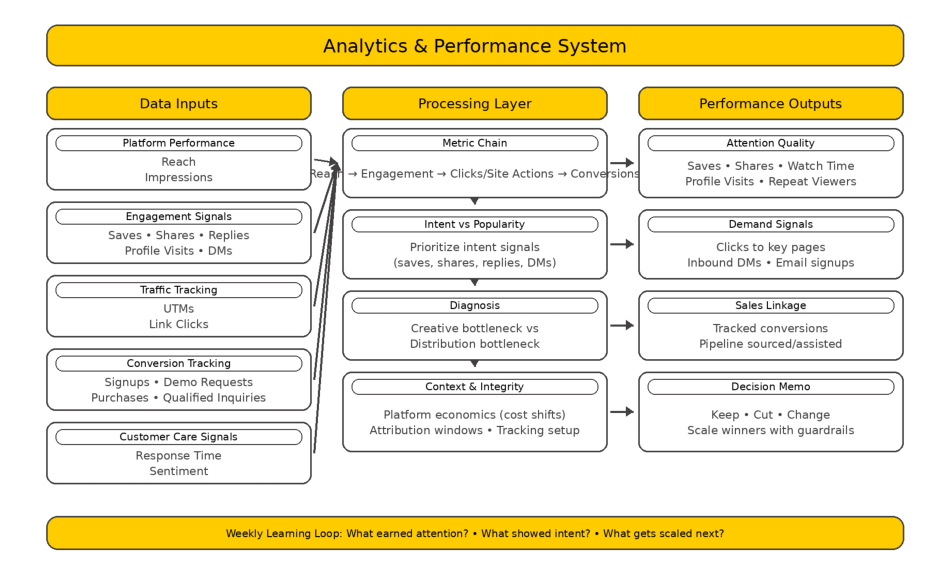
Vanity metrics are not useless, but they’re incomplete. Professional measurement focuses on signals that change what you do next week:
- Attention quality: saves, shares, watch time, profile visits, and repeat viewers.
- Demand signals: clicks to key pages, demo requests, inbound DMs, replies, email signups.
- Sales linkage: tracked conversions, pipeline sourced, assisted revenue, and cohort behavior over time.
On the industry side, it helps to understand how big the social advertising machine is, because it sets expectations for competition and costs. The IAB/PwC Internet Advertising Revenue Report for full-year 2024 (PDF) breaks out how major categories (including social) contributed to overall internet advertising growth, which is a useful context when you’re planning paid amplification and forecasting performance.
Scale with a “winners” mindset
The fastest path to growth is rarely “more new ideas.” It’s getting better at identifying what already works and scaling it responsibly:
- Double down on proven angles: when an idea resonates, make variations before you move on.
- Promote selectively: amplify content that already earned engagement and sparked high-intent actions.
- Systemize repurposing: turn one week’s winners into next week’s distribution plan.
This is the part that makes the strategy feel like a flywheel instead of a treadmill.
Step-By-Step Implementation
A social media promotion strategy becomes real the moment it can survive a normal week: unexpected requests, last-minute approvals, uneven creative energy, and the fact that audiences behave differently on every platform.
This implementation path is designed for that reality. It’s structured enough to keep you consistent, but flexible enough to let you move fast when a trend, a news moment, or a customer conversation opens a door you didn’t plan for.
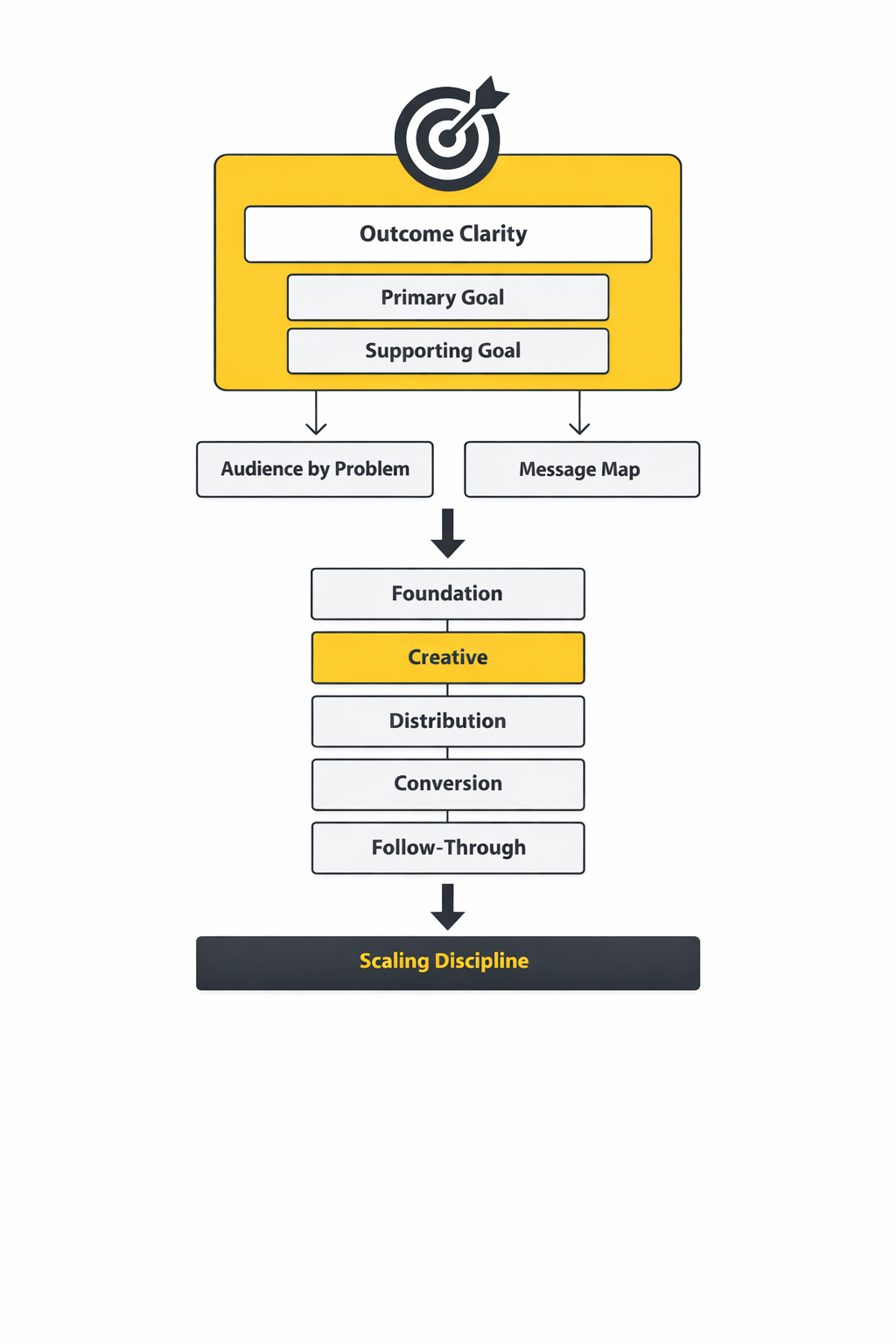
Step 1: Pick one primary outcome and one supporting outcome
The fastest way to sabotage execution is to give social ten jobs at once. Choose one primary outcome for the next 30–60 days (pipeline, trials, revenue, retention, recruitment, brand lift) and one supporting outcome that makes the primary one easier (email signups, webinar registrations, inbound DMs, product page visits).
If leadership expects social to “drive revenue,” you still need a supporting outcome that shows progress before the purchase happens. That’s how you protect momentum and stop the team from chasing random viral spikes that look good in a report but don’t move the business.
Step 2: Define the audience by problem, not by persona
Personas get stale quickly. Problems stay urgent. Write your audience definition as: “People who are trying to achieve X, but keep getting stuck because of Y.”
This makes content easier to create because every post can answer one of three questions: what’s the real obstacle, what’s the smarter approach, and what proof helps someone trust it?
Step 3: Build a “message map” that keeps you on-track
Your message map is your consistency engine. It’s a simple set of narratives you repeat from different angles until the audience can describe you correctly without thinking.
- Belief: what you believe that your audience already suspects is true
- Enemy: what wastes their time or money
- Method: the process you follow (in plain language)
- Proof: what makes this credible (results, demos, customer stories, third-party validation)
- Offer: the next step (the thing you want them to do)
This is also where you decide how you’ll show up culturally. Trend reports can be useful for this, not because you should copy them, but because they reflect how fast formats and behaviors shift. Hootsuite’s Social Trends 2026 report is a good example of the kinds of behavioral shifts you need to account for when you’re building a message map that still feels current months from now.
Step 4: Turn the map into a weekly content plan you can actually ship
A plan that looks impressive but can’t be executed is just procrastination in spreadsheet form. Build a weekly plan around repeatable content types so you’re not reinventing your process every Monday.
- One authority piece: a deeper post that teaches your method
- Two trust builders: behind-the-scenes decisions, teardown posts, lessons learned, or customer-driven insights
- Two conversation starters: questions, hot takes, or myth-busting designed to spark comments
- One conversion moment: a clear next step that doesn’t feel desperate
If you’re working across multiple platforms, keep the idea consistent and adapt the format. The point is to feel native everywhere without multiplying your workload.
Step 5: Build distribution into the plan, not as an afterthought
Most content dies quietly because distribution wasn’t designed. Decide ahead of time how your best posts will travel.
- Repurpose: one strong idea becomes multiple formats across the week
- Activate: teammates or partners add context in their own voice
- Collaborate: creators translate the idea into the audience’s language
- Amplify: paid boosts are used to scale proven winners, not to rescue weak posts
If creator partnerships are part of your plan, it helps to treat them like a serious channel, not a side experiment. The budget shift is visible in IAB’s 2025 creator ad spend and strategy report and the way that data is summarized for business leaders in this Business Insider coverage of creator ad spending growth.
Step 6: Make measurement setup non-negotiable
If your tracking is messy, your optimization becomes storytelling instead of decision-making. Standardize UTMs and define what counts as success before you publish.
For traffic and conversion clarity, the simplest baseline is consistent campaign tagging using Google’s campaign URL builder guidance. For paid social, align your reporting expectations with the attribution logic that platforms actually use, like TikTok’s attribution overview and conversion setup documentation such as Meta Pixel conversion tracking.
Step 7: Create a weekly “learning loop” and protect it
Consistency without learning turns into content treadmill fatigue. A weekly learning loop keeps the strategy alive.
- What earned attention? look for saves, shares, watch time, profile visits
- What showed intent? clicks, signups, demo requests, inbound DMs
- What created resistance? repeated objections, negative sentiment, confusing replies
- What gets scaled next? the winners that deserve variations and amplification
This is where social becomes compounding. You’re not just posting. You’re building a library of proven angles that get stronger every month.
Execution Layers
When implementation feels overwhelming, it’s usually because everything is happening in one messy layer. A clean social media promotion strategy separates execution into layers, so you can improve one part without breaking the others.
Layer 1: Foundation
This is the unsexy part that makes everything else possible: naming conventions, link tracking, access control, approvals, and a place where assets live without chaos.
If your reporting depends on platform data, it’s also wise to plan for change. Social reporting breaks in the real world when platforms deprecate metrics and APIs. Meta’s Page Insights API updates are a good reminder that “professional” includes monitoring what changes upstream.
Layer 2: Creative production
This layer is where ideas become publishable assets. The goal isn’t artistic perfection. It’s repeatable quality that matches the platform’s behavior.
When teams struggle here, it’s rarely because they lack ideas. It’s because they lack templates, a consistent review process, or a production rhythm that keeps drafts moving instead of stalling.
Layer 3: Distribution and amplification
Distribution is the layer that separates “good content” from “content that actually gets seen.” It includes repurposing, creator collaborations, community seeding, employee activation, and paid amplification.
The practical shift is to treat distribution as part of the creative brief. If a post is meant to be repurposed into three formats and boosted to a specific audience, that needs to be decided before it’s published, not after it performs.
Layer 4: Conversion and follow-through
This is where most strategies silently leak revenue. Social creates interest, then the landing page is confusing, the offer is unclear, or the follow-up is slow.
If your plan includes inbound DMs or comments as a lead path, you need routing, response quality, and a handoff process. Consumer expectations around brand responsiveness keep rising, and that pressure shows up clearly in research like the 2025 Sprout Social Index and in broader customer engagement data such as Emplifi’s consumer-brand survey.
Optimization Process
Optimization should feel calm, not chaotic. The point is to build a process that improves performance without forcing constant reinvention.
Weekly: Pattern spotting and fast iterations
Each week, look for patterns that suggest why something worked. Not just “this post got likes,” but what the audience rewarded: clarity, surprise, specificity, vulnerability, proof, humor, speed, or usefulness.
Then create variations that preserve the winning ingredient. This is how you avoid the trap of chasing novelty and instead build repeatable performance.
Monthly: Audience refinement and distribution tuning
Once a month, zoom out. Review which content themes attract the right people and which themes attract the wrong ones. If you’re getting attention from people who will never buy, you’re training the algorithm to show your work to the wrong crowd.
This is also the moment to check whether your distribution plan is doing its job. If your best content isn’t traveling, your problem may not be creative at all. It may be collaboration, repurposing, or amplification discipline.
Ongoing: Measurement integrity for paid amplification
If you use paid social, optimization lives and dies by measurement integrity. Attribution windows, conversion setup, and platform reporting differences can make performance look better or worse than it really is.
Build your expectations around platform definitions first, then layer in your own reporting. TikTok’s documentation is clear about how attribution works and why setup matters, including its attribution overview and supporting measurement guidance like this performance measurement guide.
Implementation Stories
Implementation is easiest to understand when you see what it looks like under pressure: deadlines, scrutiny, and a public audience that can scroll past you in half a second. These stories focus on execution choices, not vague inspiration.
Gap’s “Better in Denim” campaign shows what happens when distribution is designed
The moment the video hit feeds, it didn’t feel like a fashion ad. It felt like a cultural event. People weren’t debating denim fits first, they were replaying choreography, tagging friends, and arguing over why the campaign felt so alive while most brand content feels like wallpaper. The internet did what it always does when something genuinely lands: it spread the clip faster than any media plan could have predicted.
The backstory is that Gap was pushing hard to rebuild cultural relevance, especially with Gen Z. Instead of relying on a traditional “lookbook” approach, the brand leaned into a performance-first piece of content built for social sharing: music, movement, and a cast that represented the audience it wanted to win back. That choice mattered because it made the ad feel native to the feed rather than imported into it. The campaign and its impact are described in this reporting on Gap’s engagement records and in coverage of how Gap’s CEO framed the results on an earnings call.
The wall was the same one every legacy brand hits: attention is expensive, and “good creative” isn’t enough when the audience is trained to ignore ads. Even strong campaigns can disappear if they don’t give people a reason to share. And when you’re trying to climb back into relevance, a campaign that performs “fine” can still feel like failure because the culture moves on instantly. Gap needed something that didn’t just reach people, but made them participate.
The epiphany was that the content had to be built like entertainment, not advertising. The creative wasn’t trying to explain features or push a discount. It was designed to be replayed, remixed, and talked about, which is exactly how social distribution accelerates. When you treat shareability as a product requirement, the rest of the promotion strategy gets simpler because the audience does part of the work for you. That’s the difference between hoping for virality and engineering momentum.
The journey was a full-funnel distribution play, not a one-and-done post. The core video became a hub that drove repeat watch behavior and platform-to-platform sharing, while the campaign extended into real-world activations to keep the story moving. This is how you stop a hit from becoming a one-week spike: you give the audience multiple ways to keep engaging. The scale of the performance is documented across several outlets, including the San Francisco Chronicle’s campaign metrics, Business Insider’s summary of the earnings call, and Sherwood’s reporting on how the campaign was discussed alongside results.
The final conflict showed up where it always does: the louder the campaign gets, the more scrutiny it attracts. People dissect timing, intent, and cultural meaning, and the brand has to stay consistent without turning defensive. At the same time, success creates operational pressure, because more attention brings more comments, more messages, and more people expecting replies. The campaign’s cultural context and reaction cycle are captured in coverage like this People interview with KATSEYE and the broader marketing industry framing in Marketing Dive’s analysis of the campaign’s impact.
The dream outcome is what most brands want from a social media promotion strategy: attention that doesn’t evaporate immediately, distribution that multiplies itself, and a brand moment that feels bigger than a media buy. The bigger lesson isn’t “make a dance video.” It’s that the campaign was built with distribution in mind from the start, which is why it traveled the way it did.
Set standards that reduce decision fatigue
Decide what “good enough to ship” means for each format. A short video doesn’t need the same production bar as a brand film, but it does need clarity, pacing, and a strong hook. When standards are explicit, teams ship faster and argue less.
Build a cadence that survives real life
Cadence beats motivation. Protect a weekly planning block, two production blocks, and one review block. When the calendar is real, the strategy stops depending on someone’s mood or inspiration.
Create a lightweight QA checklist before publishing
- Message: does this clearly reinforce one part of our message map?
- Audience: will the right people recognize themselves in this?
- Next step: is the CTA natural, clear, and frictionless?
- Tracking: are links tagged consistently so we can learn from results?
- Distribution: do we know how this will travel beyond one post?
Make reporting a tool for decisions, not a performance review
Reporting shouldn’t be a monthly ceremony where everyone defends their work. It should be a simple mechanism that answers: what worked, why it worked, and what we’re doing next.
If leadership pressure is high, it helps to frame measurement around the expectations business leaders already have for social impact. This ROI-focused research roundup and the 2025 Sprout Social Index reflect how strongly leadership teams want clearer connections between social activity and business outcomes, which gives you language to defend your measurement plan and protect the learning loop.
Statistics And Data
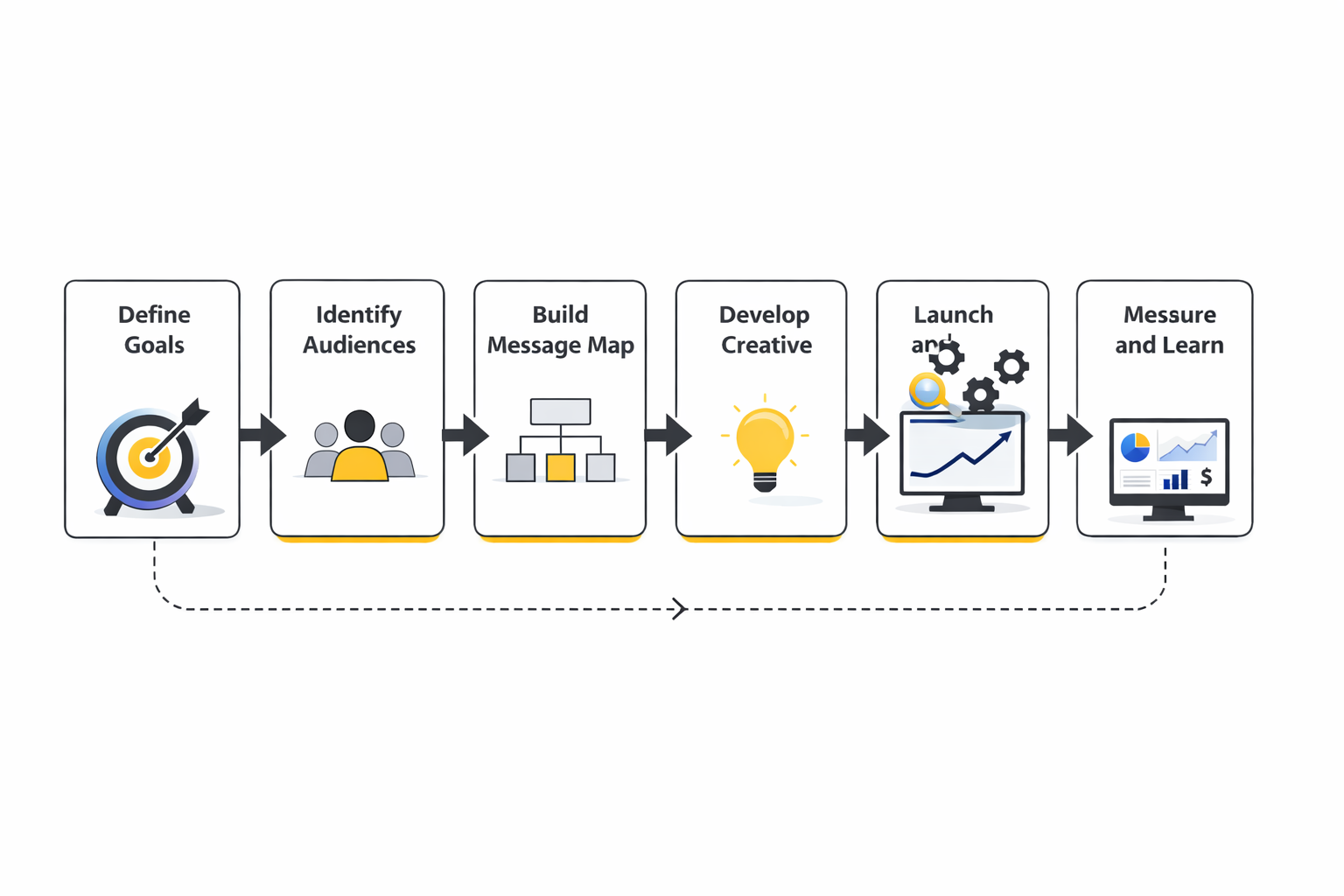
A social media promotion strategy stops being “creative” and starts being “predictable” the moment your decisions are tied to evidence. Not vanity numbers, but signals that tell you what’s working, what’s merely getting attention, and what’s quietly wasting budget.
To ground everything in reality, start with scale and money. The Digital 2025 global overview report puts global social media user identities at 5.24 billion, which is the backdrop for every channel decision you make. The same reporting ecosystem shows that global spend on social media ads in 2024 was close to a quarter-trillion dollars, which is why even small improvements compound fast.
Then zoom in on how platforms themselves are changing. Meta’s own reporting shows ad impressions grew 12% in 2025 and average price per ad rose 9%, which is a polite way of saying: competition is rising, and sloppy campaigns get punished quicker. On the video side, Alphabet disclosed that YouTube revenue across ads and subscriptions exceeded $60 billion in 2025, a reminder that “video-first” isn’t a trend anymore; it’s the default distribution layer for attention.
Performance Benchmarks
Benchmarks are not targets. They’re guardrails. If your numbers are far below the median, it’s usually a signal that the offer, creative, or targeting is off. If your numbers are far above, it’s a cue to scale carefully and protect the conditions that created the win.
For organic performance, start with engagement reality, not wishful thinking. Rival IQ’s latest benchmarking shows engagement fell across major platforms, with declines reported on Facebook, Instagram, TikTok, and X in the 2025 industry benchmark report. That doesn’t mean organic is dead. It means your social media promotion strategy needs fewer “filler” posts and more content designed to earn a specific reaction: saves, shares, replies, and profile visits.
For paid performance, upper-funnel and lower-funnel benchmarks should live in different mental boxes. The “good” view-through rate that builds memory is not the same as the “good” click-through rate that drives purchases. TikTok’s own performance guidance notes that creator collaboration can lift view-through, engagement, and ad recall versus non-creator ads, which is why many teams now benchmark creative formats separately instead of lumping everything into one average.
And don’t skip customer care benchmarks. The modern buyer treats response time like product quality. Sprout’s reporting highlights that nearly three-quarters of consumers expect a response on social within 24 hours. If your brand takes three days to reply, your promotion may still “work,” but it will work harder than it needs to because trust is leaking out of the bucket.
Analytics Interpretation
Most teams don’t fail because they lack data. They fail because they read data like a scoreboard instead of a diagnostic tool. A clean social media promotion strategy treats metrics as clues that answer three questions: did we reach the right people, did the message land, and did it move behavior?
Start with intent signals, not popularity. A spike in likes can be noise. A spike in saves, “copy link,” DMs, or profile clicks is usually intent. When a post drives unusually high profile visits but low clicks, it often means the content created curiosity but your bio, pinned posts, or landing page didn’t finish the job.
Separate creative problems from distribution problems. If reach is weak and engagement rate is normal, distribution is the bottleneck: frequency, timing, format, or platform fit. If reach is strong and engagement collapses, creative or message match is the bottleneck: the hook, the promise, or the audience you bought is wrong for the content you served.
Use platform economics to interpret cost changes. When impressions rise while prices rise too, it usually signals increased demand and better performance for the platform’s ad system. Meta’s disclosure that advertising revenue grew in 2025 due to increases in both impressions and average price per ad is a useful reminder: platforms reward relevance, but they also monetize competition. Your job is to keep relevance high enough that competition doesn’t price you out.
Case Stories
Jasper’s full-funnel reset on LinkedIn
It didn’t look like a “marketing problem” at first. Pipeline was getting tighter, and every campaign felt like it had to justify its existence by next week. The team could feel the brand slipping into the background noise while competitors shouted louder.
Jasper had built momentum, but the story wasn’t landing cleanly. The positioning had to stretch across awareness, consideration, and conversion, and it was starting to tear. They needed a social media promotion strategy that didn’t just chase clicks, but rebuilt confidence from the top of the funnel down.
The wall was measurement and consistency. If the brand ran lead gen, it felt transactional. If it ran brand, it felt impossible to defend in reporting. And when the narrative wasn’t coherent, even good creative got judged as “random content” instead of a system.
The epiphany was to stop treating LinkedIn like a posting channel and start treating it like a full-funnel environment. The rebrand wasn’t just visuals; it was a deliberate sequence of messages that could be repeated without sounding repetitive. The team anchored creative, targeting, and conversion paths to the same promise so every touchpoint reinforced the last.
They went on the journey of building a funnel that could breathe. Awareness creative set context, mid-funnel content handled objections, and conversion offers were timed to audience warmth instead of calendar deadlines. The results were documented in a LinkedIn Marketing Solutions case study showing 6.3M impressions, a 226% increase in qualified leads, and a 40% decrease in cost per lead.
Then the final conflict hit: scale pressure. When results improve, teams rush to “turn it up,” and frequency starts to erode creative quality. Jasper’s challenge became protecting what worked while increasing volume without diluting the message.
The dream outcome wasn’t just cheaper leads. It was a system that could be defended in leadership conversations because it made sense: the story, the funnel, and the metrics aligned. That’s what a grown-up social media promotion strategy looks like when it’s working.
Professional Promotion
If you’re presenting results to leadership or clients, your goal isn’t to impress them with numbers. It’s to make the next decision obvious. A professional-grade social media promotion strategy report does three things: explains what changed, proves why it changed, and recommends what to do next.
Lead with the business question. “Did we increase demand?” “Did we reduce acquisition cost?” “Did we protect brand trust while scaling?” Sprout’s research shows leaders often want clearer linkage between social activity and business outcomes, including direct connections between campaigns and goals. Frame your report the way they think, then show the social metrics as supporting evidence.
Show the chain, not isolated metrics. Reach explains opportunity. Engagement explains message fit. Clicks or site actions explain intent. Conversions explain execution. When you show the chain, stakeholders stop arguing about “likes” because they can see where the funnel held and where it broke.
End with a decision memo. Keep, cut, or change. Scale the winners with guardrails. Fix the bottleneck with a single focused test. Your promotion strategy becomes credible when every recommendation is tied to a specific signal you measured, not a vague promise to “post more.”
Future Trends
The next wave of social isn’t about “new platforms” as much as new behavior. People are learning to trust peers, creators, and communities more than polished brand posts, while platforms keep tightening what they show and why. If your social media promotion strategy is built around doing the same thing louder, you’ll feel the squeeze fast.
AI will change creative velocity and expectations. Teams that win won’t be the ones using AI to churn out more content, but the ones using it to test ideas faster, spot patterns sooner, and ship higher-quality variations without slowing down. That push toward agility shows up clearly in Hootsuite’s Social Media Trends 2026 and in the customer-experience lens of Adobe’s AI and Digital Trends 2026.
“Search” will keep shifting from Google to platforms and AI answers. Discovery is increasingly happening inside social feeds, creator communities, and AI-driven summaries, which means your strategy can’t depend on one traffic source. You’ll need content built for in-platform discovery and credibility, not just click-outs. The disruption to traditional referral traffic and the rise of AI-powered answers are discussed in pieces like Barron’s analysis of search disruption.
Social commerce will behave more like retail operations than advertising. Black Friday performance in the UK showed how fast demand can spike when checkout is frictionless and products are demonstrated natively. The scale of that shift is hard to ignore when TikTok Shop reported 27 items sold per second on Black Friday 2025 and a major weekend lift versus 2024. That kind of velocity forces brands to build inventory planning, creator coordination, and customer care into promotion, not bolt them on after a post goes viral.
Trust will become the real competitive advantage. People are more sensitive to manipulative tactics, vague claims, and brands that disappear when customers reply. Customer expectations and the role of community are baked into modern trend coverage like Sprout Social’s 2026 trends roundup and consumer research like Capgemini’s 2026 consumer trends report.
Strategic Framework Recap
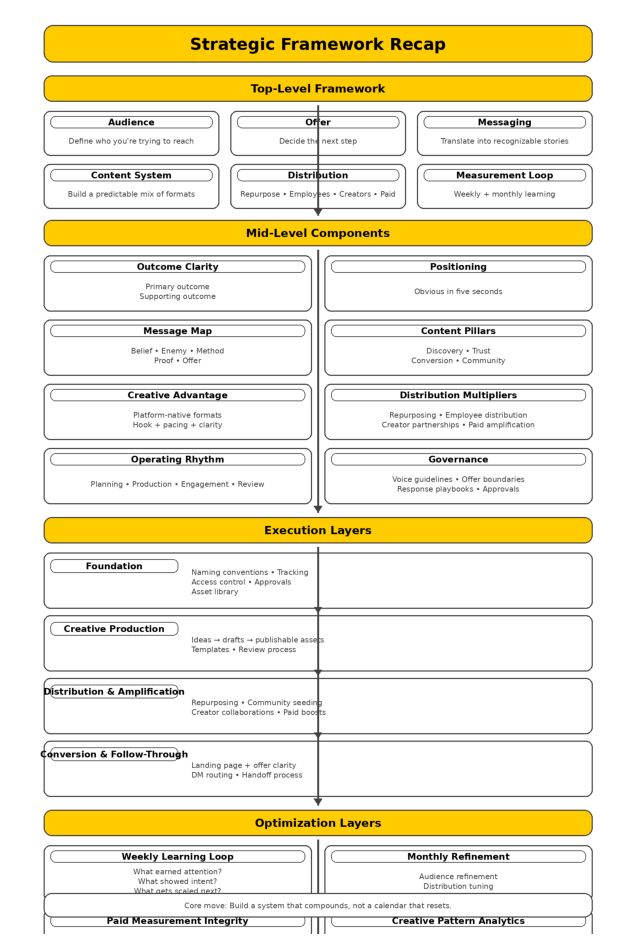
If you want your social media promotion strategy to hold up in the real world, it needs to function like an ecosystem: every part supports the next, and nothing relies on luck.
- Outcome clarity: one primary goal and one supporting goal so decisions stay clean.
- Audience by problem: content that speaks to what people are trying to solve, not what you want to say.
- Message map: a repeatable set of narratives that makes the brand recognizable.
- Execution layers: foundation, creative, distribution, conversion, and follow-through.
- Measurement integrity: tracking that allows learning without debates about what “counts.”
- Learning loop: weekly pattern-spotting and monthly refinement so results compound.
- Scaling discipline: scale winners, protect trust, and use guardrails so growth doesn’t break the system.
The big shift is psychological: you stop asking “What should we post?” and start asking “What system are we building?” That’s how social becomes predictable.
FAQ – Built For This Complete Guide
What is a social media promotion strategy, in plain English?
It’s the plan for how you earn attention and turn it into outcomes. That includes what you publish, how it gets distributed, what you measure, and what happens after people engage so interest doesn’t evaporate.
How long does it take to see results?
Most teams see early signals in 2–4 weeks if they publish consistently and measure properly, but meaningful business outcomes usually require 6–12 weeks of learning cycles. The difference is whether you’re repeating patterns that work or reinventing everything every week.
What should you post when you feel like you’ve run out of ideas?
Go back to your audience’s problems. Answer one objection, one misconception, one “how it works,” one teardown, one behind-the-scenes decision, and one clear next step. Ideas don’t run out; relevance runs out when you stop listening.
How many platforms should one brand focus on?
Start with one primary platform and one secondary platform. Add more only when you can repurpose winners without lowering quality. A strategy that’s “everywhere” but inconsistent usually underperforms a focused strategy that compounds.
How often should you post for consistent growth?
Post at a pace you can sustain for months, not days. Frequency helps, but the compounding effect comes from learning loops: pattern spotting, variation testing, and distribution discipline.
Should you boost posts or run structured campaigns?
Boosting can work when you’re amplifying a proven post that already earned strong intent signals. Structured campaigns are better when you need predictable delivery, controlled targeting, and measurable conversion paths.
What metrics matter most for a social media promotion strategy?
Start with intent signals (saves, shares, replies, profile visits, link clicks), then track business actions (signups, demo requests, purchases, qualified inquiries). Popularity metrics can be helpful context, but they’re not a decision engine on their own.
How do you avoid getting trapped by vanity metrics?
Define success before you publish. If the goal is pipeline, then content must create intent and the follow-through must capture it. If the goal is awareness, you still need indicators that the message landed, not just that it was seen.
What should you do when organic reach drops?
First, don’t panic-post. Check if your creative pattern is losing novelty, your hooks are weaker, or your distribution habits changed. Then double down on winners: remake the best ideas in new formats, collaborate with creators, and amplify proven posts instead of starting over.
How should brands handle negative comments without making things worse?
Respond fast, keep it calm, and move to resolution. If you made a mistake, say so. If it’s misinformation, correct it with clarity and proof. If it’s trolling, avoid feeding it. The goal is to show the silent majority that you’re trustworthy under pressure.
Are there really enough remote marketing opportunities for freelancers right now?
Yes. Even a quick snapshot across major marketplaces shows the volume is massive: Indeed lists 10,000+ marketing jobs in Remote, LinkedIn shows 11,000+ “Marketing Manager Remote” roles in the U.S., and Upwork shows 12,000+ open marketing jobs at the time of writing. Your edge comes from positioning, proof, and a consistent outreach system.
Work With Professionals
You can build a solid social media promotion strategy on your own, but most people hit the same wall: they know what to do, yet they can’t keep the rhythm. Client work, approvals, and life pull the calendar apart, and suddenly the strategy becomes a pile of half-finished drafts and “we’ll get back to it next week.”
If you’re a marketing freelancer, there’s a second pressure too: you don’t just need a better strategy for your clients. You need more clients who value strategy in the first place, not the ones who want endless deliverables for a bargain price.
That’s why marketplaces built specifically for marketing can feel like a shortcut back to momentum. MARKEWORK.com is positioned as a marketing-only marketplace where businesses and marketers connect directly, without platform commissions or per-project fees. The platform makes the model clear: contracts and payments happen outside the platform, and there are no project fees or commissions, so you’re not giving up a slice of every deal you close.
Picture what that changes emotionally. You’re no longer pitching into a general freelancing crowd where marketing is just one category. You’re showing up in a focused environment where companies are already looking for performance marketing, paid social, SEO, lifecycle, analytics, and strategy work, and the platform is designed around speed and direct communication. The “Why Us” page emphasizes direct messaging and no middle layer, which is exactly what you want when you’re trying to close work without friction.
And the demand is real. There are 10,000+ remote marketing opportunities visible across mainstream platforms right now, including 10,000+ Remote marketing jobs on Indeed and 11,000+ Marketing Manager Remote roles on LinkedIn, plus marketplace volume like 12,000+ open marketing jobs on Upwork. When you combine that kind of market size with a niche platform built to remove commissions, you get a simple feeling: you don’t have to beg for work, you just have to show up consistently with proof.
If you want a place where you can build a profile, connect with companies directly, and keep 100% of what you earn because there are no project fees or commissions, the setup is straightforward. Plans are monthly, and the platform highlights predictable costs and direct communication as the core advantage.
 Filip Konecny Enterprises