

Businesses no longer compete only on product quality or price. They compete on attention. And attention today lives inside feeds, stories, short-form videos, communities, and algorithm-driven discovery engines.
That shift has fundamentally changed how brands grow. Instead of treating social platforms as optional promotional channels, companies now rely on experienced social media marketing firms to build sustainable visibility, community trust, and measurable revenue pipelines.
The firms that succeed in this environment are not simply posting content. They are orchestrating data, creative, paid distribution, analytics, and brand positioning into one integrated growth engine. This article explains how that works — starting with the fundamentals.
Article Outline
- What Social Media Marketing Firms Are
- Why Social Media Marketing Firms Matter for Modern Brands
- Framework Overview
- Core Components of Social Media Marketing Firms
- Professional Implementation in Practice
What Social Media Marketing Firms Are

Social media marketing firms are specialized agencies that design, execute, and optimize brand growth strategies across platforms such as Instagram, LinkedIn, TikTok, Facebook, and emerging networks. Their role goes far beyond publishing posts.
At their core, these firms integrate audience research, content production, paid media buying, conversion tracking, and performance analysis into a single coordinated strategy. The goal is not vanity metrics. It is business outcomes — qualified leads, customer acquisition, retention, and brand equity.
In the last two years, the strategic value of professional social management has become clearer than ever. The Hootsuite Social Trends Report highlights how brands increasingly prioritize measurable ROI and full-funnel integration rather than engagement alone. Meanwhile, McKinsey’s analysis of social commerce growth shows how platforms are evolving into direct revenue channels rather than just awareness tools.
Because algorithms, audience behavior, and ad costs constantly shift, most companies lack the internal bandwidth to adapt fast enough. Social media marketing firms exist to close that gap with structured expertise and continuous optimization.
Why Social Media Marketing Firms Matter for Modern Brands
Organic reach has declined across major platforms over the past decade. Paid competition has intensified. Content formats evolve every year. Without strategic oversight, brands often burn budget while seeing minimal growth.
Professional social media marketing firms matter because they operate at the intersection of creativity and analytics. They understand how storytelling influences engagement, how targeting affects cost efficiency, and how conversion tracking ties everything back to revenue.
Recent platform earnings reports underline this shift. In Meta’s 2024 quarterly results, advertising revenue growth continued despite macroeconomic pressures, reinforcing how social platforms remain central to brand investment. At the same time, LinkedIn’s marketing solutions performance updates show sustained demand for B2B targeting capabilities.
What this means in practice is simple: brands are investing more, competition is intensifying, and performance accountability is rising. Social media marketing firms provide the structured systems necessary to navigate that environment without wasting resources.
Framework Overview
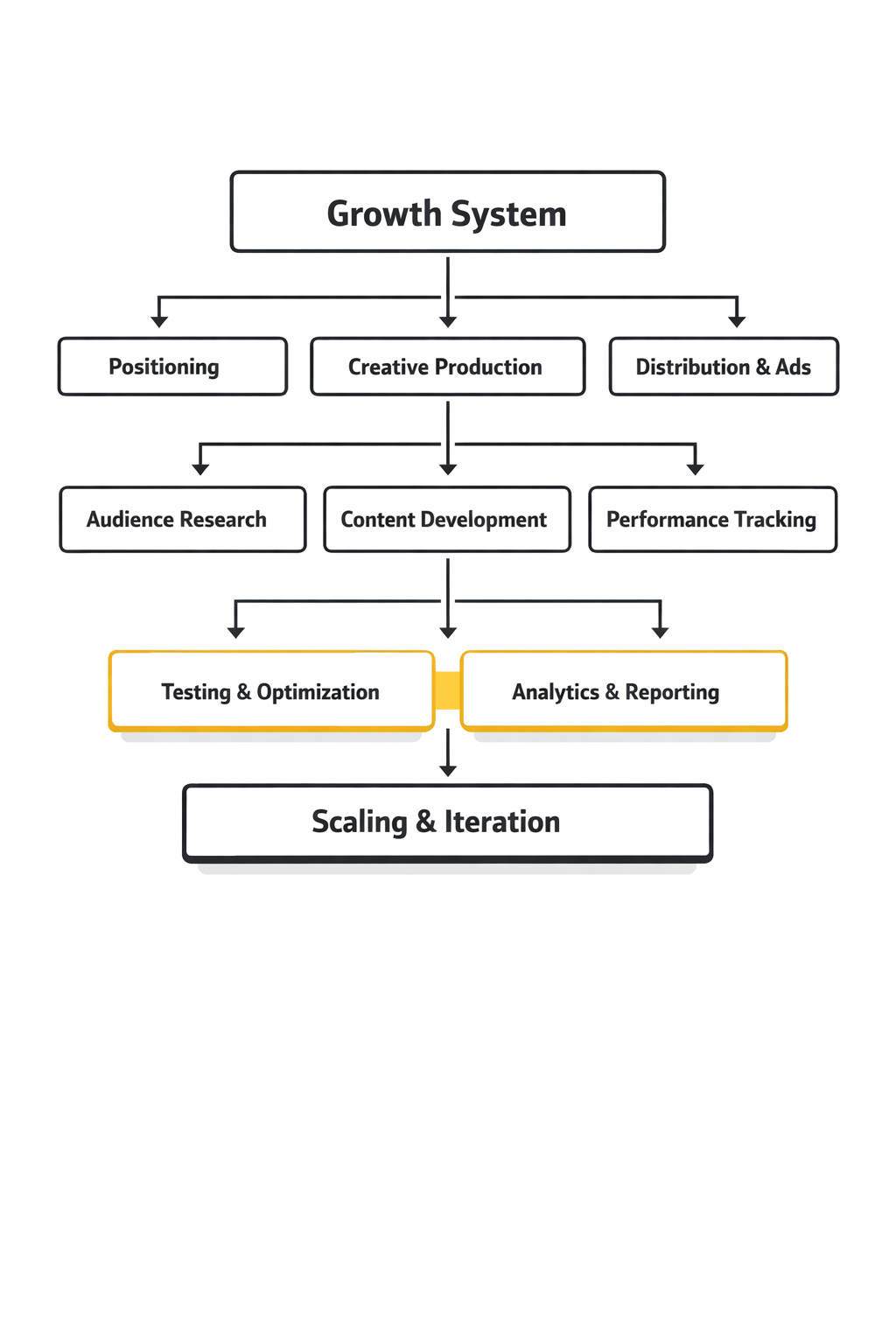
High-performing social media marketing firms rarely operate on improvisation. They rely on a repeatable framework that connects research, execution, and measurement into one continuous cycle.
1. Strategic Positioning
Before any campaign launches, firms clarify brand positioning, audience segments, and competitive landscape. This includes message testing, persona validation, and identifying content angles that resonate within platform culture.
2. Content and Creative Systems
Instead of sporadic posts, firms build structured content calendars aligned with campaign objectives. Video, short-form vertical content, thought leadership posts, and community interactions are coordinated to reinforce a consistent narrative.
3. Paid Distribution Architecture
Organic visibility alone is rarely enough. Firms design paid amplification strategies, optimize bidding models, and refine targeting layers to maintain cost efficiency while scaling reach.
4. Data Integration and Optimization
Every action feeds into performance dashboards. Metrics are interpreted within business context — not in isolation — allowing strategic adjustments that improve return on ad spend and long-term growth.
This framework transforms social activity from reactive posting into a disciplined growth engine.
Core Components of Social Media Marketing Firms
Although each agency structures its services differently, most successful social media marketing firms operate across several core components.
- Audience Intelligence: Data-driven research to understand demographics, psychographics, purchase behavior, and platform preferences.
- Platform Specialization: Deep knowledge of algorithm mechanics and content formats specific to each network.
- Creative Production: Professional copywriting, design, short-form video editing, and brand storytelling aligned with performance goals.
- Performance Advertising: Campaign setup, A/B testing, retargeting systems, and budget optimization.
- Analytics and Reporting: Ongoing performance interpretation tied directly to business KPIs rather than surface metrics.
When these components operate together, social channels stop functioning as disconnected marketing efforts and instead become coordinated acquisition and retention ecosystems.
Professional Implementation in Practice
Execution is where theory either proves itself or collapses. Social media marketing firms distinguish themselves not through promises, but through disciplined implementation.
Professional implementation means clear goal alignment with executive leadership, structured onboarding processes, platform-specific creative adaptation, and continuous testing cycles. It also requires transparency. Clients must understand what is being measured, why it matters, and how it influences revenue.
Strong firms establish predictable reporting cadences, refine creative based on performance signals, and adjust targeting strategies as market conditions change. Over time, this iterative approach compounds results.
In the next section of this article, we will move deeper into measurement, analytics infrastructure, and the ecosystem surrounding social media marketing firms — including how brands evaluate and select the right strategic partner.
- Step-by-Step Implementation
- Execution Layers
- Optimization Process
- Implementation Stories
- Professional Implementation Playbook
Step-by-Step Implementation
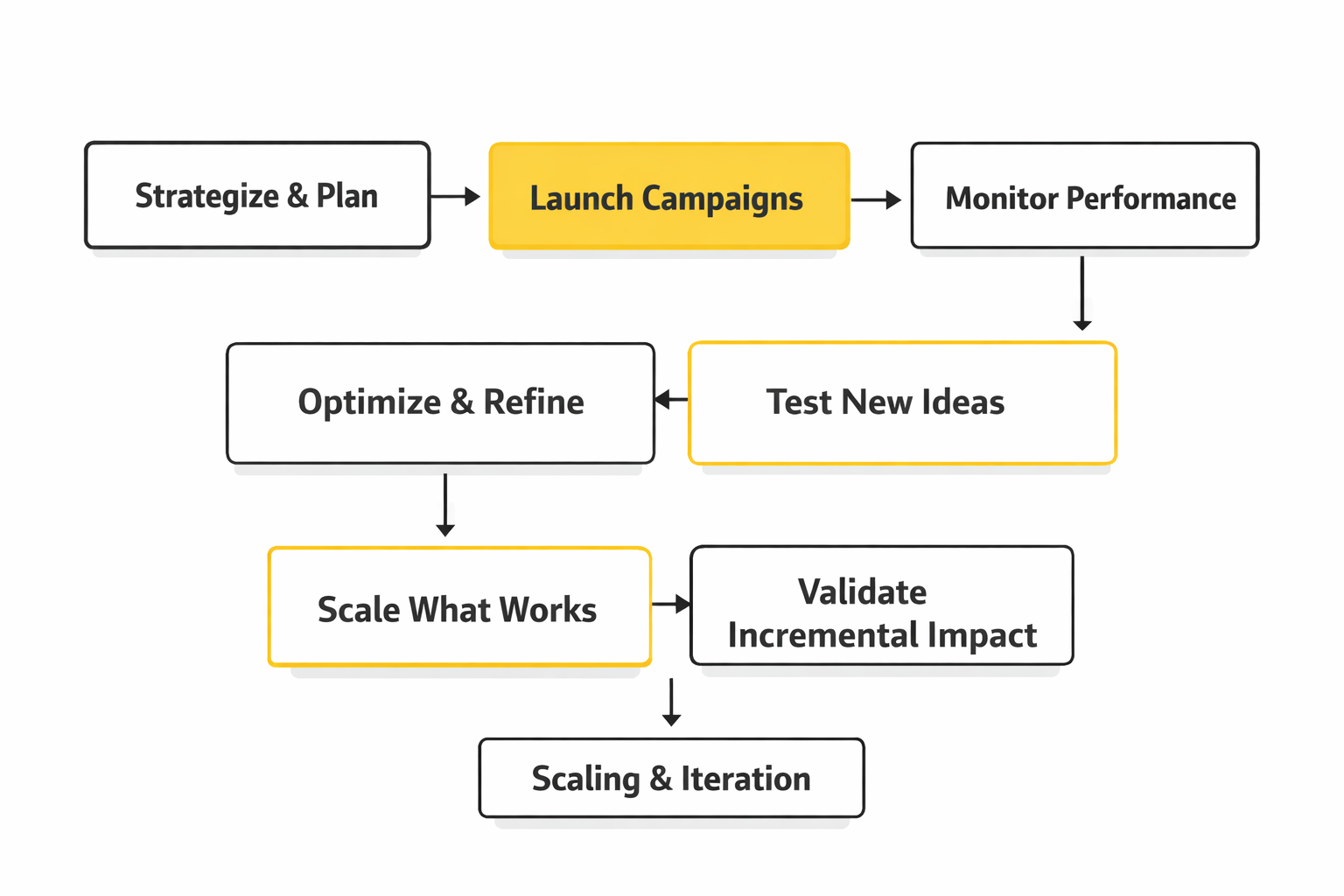
When social media marketing firms take over execution, the biggest risk isn’t “bad posts.” It’s a messy handoff: unclear goals, broken tracking, scattered brand assets, and a calendar that looks busy but doesn’t move the business. A clean implementation fixes that from day one, so the team can scale without guessing.
Here’s a step-by-step approach that works whether the firm is managing one brand account or a global portfolio.
Step 1: Lock the business outcome before touching content
Start with one primary outcome and one secondary outcome, not five. If the goal is revenue, define which conversion matters (purchase, qualified lead, booked call) and how it will be verified. If the goal is pipeline, define what counts as a qualified action and where that data lives.
Step 2: Build measurement first, then build campaigns
Measurement needs to survive modern privacy and browser constraints, which is why server-side connections have become part of “basic setup” for many teams. Social media marketing firms typically implement resilient event sharing through tools like Meta’s Conversions API, TikTok Events API, and LinkedIn conversion tracking via the Insight Tag.
Then they standardize campaign naming and link tagging so reporting doesn’t turn into detective work later. The mechanics of consistent campaign tagging are grounded in Google Analytics campaign measurement rules.
Step 3: Audit creative inputs and brand constraints
Before creating anything new, firms collect what already exists: best-performing ads, top organic posts, brand guidelines, product differentiators, customer objections, and customer language. This step prevents “pretty content” that has no strategic edge. It also sets realistic production constraints so content can be shipped consistently, not heroically.
Step 4: Map content to the customer journey
Social media marketing firms typically build a simple map: awareness content that earns attention, consideration content that explains and reassures, and conversion content that removes friction. The goal is a balanced pipeline of posts and ads, so the brand isn’t stuck shouting “buy now” at cold audiences.
Step 5: Launch in controlled batches
Instead of launching everything at once, firms usually roll out in phases: a baseline campaign set, a baseline organic cadence, then a measured expansion into additional formats. This keeps learning clean. It also reduces internal stress because the team can actually interpret results and improve rather than constantly reacting.
Step 6: Set a weekly optimization cadence that can’t be skipped
Implementation isn’t finished when campaigns go live. It’s finished when the team has a repeatable weekly operating rhythm: performance review, creative review, audience review, and next-week production decisions. That’s how small improvements compound into real growth.
Execution Layers
The easiest way to understand how social media marketing firms execute is to imagine layers stacked on top of each other. Each layer makes the next one work better, and skipping a layer almost always shows up later as wasted spend, inconsistent content, or “we can’t explain what’s driving results.”
Layer 1: Data and tracking foundation
This is the plumbing: pixels, server-side events, conversion definitions, attribution settings, and consent-aware data handling. Without it, optimization becomes cosmetic. With it, the firm can confidently scale what’s working and cut what isn’t.
On TikTok, that foundation often includes a server-to-server data connection through Events API. On Meta, the same role is played by Conversions API, alongside privacy controls such as Meta’s data processing options for compliant signal handling.
Layer 2: Creative system
This layer defines how content gets produced and shipped: briefs, templates, editing standards, review loops, and an asset library that prevents constant reinvention. Social media marketing firms that scale well treat creative like a system, not a burst of inspiration.
Layer 3: Distribution strategy
Distribution is where many brands fall apart. They post content and hope it travels. Firms build distribution intentionally: paid amplification for winners, retargeting for warm audiences, and sequencing that reflects real buying behavior.
This matters because social has become a major budget destination. The IAB/PwC Internet Advertising Revenue Report for full-year 2024 shows social media advertising revenue reaching $88.8B in 2024, reinforcing how competitive the channel has become.
Layer 4: Community and reputation layer
Brands don’t just publish; they interact. Firms manage comments, DMs, and community feedback in a way that protects the brand and improves conversion. Social customer care expectations are now part of performance: the 2025 Sprout Social Index insights on social customer care highlight how fast response expectations have become.
Layer 5: Analytics and decision layer
This layer turns activity into decisions. It’s dashboards, yes, but more importantly it’s interpretation: what changed, why it changed, and what the team is doing next. Without this layer, performance reporting becomes a weekly ritual with no momentum.
Optimization Process
Optimization is where social media marketing firms earn their fees. Not because they “tweak settings,” but because they run a disciplined loop that turns signals into action without overreacting to noise.
1) Diagnose the bottleneck before changing anything
If results are down, firms first identify the bottleneck: is it creative fatigue, audience saturation, offer friction, landing page performance, or measurement loss? This prevents the common mistake of changing everything at once and learning nothing.
2) Improve signal quality, not just targeting
When signal quality is weak, platforms optimize blindly. That’s why many firms prioritize resilient event connections that send cleaner conversion signals to ad systems. TikTok positions Events API as a reliable bridge for web, app, and offline signals, and Meta frames Conversions API as a direct connection between marketing data and ad delivery.
3) Refresh creatives using a planned cadence
Creative fatigue is rarely dramatic; it’s a slow leak. Firms watch for early signs like rising frequency, falling click quality, and conversion rate decay, then rotate concepts without wiping out what the algorithm has learned. Practical guidance on refresh timing and fatigue signals is laid out in resources like Socium Media’s breakdown of paid social creative fatigue.
4) Run controlled tests that actually teach something
Serious testing doesn’t mean “change five variables and hope.” It means isolating one meaningful variable and giving it enough time and volume to produce a real signal. The logic behind clean experimentation is consistent with research discussions around randomization and statistical rigor in systematic A/B testing methodology.
5) Prove incrementality when stakes are high
When budgets grow, attribution debates grow with them. Firms increasingly validate performance using lift testing approaches rather than relying on last-click logic alone. TikTok’s write-up on Conversion Lift studies explains how brands can measure incremental impact beyond standard reporting.
Implementation Stories
It’s easy to describe implementation in checklists. It’s harder to appreciate what it feels like in the moment, when the pressure is real and the company needs clarity fast. These are real stories from brands and partners that show what implementation looks like when the work is done properly.
Guerlain: When Signal Loss Started Quietly Breaking Performance
The performance team noticed something unsettling: reported conversions no longer matched what the business could feel happening in reality. Campaigns still spent, dashboards still updated, but confidence was slipping week by week. The scariest part was that nobody could point to a single “broken” thing.
The backstory was familiar to many brands. Measurement had been built for a simpler era, and small losses in tracking had accumulated into a gap that made optimization harder. When the brand wanted to scale, the team couldn’t do it without risking budget on incomplete signals.
Then the wall arrived. Internal stakeholders started questioning results, and the team couldn’t defend performance with the certainty they used to have. Media optimization became slower because every decision triggered a second conversation: “Is that real, or is tracking missing it?” Momentum stalled at the exact time the business wanted to move faster.
The turning point came when the team reframed the work as “signal resilience,” not “tracking setup.” Instead of obsessing over one dashboard number, they focused on rebuilding the data connection the platform needs to learn and optimize. That shift made the next step obvious: strengthen server-side signal flow.
The journey went through Conversions API implementation and a tighter measurement architecture that could withstand modern browser and privacy constraints. In the case study library from fifty-five, Guerlain is described as achieving an 18% uplift in tracked conversions through Conversions API signal resilience work. That number matters less than what it represents: the platform could “see” more of what was already happening, and optimization regained traction.
Then the messy part hit: making sure the new signals were consistent, deduplicated, and trusted across teams. When event definitions drift, the system becomes unreliable again, just in a different way. The implementation required discipline so improvements didn’t collapse under inconsistency.
The outcome was a return to confidence. Performance decisions became defendable again because measurement was closer to reality. And once the team could trust the signal, they could scale with far less fear.
Arçelik: When Better Data Became the Difference Between “Ads” and Growth
The team could see the opportunity, but they couldn’t capture it cleanly. Audiences were there, demand existed, and creative was shipping — yet results weren’t compounding the way they should. Every optimization felt like it helped a little, then hit an invisible ceiling.
The backstory was a market where leveraging data was becoming mandatory, not optional. As platforms tightened privacy and attribution got noisier, campaign learning depended more on high-quality event signals. Without reliable inputs, targeting and optimization became less predictable.
Then the wall came quickly. Audience segments weren’t growing in the way the team expected, and conversion signals weren’t as rich as they needed for the algorithm to learn. The team wasn’t failing at marketing; they were running with incomplete data.
The insight was that “better creative” wasn’t the only lever. The algorithm needed more reliable events and stronger audience foundations, and that required a different kind of implementation work. Instead of chasing another round of surface-level tweaks, they moved to strengthen the data layer.
The journey included integrating TikTok’s Events API to increase event volumes and improve audience segmentation inputs. TikTok’s case study on Arçelik describes how the team integrated Events API to enhance audience segments and increase event volumes, connecting the work directly to measurable performance improvements.
The conflict, as always, wasn’t just technical. Event setups need ongoing governance: definitions, quality control, and making sure the team doesn’t accidentally break the pipeline during future site changes. Implementation meant building habits, not just finishing a setup task.
The outcome was a clearer learning environment for the ad system and a more scalable optimization loop. Better inputs made targeting decisions sharper, measurement more dependable, and the team’s work feel less like guesswork. That’s what strong implementation does: it turns effort into compounding results.
Professional Implementation Playbook
Social media marketing firms that deliver consistently treat implementation like a product. The playbook below is what keeps outcomes stable across different clients, different platforms, and different market conditions.
Make tracking a shared responsibility
Marketing owns the definitions. Analytics or engineering often owns the deployment. Leadership owns the expectation that tracking must be reliable before budgets scale. When ownership is unclear, tracking becomes “someone else’s problem,” and performance always pays the price.
Use platform-native signal tools, but keep your logic independent
Platforms will tell you how they want data sent, like Meta’s Conversions API and TikTok Events API. Social media marketing firms follow those requirements while keeping internal logic consistent: one event dictionary, one naming system, one rule set for what counts as a conversion.
Operate with a weekly “decisions meeting,” not a weekly “reporting meeting”
Dashboards don’t improve performance; decisions do. Professional teams show results, explain why they moved, and then commit to next actions: what gets cut, what gets scaled, what gets tested, and what creative gets produced next.
Protect momentum with governance that stays lightweight
Approvals should protect the brand without slowing it to death. Firms typically define content tiers (routine posts vs sensitive posts), escalation rules for reputation issues, and a clear on-call process for spikes in comments or crises. This is how execution stays fast without becoming reckless.
Track what matters in the market, not just in your account
Strong firms pay attention to the macro environment because it shapes what “good performance” even means. Social ad growth is still accelerating in many regions; IAB Europe notes social media advertising grew 23.9% in Europe in 2024, which often translates into tougher auctions and higher expectations for creative quality and measurement.
That’s why the best implementation is never a one-time setup. It’s a living operating system that keeps improving as platforms, competition, and audience behavior change.
- Statistics and Data
- Performance Benchmarks
- Analytics Interpretation
- Case Stories
- Professional Promotion
Statistics And Data
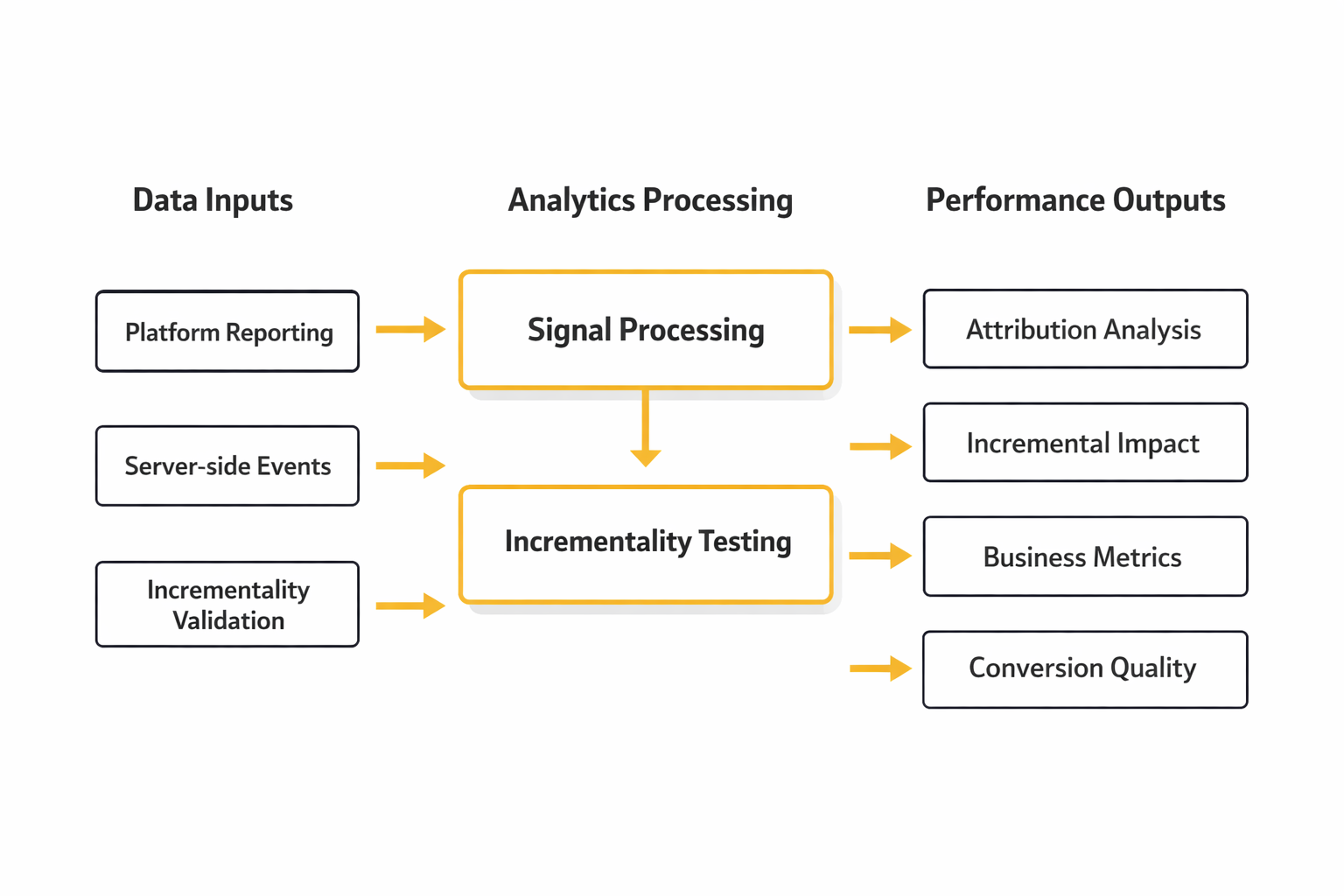
If you want to understand why social media marketing firms have become such a big part of modern growth teams, start with the money and the momentum. The market is expanding, and the fastest-growing budgets tend to flow toward channels where performance can be measured, optimized, and defended in a boardroom.
In the U.S., digital advertising revenue reached $258.6 billion in 2024, up 14.9%, with the same figures echoed in a financial summary of the report at Yahoo Finance and industry coverage from Marketing Dive.
Social is not only getting bigger; it’s also getting more expensive and more competitive. Meta’s latest financial updates show the platform delivered more ad supply while pricing moved upward at the same time. Their 2025 results note that ad impressions rose while average price per ad increased, with the same trend summarized by PR Newswire’s distribution of the release and analyzed by WARC.
Creators have also become a budget line item, not an experiment. The IAB projects U.S. creator ad spend will reach $37 billion in 2025, with the underlying report detailing growth from $29.5 billion in 2024. That projection is reinforced in mainstream coverage from Business Insider and Deadline.
For clients, this is the real takeaway: the channel is growing, auctions are tightening, and measurement expectations are rising. Social media marketing firms exist to make sure the numbers tell a coherent story and that the work behind those numbers can scale without falling apart.
Performance Benchmarks
Benchmarks are useful, but only when they’re treated like guardrails instead of targets. Social media marketing firms use benchmarks to catch problems early, explain results to stakeholders, and set realistic expectations for what “good” looks like in a given market.
Market-level benchmarks that actually matter
- Demand pressure: When a platform reports rising ad prices alongside rising impressions, it’s a signal that competition is increasing while inventory expands. Meta’s 2025 reporting shows year-over-year increases in ad impressions and average price per ad, echoed by EMARKETER’s recap and independent earnings coverage.
- Total digital growth: Strong year-over-year expansion in overall digital ad revenue suggests broader advertiser confidence and continued budget shifts toward measurable channels. The 2024 result of $258.6B (+14.9%) is reinforced by Yahoo Finance and Marketing Dive.
- Creator investment as a benchmark: When creator ad spend is projected at $37B in 2025, it signals that performance marketers now treat creators as part of the funnel, not just brand marketing. The projection is consistent across IAB’s report and media coverage from TVTechnology.
Operational benchmarks social media marketing firms track internally
Some of the most meaningful benchmarks don’t show up in a platform dashboard. Firms track them because they predict performance before performance drops.
- Creative throughput: how many usable creatives ship per week, and how quickly new concepts replace fatigue.
- Learning stability: how often campaigns are restarted, restructured, or disrupted by frequent edits.
- Signal reliability: whether event tracking remains consistent through site changes and consent updates, guided by platform measurement standards like Meta’s Conversions API and TikTok Events API.
- Response speed: how quickly the brand replies to comments and messages, which is increasingly tied to expectations described in social customer care research such as Sprout Social’s customer care insights.
Analytics Interpretation
Analytics isn’t a scoreboard. It’s a translation layer between what the platform is doing and what the business needs. Social media marketing firms earn trust when they can explain why performance changed and what that means for the next decision.
Start with the question: “What changed in the system?”
When results shift, firms look for systemic drivers before they blame creative or budgets. If costs rise across multiple campaigns at once, the cause is often auction pressure, seasonality, or macro demand rather than one “bad ad.” Market-wide signals like rising ad prices on major platforms are exactly why firms pay attention to financial disclosures such as Meta’s reporting on pricing and impression trends.
Separate platform-reported results from incremental impact
Attribution is not truth; it’s a model. Firms increasingly validate impact with incrementality methods when budgets get meaningful. TikTok’s measurement documentation for Conversion Lift Study explains the core idea: test exposed vs non-exposed groups to estimate what the ads caused, not what they merely coincided with.
Interpret funnel health, not single metrics
A low click-through rate can be fine if the audience is cold and the creative is designed for awareness. A high click-through rate can be misleading if traffic quality is poor. Social media marketing firms interpret data through funnel balance: are we expanding attention efficiently, building intent, and converting demand without burning out audiences?
Turn insights into a weekly decision loop
The most useful reporting format is a short set of decisions: what gets scaled, what gets cut, what gets rebuilt, and what gets tested next. That’s why many firms standardize a weekly rhythm that connects measurement to action, using structured campaign tagging principles like Google Analytics campaign measurement rules so reporting stays consistent as the program grows.
Case Stories
Case studies are often written to sound smooth. Real implementation never is. The most useful stories show the tension: what was breaking, what finally clicked, and what had to be rebuilt so results could hold.
Domino’s Spain: Proving What TikTok Actually Caused
The campaign looked like it was working, but the team felt a familiar unease: the numbers were moving and yet the “why” was still fuzzy. People were seeing ads, people were engaging, and there was plenty of activity to celebrate. But leadership wanted the hard answer that always shows up when budgets rise: did TikTok actually drive incremental business outcomes, or did it simply ride the wave of demand?
The backstory was a moment that made the stakes higher. Euro 2024 created a surge of attention, and the brand leaned into the cultural moment with a full-funnel approach. When a major event drives demand, attribution gets noisier because multiple channels move at once, and “we think it helped” isn’t good enough for serious investment. The team needed a measurement approach that could survive scrutiny.
Then the wall hit. Traditional reporting could show conversions, but it couldn’t confidently separate what would have happened anyway from what the ads truly influenced. The stronger the event-driven demand, the easier it is for dashboards to over-claim credit. Without incrementality, the team risked either underinvesting in a channel that worked or overspending on results that were not truly caused by ads.
The breakthrough came from switching the question. Instead of asking “How many conversions did we get?”, they asked “How many conversions did we create that wouldn’t have happened otherwise?” That shift pushed measurement from reporting into experimentation. And once the measurement method was clear, creative and media decisions became easier to defend.
The journey moved into incrementality testing with TikTok’s lift methodology, designed around exposed vs non-exposed groups and multi-signal outcomes. TikTok’s Domino’s story describes how the brand used an omnichannel Conversion Lift approach and also looked at search behavior changes tied to ad exposure. The emphasis wasn’t on one metric; it was on connecting awareness behavior, intent signals, and purchase outcomes into one measurement narrative.
The final conflict wasn’t statistical. It was organizational: making sure stakeholders trusted the method enough to act on the results. Lift studies can be misunderstood, and when teams aren’t aligned on what the test proves, the work gets stuck in debate. The brand had to communicate the method clearly so the insight didn’t die in a slide deck.
The outcome is what social media marketing firms aim to deliver for clients: clarity that changes decisions. Instead of arguing over attribution models, the team could talk about incremental value and budget allocation with more confidence. And once you can prove what a channel causes, you can scale with less fear and fewer politics.
Professional Promotion
This section isn’t about hype. It’s about how social media marketing firms present results in a way that’s persuasive, accurate, and still easy for non-marketers to understand.
Promote outcomes, not activity
Clients don’t buy content calendars; they buy momentum. Professional firms frame wins around outcomes like conversion growth, lower acquisition costs, stronger lead quality, and measurable incremental impact. That framing fits the market reality shown by continued expansion in digital advertising revenue, where competition rewards the teams that can prove and optimize value.
Use “proof stacks” instead of cherry-picked screenshots
Strong reporting combines multiple layers of proof: platform delivery metrics, web analytics consistency, conversion event reliability, and (when needed) incrementality validation. Measurement tools and methodologies like conversion lift testing exist for a reason: they help teams avoid over-claiming impact when multiple channels are moving at once.
Show what you changed, not just what happened
When results improve, the professional move is to document the decisions that created the change. Firms that retain clients typically show a clear chain: insight, decision, implementation, and outcome. That’s how reporting becomes a story of competence rather than a monthly data dump.
Make the next step irresistible and low-risk
The best promotion in analytics is a clear next action that feels safe: “Here’s what we learned, here’s the bet we want to place next, and here’s the measurement method we’ll use to know if it worked.” In an environment where platform economics shift quickly, signals like rising ad prices alongside rising impressions are a reminder that winning is less about one clever campaign and more about running a system that improves every week.
Advanced Strategies
Once the basics are stable, social media marketing firms shift from “making campaigns work” to building systems that scale without breaking. That’s where advanced strategy lives: in the decisions that protect performance when budgets grow, creative volume spikes, and platforms change rules mid-quarter.
Build a creative supply chain, not a creative calendar
At scale, the bottleneck is rarely media buying. It’s creative throughput: how fast the team can produce, test, learn, and refresh without turning the brand into a factory of repetitive ads. TikTok’s own case studies often spotlight creative volume as a growth lever, including brands that scaled output via structured programs like TikTok Creative Challenge workflows for SKIN1004 and optimization tactics noted in Quay’s methodical creative refresh cadence.
Advanced firms don’t chase “more content” for its own sake. They build repeatable creative patterns: a few winning hooks, a handful of proof formats, and multiple edit variants that can be shipped weekly. The result is a pipeline where fresh ideas are a predictable output, not a stressful event.
Shift from attribution arguments to incrementality proof
When budgets get meaningful, teams stop arguing about which platform “deserves credit” and start proving what the ads actually caused. That’s why lift testing is becoming a core scaling tool, not a niche measurement technique. TikTok’s documentation on Conversion Lift studies exists because platforms know advertisers need incremental evidence, and TikTok’s case story on Quay’s lift results across search, add-to-cart, and purchases shows how that proof can unlock confident scaling decisions.
Engineer better signals to make algorithms smarter
Advanced scaling often comes from signal quality, not targeting tricks. Many firms invest in server-side measurement and stronger event foundations so platforms receive cleaner conversion inputs and can optimize more reliably. That approach is supported by platform measurement frameworks like Meta’s Conversions API and TikTok’s Events API, which are built specifically to strengthen how conversion data reaches the ad system.
Turn creators into performance assets, not just awareness boosts
Creator marketing is no longer a side quest, and the spending trajectory makes that hard to ignore. IAB’s research points to a market heading toward $37B in U.S. creator ad spend in 2025, with the PDF detailing growth from $29.5B in 2024 and coverage reinforcing the shift from outlets like Business Insider.
Advanced firms treat creators as a scalable content engine with performance accountability. They standardize briefs, approvals, and reuse rights so the best creator assets can be repurposed across paid formats without legal or operational friction. They also protect brand safety by building disclosure and review workflows that don’t slow the program to a crawl.
Use platform economics as a strategy input
Scaling isn’t only about what you do inside an ad account. It’s also about what the market is doing to you. Meta’s 2025 reporting highlights how ad impressions increased while average price per ad also increased, and that combination is a reminder that competition can rise even when inventory expands.
Advanced firms plan for this by building efficiency buffers: stronger creative testing, tighter conversion paths, and clearer measurement so performance remains defendable when the auction gets more expensive.
Scaling Framework
Scaling works when it’s treated like an operating system. Social media marketing firms that scale well follow a framework that protects learning, prevents creative fatigue, and keeps measurement trustworthy as spend grows.
Stage 1: Stabilize the foundation
This stage is about consistency and reliability: stable event tracking, clean naming conventions, and a baseline creative system that ships every week. If tracking is unreliable, scaling only multiplies confusion, which is why measurement infrastructure built around campaign tagging discipline in Google Analytics and resilient event connections like Conversions API or Events API shows up early in mature programs.
Stage 2: Expand what already works
Firms scale by widening distribution of proven winners before they invent new complexity. That means taking the best creative concepts and multiplying them across new edits, hooks, formats, and audiences while keeping the core message intact. TikTok case studies that emphasize systematic growth often describe this “compound the winners” dynamic, such as the growth blueprint described in Loop’s scaling story across spend and markets.
Stage 3: Add new growth levers one at a time
Once winners are scaled, the next phase is controlled expansion into additional levers: new placements, new markets, new offers, new creator pipelines, or new measurement validation methods. The rule is simple: one new lever at a time, or the team loses the ability to learn what actually drove change.
Stage 4: Prove incrementality and defend budgets
At higher spend, the question becomes political as much as performance-based: “Is this channel actually creating growth, or is it claiming it?” Lift testing and controlled experiments become the defense mechanism. TikTok’s materials on Conversion Lift and the detailed outcomes in Quay’s incremental lifts are examples of how teams move from reporting to proof.
Growth Optimization
Growth optimization is what happens after you’ve earned the right to scale. Social media marketing firms optimize growth by tightening the loop between creative, measurement, and iteration so performance compounds rather than swings.
Optimize for learning velocity, not constant tweaking
Constant edits can feel productive while quietly destroying learning. Strong teams protect stability by grouping changes into scheduled cycles: weekly creative decisions, weekly audience decisions, and clear rules for when not to touch campaigns. That’s how the program gets smarter instead of just busier.
Upgrade signal quality to upgrade optimization quality
If the system can’t “see” conversions clearly, it can’t learn efficiently. That’s why growth-focused firms invest in better event transmission and data hygiene, using platform standards like Meta’s server-side event setup and TikTok’s Events API to strengthen the conversion feedback loop.
Use market data to explain performance shifts before clients panic
When ad prices rise, clients often assume the team is doing something wrong. Market signals help explain reality and protect trust. Meta’s reporting that pricing and impressions rose together is the kind of context that lets a firm say, “Here’s what changed in the market, here’s how we’re responding, and here’s what we’re testing next.”
Expand distribution through formats, not just budgets
Scaling a budget without scaling formats often leads to fatigue and diminishing returns. Growth optimization typically means expanding into additional creative styles, creator assets, and platform-native formats. LinkedIn’s increasing emphasis on video as a growth driver, including the expansion covered in Reuters reporting on LinkedIn’s BrandLink expansion and video growth, is a reminder that platforms reward teams who evolve with format shifts.
Scaling Stories
Scaling always sounds clean in hindsight. In reality, it’s a sequence of pressure moments where the team either installs a system that holds, or keeps improvising until performance collapses. These stories show what scaling looks like when a real brand pushes harder and the details start to matter.
Loop Earplugs: Scaling Spend Without Losing Profitability
The first sign of trouble didn’t look like failure. Sales were climbing, the team was spending more, and the dashboard looked exciting. But behind the excitement was a fear every growth team recognizes: “What happens when we turn the dial up and the numbers break?”
Loop had momentum and a product that people genuinely wanted, which is the best possible starting point and the most dangerous illusion. When demand is strong, it’s easy to assume every channel is the reason. The team needed a way to scale that didn’t rely on luck or one-off creative hits.
Then the wall arrived as the spend increased. Scaling spend can inflate frequency, burn out audiences, and raise acquisition costs even when revenue grows. The team faced the classic scaling dilemma: push harder and risk efficiency, or stay cautious and cap growth.
The turning point came from treating scaling like a blueprint, not a budget decision. Instead of chasing new audiences endlessly, the team focused on repeatable structures: creative testing, disciplined optimization, and expansion decisions tied to profitability. They also leaned into the idea that one market can be a template for the next when measurement and execution are consistent.
The journey turned into controlled scaling: increasing investment while maintaining performance targets, then using the strongest market as proof that the system could travel. TikTok’s case story describes how UK success became a blueprint for growth, including a 9x increase in spend while keeping ROAS on target. It also notes that Loop grew 2024 sales volume more than 4x year over year with only a modest CPA increase, which is the kind of efficiency story that makes scaling feel safe.
Then the messy part hit: expansion adds complexity. New markets mean new creative nuance, new competitive pressure, and new operational load, and a system that works in one country can wobble in another. The team had to prevent the “copy-paste scaling” mistake by adapting while keeping the measurement spine consistent.
The outcome is the scaling dream social media marketing firms sell, but rarely deliver without systems: more spend, more markets, and more revenue without sacrificing profitability. The brand gained confidence to expand into new regions and new commerce motions described in the same Loop growth blueprint. And most importantly, the team didn’t just get bigger results—they built a repeatable way to keep getting them.
Quay: Using Incrementality Proof to Scale with Confidence
The pressure didn’t come from a crash. It came from ambition. Quay had a strong presence on TikTok and wanted to drive lower-funnel outcomes, but scaling spend without proof can feel like gambling with brand money.
The backstory was a common leadership tension: performance teams can show platform results, but executives want causal certainty. When multiple channels run at once, attribution can flatter the story. The team needed a measurement method that could survive skepticism and still guide growth decisions.
The wall was the credibility gap. Standard reporting could show conversions, but it couldn’t convincingly answer the question, “What did TikTok actually cause?” Without that answer, scaling decisions stayed fragile, because any stakeholder could challenge the channel’s true value.
The epiphany came from reframing the goal. Instead of optimizing only for ROAS, the team moved toward proving incrementality through experimental design. That unlocked a cleaner narrative: not “we got conversions,” but “we created additional conversions that wouldn’t have happened otherwise.”
The journey involved running a Conversion Lift study with structured lower-funnel campaigns and disciplined creative refresh. TikTok’s write-up explains the methodology and reports outcomes including incremental lift in search, add-to-cart actions, and purchases. That kind of proof changes how teams talk about budgets because it connects spend to caused outcomes.
The conflict showed up during interpretation and internal alignment. Lift studies can be misunderstood, and results can be dismissed if stakeholders don’t trust the method. The team had to communicate the experimental logic clearly so the insight turned into action instead of debate.
The outcome was the kind of scaling foundation firms aim to build for clients: confidence. With incremental impact proven, the team could scale with fewer politics and less fear, using the same Quay lift evidence as the budget rationale. That is what “scaling” looks like when it’s anchored in proof rather than optimism.
Promote the operating system, not a single tactic
Clients don’t want a tactic-of-the-month. They want an operating rhythm that keeps delivering when platforms shift and auctions tighten. Market evidence like Meta’s combination of rising impressions and rising prices in its 2025 results is a useful reminder that efficiency is a moving target, and clients need a system that adapts.
Make proof the centerpiece of the pitch
Scaling promises without proof are expensive. Professional firms anchor scaling proposals in measurement rigor: signal quality improvements, clean campaign tagging grounded in GA campaign measurement rules, and incrementality validation methods like Conversion Lift testing. That framing shifts the conversation from “trust us” to “here’s how we’ll know.”
Sell a plan that reduces risk for decision-makers
The most persuasive scaling offer is one that protects the client’s reputation and budget. It sets expectations honestly, defines the learning plan, and explains exactly how the team will respond if costs rise or performance dips. In a market where creator budgets are expanding toward figures like IAB’s projected $37B creator ad spend, that risk-reduction positioning matters even more because clients are juggling multiple channels that all claim impact.
Future Trends
The next wave of growth for social media marketing firms won’t come from posting more. It’ll come from building sharper systems around signal quality, creative velocity, and trust—because platforms are evolving into recommendation engines, shopping layers, and AI-driven content machines all at once.
AI-assisted content will become normal, but “human-proof” will become premium
Teams are already using AI to speed up ideation, repurposing, and variations. The problem is that the feed is filling up with the same patterns, the same phrasing, and the same “optimized” structures. Trend reports are calling out the reality that audiences are increasingly sensitive to low-effort or overly synthetic content, and brands that keep a clear voice are more likely to stand out in crowded feeds. Hootsuite’s 2026 Social Trends and Digital Marketing Institute’s 2026 trend roundup both highlight AI saturation and the growing need to protect authenticity.
Social video keeps stealing attention from everything else
Social platforms are continuing to pull time away from traditional media formats, which is why brands are pushing harder into creator-style, platform-native video. That shift is well aligned with how Deloitte’s 2025 Digital Media Trends describes hyperscale social video platforms reshaping consumption habits and competing for a finite number of daily media hours.
Measurement will keep moving toward resilient signals and incrementality
As tracking becomes less straightforward, firms that can maintain reliable conversion signals will have an advantage. Platform measurement stacks like Meta’s Conversions API and TikTok’s Events API exist because ad systems learn better when they receive stronger event data. On the “proof” side, lift testing is becoming a more common way to defend budgets when leadership asks what social actually caused. TikTok’s documentation on Conversion Lift studies shows how teams can validate incremental impact beyond standard reporting.
Social commerce will keep turning feeds into checkout paths
Brands are treating social as a sales channel and a service channel at the same time. The practical question is no longer “should we do social commerce?”—it’s “which parts of our customer journey belong on-platform versus on-site?” Global trend summaries like DHL’s 2025 Social Commerce Trends report outline how platforms are influencing discovery and conversion behaviors across generations.
Regulation and disclosure pressure will rise, especially around synthetic content
As AI-generated content becomes easier to produce, platforms and regulators are increasingly pushing for clearer labeling and tighter governance. For teams, this means building review workflows that can move fast without becoming reckless—especially when creators, AI tools, and multiple stakeholders are involved.
Strategic Framework Recap

If you strip away the noise, high-performing social media marketing firms succeed for one reason: they run a repeatable growth system that connects creative, distribution, and measurement into a single loop.
Positioning first, then content
The work begins with clarity: who the brand is for, what it stands for, and what promise it can consistently prove. Without that, content becomes a constant reinvention exercise and paid spend becomes a guessing game.
Creative as a system, not a burst of inspiration
Winning brands build a steady creative supply chain: ideas, briefs, production, edits, approvals, and reuse rights that keep output consistent. This is how teams avoid the “one viral moment” trap and instead create repeatable momentum.
Distribution that compounds instead of resets
Organic publishing and paid amplification work best when they reinforce each other. The most scalable approach is to identify winners, expand them across formats and audiences, and keep the learning stable long enough to get real signals.
Signal quality and proof that executives can trust
Reliable measurement is what lets teams scale with confidence. Strong programs use modern event connections like Conversions API and Events API, then validate impact with tools like Conversion Lift studies when the stakes get higher.
A weekly decision loop that never slips
The framework only works when it becomes an operating rhythm: measure, interpret, decide, ship, repeat. That rhythm is the real differentiator between brands that “do social” and brands that grow from social.
FAQ – Built For This Complete Guide
What do social media marketing firms actually do beyond posting?
They build and run a full growth system: audience research, content strategy, creative production, paid distribution, tracking, analytics interpretation, and continuous optimization. Posting is just one small part of the work.
How do I know if I need a firm or an in-house hire?
If you need a scalable system quickly, or you’re managing multiple channels and campaigns without enough specialist coverage, a firm can be the faster path. If you have stable demand, clear processes, and budget for a long-term team build, in-house can make sense.
What’s the biggest mistake brands make when hiring social media marketing firms?
Hiring for “aesthetic” instead of outcomes. A polished feed can still fail if measurement is weak, creative testing is inconsistent, or the content doesn’t reflect real customer objections and desires.
Which metrics matter most for judging performance?
The best metrics depend on your funnel stage, but the most important question is always the same: are we creating measurable business impact? That usually means tracking conversions and pipeline quality with consistent campaign tagging and web analytics logic like Google Analytics campaign measurement rules.
Why is server-side tracking suddenly a big deal?
Because ad platforms learn from conversion signals, and browser-only tracking is less reliable than it used to be. Tools like Meta’s Conversions API and TikTok’s Events API help teams send cleaner event data to improve optimization and reporting consistency.
How long does it usually take to see results?
It depends on your offer, market, and starting point. Most teams need time to stabilize tracking, test creative, and build a reliable learning loop. The faster you can produce and test high-quality creative, the faster improvement tends to show up.
Do social media marketing firms handle influencer and creator marketing too?
Many do, especially as creator budgets expand. Market research like IAB’s creator economy ad spend report for 2025 reflects how creator work is increasingly treated as a core part of the funnel rather than a side channel.
How do firms prevent “creative fatigue” when scaling?
They plan creative refreshes as a normal operating cadence, not a reactive scramble. That means building multiple angles per offer, rotating hooks, and shipping variants weekly so performance doesn’t rely on a single ad staying fresh forever.
What’s the difference between attribution and incrementality?
Attribution explains which touchpoints a platform believes contributed to a conversion. Incrementality asks what the ads actually caused that wouldn’t have happened otherwise. Measurement approaches like Conversion Lift studies are designed to estimate incremental impact through controlled testing.
What should be included in a strong monthly report?
Clear outcomes, the reasons performance moved, what was tested, what the team learned, and exactly what decisions are being made next. A good report is a decision tool, not a screenshot gallery.
How can a small business work with social media marketing firms on a smaller budget?
Many firms offer phased engagements: measurement setup, creative system setup, and a focused paid test before scaling. Starting with a clean foundation often saves money by avoiding weeks of spending without trustworthy data.
Work With Professionals
If you’re a freelancer or independent marketer reading this, you already know the hard part isn’t doing the work. The hard part is finding consistent, high-quality clients without giving away margin to commissions, middle layers, or platforms that skim your earnings.
That’s why a marketplace model built specifically for marketing roles can feel like a breath of fresh air. Markework is positioned as a focused marketing marketplace where you can build a profile, apply to roles, and message companies directly—without project fees or middleman delays. Their pricing and plan details emphasize no commissions and no per-project fees, plus access to thousands of job listings and direct communication with companies.
Imagine what changes when you don’t have to “perform” for an algorithm to get leads. You publish a clear profile with proof, rates, and specialties, then focus your energy on conversations with companies that already want marketing help. You stop fighting for scraps and start building a pipeline that matches your skill set and your goals.
It’s also built around speed and independence: listings and profiles are designed to make fit obvious fast, and Markework’s own FAQ on pricing makes it clear that contracts and payments are handled directly, so you’re not trapped in a platform-controlled workflow.
If you want more leverage—more control over your earnings, more direct access to companies, and fewer gatekeepers—this is a practical place to start.
 Filip Konecny Enterprises