

If you run a small business, social media can feel like a moving target: new formats every quarter, new ad options every month, and “best practices” that expire before you finish reading them. That’s exactly why social media marketing companies for small business have become so popular—they turn a noisy, time-consuming channel into a repeatable system that drives awareness, leads, and sales.
But hiring help only works when you know what you’re actually buying. In Part 1, you’ll get a clean definition of what these companies do, why it matters right now, and a simple framework you can use to evaluate agencies (or build the same structure in-house).
Article Outline
- What Are Social Media Marketing Companies for Small Business?
- Why Social Media Marketing Support Matters for Small Businesses
- Framework Overview
- Core Components
- Professional Implementation
What Are Social Media Marketing Companies for Small Business?

Social media marketing companies for small business are service providers (agencies, studios, or specialist teams) that plan, produce, publish, and optimize your social presence so it contributes to real business goals—not just “posting consistently.” That can mean content strategy and production, paid social advertising, community management, influencer/creator partnerships, analytics, and ongoing experimentation across platforms like Facebook, Instagram, TikTok, LinkedIn, YouTube, Pinterest, or emerging channels where your customers are actually paying attention.
What makes a small-business-focused partner different is the constraint reality: limited time, limited budget, and a need for results that show up in the business (calls, bookings, store visits, inquiries, signups, revenue). The best teams translate that reality into practical choices: fewer platforms, tighter messaging, quicker test cycles, and reporting that a busy owner can understand in five minutes.
It also helps to be clear about what these companies are not. They’re not a magic faucet for viral growth, and they’re not just “someone to post for us.” When it’s done well, the work looks more like a mini revenue engine: strategy, creative, distribution, conversion, and measurement working together.
Why Social Media Marketing Support Matters for Small Businesses
Social is no longer a side channel. The internet is now operating at social scale, with global social media user identities at 5.24 billion, growing year over year. That matters for small businesses because attention has shifted: discovery, consideration, and even purchasing are happening inside feeds—not only on websites or search results.
At the same time, budgets are tighter and expectations are higher. Marketing leaders are allocating a meaningful share of spend to social advertising (for example, Gartner’s 2024 CMO survey lists social advertising at 12.2% of marketing budgets in its paid media channel breakdown), which increases competition in auctions and raises the bar on creative quality. If your content and ads look “fine,” you often pay more for the same outcomes—or you get ignored.
Small businesses are reacting by leaning in. Intuit’s 2025 Small Business Advertising Trends report found that among businesses planning to spend more on advertising in 2025 versus 2024, 48% said the extra money is going to expand social media advertising. That shift is a clue: owners are treating social as performance, not decoration.
And the “why now” goes beyond reach. Social has become a direct commerce and discovery layer. Horowitz Research’s 2025 “Advertising in a Digital World” work highlights how shoppable media is compressing the funnel, including the finding that a large share of consumers report purchasing through social platforms in the past month. When your buyer can discover you and buy without leaving the app, the business case for getting social right becomes obvious.
In short: social is where attention lives, where demand is shaped, and increasingly where conversion happens. For a small business, that’s both an opportunity and a risk—because inconsistent execution can quietly waste months of effort. A capable partner reduces that risk by bringing process, tools, and repetition to something that’s otherwise chaotic.
Framework Overview
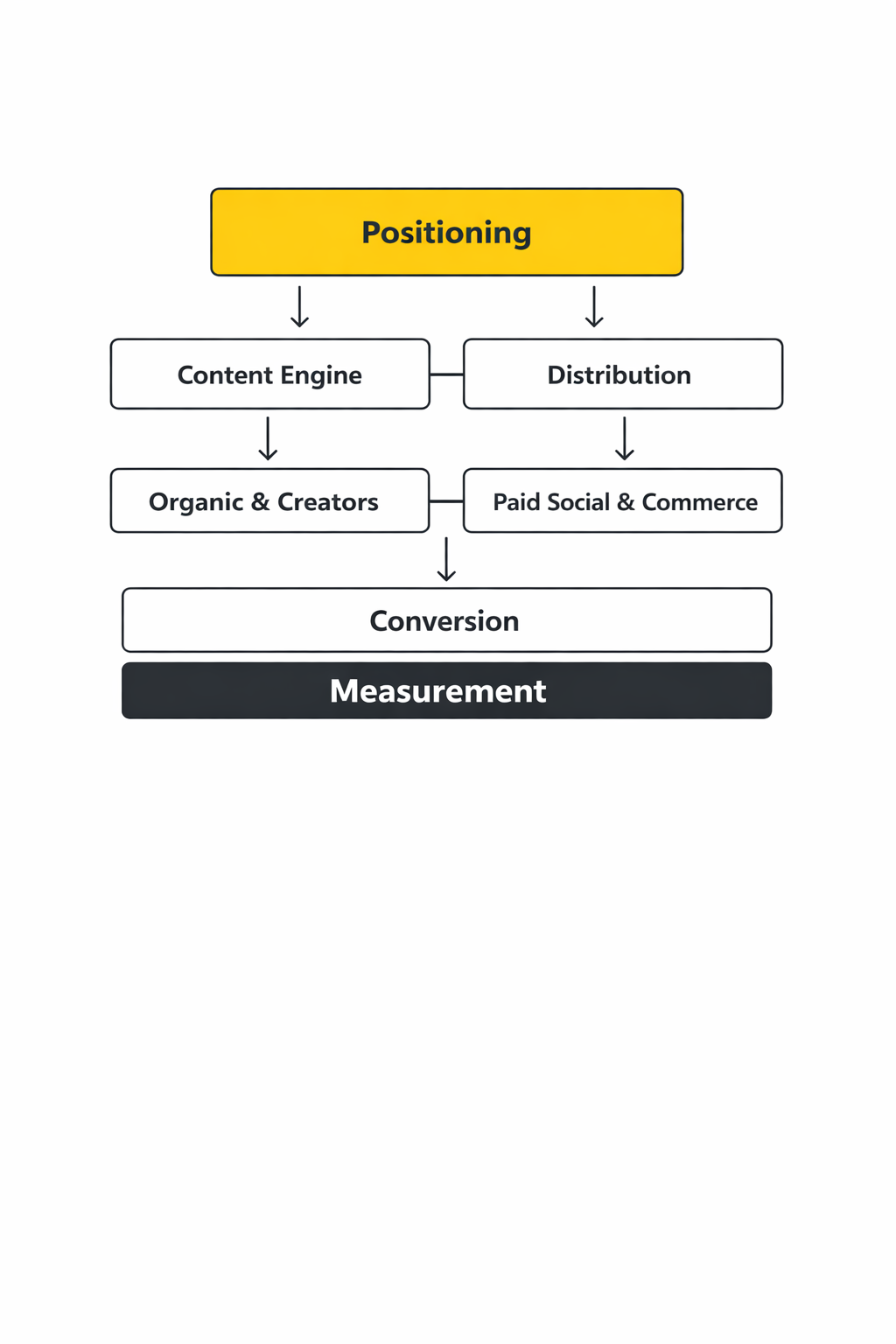
This framework is designed for small businesses that want clarity: what should an agency do first, what should it do every week, and how do you know it’s working? It’s intentionally simple, because complexity is where small teams lose momentum.
The framework has five layers:
- Positioning: What you’re known for, who you’re for, and why someone should care now.
- Content engine: A repeatable way to produce posts that match your customer’s real questions and motivations.
- Distribution: A smart plan for organic reach, partnerships/creators, and paid social that amplifies what already works.
- Conversion: The path from feed to action (call, booking, lead form, checkout, email list, store visit).
- Measurement: A small set of numbers that tie activity to business outcomes, not vanity metrics.
Notice what’s missing: “post daily,” “go viral,” or “be on every platform.” Those are tactics. The framework is the system that makes tactics useful.
Core Components
Most social media marketing companies for small business sell a bundle that includes some mix of strategy, creative, media buying, and reporting. The difference between an okay provider and a great one is whether those pieces connect.
Strategy That Fits Your Business Model
Strategy should feel like a map, not a slideshow. A strong partner starts by translating your business into social terms: what triggers demand, what objections slow people down, and what proof makes you believable. If your customers need trust, your content should build trust. If your customers need speed, your ads and landing flow should remove friction.
Creative That’s Built to Compete in Feeds
Creative is the new targeting. Platforms can find audiences, but they can’t make people care. Great partners build a “creative library” approach: multiple angles, multiple formats, and fast iteration—because social rewards learning speed. Hootsuite’s Social Trends 2025 report emphasizes an agility mindset, backed by a commercial survey of 3,864 marketers, which is another way of saying: the teams who adapt quickly win attention.
Paid Social That Scales What Already Works
Paid social should amplify proven messages, not compensate for unclear messaging. The most reliable approach is to test small, learn what earns attention, and then scale budget toward the winners. When you do use benchmarks or typical ranges, they should come from a transparent dataset—like Clutch’s pricing analysis, where the average monthly cost across reviewed social media marketing projects is reported around $5,107. That number shouldn’t decide your budget, but it can help you sanity-check proposals.
Community and Reputation as a Growth Lever
For many small businesses, the comment section and DMs are the front desk. A good provider doesn’t treat community management as “replying to comments.” They treat it as conversion support: helping potential customers feel confident, reducing purchase anxiety, and feeding real customer questions back into content ideas.
Analytics That Tie Back to Sales Reality
Reporting should answer three questions: what we did, what happened, and what we’re doing next. If the report can’t connect content and campaigns to leads, bookings, inquiries, or revenue proxies you actually trust, you’ll eventually feel like you’re paying for activity instead of outcomes.
Professional Implementation
Even a great framework fails if the working relationship is messy. Professional implementation is where strong social media marketing companies for small business quietly separate themselves: clear onboarding, fast turnaround, and a process that respects the owner’s time.
In practice, implementation looks like:
- Discovery that’s short but real: a tight intake of your offers, margins, seasonality, and best customers—enough to make smart choices, not enough to waste two weeks.
- A content pipeline: a predictable cadence for ideation, drafts, revisions, and publishing so you’re not approving posts at midnight.
- A test plan for paid social: small experiments that answer one question at a time, instead of one “big campaign” that’s impossible to diagnose.
- Simple performance reviews: monthly (or biweekly) decisions about what to double down on, what to stop, and what to try next.
- Shared ownership of outcomes: the agency owns execution, and the business owns the offer and customer experience—because no amount of creative can fix a confusing offer or a broken follow-up process.
In Part 2, we’ll turn this into a practical hiring lens: how to compare providers, what deliverables actually matter, and how to spot “busywork packages” before you sign.
Step-by-Step Implementation
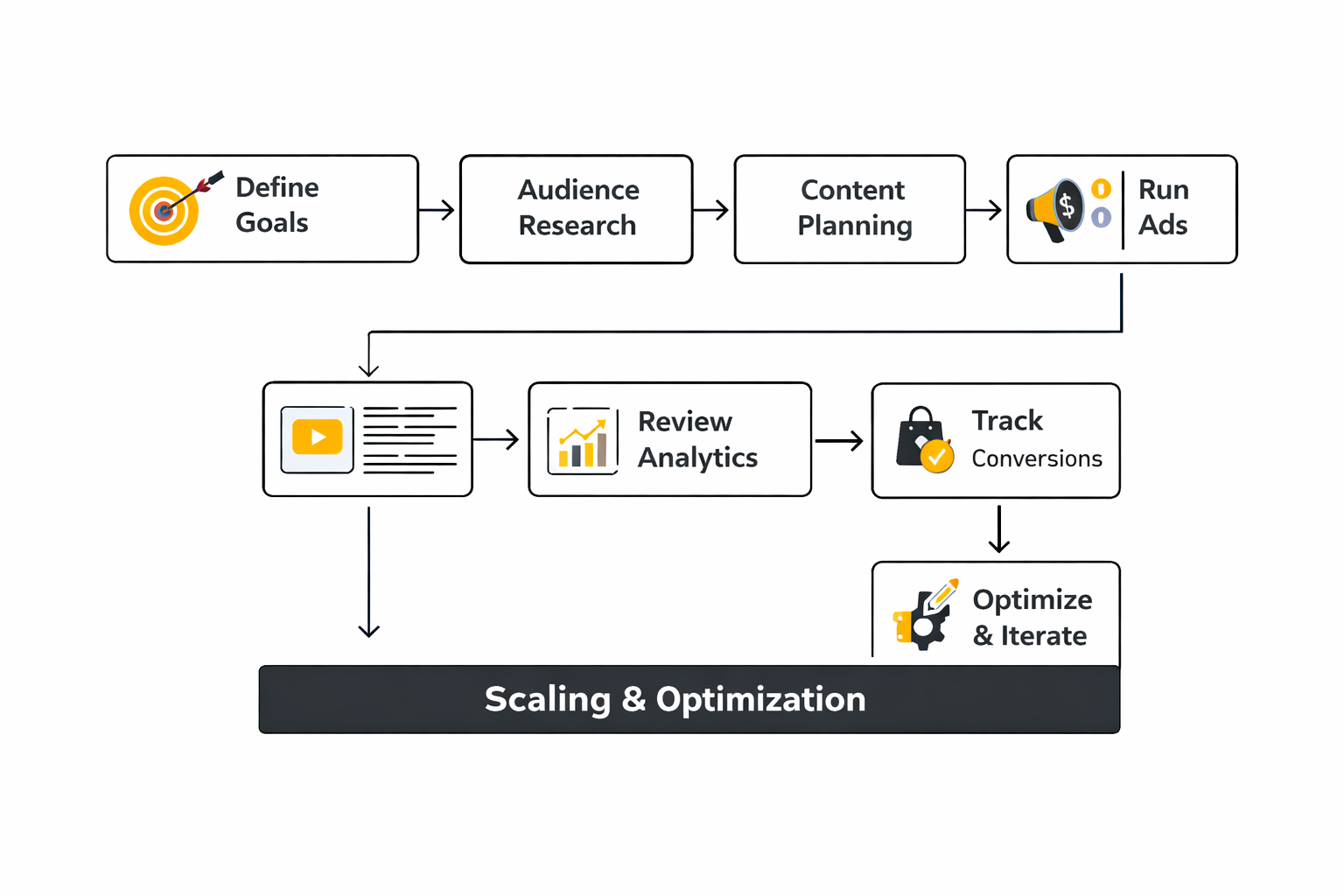
The fastest way to understand what you’re paying for with social media marketing companies for small business is to watch how they implement. Good agencies don’t start by “posting more.” They start by building a clean path from attention to action, then they make it repeatable.
Step 1: Lock the Goal to a Real Offer
Pick one primary outcome for the next 30 days: booked calls, quote requests, store visits, online orders, email signups, or app installs. Then tie it to one offer that is easy to understand and easy to say “yes” to. When a partner can’t explain your offer in one sentence, they’ll try to compensate with more content, and that’s where small business marketing turns into busywork.
Step 2: Define the Audience and One Clear Point of View
This isn’t about creating ten personas. It’s about choosing one “best customer” segment and writing content that speaks to their specific problem and desire. The point of view is what makes your posts sound like you, not like every other business in your category.
Step 3: Build a Content Engine You Can Actually Sustain
Most small businesses don’t fail because they lack ideas; they fail because they can’t keep up with production. A sustainable engine means a fixed set of content pillars, a weekly creation routine, and a simple approval flow. If your agency needs you to brainstorm every post, you didn’t hire a system—you hired a reminder.
Step 4: Install the Tracking Foundation Before Scaling
Before you spend seriously on ads, clean up measurement. Set up your key events in analytics and make sure campaign links are tagged consistently. Google’s own guide to building URLs with UTM parameters exists for a reason: without consistent tagging, you’ll argue about where leads came from and waste time “optimizing” the wrong thing.
Step 5: Decide the Distribution Plan
Distribution is the mix of organic posting, creator/partner content, and paid amplification. The smartest approach is to publish organically first, watch what earns attention, then turn the winners into ads. If you’re going straight to ads with untested messaging, you’re paying to learn slowly.
Step 6: Make the Conversion Path Frictionless
Decide what happens after someone clicks, comments, or DMs. Service businesses often win with click-to-message funnels, while product businesses may win by letting people buy in-app. If you’re using Meta and want more reliable event data for optimization, Meta’s Conversions API exists specifically to send events from your servers to Meta’s systems for better measurement and delivery.
Step 7: Run Weekly Iteration, Not Random Posting
Every week should have one clear learning goal: test a new hook, test a new offer angle, test a new format, or test a new audience segment. Small businesses grow when learning is consistent, not when content is constant. Your partner’s job is to keep the learning loop moving even when you’re busy.
Execution Layers
When social media marketing companies for small business execute well, their work tends to fall into layers. Each layer makes the next one more effective, and skipping layers is how campaigns look “active” while results stay flat.
Layer 1: Foundation Setup
This is the unglamorous work that prevents expensive confusion later. It includes UTMs, key events, basic reporting, and making sure your offers and landing pages match what your posts promise. If you’re doing server-side tracking, this is where tools like Meta’s Conversions API and TikTok’s Events API get implemented so optimization signals don’t disappear when browsers get stricter.
Layer 2: Creative Production
This is the engine room. Your partner should be producing variations of the same idea: different hooks, different cuts, different captions, different first frames, different calls to action. If the agency delivers “one video a week,” you’re not getting iteration—you’re getting a schedule.
Layer 3: Publishing and Community
Publishing is more than scheduling. It’s choosing the right format for the platform and then being present when the audience responds. In many small businesses, the comments and DMs are where the sale begins, so a partner should treat community like conversion support, not like an afterthought.
Layer 4: Paid Amplification
Paid amplification should make your best messages bigger. The agency’s execution skill shows up in how quickly they spot winners and how cleanly they scale, not in how many campaigns they build. This layer also depends heavily on measurement quality, which is why the tracking layer comes first.
Layer 5: Measurement and Decisions
Great reporting doesn’t drown you in metrics. It makes decisions easy: what to keep, what to cut, what to test next. If your agency can’t translate performance into a short list of actions, the work becomes “content for content’s sake,” and you’ll feel it within a month.
Optimization Process
Optimization is where most small businesses either accelerate or quietly stall. The goal isn’t chasing a perfect CTR or obsessing over follower count. The goal is increasing the percentage of people who move from attention to action, week after week, without burning out the owner.
Optimize Creative Before You Optimize Spend
Social platforms are saturated, so the biggest performance lever is often the first two seconds of your content. You’re looking for patterns: which hooks stop the scroll, which angles generate saves or shares, and which posts trigger comments that signal buying intent. Then you turn those patterns into more variations, because the “winning post” is rarely a one-time miracle—it’s a clue.
Optimize the Offer and Funnel Before You Blame the Platform
If people click but don’t convert, the issue is often mismatch: the post promised one thing and the landing page delivered another. Sometimes the fix is simple: make the offer clearer, reduce steps, or move the action into messages. If you’re using analytics to diagnose this, GA4’s event-based model is designed to track actions beyond pageviews, which is part of why Google highlights that GA4 uses event-based data to understand the journey.
Optimize Measurement So You Don’t Optimize Blind
When data is messy, optimization becomes guesswork. That’s why serious partners standardize UTMs across every campaign and content link, using Google’s campaign URL builder approach so traffic is attributed consistently. And when paid social is involved, server-to-server event sharing can improve reliability, which is exactly what both Meta’s Conversions API and TikTok’s Events API are built to support.
Scale Budget Only When Learning Is Stable
Scaling is not “spend more.” It’s increasing spend while maintaining efficiency, which only works when your creative system is producing winners consistently. A practical rule: if you can’t explain why the current campaign is winning, you probably can’t scale it without breaking it.
Implementation Stories
The best way to understand implementation is to see what it looks like when pressure hits. These are real examples where execution choices—creative, distribution, and measurement—changed what was possible.
Freedom of Movement: Small Budget, Big Reach, and the Moment They Stopped Selling Like an Ad
The campaign wasn’t born from comfort. The team wanted to expand beyond their existing customers, but they also knew that “polished product ads” weren’t earning attention in feeds anymore. They needed awareness and sales, and they needed it without wasting budget on creative that looked like every other brand.
The backstory matters because it explains the constraint. Freedom of Movement started as a South African lifestyle brand that grew from a small-room origin into a broader line of clothing and accessories, and their marketing decisions were shaped by a desire to reach young adults without losing the brand’s outdoorsy identity. When they planned their autumn/winter push, they chose TikTok as the battleground because that’s where their audience was spending time and where lifestyle content could look native.
The wall was the classic small-business wall: budget and fatigue. They had experience running conversion campaigns, but conversion-only optimization can struggle when the audience doesn’t know you yet, and creative can burn out fast when it’s too product-centric. They needed a way to run ads that didn’t feel like ads, while still tracking performance clearly enough to learn.
The epiphany was that the ad format wasn’t the secret—the creative style was. TikTok’s case study describes how they leaned into lifestyle content and used Spark Ads built from organic videos so the campaign carried a native feel instead of a hard-sell vibe. They also expanded creative relatability by using different models and showing outfits in real settings, not studio shots, which helped the content blend into the feed.
The journey was disciplined, not dramatic. They ran the campaign with a Johannesburg-based agency and deliberately balanced awareness with performance instead of betting everything on direct response. The execution choices created measurable outcomes, including 1.2 million impressions and a reported cost per video view of R0.004, while still generating sales at a cost per mille of R6.30.
The final conflict came after the win: success changes expectations. When a platform works, it’s tempting to chase short-term spikes, but brands can also lose their voice by over-optimizing for whatever is trending. The team’s challenge was maintaining the native, lifestyle-first approach while increasing investment, because scaling too fast can turn good creative into repetitive creative.
The dream outcome wasn’t just cheaper views. TikTok’s write-up notes that since October 2023 they increased their store footprint by 64% and continued shifting budget toward TikTok for product launches and end-of-season sales. That’s what strong implementation looks like: learn a channel, build a system, and keep using it when the campaign ends.
The Original Tamale Company: A 46-Second “PSA,” 22 Million Views, and a Small Team That Had to Turn Attention Into Foot Traffic
The moment it hit, it didn’t look like a marketing plan—it looked like a fire alarm. A family-run tamale shop in Los Angeles posted a humorous, AI-assisted video styled like a safety PSA, and the internet did what it does when it loves something: it shared it everywhere. Within weeks, the clip had pulled in massive attention, and suddenly the business wasn’t just a neighborhood spot—it was a destination.
The backstory is what makes it feel real. The Original Tamale Company is a small, family-run operation, and its social presence was being managed by the owner’s nephew, Christian Ortega. He leaned on meme culture and used AI tools to accelerate production, including using ChatGPT to help with scripting and voiceover work, which meant the team could ship a high-impact concept without a big agency budget, as described in Business Insider’s profile.
The wall wasn’t views—it was conversion. Viral attention is intoxicating, but it’s also fragile, and it doesn’t automatically translate into customers unless the business knows what to do next. A small restaurant can’t “retarget everyone who watched” like a massive brand, and it can’t afford to disappoint people who show up because of hype.
The epiphany was that the content didn’t need to be perfect; it needed to be shareable and on-time. Ortega reportedly created the video quickly, and the concept was strong enough that the production speed became a competitive advantage. The lesson for small businesses is brutal and freeing: you don’t need a giant content machine to win attention—you need a repeatable way to create strong ideas and publish them while the culture is still paying attention.
The journey after the viral moment was operational as much as creative. The shop had to meet new customers in real life, handle increased recognition, and keep the story going without turning every post into “look how viral we went.” The profile notes that the video drove increased visibility and customers visiting specifically because they saw the ad, which is the hard part—turning a view into a real-world visit—captured in Business Insider’s reporting.
The final conflict is the one people don’t talk about: pressure to repeat the miracle. Once you win big with one creative concept, it’s easy to spiral into chasing the same format, the same joke, the same hook—until it stops working. That’s where implementation discipline matters, because the right response to a breakout moment is building a content system and a conversion path, not gambling everything on the next viral post.
The dream outcome is a small business that earns attention without buying it, and then uses that attention to grow something stable. The story shows how creative experimentation and lightweight AI tooling can level the playing field for tiny teams—especially when the execution doesn’t stop at “we got views,” but continues into real customer experience.
A Weekly Rhythm That Protects the Owner’s Time
Professionals design the week so you don’t live in approvals. One day for planning, one day for production, one day for publishing and community, one day for testing/ads, and one day for review. You should never feel like social is happening “whenever someone remembers.”
Tracking Ops That Make Optimization Possible
If paid social is part of the plan, professional teams treat measurement like infrastructure. They standardize UTMs using Google’s URL builder guidance, align GA4 events with the actions that matter, and ensure platform optimization signals are reliable. When accuracy matters, they may implement server-to-server event sharing via Meta’s Conversions API or TikTok’s Events API so learning doesn’t collapse when browser tracking gets weaker.
Creative QA Without Creative Paralysis
Professional execution doesn’t mean endless revisions. It means a few consistent quality checks: is the hook clear, is the offer obvious, is the call to action simple, and does the creative feel native to the platform? If your agency can’t ship quickly, you’ll lose the one advantage small businesses can have over big brands: speed.
Decision-Making That Shows Up in the Next Week’s Work
The most important implementation detail is what happens after reporting. A good partner turns the review into action: two things to double down on, two things to stop, and two focused tests for the next cycle. That’s how a small business turns social from “a channel we should do” into a system that compounds.
Statistics and Data

When small businesses hire social media marketing companies for small business, they’re really hiring a measurement advantage. Not “more dashboards,” but clearer answers to hard questions: Is attention turning into leads? Are those leads turning into revenue? Is growth coming from one lucky post, or from a system that keeps working next month?
A few current data points make the opportunity (and competition) obvious. Global social media identities hit 5.24 billion, which means your customers are almost certainly spending time in feeds every day, whether you show up there or not. In the U.S., platform concentration still matters too: Pew’s 2025 research found 84% of adults use YouTube and 71% use Facebook, while Instagram sits at roughly half of adults, which helps explain why many small businesses start with Meta before branching out.
Meanwhile, small business owners are putting real money behind social. Intuit’s 2025 survey shows that among businesses increasing ad spend, 48% are directing the extra budget to expand social media advertising. This isn’t a “nice to have” trend anymore; it’s where a lot of small-business growth bets are being placed.
Social also influences buying behavior more directly than many owners realize. Deloitte’s consumer research found 56% of consumers browsed products on social media in the past year, and Deloitte’s Digital Media Trends reporting highlights how social video platforms and creator-driven content are reshaping where people spend their media time and what influences purchase decisions, including the note that Gen Z (63%) and millennials (49%) say ads or product reviews on social are most influential.
Performance Benchmarks
Benchmarks are useful, but only if you use them the right way. A benchmark should help you spot whether something is wildly off, not tell you whether your business is “good” or “bad.” The same cost per click can be amazing for a high-margin service and terrible for a low-margin product. The same engagement rate can be meaningless if it isn’t driving inquiries or sales.
Benchmark the Market First: Is the Auction Getting Tougher?
Before looking at your own numbers, look at the market’s direction. Meta’s 2025 results show ad competition is still heating up: ad impressions rose while pricing increased, with Meta reporting ad impressions up year over year and average price per ad up. That same pricing story is also documented in Meta’s SEC filing exhibit, which repeats the performance drivers in a more formal format, including the year-over-year price-per-ad increase.
For a small business, the practical implication is simple: if the auction is getting more expensive, creative quality and conversion clarity matter even more. This is one reason social media marketing companies for small business are leaning into faster creative testing and clearer funnel design instead of “posting more.”
Benchmark Where Spend Is Moving: Reels and Short Video
Benchmarks aren’t just numbers; they’re signals about where performance is concentrating. Emplifi’s 2025 benchmarks report describes how Reels dominated strategies and notes that median ad spend per account on Facebook Reels more than doubled in 2024. The same report also describes Reels as a cost-efficient format, discussing lower CPM/CPC dynamics compared to some feed placements in its dataset, which helps explain why many agencies push short-form video even for conservative small businesses.
Benchmark Platform Mix: TikTok Adoption Rising
If your agency is recommending TikTok or Pinterest and it feels like a gamble, it helps to see how advertisers are behaving in aggregate. Skai’s Q1 2025 report notes TikTok’s footprint expanding among its advertiser base, including the statistic that 44% of Skai advertisers used TikTok in Q1 2025. That doesn’t mean TikTok is right for every small business, but it does mean serious spenders are increasingly treating it as part of the mix.
Benchmark Social Commerce: Real Money Is Moving In-App
If you sell products, the fastest-moving benchmark category is social commerce. In the U.K., TikTok Shop reached a scale that’s hard to ignore: over 200,000 UK small businesses signed up, and the same reporting highlights spikes around peak shopping periods and the growing role of livestreaming. In the U.S., Business Insider reported TikTok Shop crossed over $500 million in sales during the 2025 Black Friday–Cyber Monday week (company spokesperson), while Adobe’s estimate of overall U.S. online sales provides broader context for the scale of that period.
Analytics Interpretation
Good analytics interpretation is a skill, not a screenshot. This is where strong social media marketing companies for small business feel different: they don’t just report what happened, they explain why it happened and what to do next—without drowning you in metrics.
Start With One North Star Metric, Then Work Backward
Choose one outcome that represents real business value: booked calls, purchases, qualified leads, or store visits. Everything else is supporting evidence. If the agency can’t tie their reporting to a concrete outcome (or a credible proxy like “complete payment” events for ecommerce), you’ll end up debating vanity metrics instead of making decisions.
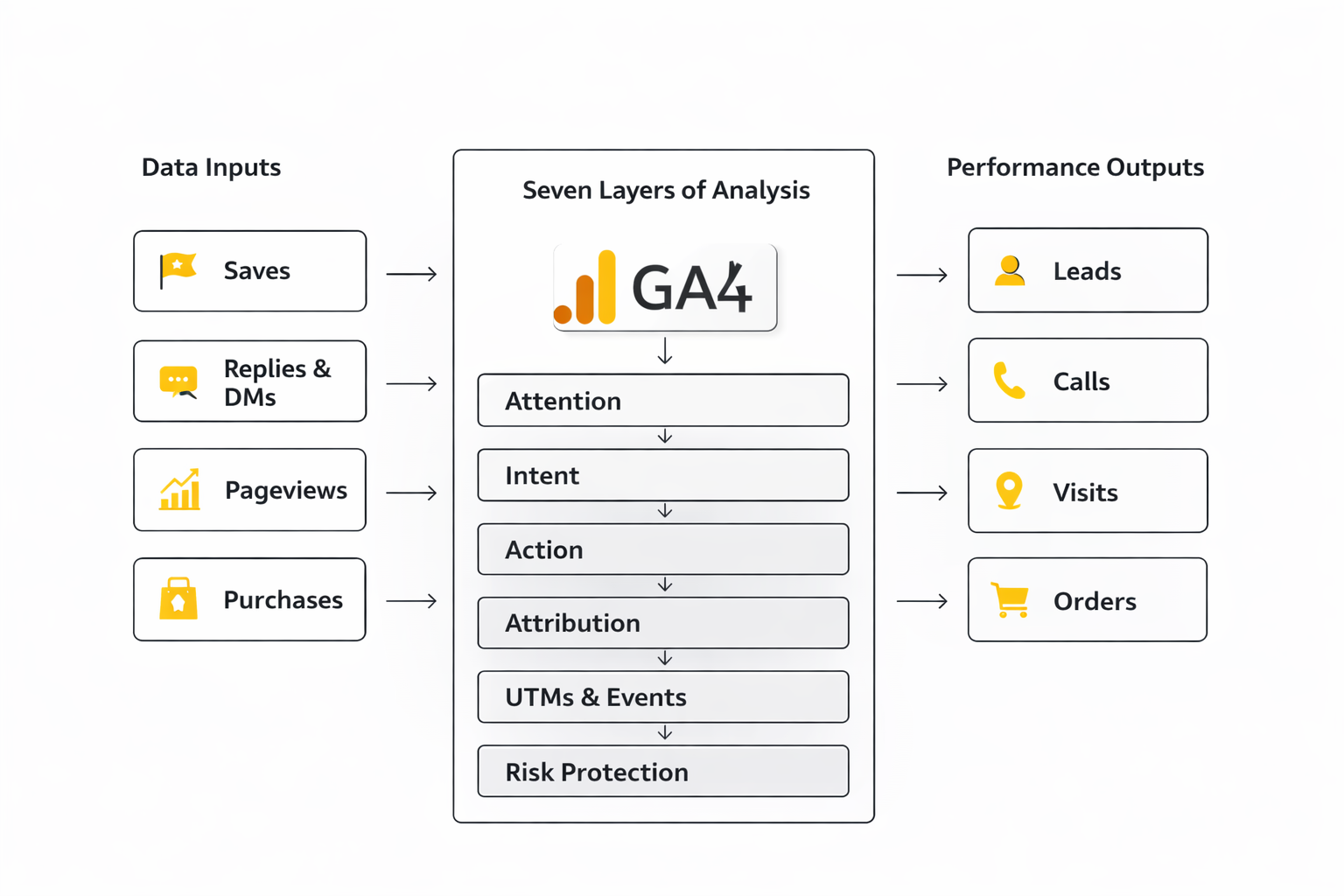
Read Metrics in Three Levels: Attention, Intent, Action
Attention is whether people stop and engage. Intent is whether they click, save, DM, or comment in ways that signal purchase interest. Action is whether they complete the next step (purchase, booking, form submission). GA4 is built around tracking events and user behavior across the journey rather than only pageviews, which is part of why Google describes GA4 as event-based.
Assume Attribution Is Messy, Then Make It Less Messy
Social attribution is rarely one-click. People watch a video, forget, see you again, then Google you, then DM you, then buy days later. You won’t “fix” that, but you can reduce confusion by standardizing UTMs for every campaign link, using Google’s guidance for building URLs with UTM parameters. This is the difference between a report that sparks arguments and a report that sparks action.
Build a Risk Lens Into Reporting
Analytics should also protect the business. If you’re spending on ads, you want to know whether traffic quality is holding, whether comments are turning negative, or whether weird activity is inflating results. Reuters’ investigation into Meta highlighted how fraud and scam advertising can be a serious ecosystem issue, including internal concerns discussed in the report about the scale of scam ads and enforcement challenges, which is a reminder to treat anomalies seriously and keep a close eye on campaign quality. The Reuters investigation is worth reading if you run paid campaigns heavily, because it encourages a healthier skepticism when something looks “too good.”
Case Stories
Numbers help you manage a system, but stories help you understand what the system is protecting you from. The story below is real, sourced, and painfully familiar to small business owners who bet on one channel and then wake up to uncertainty.
Crown’s Corner Mechanic: When One Platform Powered Growth, Then the Floor Started Moving
It didn’t feel like marketing anymore; it felt like survival planning. A looming TikTok ban meant the channel that had been sending daily attention could disappear overnight. The business wasn’t just worried about reach—it was worried about what would happen to real-world foot traffic if the algorithm went dark.
The backstory is that Crown’s Corner Mechanic built meaningful momentum through TikTok visibility, with the owner, Desiree Hill, publicly crediting the platform for helping establish and expand physical locations and customer growth. That detail matters because it frames TikTok as a business development channel, not a vanity channel. The story was highlighted as part of AP News coverage on how small businesses rely on TikTok and what a potential ban could mean. The AP report on small businesses bracing for a TikTok ban.
The wall arrived when uncertainty replaced momentum. You can’t optimize content for a platform you might lose, and you can’t easily “port” a community to another app. Small businesses also don’t have the luxury of spending months rebuilding reach elsewhere while rent and payroll keep showing up.
The epiphany was that social growth is fragile when it lives on one platform. The business owners in the AP coverage described exploring alternatives like Instagram Reels, YouTube Shorts, and Snapchat, but the deeper realization was that platform diversification is not a marketing trend—it’s risk management. They also surfaced a more durable idea: building direct audience access through email and phone databases, so the business owns the relationship. The AP report’s discussion of creators and owners exploring backup channels.
The journey wasn’t about chasing shiny tools. It was about shifting from “posting for reach” to building a conversion path that survives platform shifts: collect contacts, nurture leads, and make sure customers can find you even if discovery changes. That’s exactly where social media marketing companies for small business add value—by building a multi-channel system instead of a single-platform dependency.
The final conflict is the emotional part nobody budgets for. When your growth engine is threatened, every experiment feels urgent and every metric feels personal. Even if the ban never happens, the stress teaches a painful lesson: a strategy that works today can still be risky if it has one point of failure.
The dream outcome is a business that can keep growing no matter what one platform decides. If TikTok stays, the business still benefits—but now TikTok is a powerful channel inside a broader ecosystem, not the entire ecosystem. That’s the kind of stability that makes marketing feel less like gambling and more like building.
Professional Promotion
Professional promotion is the bridge between “we posted something good” and “we grew.” It’s the discipline of putting your best content and offers in front of the right people, then using data to improve results without burning budget or burning out the team.
Turn Proven Content Into Paid Winners
The most reliable approach is to promote what already works organically. If a post is earning saves, shares, meaningful comments, or high watch time, it has demonstrated market fit in the feed. Turning those winners into campaigns is typically more efficient than launching ads from scratch, especially while ad markets are getting more competitive, as reflected in Meta’s reporting on ad pricing increases alongside rising impressions.
Match the Campaign Objective to the Customer’s Readiness
Small businesses often make one mistake that looks harmless: running conversion campaigns to cold audiences with no trust built. If your product is unfamiliar or your service is high-consideration, awareness and engagement-style distribution can be the right first step—then retarget with offers once intent signals show up. This becomes easier to manage when your reporting is event-based and you can follow the path from attention to action, which is exactly why GA4 emphasizes event-based measurement.
Use Measurement Guardrails So Spend Doesn’t Drift
Professional promotion needs guardrails: UTMs for every link, defined conversion events, and a weekly review that forces decisions. Google’s UTM guidance for campaign URL building is basic, but it’s what keeps a small business from arguing about attribution instead of improving performance.
Promote With a Platform-Risk Mindset
Promotion should also protect the business from sudden shifts. The TikTok-ban uncertainty covered by AP illustrates how one platform can become existential if it’s your only engine. Professional teams use promotion to build resilience: they diversify distribution, they collect first-party contacts, and they make sure your best customers can still find you even if the feed changes tomorrow. The AP coverage on small businesses planning for a possible TikTok ban.
In Part 5, we’ll zoom out from analytics into the bigger ecosystem: how agencies, creators, platforms, and small business operations fit together, and how to choose a growth path that matches your reality.
Advanced Strategies
Once the basics are running smoothly, social media marketing companies for small business start looking less like “content managers” and more like growth operators. The work shifts from keeping the calendar full to building repeatable advantages: faster learning, better creative, stronger distribution, and more owned demand that doesn’t disappear when an algorithm changes.
One of the most reliable advanced moves is building for short-form video like it’s a product line, not a one-off. Reels-heavy strategies have become mainstream because they can reach broadly, and benchmarks data shows Reels remain a major format for brands, even as engagement rates fluctuate across platforms. Emplifi’s 2025 benchmark report notes that video reach engagement rates dipped from 2023 to 2024, yet Reels still outpaced TikTok’s average reach engagement rate in their dataset, which helps explain why agencies keep building around vertical video.
Another advanced lever is creative science. Meta’s own small business playbook ties specific creative choices to measurable lift signals, including the note that Reels creative with certain cues (like audio brand cues) saw a statistically significant higher average positive response score. The point isn’t to copy a template; it’s to treat creative like a testable system, so your business doesn’t rely on luck.
The third lever is a “conversation-first” funnel. When customers buy through DMs or ask questions before they purchase, your comment section becomes the top of your funnel and your inbox becomes the checkout line. This is why many advanced teams build workflows around response speed and clarity, especially as consumer expectations rise and social becomes a direct path to acquisition, echoed by findings in Sprout’s impact work where 71% of leaders believe social media has a direct impact on customer acquisition.
Finally, advanced strategy includes risk management. When almost every business competes in the same feeds, growth can be fragile if your entire pipeline depends on a single platform. That’s why the most professional partners diversify distribution and build first-party assets (email and SMS lists) so the business still has leverage even if reach shifts.
Scaling Framework
Scaling is where small businesses get hurt when they confuse activity with capacity. Real scaling means increasing output, improving performance, and protecting customer experience at the same time. A practical scaling framework keeps you from “going bigger” in ways that quietly break the business.
Stage 1: Prove One Winning Message
Before you add channels or increase spend, prove that one message reliably earns attention and creates intent. This can be one offer angle, one signature service, or one product story that people actually respond to. If your marketing team can’t say “this is our winner right now,” scaling will feel random.
Stage 2: Multiply Variations, Not Platforms
When something works, your first move is not “add more networks.” Your first move is producing variations so you can sustain performance as creative fatigue hits. Many teams use Reels-like production because it supports fast iteration, and Meta’s creative guidance for Reels exists precisely because creative fundamentals influence outcomes, including the playbook’s evidence that specific creative elements correlate with higher positive response signals.
Stage 3: Scale Distribution With Guardrails
Once you have a creative system, scale distribution. That might mean paid amplification, creator partnerships, or social commerce formats depending on how your customers buy. If you’re leaning into social commerce, the adoption curve is real: the Sprout Index highlights how consumers are increasingly comfortable buying through social, including the widely cited finding that 81% of consumers say social media drives impulse purchases, which changes how quickly a good offer can convert.
Stage 4: Build Owned Demand
Scaling that lasts usually includes an “owned demand” layer: email, SMS, memberships, or customer communities that you control. This reduces platform dependence and makes promotions more profitable because you’re not paying repeatedly to reach the same people. It’s also a sanity move for small teams, because a strong owned audience reduces the pressure to constantly chase new reach.
Stage 5: Operationalize the Customer Experience
As volume grows, customer experience becomes a growth channel or a growth killer. Faster response times, cleaner fulfillment, and consistent service delivery become marketing, because customers talk about what it felt like to buy from you. Scaling only counts if reputation scales too.
Growth Optimization
Growth optimization is the part most owners never see, but it’s where performance compounds. It’s the weekly discipline of tightening what’s already working and cutting what drains attention. The best social media marketing companies for small business treat optimization like a rhythm, not a rescue mission.
Optimize for Signal, Not Noise
Growth teams don’t obsess over every metric. They choose signals that map to business outcomes: DM conversations that turn into booked calls, product page views that turn into purchases, or lead forms that turn into qualified pipeline. That’s why modern reporting tends to focus on fewer numbers with clearer meaning.
Run a Creative Learning Loop Every Week
Short-form is competitive, and saturation is real. One reason high-performing teams look different is that they aren’t jumping on everything—they’re learning from what matters and repeating what works. Hootsuite’s 2025 report emphasizes that top teams aren’t chasing every trend and are instead building structured approaches like listening and insight-driven action, supported by primary survey research across thousands of marketers.
Increase Velocity Without Lowering Quality
Optimization often comes down to one question: can you produce more “good enough to win” creative without drowning the business in approvals? That’s why professional teams build templates, repeatable formats, and a lightweight review system. If speed improves while quality stays stable, your learning rate increases and your growth becomes less fragile.
Use Social Commerce and Live Formats When the Offer Fits
Not every business should sell inside an app, but when it fits, it can compress the funnel dramatically. Recent reporting shows how quickly social shopping habits are changing, with Horowitz Research findings summarized in trade coverage noting that nearly half of consumers purchased through social platforms in the past month in their survey results. When conversion happens where discovery happens, optimizing your product presentation, creator content, and live formats becomes a real growth lever.
Optimize With a Risk Lens
Scaling aggressively without safeguards can create ugly surprises: rising costs, shifting performance, or even quality issues that show up in reviews. Professional partners watch for anomalies, protect brand trust, and diversify so the business isn’t trapped in a single ecosystem. It’s not pessimism; it’s stability engineering.
Scaling Stories
Scaling looks clean on a spreadsheet. In real life, it’s messy, emotional, and full of moments where a small business has to decide whether it can handle the next wave of attention. This story is real, and it captures the kind of pressure that social growth creates when it shows up fast.
The Cheese Store of Beverly Hills: A Legacy Business, a Teen Audience, and the Fight to Scale Without Losing the Soul
Start at a point of high drama
The shop wasn’t failing, but it was aging into invisibility. Then a new wave of customers started showing up—teenagers—asking for products they’d seen in videos. The owner realized the business wasn’t just getting attention; it was being pulled into a different era overnight, as described in Business Insider’s account of the shop’s social-driven resurgence.
Backstory
The Cheese Store of Beverly Hills had been operating for decades, with a reputation built on chefs, locals, and serious food lovers. That kind of reputation is powerful, but it can also trap a business into relying on a shrinking customer pattern. When social platforms began shaping food discovery, the store’s legacy didn’t automatically translate into the feeds where younger buyers were forming their tastes, as the owner reflects in the Business Insider story.
Wall
The first wall wasn’t reach; it was operations. Viral visibility can create spikes in demand that a small specialty store isn’t structured to absorb. At the same time, the business faced economic pressure from rising costs and margin compression, a reality the owner discusses alongside the social boost in Business Insider’s reporting.
Epiphany
The breakthrough wasn’t “post more.” The breakthrough was recognizing that social attention had to be matched by an in-store experience that made new customers stay. The owner leaned into modernization without abandoning the legacy, including evolving offerings to meet the new demand profile described in the same profile.
Journey they went on to reach the goal
The business began adapting what it sold and how it served customers, adding items that supported repeat visits and a broader audience. This wasn’t just a menu decision; it was a scaling decision that made the store more “everyday visit” friendly while still honoring its specialty roots. Social visibility continued feeding the top of funnel, while operational changes made conversion and retention more likely, as captured in Business Insider’s narrative.
Final conflict
Scaling created a conflict between momentum and margins. More customers can still mean less profit when costs rise and purchasing power shifts, which the owner describes as part of the modern reality for specialty food businesses. The business had to balance the excitement of new demand with the seriousness of economic headwinds, a tension made clear in the same reporting.
Dream outcome
The dream outcome wasn’t a viral moment; it was a business that feels alive again. Social media brought new customers from unexpected places, and the store used that energy to evolve instead of fading. It’s a reminder that scaling is not only about ads and content—it’s also about building a business that can welcome the next generation without losing what made it worth discovering in the first place, reflected in Business Insider’s first-person framing.
Build a Promotion Mix That Matches How People Buy
A strong mix usually includes three buckets: always-on content for trust, targeted distribution for demand capture, and bursts for launches. The mix also changes by generation and category, because buyer behavior differs wildly across platforms. This is why data like Pew’s platform usage and consumer surveys matter, and why large reports keep reinforcing that social is central to discovery and purchase influence.
Promote Proof, Not Promises
The safest scaling move is promoting what already worked organically: high-retention videos, posts that generate “buying questions,” and content that earns saves and shares. This isn’t just efficient; it reduces creative risk. Benchmarks and playbooks are helpful here because they provide patterns worth testing, like the creative cues highlighted in Meta’s small business Reels playbook.
Use Creators as a Distribution Layer
Creators aren’t only for brand awareness; they can be a scalable distribution network when the offer fits. The best partners treat creator content as both creative production and media, then amplify the winners with paid spend. This also helps small businesses compete when ad auctions get tougher, because creative relevance becomes a stronger advantage than targeting complexity.
Scale With Measurement Guardrails
Promotion scales faster than your intuition. That’s why professional teams standardize campaign tagging and track meaningful actions, so decisions don’t get made from gut feelings after a good week or a bad week. Google’s guidance for building URLs with UTM parameters isn’t glamorous, but it’s the difference between scaling a system and scaling confusion.
Design for Resilience
Professional promotion also assumes the landscape will change. Algorithms shift, costs rise, and buyer behavior evolves, which is why the most stable growth plans include diversification and owned demand. When your pipeline includes email, SMS, and repeat purchase loops, social becomes a growth engine—not a single point of failure.
Future Trends
The next 12–24 months will reward small businesses that treat social as an ecosystem, not a posting schedule. Social media marketing companies for small business are already adjusting their services around a few shifts that are becoming hard to ignore.
AI becomes a production accelerator, but “human proof” becomes the differentiator. Teams will keep using AI to move faster, generate variations, and repurpose content, but trust will increasingly flow to brands that feel real and accountable. The 2026 trend signals highlighted in Hootsuite’s Social Media Trends 2026 emphasize how quickly the culture shifts, which means speed matters, but credibility matters even more when the feed is full of synthetic content.
Social commerce continues to normalize, especially for younger buyers. Purchase behavior is moving inside platforms, and it’s not a fringe behavior anymore. Capgemini’s consumer research reported that 35% of consumers said they purchased a product via a social media platform in 2025, while EMARKETER’s January 2026 briefing highlights that a September 2025 survey found one-third of adults ages 18–34 have made a purchase on social media. For small businesses, that shift changes what “good social” looks like: fewer detached brand posts, more product storytelling that makes buying feel natural.
Creators become a distribution layer, not a campaign add-on. More brands are treating creators as a long-term channel because trust and attention are concentrating around personalities. CreatorIQ’s 2026 trends report frames the market around measurement, speed, and brand safety, backed by data from 1,700+ respondents across 17 industries, while Digiday notes IAB’s projection that the creator economy is set to grow, citing an 18% growth figure for 2026. Practically, this means small businesses will increasingly “rent” distribution through creator relationships when paid CPMs rise.
Community and retention win over “viral” as the feed gets more expensive. The brands that grow consistently will be the ones that keep customers coming back, not just the ones that spike reach. Sprout’s 2026 trend coverage points out that brands are publishing at high volume and shifting focus toward resonance and community over virality, including the detail that brands published an average of 9.5 posts per day across networks in 2024 in the referenced benchmark work. Small businesses don’t need that volume, but they do need the mindset: fewer random posts, more repeatable formats that deepen trust.
Consumer research on social increases, but intent signals matter more than “likes.” McKinsey’s 2025 consumer insights show social is increasingly used for product research, with 32% using social media for product research on average across markets (up from 27% in 2023). Expect better tools to track intent signals like saves, replies, DMs, and on-platform shopping actions, which will push agencies to report more like revenue operators and less like content coordinators.
Strategic Framework Recap
If you remember one thing from this guide, let it be this: social media marketing companies for small business deliver the best results when they build a system that compounds, not a calendar that resets every week.
Positioning: You’re not trying to appeal to everyone. You’re trying to become the obvious choice for a specific buyer with a specific problem.
Content engine: Your content should come from repeatable pillars and formats so production stays consistent even when the business is busy.
Distribution: Organic earns signals, creators add leverage, paid amplifies winners, and social commerce can compress the funnel when it fits the offer.
Conversion: The feed is not the finish line. DMs, landing pages, checkout, booking, and follow-up are where growth becomes real.
Measurement: The point of analytics is decision-making: what to double down on, what to stop, and what to test next.
When all five pieces connect, social stops feeling like “something we should do” and starts feeling like an operating system that drives awareness, demand, and revenue.
FAQ – Built for the Complete Guide
What do social media marketing companies for small business actually do?
They turn social into a structured growth system: strategy, content production, distribution (organic, creators, paid), conversion paths (DMs, landing pages, checkout), and reporting that ties activity to business outcomes. The best partners don’t just post; they manage learning and performance.
Should I hire an agency or a freelancer?
If you need multiple skills at once (strategy, creative, ads, analytics) and want a managed workflow, an agency can be efficient. If you already have a clear plan and only need execution in one area (editing, community, ads), a specialist freelancer can be a better fit. Many small businesses start with a specialist and add support as results prove out.
How much should a small business budget for social marketing help?
Budget depends on your goals and how much production you need. A helpful reference point is pricing datasets like Clutch’s, which report an average monthly project cost around $5,107 across reviewed social media marketing projects. Use it as context, then match spend to what one additional customer is worth to you.
How quickly can I expect results?
Organic results usually build over weeks as content finds traction and your audience starts recognizing you. Paid can move faster, but only if the offer and tracking are clean. A realistic approach is a 30-day “prove the message” phase, then a 60–90 day “scale the winners” phase.
Which platforms matter most for small businesses right now?
It depends on where your buyers spend time and how they buy, but mainstream adoption still favors YouTube and Facebook for broad reach in many markets. Pew’s 2025 study reports 84% of U.S. adults use YouTube and 71% use Facebook, which is why many small businesses start there and expand into Instagram, TikTok, or LinkedIn based on fit.
What metrics should I actually care about?
Start with one outcome metric tied to revenue (purchases, booked calls, qualified leads). Then track the signals that predict it: watch time/retention for video, saves/shares for relevance, clicks/DMs for intent, and conversion rate for the handoff from social to action. If a metric doesn’t change what you do next week, it’s probably noise.
Is social commerce worth it for small businesses?
It can be, when your product is impulse-friendly or easy to demonstrate. Consumer behavior is moving in that direction: Capgemini reports 35% of consumers purchased via a social media platform in 2025, and DHL’s 2025 social commerce report says 7 in 10 global shoppers buy on social media. The operational requirement is the hard part: product setup, fulfillment, and customer support must be ready.
Should I focus on organic content or paid ads?
For most small businesses, the strongest path is “organic first, paid second.” Use organic to find what resonates, then amplify winners with paid. Paid works best when you’re scaling proven messages and tracking conversions cleanly, not when you’re trying to buy your way out of unclear positioning.
What are red flags when hiring a social marketing partner?
Watch out for partners who won’t talk about your offer and conversion path, only promise followers or virality, can’t explain reporting without jargon, or lock you into long contracts before proving results. If they can’t describe how they’ll run your week-to-week workflow, you’ll end up managing them.
How do I keep my brand voice if someone else runs my social?
Give your partner raw material: customer questions, real objections, screenshots of reviews, and a few “non-negotiables” about how you speak. Then approve a small set of repeatable formats (hooks, tone, visual style) so content stays consistent without needing your input on every post.
Will AI-generated content hurt my brand?
AI can help you move faster, but audiences still respond to content that feels real. The safest approach is using AI for ideation, scripting support, repurposing, and variations, while keeping your proof human: real customer stories, real demonstrations, and real behind-the-scenes moments.
If I’m overwhelmed, what’s the first step I should take?
Pick one goal and one offer for the next 30 days. Then choose one platform where your buyers already pay attention. A focused month of consistent execution beats a scattered year of “trying everything.”
Work With Professionals
If you’re serious about growth, the hardest part isn’t learning what to do. It’s doing it consistently while running a business or building your freelance career. That’s why so many talented marketers get stuck: they know how social works, but they don’t have a steady pipeline of real opportunities to apply their skills.
That’s where MARKEWORK.com is built to feel different. It’s a focused marketplace for marketing work where you can build a profile, show your proof, and connect directly with companies—without a middle layer taking a cut. The platform is clear about the model: no project fees, no commissions, and direct communication with businesses while contracts and payments stay between you and the client.
Picture what changes when you’re not trapped in endless bidding wars or paying platform taxes on every deal. You can price confidently, negotiate directly, and build relationships that turn into repeat work. You can focus on doing great marketing instead of constantly hunting for the next lead.
And because the platform is designed around marketing roles and specialties, it’s easier to stay in your lane—paid social, SEO, lifecycle, content, analytics—without trying to be everything to everyone. The pricing is structured as simple monthly plans for access and activity, with access to thousands of job listings and a workflow that’s meant to help you close faster.
If you want more clients, more leverage, and a cleaner path to remote marketing work, take a look and build your profile where companies are already searching for specialists:
 Filip Konecny Enterprises