

If social media feels “busy” but not “profitable,” you’re not alone. Most companies don’t fail because they post the wrong thing. They fail because they treat social as a content chore instead of a business system that compounds visibility, trust, and demand.
When you build social media for business like a system, it starts behaving like one: content gets reused instead of recreated, messages stay consistent across channels, and the work connects to outcomes your team can defend. The goal of this guide is to make that shift feel straightforward.
Article Outline
- What Social Media for Business Is
- Why Social Media for Business Matters
- Framework Overview
- Core Components
- Professional Implementation
What Social Media for Business Is

Social media for business is the disciplined practice of turning attention into business value. That sounds abstract, so here’s the practical version: it’s how you earn reach, shape perception, and create demand by showing up with clear ideas in the places your customers already spend time.
It isn’t limited to “posting.” It includes your positioning (what you stand for), your messaging (how you explain it), your creative (how it looks and sounds), your distribution (how it gets seen), and your measurement (how you know it worked). Treating any one of those as optional is where most strategies quietly break.
It also isn’t one platform. Your audience might discover you on TikTok, sanity-check you on LinkedIn, validate you through reviews and creators, and finally convert after seeing a retargeting ad. That cross-platform behavior is why modern social media for business is less about chasing trends and more about building a repeatable engine.
The scale of the environment matters too. There were billions of social media user identities worldwide by late 2025, and the same Digital Reports show social has become a default layer in how people navigate the internet. A business that ignores social isn’t opting out of marketing; it’s opting out of where trust gets formed.
Why Social Media for Business Matters
Most buyers don’t wake up wanting your product. They wake up wanting clarity. Social is where they collect that clarity in small moments: a saved post, a shared video, a comment thread, a creator recommendation, a quick check of your profile. Those moments stack until you become the “obvious” option.
That buyer behavior is becoming more measurable. In McKinsey’s 2025 consumer research, social media use for product research increased across markets, a reminder that social now sits inside the purchase journey, not beside it.
On the B2B side, social is increasingly the place where risk gets reduced. Complex purchases tend to reward familiarity, not novelty. That’s why the LinkedIn B2B Institute highlights how brand trust changes what buyers are willing to pay and choose. Their summary of B2B buyer research on familiarity and trust is a useful warning: when your market doesn’t recognize you, your pipeline works harder than it should.
And budgets are following attention. Digital ad forecasts from major holding groups and research firms consistently show the center of gravity moving toward digital formats. You can see the broader momentum in WPP Media’s global advertising revenue outlook and in PwC’s Entertainment & Media Outlook, which expects digital formats to keep gaining share through the decade. Social isn’t “nice to have” in that environment; it’s where competition intensifies.
There’s also a structural shift that matters for smaller teams: creators are no longer an experiment. The IAB projects creator economy ad spend reaching tens of billions of dollars in 2025, which is essentially the market telling you that influence and distribution are becoming as important as targeting.
Framework Overview
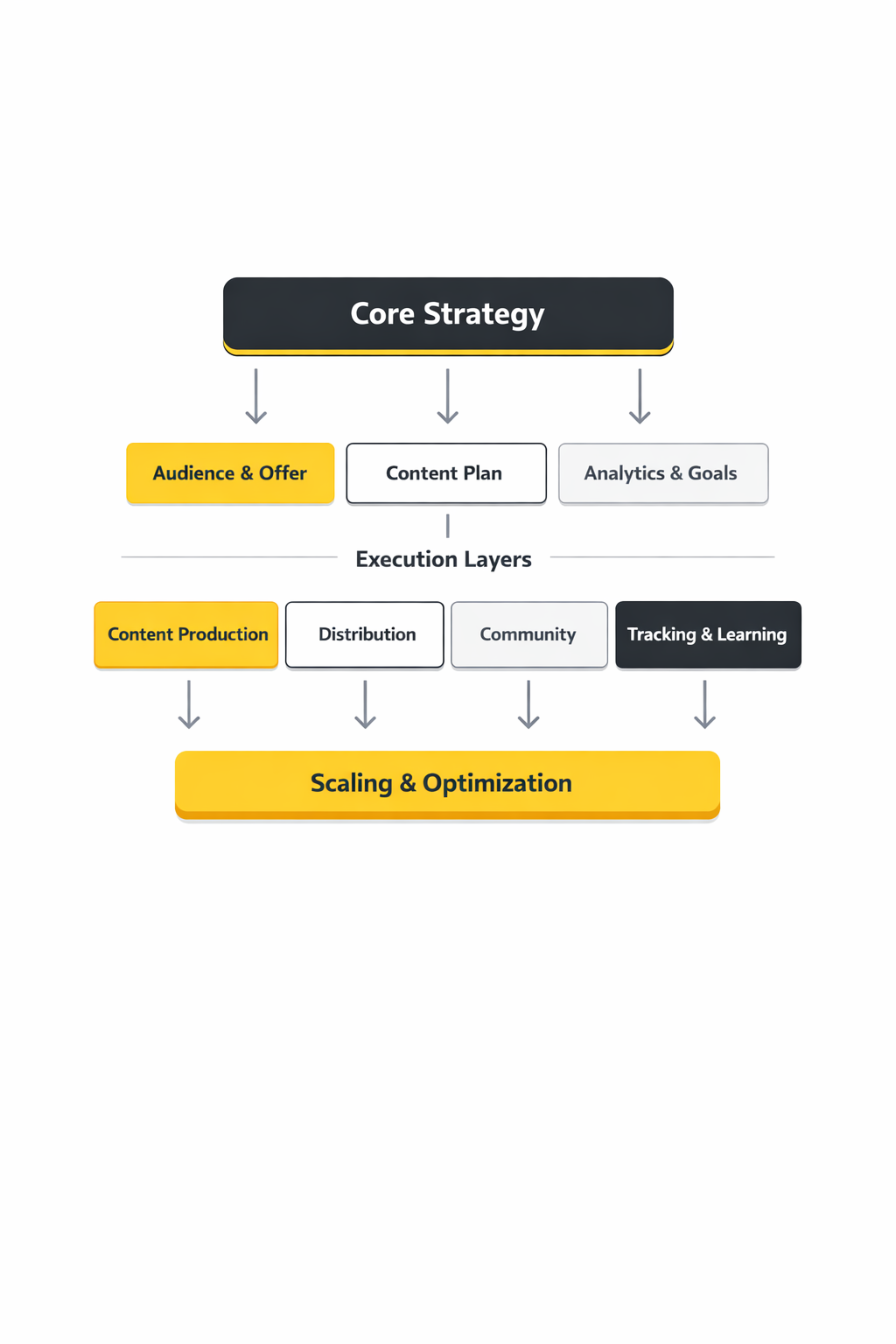
To make social media for business predictable, you need a framework that ties creative work to business outcomes. The one used in this article is intentionally simple: five connected layers that turn strategy into execution and execution into learning.
- Positioning: what you stand for, who you serve, and what you want to be known for.
- Content: the ideas and assets you publish, and the formats that make them travel.
- Community: the relationships you build through conversation, customer stories, and credibility.
- Distribution: how you earn reach (organic), buy reach (paid), and borrow reach (partners/creators).
- Measurement: how you connect signals (attention and engagement) to outcomes (leads, sales, retention).
This matters because most social strategies fail at the handoffs. A team might have strong content but weak distribution, or good community management but no measurement discipline, so the business can’t justify investment. The framework forces you to close those gaps on purpose instead of hoping consistency magically appears.
It also helps you diagnose problems quickly. If you’re getting views but no leads, the issue is usually positioning, offer clarity, or conversion paths. If you’re getting leads but low quality, the issue is audience definition, content intent, or distribution targeting. Frameworks turn “we should post more” into “we should fix the bottleneck.”
Core Components
Positioning That Sounds Like a Human
Good positioning on social doesn’t sound like a slogan. It sounds like a point of view your market recognizes as true. Start by deciding what you want to be the default answer for, and then pressure-test whether your current profile, pinned posts, and recent content actually communicate that.
A practical rule: if a stranger can’t tell who you help and why you’re different in under 10 seconds, your social media for business strategy is forcing every post to work too hard. Clear positioning makes everything downstream easier, including ads, partnerships, and sales conversations.
A Content Engine, Not a Content Calendar
Calendars help you ship. Engines help you compound. The difference is reuse. An engine turns one strong idea into multiple formats: a short video, a carousel, a newsletter-style post, a customer story, a live session, and a sales enablement snippet.
This is where many teams waste budget: they produce constantly but don’t build assets that can be repackaged. If you want social media for business to scale, design content so it can be redistributed across platforms and reused across campaigns without losing its meaning.
Community as Trust Infrastructure
Community isn’t “replying to comments.” It’s the trust layer around your brand. That includes how fast you respond, how you handle criticism, how you spotlight customers, and how consistently your team shows up in conversations where your buyers are already talking.
In practice, community work reduces friction in the buying journey. When a prospect checks your profile, they’re often looking for signs that real people engage with you and get results. Community creates those signs.
Professional Implementation
Professional social media for business implementation is less about creativity and more about operations. The highest-performing teams treat social like a product: they define inputs, ship consistently, measure outcomes, and improve the system every cycle.
Build a Simple Operating Model
Start with roles, even if one person holds multiple hats. You need someone accountable for strategy, someone responsible for production, and someone owning distribution and reporting. Without clear ownership, social becomes everyone’s job and therefore no one’s job.
Then set a cadence your team can actually maintain: a weekly content sprint, a midweek distribution check, and a monthly performance review. Consistency beats intensity here.
Create Guardrails for Brand Safety and Consistency
Guardrails aren’t corporate red tape; they’re what let you move faster without fear. Define voice and tone, what you will and won’t comment on, approval rules for sensitive posts, and how you handle customer issues in public.
This matters even more as platforms shift policies and as paid placements expand into new surfaces. A lightweight governance doc protects the brand and keeps execution smooth when the pace picks up.
Measure What the Business Can Use
Social metrics are only valuable when they inform decisions. Track a small set of signals that map to outcomes: reach and saves for awareness, click intent for consideration, and lead or purchase actions for conversion. Then review those numbers alongside content themes and distribution moves so the team can see cause and effect.
If you want a north star that leadership understands, connect social to pipeline inputs. Even when attribution is imperfect, disciplined reporting helps the business choose what to double down on and what to stop doing.
Step-by-Step Implementation
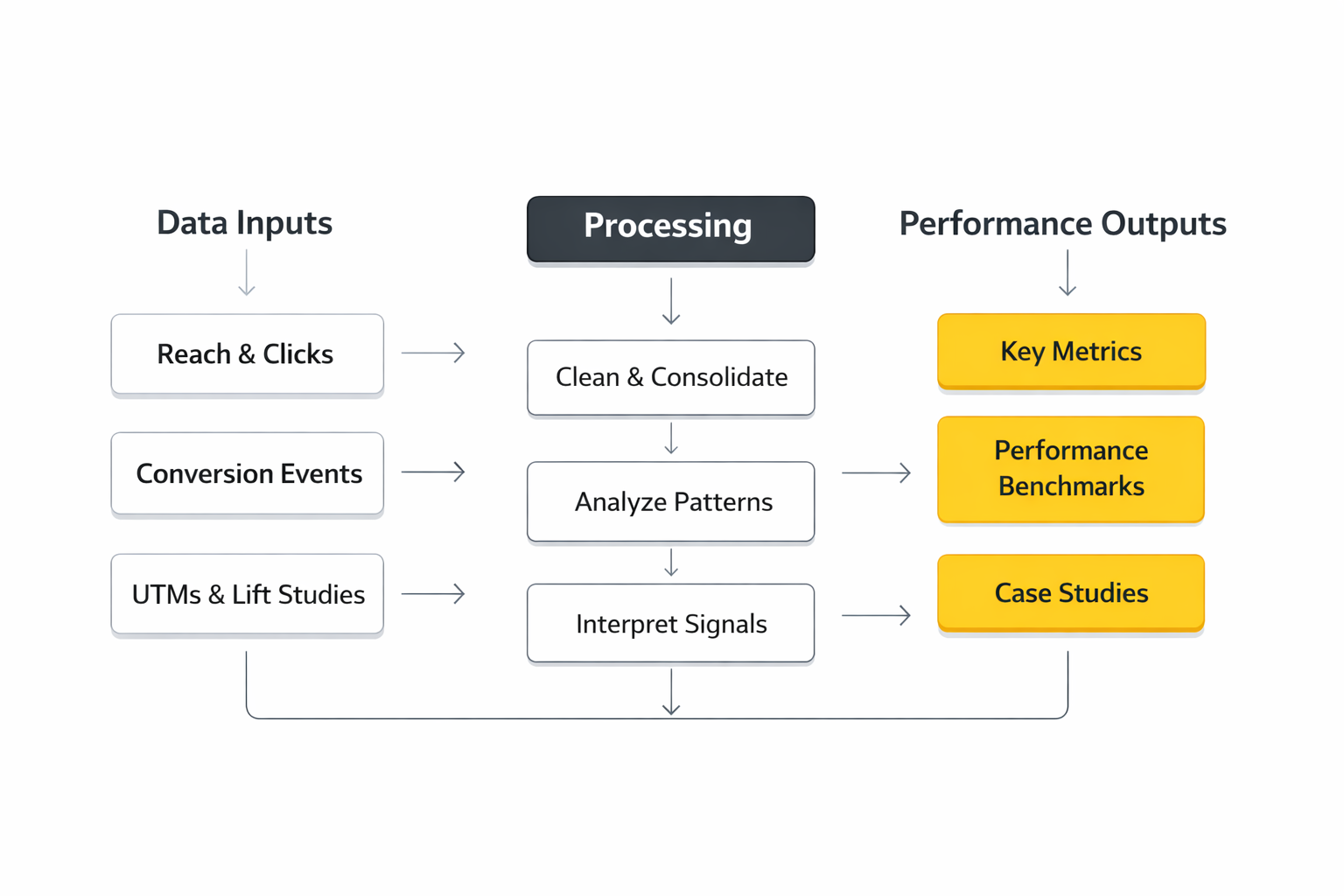
The fastest way to make social media for business feel manageable is to treat it like an operational rollout, not a creative mood. You’re not “starting to post.” You’re installing a system that can run every week, even when priorities shift and people get busy.
This step-by-step approach is designed to work whether you’re a solo marketer, a small team, or a larger organization. The steps build on each other so you don’t end up with great content and no distribution, or clean reporting and no strategy.
Step 1: Lock the outcome and the audience
Pick one primary outcome for the next 90 days: pipeline, purchases, recruiting, retention, or partner demand. Then define one primary audience you’re willing to win first, even if it means saying “not yet” to everyone else.
Social can do many things, but it does one thing at a time. When the outcome is clear, your content decisions stop being personal preferences and start being strategic choices.
Step 2: Build a message map you can reuse
Create a short message map: three core problems your audience wants solved, three beliefs you want to be known for, and three proof points you can repeat without getting boring. This becomes the backbone for posts, videos, comments, and even sales conversations.
If you skip this, social media for business turns into constant reinvention, and inconsistency becomes the brand.
Step 3: Design content pillars around intent
Choose 3–5 pillars that match how people decide: education, proof, perspective, product, and culture are usually enough. Then assign intent to each pillar so it’s clear what it should accomplish.
This prevents the common trap where everything is “content” but nothing is designed to move a buyer forward.
Step 4: Create a production rhythm you can survive
Set a weekly rhythm: one day to capture ideas, one day to produce, one day to schedule, and daily time blocks for community. The goal is to make shipping predictable, not heroic.
When the rhythm is realistic, consistency stops feeling like discipline and starts feeling like routine.
Step 5: Make distribution a deliberate step
Decide how every piece will be distributed: organic posting, employee advocacy, partner shares, creator collaborations, paid amplification, or all of the above. Distribution isn’t something you “hope happens.” It’s a plan.
If you want social media for business to compound, distribution has to be treated as part of the deliverable, not an afterthought.
Step 6: Set measurement that the business will respect
Pick a small set of signals you will track weekly, and define what “better” means. The goal is not to measure everything, but to make decisions faster.
If you need a practical guide for connecting social campaigns to business outcomes, LinkedIn’s documentation on mapping conversion events like MQLs and opportunities is a solid reference point in their Conversions API playbook.
Execution Layers
Once the basics are in place, execution becomes easier when you think in layers. Each layer has its own “definition of done,” and the layers together keep social media for business from collapsing into random acts of posting.
Layer 1: Strategy and planning
This is where you decide what you’re trying to achieve, who you’re speaking to, and which messages deserve repetition. Planning also includes selecting formats your team can realistically produce at the quality bar you need.
The output of this layer is simple: a weekly plan that tells your team what to create and why.
Layer 2: Creative and production
Production is where most teams either win or burn out. The key is to build repeatable templates, reusable structures, and a consistent way to turn one idea into multiple formats.
If your production pipeline depends on inspiration, it will eventually break. If it depends on systems, it becomes reliable.
Layer 3: Publishing and distribution
Publishing is scheduling, approvals, and timing. Distribution is how you extend reach through people and paid support when something earns it.
Social media for business starts scaling when distribution is treated like a second production line: planned, repeatable, and owned.
Layer 4: Community and conversation
Community is not a side task; it’s where trust becomes visible. Comment replies, DMs, and how you handle criticism are part of the product experience.
If you want a research-backed lens on why trust and credibility matter in social influence, the 2025 meta-analysis on influencer effectiveness highlights the role of credibility and attractiveness as mechanisms that drive engagement and purchase intention.
Layer 5: Measurement and learning
This layer turns activity into intelligence. The point isn’t to admire dashboards, but to understand what themes, formats, hooks, and offers are earning attention and which ones are wasting it.
When learning is consistent, your team gets better without needing constant reinvention.
Optimization Process
Optimization is where social media for business becomes a compounding advantage instead of a never-ending treadmill. The goal is to build a loop where you ship, learn, adjust, and ship again with better odds each cycle.
Run a weekly optimization loop
Once a week, review your top and bottom performers side-by-side. Don’t ask “why did this go viral?” Ask what the audience signal was: saves, replies, clicks, or qualified inbound.
Then make one decision per category: one theme to repeat, one format to improve, and one thing to stop doing for the next week.
Test in small, controlled bets
Testing works when you change one variable at a time: the hook, the format, the CTA, or the distribution path. Keep the rest stable so you can actually learn something.
If you’re using creators as part of your distribution strategy, research continues to show they can outperform brand-only posting in engagement and intent outcomes, as reflected in the same 2025 meta-analysis finding that influencers are more effective than brand posts for engagement and purchase intention.
Instrument conversions so you can defend decisions
When social results are real but attribution is messy, leadership gets skeptical. The antidote is consistent instrumentation: conversion events, clean UTM standards, and campaign naming conventions that make reporting credible.
For teams operating on LinkedIn, it helps to align reporting with downstream actions like opportunities and won deals, a measurement approach emphasized in the Conversions API playbook.
Automate what drains time, not what drives differentiation
Automate reporting, scheduling, and repetitive operational work first. Save human attention for strategy, creative direction, and community tone.
That’s where platforms can create meaningful leverage, including documented reductions in manual reporting effort like the 80% reduction in employee time spent on social media reporting reported in a Forrester Total Economic Impact study commissioned by Sprout Social.
Implementation Stories
It’s easier to understand social media for business implementation when you see how real teams move through chaos, friction, and tradeoffs. These stories are drawn from brand and platform case materials, so you can trace the results back to original sources.
Castlery’s “Growth Is Stalling” Moment Turned Into a Cleaner Performance System
The week the numbers dipped, the team felt it immediately. Spend was rising, performance was uneven, and every “just scale it” conversation started sounding reckless. The pressure wasn’t abstract, because every underperforming day created a new hole to dig out of.
Castlery wasn’t new to performance marketing. They were already operating with a clear product and a strong brand, and they understood the basics of paid acquisition. But scaling a furniture business is unforgiving, because margins, shipping realities, and decision cycles can punish sloppy targeting.
Then they hit the wall: manual campaign work was taking time, but not reliably producing better outcomes. Tweaks were constant, yet results still swung in ways that were hard to explain. The team needed a way to grow without turning optimization into a full-time firefight.
The turning point came from treating the problem as an experimentation design challenge. Instead of guessing, they built an A/B test that compared a manual catalogue setup to an automated setup. That shift mattered because it changed the conversation from opinions to evidence.
The journey was structured and specific. They launched a strategic test using Pinterest Performance+ automation while expanding targeting to give the system room to find new high-intent audiences. Their case materials describe how they focused on a small set of core metrics to judge impact and make a decision, outlined in Pinterest’s Castlery success story.
But it wasn’t frictionless. Automation can uncover new audiences, but it can also expose creative weaknesses fast, and teams can panic when control feels reduced. The case write-up frames the outcome as stronger results with less manual effort, which is only possible when creative, tracking, and product-market fit are strong enough to support scale.
The dream outcome was sustainable growth without constant manual intervention. In the published results, Pinterest reports Castlery doubled ROAS, increased AOV, and reduced CPA by 14%. That’s the kind of result that turns social media for business from “more work” into “better leverage.”
Rohde & Schwarz Stopped Chasing Volume and Started Winning With Lead Quality
The frustration wasn’t loud at first, but it was constant. Campaigns were running, spend was happening, and the lead lists kept growing, yet the sense of momentum never arrived. The team was doing work, but it didn’t feel like progress.
Rohde & Schwarz is not a brand that needs hype. They operate in serious technical markets where trust, specificity, and credibility matter. In Asia Pacific, the regional team was balancing diverse markets and trying to grow awareness while still delivering leads sales could actually use.
The wall hit when “more leads” stopped being a win. Low-quality contacts create downstream cost, because sales teams burn time chasing people who were never going to buy. When that happens, social media for business becomes politically fragile, because internal stakeholders start questioning the channel.
The shift came from leaning into LinkedIn as a precision channel rather than a volume channel. Instead of optimizing for the easiest conversions, the team focused on the kind of audience and offer structure that produced higher-quality leads. This wasn’t about a clever ad trick; it was about matching the channel to the buying reality.
The journey is described in LinkedIn’s customer story. They used LinkedIn to grow a database of prospects while improving efficiency, a key part of building a demand engine that can scale across a complex region. The story highlights the performance outcome and positioning, documented in LinkedIn’s Rohde & Schwarz case study.
Even with better lead efficiency, the hard part is always internal alignment. When sales expectations are shaped by past lead-gen experiences, marketing has to prove that “fewer, better leads” creates more revenue than “more, weaker leads.” That’s why the case story emphasizes comparative efficiency rather than vanity outcomes.
The dream outcome was credibility and efficiency at the same time. The published result states they drove leads at up to 80% lower cost per lead compared to industry benchmarks. In social media for business terms, that’s not just a metric win; it’s the kind of win that keeps the program funded.
Use a rollout checklist that prevents predictable failures
- Ownership: one person owns the operating cadence, even if multiple people contribute.
- Message map: a shared reference for what the brand repeats and what it avoids.
- Production system: templates, asset libraries, and a weekly rhythm that does not require overtime to maintain.
- Distribution plan: a defined path for how each piece earns reach beyond publishing.
- Tracking: clean UTMs, consistent campaign naming, and defined conversion events.
Build workflows around decisions, not tasks
Most teams create workflows that move content from draft to published. Professional teams create workflows that make decisions faster: what to repeat, what to stop, and what to test next.
That’s why monthly reviews should include both performance and process. If it took three hours to assemble a report, that’s a system failure you can fix, and studies like the Forrester TEI report on social reporting time savings show how meaningful that leverage can be when tooling and workflows are aligned.
Set guardrails that let teams move faster
Guardrails are how you scale without fear. Define who can publish, what requires approval, what you do when a post attracts criticism, and how customer issues get escalated.
If you’re collaborating with creators or employees, guardrails protect authenticity instead of killing it. The goal is a system that makes “the right thing” easy to do under pressure.
Protect sustainability so the system survives success
When social works, volume increases: more comments, more DMs, more requests, more internal stakeholders with opinions. Sustainability means you plan for that success before it arrives.
Set response windows, define what gets prioritized, and keep the content pipeline simple enough that the team can maintain it for months. Social media for business becomes a competitive advantage when it’s still running well after the novelty is gone.
Statistics and Data

Numbers don’t make your social media for business strategy “right,” but they do keep it honest. When a team knows what’s normal in the market, it stops overreacting to a slow week, and it stops celebrating noise that won’t convert.
It also helps to separate three types of data, because they answer different questions:
- Scale data: how big the opportunity is and where attention is moving.
- Performance data: what “good” looks like for engagement and efficiency.
- Impact data: what social changes downstream (leads, revenue, retention, recruiting).
On scale, the clearest signal is adoption: the latest global reporting shows 5.66 billion social media “user identities” worldwide, reinforced by the Digital 2026 “two in three people” update and echoed in We Are Social’s summary of the same dataset.
On budgets, social is no longer a side channel. Forecasts for 2025 converge around social ad spend exceeding $300B, including WARC’s projection of $306.4B in 2025 and 26.2% of all ad spend, while major forecasters continue to frame digital as the engine of growth in 2026, including dentsu’s 2026 outlook and WPP Media’s global ad revenue report.
On distribution power, creators are no longer “experimental.” The market has effectively voted with money: the IAB projects $37B in U.S. creator economy ad spend in 2025, with the same figures reflected in IAB’s report hub and covered by Business Insider’s reporting on the IAB data.
And on platform behavior, Meta’s latest financial reporting shows just how large the “attention layer” has become: its press release reports 3.58 billion Family daily active people in December 2025, plus year-over-year growth in ad impressions and pricing, which is a useful reminder that the auction environment keeps getting more competitive.
Performance Benchmarks
Benchmarks are guardrails, not grades. They help you detect whether you have a creative problem, a targeting problem, or a measurement problem, without turning social media for business into a panic-driven cycle of “post more” and “boost everything.”
Engagement benchmarks are moving targets
Engagement rates vary wildly by industry, audience size, and content format. Still, market-wide benchmark reports are useful because they show direction, not just a point estimate.
Rival IQ’s 2025 benchmark work highlights a broad decline in engagement rates year over year across major platforms, including reported drops such as Facebook down 36% and Instagram down 16%. Emplifi’s reporting adds another angle by looking at reach engagement by format, noting shifts like Reels reach engagement moving from 2.6% (2023) to 2.2% (2024) in its dataset. Together, those trends point to the same practical takeaway: you can’t rely on “average engagement” staying stable, so your process has to keep learning.
Format benchmarks matter more than platform averages
If your team is trying to improve performance, compare formats against each other before you compare yourself to the whole internet. Rival IQ’s benchmarks describe how carousels outperformed Reels on Instagram engagement in their 2025 report, while Emplifi’s dataset shows how short-form video remains powerful even as rates fluctuate, including its comparison where Reels reach engagement outpaced TikTok’s average reach engagement rate in its sample.
For social media for business teams, this is the kind of benchmark that changes what you produce next week: you’re not “making more content,” you’re doubling down on the formats that are earning attention in your category.
Paid benchmarks should be tied to the job the campaign is doing
Paid social benchmarks are most useful when they match your campaign objective. A brand awareness campaign can be “working” even if clicks are modest, while a lead-gen campaign can look healthy on CTR but still fail if conversion quality is weak.
For example, TikTok has been pushing more rigorous measurement through lift studies and incrementality, outlined in its documentation on Conversion Lift Studies. That emphasis is helpful for teams that need to defend spend with more than platform-reported conversions.
Analytics Interpretation
Analytics interpretation is where most social media for business programs either become strategic or stay superficial. A dashboard can tell you what happened. Interpretation tells you what to do next, and what to stop doing.
Read intent signals, not just popularity
Not all engagement is equal. Shares and saves often signal “this was valuable,” while comments can mean “this provoked a reaction,” and clicks can mean “this created enough curiosity to leave the feed.” Your job is to decide which signal matters for your current goal.
If you’re aiming for demand generation, treat saves, profile visits, high-intent clicks, and qualified DMs as higher-value signals than raw likes. If you’re aiming for community trust, treat response time and conversation quality as performance metrics, not soft “nice-to-haves.”
Interpret results in context of competition and auctions
When costs rise or reach falls, it’s not always your creative. Platforms are auction systems. Inventory quality shifts, advertisers pile into certain periods, and algorithms learn from fresh data.
This is one reason year-to-year budget signals matter. WARC’s projection of double-digit social ad spend growth to $306.4B in 2025 and dentsu’s expectation that global ad spend surpasses $1T in 2026 both imply the same reality: if you stand still, you effectively fall behind.
Make measurement harder up front so reporting becomes easier later
Attribution is messy because people don’t buy in a straight line. The fix isn’t pretending attribution is perfect. The fix is setting up tracking so you can see patterns and make confident decisions anyway.
That means consistent UTMs, clear conversion events, and a naming system your team can maintain. LinkedIn’s guidance on connecting ad activity to downstream events like opportunities is a good reference point for teams building this discipline, outlined in its Conversions API playbook.
Case Stories
Stories are where analytics becomes real. When you see a team hit a wall, change the measurement, and then change the outcome, you stop treating social media for business as a content exercise and start treating it like a performance system.
Meta’s 2025 “Pressure Cooker” Quarter Became a Lesson in What Metrics Actually Matter
When the market started watching every earnings line, the tension wasn’t subtle. Ad platforms don’t get to miss quarters without consequences, and investors were openly evaluating whether Meta’s growth could keep pace with its spending. Inside that kind of pressure, performance claims need receipts, not optimism.
The backstory is that Meta sits at the center of the social advertising economy, so any shift in its auction dynamics hits millions of businesses. Growth on the platform isn’t just “more users”; it’s more competition for attention and more advertisers bidding for the same moments. That’s why Meta’s reporting includes not just revenue, but operational signals like impressions and pricing.
The wall came from the reality that “posting more” doesn’t fix an auction environment. Businesses felt costs move, algorithms changed, and teams struggled to separate creative problems from market-wide shifts. Without clean measurement, it’s easy to blame content when the real issue is the underlying distribution mechanics.
The epiphany was that the metrics that matter most are the ones that show how the system is behaving, not just what the surface outputs look like. Meta emphasized signals like scale and ad delivery dynamics, reporting 3.58B Family daily active people in December 2025 alongside 18% year-over-year growth in ad impressions in Q4 2025 and changes in average price per ad. Those are “system health” metrics that help explain why performance can shift even when creative stays constant.
The journey, for businesses watching from the outside, was learning to interpret platform-level movement without spiraling. If impressions are rising and prices are moving, your benchmarks need to be adjusted, and your testing discipline has to tighten. In practical social media for business terms, that often means shorter test cycles, clearer hypotheses, and more attention to incrementality-style validation rather than last-click comfort.
The final conflict is that platform scale doesn’t protect you from trust problems. Meta’s ecosystem has also faced scrutiny, including Reuters reporting on internal concerns related to fraudulent advertising and enforcement pressure, which is the kind of risk that can reshape policy and impact advertisers overnight, described in Reuters’ investigation into scam advertising dynamics.
The dream outcome is not “perfect attribution.” It’s confidence. When you can read system signals, run controlled tests, and interpret results without panic, your social media for business strategy becomes resilient. That resilience is what lets teams keep investing when others pull back—and it’s usually where long-term gains are made.
Professional Promotion
Professional promotion is how you stop leaving results to chance. You’re not boosting posts because you’re impatient. You’re promoting what has already earned attention so the best ideas get more surface area, more learning, and more business impact.
Promote proven content, not untested guesses
Run content organically first, then promote the winners. A post that earns saves, meaningful comments, or high-intent clicks is telling you it has product-market fit in the feed. That’s the moment to amplify, because paid spend becomes fuel for something the audience already wants.
Use creators as a distribution channel with clear measurement
Creators are becoming a core part of paid promotion because they can deliver trust faster than brand accounts. The scale of investment is the signal: the IAB projects $37B in U.S. creator economy ad spend in 2025, and coverage of the same figures shows how quickly budgets are shifting, including TVTechnology’s reporting on the IAB findings.
To keep creator promotion professional, treat it like performance media: brief clearly, define the audience and angle, and measure lift, not just views. TikTok’s focus on incrementality through Conversion Lift Studies is a useful model for how to think about proving impact beyond platform-reported conversions.
Budget like a portfolio, not a gamble
Instead of dumping budget into one “big campaign,” allocate spend across three buckets: always-on support for your core offer, experimental tests to discover new angles, and burst spend behind content that is already winning. This keeps learning alive while still driving predictable outcomes.
It also aligns with the bigger market reality: social is absorbing more ad spend, not less, with projections like WARC’s $306.4B in social ad spend in 2025 and broader forecasts from major groups like dentsu’s 2026 outlook. In that environment, disciplined promotion is how you stay competitive without turning spend into chaos.
Advanced Strategies
Once the basics are stable, social media for business stops being a publishing game and becomes a compounding advantage. The shift is subtle: you stop asking “what should we post?” and start asking “how do we build a repeatable system that earns attention, converts it, and keeps working when the algorithm changes?”
These advanced strategies are designed for teams that already ship consistently and now want more leverage from the same effort.
Build social SEO into every post
Search behavior is drifting into social platforms, especially for discovery and evaluation. Instead of treating captions as decoration, treat them as findable context: specific keywords your customers actually use, clear problem statements, and simple language that matches how people search in real life.
When you do this well, your content starts working twice: it performs in the feed and it stays discoverable long after the posting day.
Use creators as a distribution system, not a one-off tactic
Creators are no longer a fringe channel; budgets are moving there because trust moves there. The IAB projects $37B in U.S. creator economy ad spend in 2025, and the full dataset in IAB’s 2025 Creator Ad Spend & Strategy Report explains why advertisers treat creators as a “must-buy” category.
The operational win is to build a creator pipeline: a repeatable brief template, a consistent approval process, and a measurement plan that doesn’t depend on vibes. Once that exists, creators become a steady growth lever inside your social media for business stack.
Turn employees into “trusted distribution” with guardrails
Brand accounts are easy to ignore. People aren’t. The most scalable version of advocacy is not forcing shares; it’s giving employees great stories they’re proud to tell, with guardrails that keep tone and compliance safe.
Advocacy becomes even more powerful when it aligns with one business goal (recruiting, demand gen, partnerships) and when reporting shows how it supports that goal over time.
Run brand and performance as one system
When teams treat brand building as “nice” and performance as “serious,” they create a fragile strategy that only works while costs stay low. LinkedIn’s B2B Institute makes a strong case that brand investment unlocks competitive advantage and pricing power, and it also highlights how 81% of B2B ads fail to gain adequate attention or drive recall.
The practical move is to design content as a ladder: top-of-funnel attention pieces, mid-funnel proof and clarity, and bottom-funnel conversion assets. That ladder is what makes social media for business feel predictable instead of random.
Scaling Framework
Scaling doesn’t mean “more posts.” Scaling means your team can increase output and impact without increasing chaos. The easiest way to do that is to build a scaling framework that clarifies what gets standardized and what stays creative.
Standardize the parts that should never be reinvented
- Message map: the few ideas you repeat until the market associates them with you.
- Format playbook: a small set of post structures your audience already responds to.
- Creative templates: reusable design and editing patterns that keep quality consistent.
- Governance: roles, permissions, approvals, and escalation rules that prevent costly mistakes.
- Measurement: conversion events, UTMs, and naming conventions that keep reporting credible.
Make content modular so one idea fuels multiple channels
A scalable social media for business system treats content like LEGO, not like single-use crafts. One core insight becomes a short video, a carousel, a founder post, a sales enablement clip, and a newsletter snippet. That modular approach is how teams keep output high without burning out.
Separate the creative team from the operating cadence
Creativity needs room. Operations needs rhythm. When the same person tries to hold both, the system becomes unstable during busy weeks.
Professional teams run a steady cadence for planning, production, publishing, and reporting, then use creative bursts strategically when something has earned extra investment.
Growth Optimization
Growth optimization is how social media for business becomes a learning machine. You’re not chasing hacks; you’re building a feedback loop that improves the odds of every post and every campaign.
Design tests that teach you something
The fastest teams don’t test “random ideas.” They test one variable at a time: hook, format, audience, offer angle, or distribution path. That discipline turns social into a lab instead of a roulette wheel.
Build a video flywheel without depending on virality
Video keeps growing across platforms, but the advantage goes to teams that treat it as a repeatable engine. LinkedIn’s video push is one signal of where B2B attention is moving: Reuters reported that LinkedIn expanded its BrandLink program and that video uploads were up over 20% and views grew 36% year over year.
The optimization move is to keep production simple: consistent series formats, consistent publishing cadence, and tight feedback on what drives saves, shares, and qualified clicks.
Stop arguing about attribution and start proving lift
Most social programs don’t fail because they can’t generate interest. They fail because they can’t prove impact under scrutiny. The fix is to measure in ways that survive skepticism: clean conversion events, consistent UTMs, and lift-style thinking whenever possible.
TikTok’s guidance on Conversion Lift Studies is a useful reference for teams that want to validate impact beyond last-click comfort.
Use automation, but govern it like a grown-up
Automation can unlock scale, but it also introduces new risks. Meta’s own help documentation explains how Advantage+ creative can automatically generate variations, which can be helpful when volume matters.
At the same time, real-world reporting has highlighted cases where advertisers saw unexpected outputs and control issues, covered in Business Insider’s reporting on odd AI-generated ad creatives. The practical lesson for social media for business teams is simple: automate for speed, but keep approval and monitoring strict enough to protect the brand.
Scaling Stories
Scaling looks glamorous from the outside. Inside, it usually feels like pressure, fatigue, and a constant fight to keep quality from collapsing under volume. This story is a useful reminder that scaling social media for business is as much about protecting the team as it is about growing the brand.
Duolingo’s “Viral Machine” Nearly Broke the People Running It
The pressure spiked when every post started feeling like a quarterly earnings event. The brand had trained the internet to expect the next outrageous moment, and the internet rarely asks politely. One quiet week didn’t just look like a lull; it looked like failure.
Behind the scenes, Duolingo’s social presence had become famous enough to attract its own kind of scrutiny. The account wasn’t simply “marketing”; it was part of the brand’s identity, and people built emotional expectations around it. That intensity is captured in the Wall Street Journal profile of Duolingo’s departing social media manager, which describes the scale of the following and the psychological weight of maintaining it.
Then the wall hit, and it wasn’t about ideas. It was about sustainability. In the same WSJ piece, the manager describes anxiety and burnout pressures that came with being responsible for virality and public reaction at that scale.
The epiphany came from a truth most brands ignore: social doesn’t just need creators, it needs an operating model. The WSJ describes Duolingo introducing a “writer’s room” approach, which is essentially a structural decision to protect creativity and increase throughput. That’s what professional scaling looks like—designing a system so the output doesn’t depend on one exhausted person.
The journey intensified when Duolingo leaned into high-drama moments as part of its brand narrative. In early 2025, the company ran its “Death of Duo” campaign, a stunt that deliberately pushed into culture and conversation, described in PR Daily’s breakdown of the campaign mechanics. At this point, the team wasn’t just publishing content; they were managing a live audience reaction in real time.
But the final conflict is the part most case studies skip: the backlash and the mistakes. The WSJ profile notes that controversial jokes and public blowback became part of the job, not an exception, and that learning to navigate those moments was painful. Even when a campaign “works,” the human cost can be real, and it shows up as stress, turnover, and fragile execution.
The dream outcome wasn’t simply more followers. It was a social media for business system that could keep winning without breaking the people behind it. The WSJ reports the TikTok following had reached 16.7 million, while Duolingo’s investor communications show the business continuing to grow, including its statement that it surpassed 50 million daily active users in Q3 2025. That combination—brand momentum plus business momentum—is what scaling is supposed to achieve, as long as the operating model is built to sustain it.
Promote like a portfolio: always-on, experiments, and winners
A professional social media for business promotion system usually has three budget buckets: always-on spend behind your core offer, controlled experiments to find new audiences and angles, and heavier amplification for content that has already proven it can earn attention.
This structure protects you from “one big bet” thinking while still letting you scale what works.
Turn creator content into performance media
Creators can deliver trust faster than brands, but the real leverage comes when you turn that content into a measured distribution asset. The budget shift is already visible in the IAB’s forecast of $37B in U.S. creator ad spend in 2025, and the strategic detail is expanded in the full IAB report.
Professional teams treat creator assets like media: they test hooks, control targeting, and evaluate lift instead of celebrating views that never convert.
Align promotion with where platforms are investing
Platforms put their thumb on the scale. When they push a format, distribution and ad products follow. LinkedIn’s expanding video program and BrandLink growth are a clear signal of where B2B distribution is heading, reported in Reuters’ coverage of LinkedIn’s video ad push.
The practical move is to build creative and measurement systems that can exploit those pushes without becoming dependent on them.
Scale with controls that protect the brand
As automation grows, so does the need for safeguards. Meta’s documentation describes how creative optimization features can generate variations automatically, outlined in Meta’s Advantage+ creative overview. At the same time, public reporting has shown why monitoring matters when AI changes outputs in unexpected ways, described in Business Insider’s coverage of bizarre AI-generated ad creatives.
If you want social media for business promotion to scale safely, build a review process that is fast enough to keep pace and strict enough to prevent embarrassing mistakes.
Future Trends
The next wave of social media for business won’t be won by the teams who post the most. It will be won by the teams who build the cleanest system for trust, distribution, and measurement—then adapt fast when platforms shift the rules.
Here are the trends that are already reshaping how brands grow on social.
AI will raise the content baseline, so originality becomes the differentiator
AI is making “good enough” content cheap and fast. That changes the competitive landscape: audiences will see more posts, more videos, more ads, and more sameness. Sprout Social frames 2026 as a year where AI-generated content becomes mainstream and where brands need stronger ethics and quality control to avoid trust erosion, highlighted in its 2026 trends report on AI-driven social content becoming the new normal.
In practice, social media for business will lean harder into human proof—opinions, stories, behind-the-scenes decisions, and credibility—because those are the parts AI can’t fake convincingly for long.
Short-form video will keep expanding into “professional” spaces
Video is no longer confined to entertainment-first apps. LinkedIn’s product direction is a clear signal: Reuters reported that LinkedIn expanded its BrandLink program and that video uploads rose over 20% while views grew 36% year over year. LinkedIn also outlined how brands can sponsor curated video shows produced by creators and publishers in its official update on expanding video sponsorship opportunities.
If you run social media for business in B2B, this is a direct invitation: build a video system now—simple formats, consistent series, and measured distribution—before the space gets saturated.
Social search will keep growing, and “findable” beats “flashy”
Discovery behavior is shifting toward searching inside social platforms for recommendations, comparisons, and how-to guidance. Gartner’s 2026 marketing trends overview calls out a continued shift toward AI-powered personalization and creator influence, alongside the ongoing dominance of short-form video and social commerce, summarized in Gartner’s 2026 marketing trend predictions.
The practical move is to write for discovery: clear topic phrasing, explicit outcomes, and language that matches how customers describe their problems. In social media for business, that means fewer clever captions and more helpful clarity.
Creators become a core media channel, not a side experiment
Creator budgets are rising because trust travels through people faster than it travels through logos. The IAB projects $37B in U.S. creator economy ad spend in 2025, which signals how central creator distribution is becoming for performance and brand outcomes.
The teams who win will treat creators like a professional channel: a pipeline, a brief system, creative QA, and reporting that ties content to business results.
Private communities and “conversation spaces” matter more as feeds get noisier
As public feeds fill up, buyers will keep looking for places where real people talk honestly. That trend shows up in how brands invest in communities, and it also shows up in where consumers validate purchases. Vogue’s reporting on Reddit’s positioning highlights how the platform is leaning into human discussion as an antidote to AI-saturated shopping experiences, explored in Vogue’s look at Reddit’s “authentic discussion” advantage.
For social media for business, this means your community work (comments, DMs, groups, and creator relationships) becomes a compounding moat, not a support task.
Strategic Framework Recap

If you want social media for business to be predictable, it needs a full ecosystem—strategy, production, distribution, community, and measurement working together. When one piece is missing, results feel random. When all pieces are aligned, the system starts compounding.
- Strategy: one clear outcome, one clear audience, and a message map you repeat until it sticks.
- Content engine: a production rhythm you can sustain, built on reusable formats and series.
- Distribution: a plan for how winning content earns reach through people, creators, and paid support.
- Community: conversation and trust-building that turns attention into relationships.
- Measurement: clean tracking and interpretation so decisions improve every week.
That ecosystem is what keeps your social media for business strategy stable when algorithms change, when budgets tighten, or when a competitor floods the feed.
FAQ – Built for This Complete Guide
How long does it take for social media for business to produce real leads?
It depends on how established your offer is and how quickly you can ship consistent proof. If you already have a clear offer and you publish weekly with strong distribution, you can see qualified conversations within weeks. If you’re still clarifying positioning and building proof assets, it often takes a few months for momentum to compound.
Which platform should a business prioritize first?
Pick the platform where your buyers already pay attention and where your team can create consistently. For many B2B companies that’s LinkedIn; for many consumer brands it’s Instagram, TikTok, or YouTube. The “best” platform is the one you can win repeatedly with your available resources.
How many posts per week are realistic without burning out?
Start with what you can sustain for 90 days. Many teams do well with 3–5 posts per week plus daily community time. Consistency beats intensity; a smaller output that stays alive is more valuable than a big burst that collapses.
What metrics matter most when leadership only cares about revenue?
Use a ladder of metrics. At the top: reach and engagement to validate attention. In the middle: clicks, profile visits, and qualified DMs to validate intent. At the bottom: leads, opportunities, and revenue to validate business impact. Leadership respects measurement when the ladder is consistent and tied to outcomes.
Is organic social enough, or do we need paid promotion?
Organic can work, but paid promotion often accelerates learning and distribution—especially when you amplify content that has already proven it can earn attention. A common professional approach is to publish organically, identify winners, then invest paid spend to scale what the audience already wants.
How do we use AI without sounding generic?
Use AI to speed up operations, not to replace your point of view. Let it help with outlines, repurposing, and variants, then add human specificity: real decisions, real tradeoffs, real examples, and clear opinions. Sprout Social’s 2026 outlook on AI becoming mainstream on social is a useful reminder that the baseline will rise—so your originality has to rise too.
What content formats tend to perform best right now?
Formats change, but patterns persist: clear educational posts, proof-based breakdowns, and repeatable series tend to compound. Video continues to grow across platforms, and even LinkedIn is investing heavily in video distribution, with Reuters reporting strong year-over-year growth in video uploads and views.
How do we avoid chasing trends that don’t fit the brand?
Use a simple filter: does the trend help your audience make a decision, trust you more, or take a step toward the outcome? If not, skip it. Social media for business works best when trends serve the strategy—not when strategy is sacrificed for trends.
Should we invest in creators, and how do we measure it?
If your audience trusts creators, yes—especially for distribution and credibility. Measure creators like media: define the goal (awareness, sign-ups, pipeline), track the path (clicks, conversions, lift), and evaluate performance over multiple posts. The IAB’s projection of $37B in U.S. creator ad spend in 2025 shows how quickly this channel is becoming standard.
What’s the fastest way to make social media for business feel “professional”?
Build a repeatable operating system: a message map, a weekly production rhythm, a distribution plan, and a measurement loop. When those are in place, your output gets more consistent, your reporting gets more credible, and your results become easier to scale.
Work With Professionals
If you’re serious about social media for business, the hardest part isn’t learning what to do—it’s staying consistent long enough for momentum to compound. And if you’re a marketing freelancer, the real pain is even sharper: you can do the work, but you still need a steady pipeline of clients who are ready to hire.
The market demand is not the problem. Freelance work is everywhere, and even one major marketplace shows the scale: Upwork lists a sample of 12,297 marketing jobs posted. The problem is the friction—fees, gatekeeping, and slow back-and-forth that turns “opportunity” into wasted time.
MARKEWORK is designed to remove that friction for marketing specialists. It positions itself as a focused marketing marketplace where you can build a profile, apply to listings, and connect directly—with no project fees and no middleman delays. You keep control of your client relationship, and you keep what you earn because the platform is built around subscriptions rather than commissions, reinforced in its FAQ where it states there are no project fees, commissions, or transaction charges.
If you want a cleaner way to win clients, imagine opening your week with listings that are actually written for marketing work—clear scope, clearer expectations, and faster conversations. Then imagine a system where you’re not punished for success with fees, because the goal is to help you build momentum and keep it.
If you’re ready to turn your skills into a predictable pipeline—and keep 100% of what you earn—start here:
 Filip Konecny Enterprises