
If you run a small business, paid social can feel like a weird mix of opportunity and chaos. One day you boost a post and it “works,” the next day the same thing burns money with nothing to show for it. The problem usually isn’t the platform—it’s the lack of a system that ties audience, offer, creative, and measurement together.
This guide is built to be that system. Part 1 lays the foundation: what paid social really is (in plain English), why it matters now (not five years ago), and a framework you can use to make decisions without guessing.
Article Outline
- What Is Social Media Advertising for Small Business?
- Why It Matters for Small Businesses
- Framework Overview
- Core Components
- Professional Implementation
What Is Social Media Advertising for Small Business?

Social media advertising for small business is the paid side of platforms like Facebook, Instagram, TikTok, LinkedIn, Pinterest, and Snapchat—where you buy distribution on purpose. Instead of hoping the algorithm shows your posts to the right people, you choose who sees your message, when they see it, and what action you want them to take.
In practice, that usually means one of three things:
- Demand capture: reaching people who are already close to buying (e.g., retargeting site visitors, cart abandoners, or engaged followers).
- Demand creation: putting your offer in front of new people who resemble your best customers, so you’re not limited to referrals and repeat buyers.
- Relationship building: staying visible long enough that the right customer remembers you at the exact moment they need you.
What makes paid social different from most other channels is the feedback loop. Platforms learn from engagement and conversion signals, then automatically try to find more people like the ones who responded. That’s why a small budget can perform well when the inputs are solid—and why a big budget can still fail when the inputs are fuzzy.
Why It Matters for Small Businesses
Small businesses don’t usually lose because they have a worse product. They lose because they’re invisible at the wrong time, or they’re visible to the wrong people, or their message doesn’t land fast enough to earn attention.
Paid social solves a very specific problem: consistent reach. Organic reach rises and falls, but advertising gives you a reliable way to:
- Stabilize lead flow when referrals slow down or seasonality hits.
- Control your growth pace by turning spend up or down based on capacity.
- Compete with bigger brands by targeting tighter niches instead of trying to outspend them.
It also matters because the audience is simply there. Global social media user identities were reported at 5.24 billion at the start of 2025, which turns “my customers aren’t on social” into a claim that needs proof, not a default assumption. You can cross-check that figure across the Digital 2025 Global Overview, the We Are Social global report PDF, and Meltwater’s Digital 2025 press release summary.
And the money is following attention. In the U.S., social media advertising revenue was reported at roughly $88.8B in 2024, a number that shows up consistently in the IAB/PwC Full Year 2024 report PDF, IAB’s release summary, and an industry breakdown published by Search Engine Land.
None of this guarantees results. It just means the channel is mature, competitive, and measurable—which is exactly what a small business needs if it wants growth that isn’t based on luck.
Framework Overview
If you want social ads to work without turning into a full-time hobby, you need a framework that answers five questions in this order:
- Who exactly are we trying to reach? (Not “women 25–45.” A real buying situation.)
- What outcome do we want? (Lead, booking, sale, store visit, email signup, app install—pick one.)
- What’s the offer? (The value exchange that makes action feel worth it right now.)
- What creative will earn attention and explain the offer fast? (The ad is the product’s first impression.)
- How will we measure success and learn? (So you’re optimizing, not gambling.)
Think of it like this: the platform is the engine, but you supply the fuel. Targeting plus offer plus creative plus tracking equals performance. If one piece is weak, the whole system underperforms—and the dashboard will lie to you in subtle ways.
This is also where many small businesses get trapped: they try to “fix ads” by tweaking one setting at a time (audiences, placements, budgets) while the real bottleneck is the offer clarity or the creative. A framework forces you to diagnose the right problem first.
Core Components
Here are the five core components you’ll keep coming back to throughout this guide.
1) A Single Goal Per Campaign
Every campaign needs one primary win condition. If you ask an ad to generate awareness, grow followers, and drive purchases at the same time, you end up with reporting that looks busy but doesn’t move the business. Pick the action that matters most right now, then build the campaign around that action.
2) A Defined Audience With a Real Buying Context
“Small business owners” is not an audience. A useful audience definition includes a situation and a trigger: someone who needs a solution because something changed—new job, new baby, new regulation, a deadline, an urgent pain, or a visible aspiration.
Platforms give you multiple ways to reach people (interest targeting, lookalikes, engagement retargeting, site retargeting, customer lists). The point isn’t to collect options; it’s to match the audience type to the stage of intent.
3) An Offer That Earns the Click
Most ads fail because the offer is vague. A strong offer answers: “Why you, why now, and what happens next?” That could be a clear price anchor, a limited-time bundle, a risk reversal, a free consult with a defined outcome, or a product demo that removes uncertainty.
For social media advertising for small business, the offer has another job: it needs to be instantly understandable on a phone screen while someone is half-distracted. Clarity beats cleverness almost every time.
4) Creative That Matches How People Actually Scroll
Great creative is not “pretty.” It’s fast. It earns attention in the first second, communicates the idea in a few beats, and makes the next step feel easy.
The best small-business ads often look less like traditional commercials and more like:
- Simple founder-led explanations
- Product-in-use demos
- Before/after proof (when ethically and legally appropriate)
- Customer language turned into headlines
- Short, specific “how it works” walkthroughs
This is also why platforms keep investing in creative tooling and automation. Meta, for example, has been publicly pushing deeper AI-driven ad creation and automation across its ad products, a direction covered in reporting from Reuters.
5) Measurement You Actually Trust
Small teams don’t have time to argue with dashboards. The goal is a measurement setup that tells you, with reasonable confidence, whether ads are creating incremental business results.
That’s why incrementality testing and experimentation have become more accessible and more important. Google has been emphasizing this direction in its measurement guidance and product updates, including its overview of incrementality testing and newer Google Ads support updates on incrementality experiments.
You don’t need a data science team to be disciplined. You just need to decide what you’ll treat as “truth” (sales, qualified leads, booked calls) and build your tracking around that.
Professional Implementation
Running ads like a pro doesn’t mean using advanced tricks. It means setting up a repeatable operating system so performance improves over time instead of resetting every week.
Start With a Clean Foundation
- One source of truth: define the business outcome you’ll optimize for (revenue, margin, booked appointments, qualified leads).
- Conversion hygiene: ensure your landing page, checkout, or booking flow is friction-light and mobile-first.
- Tracking basics: use platform pixels and server-side options where available, and confirm key events fire correctly.
Use a Simple Campaign Structure That’s Hard to Break
A practical structure for most small businesses includes:
- Prospecting: reach new people likely to care (broad + lookalikes, depending on data volume).
- Retargeting: re-engage people who showed intent (site visitors, video viewers, engagers).
- Retention: speak to existing customers (upsells, repeat purchase, referrals).
This structure keeps your learning clean. When results shift, you can see whether the problem is new demand, conversion, or repeat business—without guessing.
Operate on a Testing Rhythm
Professionals don’t “set and forget.” They test on purpose.
- Weekly: test new creatives and angles, prune obvious losers, watch frequency and cost trends.
- Monthly: review audience performance, refresh offers, and improve landing pages based on user behavior.
- Quarterly: validate incrementality, revisit positioning, and decide where to scale.
Platforms publish plenty of case studies showing what can happen when a business aligns objective, creative, and conversion flow. If you want to see how a lead-focused setup is described at the platform level, TikTok’s small-business case study for Stepful is a useful example of how they frame objective choice and lead-gen mechanics.
In the next parts of this series, we’ll translate the framework into practical playbooks: how to choose platforms without spreading yourself thin, how to build offers that convert, how to design creative that doesn’t look like an ad, and how to read performance without getting fooled by vanity metrics.
Step-by-Step Implementation
When social media advertising for small business works, it rarely feels like “genius targeting.” It feels like a clean setup where the right signal reaches the platform, the offer is clear, and the team has a weekly rhythm for improving what’s actually holding performance back.
This step-by-step is designed so you can ship campaigns quickly without painting yourself into a corner later.
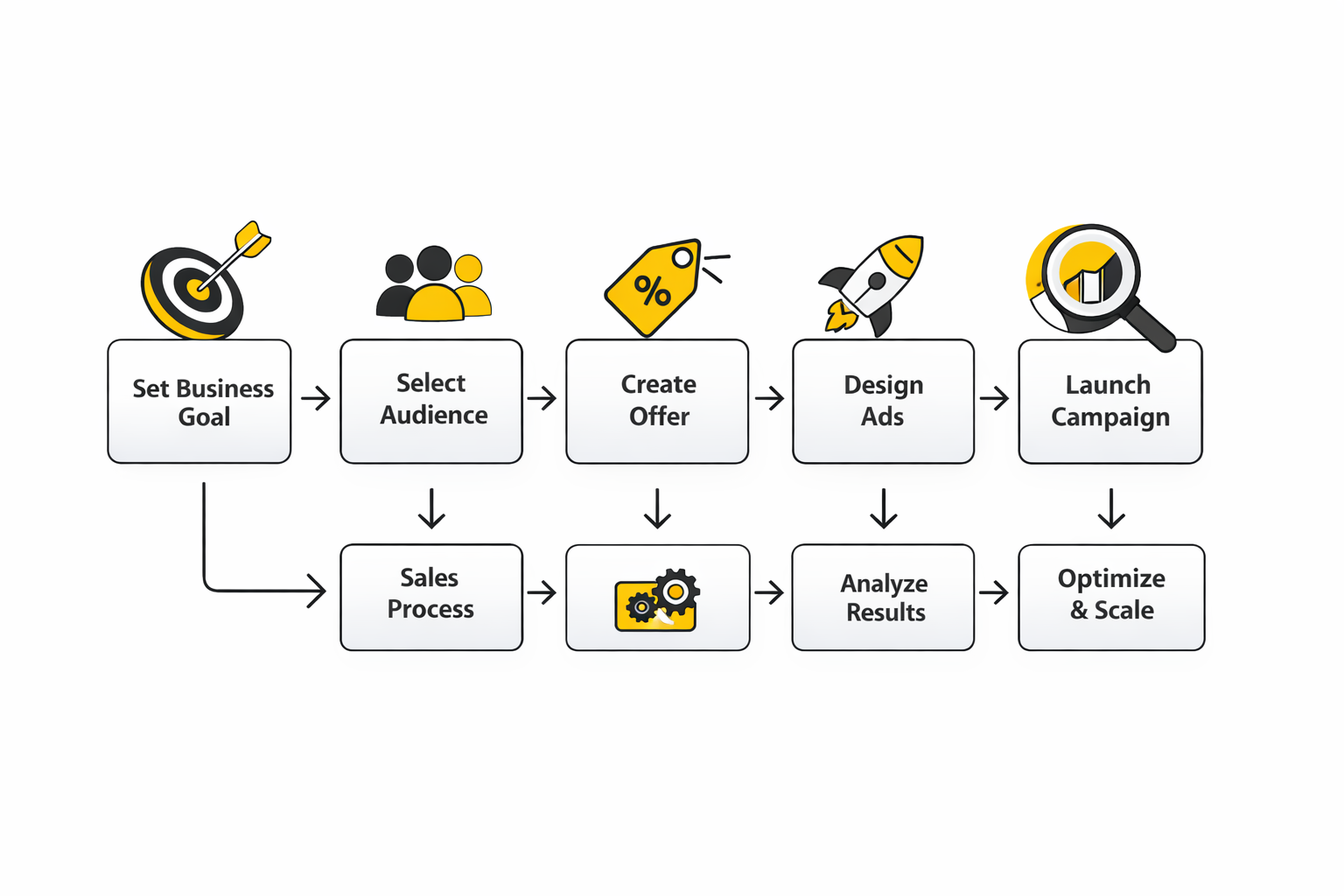
Step 1: Define “Success” in One Sentence
Write a single sentence that includes the outcome, the time window, and the quality bar. Examples: “Book 25 qualified consultations per month,” or “Sell 120 units per week at a sustainable margin.” This sentence becomes the filter for every campaign decision.
- Outcome: the action that matters (purchase, booked call, application, lead, store visit).
- Quality bar: what counts as “good” (qualified lead, minimum order value, service area, budget range).
- Time window: weekly or monthly, so you can spot trends without reacting to daily noise.
Step 2: Make the Conversion Path Friction-Light
Before you touch the ad platform, walk the path your customer will take. On a phone. On mobile data. If the page is slow or confusing, your ads will look “expensive” no matter how good the targeting is.
- For leads: form is short, next step is obvious, and confirmation happens instantly (email/SMS/thank-you page).
- For bookings: calendar loads fast, time zones are correct, and confirmation is immediate.
- For ecommerce: product page answers the obvious questions, checkout is clean, and payment options match your audience.
If you want a simple way to run controlled page experiments without overthinking it, Unbounce’s overview of A/B testing fundamentals is a solid reference point.
Step 3: Install Tracking the Way Platforms Can Actually Use
Platforms optimize on signals. If the signal is missing or inconsistent, the algorithm is guessing. Start with browser tracking, then layer in server-side event sharing when results justify the extra effort.
- Meta: install the Meta Pixel, then add server-side events via Conversions API when you need stronger reliability.
- TikTok: implement Pixel and events with TikTok’s step-by-step guide to getting started with the TikTok Pixel, and use their reference for standard events and parameters so optimization has clean inputs.
- Server-side routing: if you want one plumbing layer, Google’s explanation of server-side tagging is the baseline most teams build around.
Keep your event list small at first: one primary conversion and one or two supporting events (like “add to cart” or “start checkout”). You can always expand later.
Step 4: Choose the Objective That Matches Reality
Pick the optimization objective that matches what you truly want the platform to learn. If you optimize for clicks when you really want purchases, you train the system to find clickers, not buyers.
- Lead generation: use native lead forms only if your follow-up system is fast and disciplined.
- Conversions/sales: use web conversion objectives when your site and tracking are ready to send reliable purchase/lead signals.
- Awareness/video: use when your goal is reach and message penetration, not immediate pipeline.
Step 5: Build a Campaign That’s Easy to Learn From
Early campaigns should be designed for learning, not perfection. That means keeping the structure simple enough that you can interpret results without reading tea leaves.
- One offer per campaign: don’t mix a discount and a consultation and a newsletter signup in the same conversion campaign.
- One audience hypothesis per ad set: broad vs. lookalike vs. retargeting should be separated so you can see what’s actually working.
- Multiple creative angles: give the platform options, but keep your message consistent per ad set.
Step 6: Launch With a “Creative Pack,” Not a Single Ad
One ad can win, but it’s a fragile way to run social media advertising for small business. Launch with a small pack so you can learn which angle is earning attention and which format the platform prefers for your audience.
- One simple founder-style explanation (what it is, who it’s for, what happens next).
- One demonstration (product-in-use or “how it works” walkthrough).
- One proof-driven piece (review snippet, testimonial theme, or outcome framing that’s honest and specific).
If TikTok is part of your mix, their write-up on creative best practices for top-performing ads is a practical checklist for making ads feel native instead of interruptive.
Execution Layers
Once campaigns are live, execution becomes a set of layers. Thinking in layers helps you diagnose problems quickly: are you losing people before the click, after the click, or after the lead arrives?
Layer 1: Offer and Message
This is the “why you, why now” layer. If performance is weak here, you’ll see low engagement, weak click-throughs, and expensive reach—because the market isn’t buying what you’re saying.
Layer 2: Creative and Format
This is where attention is won or lost. Creative is also the fastest lever you have. It’s why platforms keep investing heavily in automation and creative tooling—Meta’s longer-term push toward deeper AI automation in ads has been widely covered, including by Reuters reporting on Meta’s automation direction.
Layer 3: Targeting and Delivery
Targeting is no longer about micromanaging interests. It’s about choosing the right delivery context: broad discovery, lookalike expansion, or intent-based retargeting. When you keep these separated, you can scale what’s working without confusing your own reporting.
Layer 4: Measurement and Signal Quality
If conversions are happening but the platform can’t see them, optimization collapses. That’s when server-side event sharing becomes a practical upgrade, using tools like Meta’s Conversions API or TikTok’s Events API.
Layer 5: Sales and Follow-Up Operations
Leads that don’t get followed up quickly create a painful illusion: the ad account looks “meh,” but the real issue is response time, routing, or qualification. This is why integrations matter—workflows that connect Lead Ads to CRMs via tools like Zapier can be the difference between “ads don’t work” and “ads fuel the calendar.”
Optimization Process
Optimization is not “tweaking settings until something changes.” It’s a loop: diagnose the bottleneck, change one meaningful variable, then let the system collect enough signal to judge the result.
1) Respect the Learning Period
Platforms need a stable period to learn who converts. Meta explicitly describes how ad sets can be less stable during the learning phase and recommends avoiding changes that reset learning too often. If you change budgets, targeting, or creatives every day, you’re continuously restarting the algorithm’s work.
2) Diagnose Before You Touch Anything
Before you “optimize,” answer three questions:
- Is the problem before the click? People aren’t stopping, watching, or engaging.
- Is the problem after the click? People click but don’t convert, suggesting a landing page or offer clarity issue.
- Is the problem after the lead? Leads arrive but don’t turn into revenue, suggesting follow-up operations or lead quality problems.
3) Test One Variable at a Time
Most small teams don’t have the volume for complex multivariate tests. Keep it simple:
- Creative tests: new angle, new hook, new format.
- Offer tests: same audience, different value exchange (demo vs. consult vs. bundle).
- Audience tests: same creative pack, different intent layer (broad vs. retargeting window).
When the goal is measurement credibility (not just “better dashboard numbers”), incrementality helps you estimate what ads truly add beyond baseline behavior. Meta’s explainer on incrementality and causal impact is a helpful starting point, and Northbeam’s guide to incrementality methods like holdouts provides a clear practical overview for marketers.
4) Use Analytics to Understand the Path, Not to Argue With the Platform
Attribution will never be perfect, especially across devices and privacy constraints. GA4 is useful for understanding the journey, but it’s important to understand how it assigns credit and why numbers can differ from ad platforms. A practical breakdown of GA4’s attribution scopes and reporting is covered in Search Engine Land’s guide to GA4 attribution.
5) Refresh Creative Before Performance Falls Off a Cliff
Creative fatigue is predictable: frequency rises, engagement drops, costs creep up. TikTok’s best-practices guidance explicitly calls out the need to refresh creative regularly, and the same principle applies across platforms. Your job is to keep a small “next batch” ready so you’re not scrambling after results collapse.
Implementation Stories
Tools and tactics matter, but the real turning points usually come from fixing a broken system: signal quality, operational follow-up, or the ability to produce and test creative consistently.
Story 1: Stepful’s Breakthrough Came When They Stopped Treating Leads Like a Spreadsheet
The numbers looked exciting at first—until the team realized excitement doesn’t equal enrollments. Leads were arriving fast, but the experience after the form felt chaotic. Some prospects waited too long for a response, others never got routed to the right next step, and the campaign reports started to feel like a foggy mirror instead of a control panel.
The backstory was a familiar one: growth was outpacing process. The team had tried different campaign setups before, and they could generate interest, but consistency was missing. The more they pushed spend, the more obvious it became that lead generation wasn’t just a marketing function—it was an operational system that had to hold up under pressure.
Then they hit the wall. Their previous approach wasn’t giving them cost efficiency, and it wasn’t producing a predictable flow of leads at a sustainable cost. The team needed a setup that matched the business reality: if the goal is leads, optimize the platform for leads, and design the path that happens immediately after the lead submits.
The epiphany was choosing a campaign objective that aligned with what they actually wanted the platform to learn. TikTok’s own case study describes how Stepful shifted strategy toward Lead Generation, and how that change altered results in a meaningful way. The details are laid out in TikTok’s Stepful story, including volume and efficiency outcomes tied to the objective change.
The journey after that looked less like “growth hacking” and more like professional implementation. They aligned campaign structure with the lead-gen goal, ensured the system captured and used the right conversion signals, and treated the post-lead experience as part of performance. That approach made it easier to iterate: new creatives could be tested without breaking the measurement logic, and the team could spot when lead quality shifted before the business felt the pain.
Of course, things went wrong along the way. Any time you rebuild a lead system, you find hidden cracks: follow-up steps that aren’t consistent, routing that fails silently, and periods where the platform has to re-learn because inputs changed. It’s uncomfortable because it can briefly look worse before it looks better, especially if the team keeps making reactive edits during the learning period Meta describes in its learning phase guidance.
The dream outcome wasn’t a perfect dashboard. It was predictability. Leads came in, the business could handle them, and optimization became a steady weekly routine instead of a panic spiral.
Story 2: L’ERA’s Growth on TikTok Shop Came With a Hidden Price Tag: Operational Endurance
For a small brand, a sudden spike in demand can feel like the dream—and like a threat at the same time. Orders come in while you’re still processing yesterday’s messages. Customers expect instant answers, and the platform rewards you for showing up again tomorrow, even if you’re already exhausted today.
The backstory was that L’ERA, a London-based jewellery brand, leaned hard into the kind of content TikTok rewards: live shopping. The brand didn’t just post occasionally; it committed to a cadence that many small teams would struggle to sustain. It worked, but it also changed the nature of the business from “sell products” to “perform operations in public.”
The wall arrived in the form of pressure. TikTok Shop can push powerful momentum, but it also encourages constant output and rapid responsiveness. The Guardian’s reporting describes how live selling can demand hours-long sessions multiple times per week, and how that intensity can reshape a small business’s day-to-day reality.
The epiphany was recognizing that the channel wasn’t only marketing—it was a new operating model. The Guardian report details how L’ERA expected substantial revenue through TikTok, relied heavily on live shopping, and even saw high-value orders through the platform. The story is captured in coverage of UK small businesses using TikTok Shop.
The journey that followed wasn’t a single campaign tweak; it was building stamina and structure. Live content had to be planned, inventory had to be ready for surges, customer questions had to be handled quickly, and the team had to keep finding ways to show up without burning out. In a world where creative and commerce blend together, that operational layer becomes the real moat.
Then the final conflict: momentum is fragile. The same report highlights how TikTok Shop can create a “race to the bottom” on pricing and put constant content pressure on small businesses. If a brand chases every trend without protecting margin and capacity, growth can turn into a treadmill that never slows down.
The dream outcome is the kind of growth that doesn’t break the business. When social media advertising for small business is paired with an execution system—tracking, follow-up, content cadence, and fulfillment—it stops being a gamble and becomes a controllable engine.
Keep a Launch Checklist and Use It Every Time
- Event accuracy: conversions fire correctly (browser and, if used, server-side) via Meta Conversions API and/or TikTok Events API.
- Standardized events: TikTok events follow standard naming and parameters so optimization is predictable.
- Mobile experience: the conversion path works cleanly on a phone.
- Follow-up routing: leads go somewhere immediately via a documented workflow (often starting with Lead Ads routing).
Use Change Control So You Don’t Reset Learning Constantly
Professional teams avoid “death by a thousand edits.” They bundle changes, document what changed, and give the system time to respond. Meta’s explanation of the learning phase makes it clear why stability matters when you want performance to settle.
Run a Weekly Rhythm That Forces Clarity
- Creative review: which angles are earning attention, and which are fatiguing?
- Funnel review: where are users dropping off—before click, after click, or after lead?
- One test decision: choose one meaningful test for the week and execute it.
When you need measurement truth (not just platform-reported ROAS), add incrementality at the right time. Meta’s overview of incrementality and causal impact and Northbeam’s guide to incrementality testing methods are practical references for deciding when a holdout test is worth it.
Document the System So It Survives Staff Changes
The fastest way to lose performance is to lose institutional knowledge. Keep a living document that includes: event definitions, where tags are installed, naming conventions, budget guardrails, and your current testing backlog. That’s how your implementation stays durable while your creative evolves.
Statistics And Data
If you want social media advertising for small business to feel predictable, you need a clean mental split between market-level reality (what’s happening to costs and attention) and account-level reality (what your specific ads are doing this week).
On the market side, the biggest signal is simply that money keeps flowing into digital. The IAB/PwC internet advertising revenue report puts 2024 U.S. internet ad revenue at $258.6B and still growing fast, which matters because competition doesn’t politely disappear when your budget is small. The IAB/PwC full-year 2024 report summary makes that trend hard to ignore.
Within that, social is not a side dish anymore. The same report breaks out social media advertising revenue at $88.8B in 2024, after a large jump from the year prior. The report PDF is worth bookmarking because it gives you context for why “my CPM is higher than last year” isn’t a personal failure.
Now zoom back down to account-level reality. Your job isn’t to win against the entire market. Your job is to build a dashboard that answers three questions fast: Are we getting attention? Are we earning trust? Are we turning that trust into revenue or leads?
That’s why the most useful “data” for social media advertising for small business isn’t a spreadsheet of vanity metrics. It’s a short list of numbers tied to decisions: when to kill an ad, when to keep spending, and when to fix the offer instead of the targeting.
Performance Benchmarks
Benchmarks are helpful in exactly one way: they stop you from panicking. They’re not a goal. They’re a sanity check that tells you whether you’re dealing with a creative problem, an offer problem, or a tracking problem.
For small businesses selling online, a grounded starting point is the set of paid-ad medians Triple Whale reports across tens of thousands of ecommerce brands: 1.77% CTR, 2.01% conversion rate, and a median $32.74 CPA in 2025. Their 2025 ecommerce benchmark roundup is useful precisely because it’s not trying to be inspirational; it’s trying to be directional.
If you run Meta traffic or lead campaigns, you’ll also see a different “shape” of numbers because objectives change what the algorithm optimizes for. WordStream’s 2025 Meta benchmarks, built from a large campaign sample, show traffic campaigns averaging 1.71% CTR and roughly $0.70 CPC, while lead-focused campaigns trend higher on CTR but cost more per click and per lead depending on industry. Their 2025 breakdown is handy when you’re trying to tell whether your results are wildly off-pattern for your objective.
Instead of memorizing every number, use benchmarks in three moments:
- Launch week: If your CTR is far below a reasonable range, you probably have a creative/message mismatch, not a “bad audience.”
- Scale week: If CPA rises as spend rises, you might be hitting creative fatigue or a weak landing page, not “algorithm decay.”
- Seasonality week: If costs jump during peak periods, that can be normal market pressure, not sudden incompetence.
Trend reports are useful here because they remind you that platform pricing moves. Skai’s Q4 2025 trends call out a quarter where paid social clicks grew sharply while CPMs fell, a reminder that efficiency can swing with inventory and format mix. Skai’s Q4 2025 report page is a solid “temperature check” when your account feels weird.
And if you want a platform-by-platform pulse, Tinuiti’s benchmark reports are built specifically for this. Their Q3 2025 notes Meta impression growth alongside CPM movement, which helps explain why you can get more reach without spending more, depending on format and competition. Tinuiti’s Q3 2025 benchmark overview is the kind of reference you open when a client asks, “Is everyone seeing this?”
Analytics Interpretation
A dashboard becomes dangerous when it’s treated like a scoreboard. With social media advertising for small business, you’re not trying to “win metrics.” You’re trying to understand cause and effect.
Here’s the simplest way to interpret what you’re seeing without getting trapped in noise:
- Start with the business goal: revenue, booked calls, store visits, lead quality, or repeat purchases. If the goal isn’t clear, your dashboard will turn into a junk drawer.
- Separate leading indicators from lagging ones: CTR, thumb-stop rate, and landing page engagement usually move before conversions do. Conversions, CAC, and ROAS usually move after.
- Look for “break points”: the moment a metric shifts is often more informative than the metric itself. A sudden CTR drop after day 5 can be creative fatigue. A sudden conversion rate drop can be page speed, out-of-stock inventory, or tracking.
When things go wrong, don’t ask “what’s the average CTR.” Ask questions that point to a fix:
- If CTR is low: Is the hook unclear, is the offer too complicated, or is the audience cold but the message assumes they’re warm?
- If CTR is fine but conversions are weak: Does the landing page match the promise, or are people arriving excited and leaving confused?
- If conversions look fine but profit isn’t: Are you optimizing for the wrong event, or selling the wrong product first?
And if you’re serious about proving what paid social is really doing (not just what last-click says), incrementality testing is the grown-up move. The simplest version is holding out a region or audience slice and comparing outcomes over time. Haus publishes ongoing work on incrementality and delayed conversions, which is useful if you’ve ever felt like “the ads work, but attribution is undercounting it.” Their Cyber Week incrementality report is a practical window into how measurement can change the story your dashboard tells.
Case Stories
Love & Pebble: when the numbers finally started telling the truth
It didn’t look like a marketing problem at first. Videos would pop off, comments would flood in, and then the sales graph would shrug like nothing happened. The founders were watching attention pour in while the business still felt stuck.
Love & Pebble had already proven they could earn interest on TikTok, but interest didn’t automatically become profitable growth. They were a minority-owned clean beauty brand founded by Lynda and Paul Tran, and they’d been building since 2021. The frustrating part was that success looked real in the feed and fake in the bank account.
The wall wasn’t “not enough content.” The wall was the gap between viral moments and measurable purchases. They could feel momentum, but they couldn’t reliably attribute it, scale it, or repeat it. Without that clarity, every new ad dollar felt like a gamble.
The epiphany came when TikTok Shop made the journey shorter and the signal clearer. Instead of forcing buyers to leave the app, the checkout could happen inside the platform, which tightened feedback loops. That changed the emotional experience too: when results are visible, it’s easier to keep going.
Then they built a system, not a lucky hit. They activated TikTok Shop’s Creator Affiliate program, brought creators into a commission-based partnership, and let those creators generate the kind of product demos their brand couldn’t easily produce at scale. When certain affiliate videos took off, they amplified them as Video Shopping Ads instead of endlessly guessing what new creative might work.
Of course, the path still fought back. Their previous pain point was content that didn’t convert, so leaning on creator-led content required trust and coordination, not just budget. And when inventory sold out, that “good problem” created a new constraint: performance becomes harder to sustain when you can’t fulfill demand smoothly.
The outcome reads like a relief sentence. TikTok’s case study reports a 3.2x ROAS, over 240 conversions, and a 1194% increase in sales, with a major improvement in CPA versus their baseline. TikTok’s Love & Pebble success story is worth reading because it’s not “TikTok is magical,” it’s “closed-loop measurement plus creator supply changed what scaling felt like.”
DEIA: when a small brand lost the ability to advertise overnight
One month after launch, the business lost its voice. The social accounts were gone, the ad account access was tangled, and the growth plan turned into a daily fight just to get back online. It wasn’t a bad campaign that caused the panic; it was the sudden absence of the entire channel.
DEIA was a new cosmetics brand launched by Melissa Haddad after years of planning and a significant personal investment. The early days were supposed to be the moment the brand finally got to breathe. Instead, the business had to make decisions under stress while the market kept moving without them.
The wall was support and recovery time. Even creating new social profiles didn’t immediately solve the advertising issue because critical assets were still linked to compromised access. When you’re a small business, “downtime” doesn’t just hurt pride; it hits payroll, inventory, and confidence.
The epiphany was brutally practical: security and account governance are performance marketing. Two-factor authentication, business manager roles, backups, and clear ownership are not “admin work,” they’re revenue protection. In paid social, the ability to run ads is an asset you have to defend.
The journey wasn’t glamorous. It was persistence, documentation, rebuilding what could be rebuilt, and trying to keep customers warm without the same paid reach. The work looked more like operations than marketing, but it was still part of the growth system.
The final conflict was time itself. Every week without stable ad access compounds because competitors keep buying attention and customers keep forming habits elsewhere. The longer the gap, the harder it is to regain momentum with the same efficiency.
The dream outcome was getting access restored and the business back in motion, but the story is a reminder: when social media advertising for small business is a core growth lever, the “boring” protective steps are not optional. DEIA’s account-hacking story is the kind of real-world scenario worth learning from before you’re forced to learn it the hard way.
Professional Promotion
The best reason to bring in a professional isn’t “they know ads.” It’s that they keep you from paying tuition with your own budget while you learn lessons the market has already taught thousands of times.
A strong operator will usually improve your results in three places that small businesses commonly underinvest in:
- Measurement design: making sure events, UTMs, and platform signals match how your business actually makes money.
- Creative throughput: building a repeatable way to produce and test new angles, not “make one more ad when performance drops.”
- Risk control: account access, fraud protection, and process, so your growth channel doesn’t vanish overnight.
That risk-control point matters more than most people admit. Reuters has reported on the scale of ad fraud and enforcement challenges in major platforms, which is a reminder that professional oversight isn’t just optimization, it’s governance. The Reuters investigation into Meta ad fraud is uncomfortable reading, but it reinforces why brand safety checks, review processes, and strict account permissions belong in your “performance” playbook.
If you’re hiring help for social media advertising for small business, look for someone who offers a clear operating rhythm: what gets reviewed weekly, what gets tested monthly, what gets rebuilt quarterly, and how decisions get made when the data disagrees. That’s the difference between “managing ads” and building an acquisition engine you can trust.
Future Trends
The next wave of social media advertising for small business will feel less like “buying ads” and more like managing an ecosystem of signals, creative, and commerce. The businesses that win won’t be the ones who discover a single trick—they’ll be the ones who build a system that adapts as platforms automate more and tracking gets tighter.
AI will move from “assist” to “default.” The direction is clear: platforms want you to feed them a product, a budget, and guardrails—then let automation handle targeting and creative variants at scale. Reuters reporting on Meta’s goal to automate ad creation and targeting with AI by 2026 makes the trajectory hard to miss. This report on Meta’s automation plans explains why creative inputs and brand controls will matter more than endless manual tweaks.
Commerce will keep collapsing into the feed. Social commerce isn’t just “shoppable posts” anymore—it’s live selling, affiliate-driven demand, and in-app checkout that shortens the path from interest to purchase. DHL’s 2025 insights highlight how buyers increasingly expect shopping experiences inside social platforms, including strong interest in livestream shopping. Their 2025 social commerce trends page is a useful snapshot of how quickly behavior is shifting.
TikTok Shop will get more pay-to-play. Early-stage “free reach” eras don’t last. Business Insider has documented how TikTok Shop has shifted toward a more ad-driven model as competition increases, pushing sellers to treat paid distribution as a core part of the channel rather than a backup plan. This overview of TikTok Shop’s changing dynamics explains why small businesses will need stronger creative and tighter margins as the platform matures.
Privacy and consent will keep reshaping measurement. For European advertisers, consent tooling and clean data flows are no longer optional “legal stuff”—they’re performance infrastructure. When browser signals weaken, server-side event sharing and experiment-based measurement become more important, and the baseline shifts from perfect attribution to credible decision-making. If you’re operating in markets affected by Chrome’s evolving cookie stance and privacy controls, it’s worth tracking explanations like Usercentrics’ breakdown of Google’s shifts and what that means for advertisers. This summary of Google’s cookie direction changes captures why “just rely on cookies” is not a real long-term plan.
Incrementality will become the grown-up default. As channels overlap and attribution disagrees, marketers will increasingly rely on controlled experiments to measure what ads truly add. Both Meta and TikTok have leaned into lift testing as a way to estimate causal impact. Meta’s lift studies documentation and TikTok’s Conversion Lift Study overview show where measurement is headed.
Strategic Framework Recap
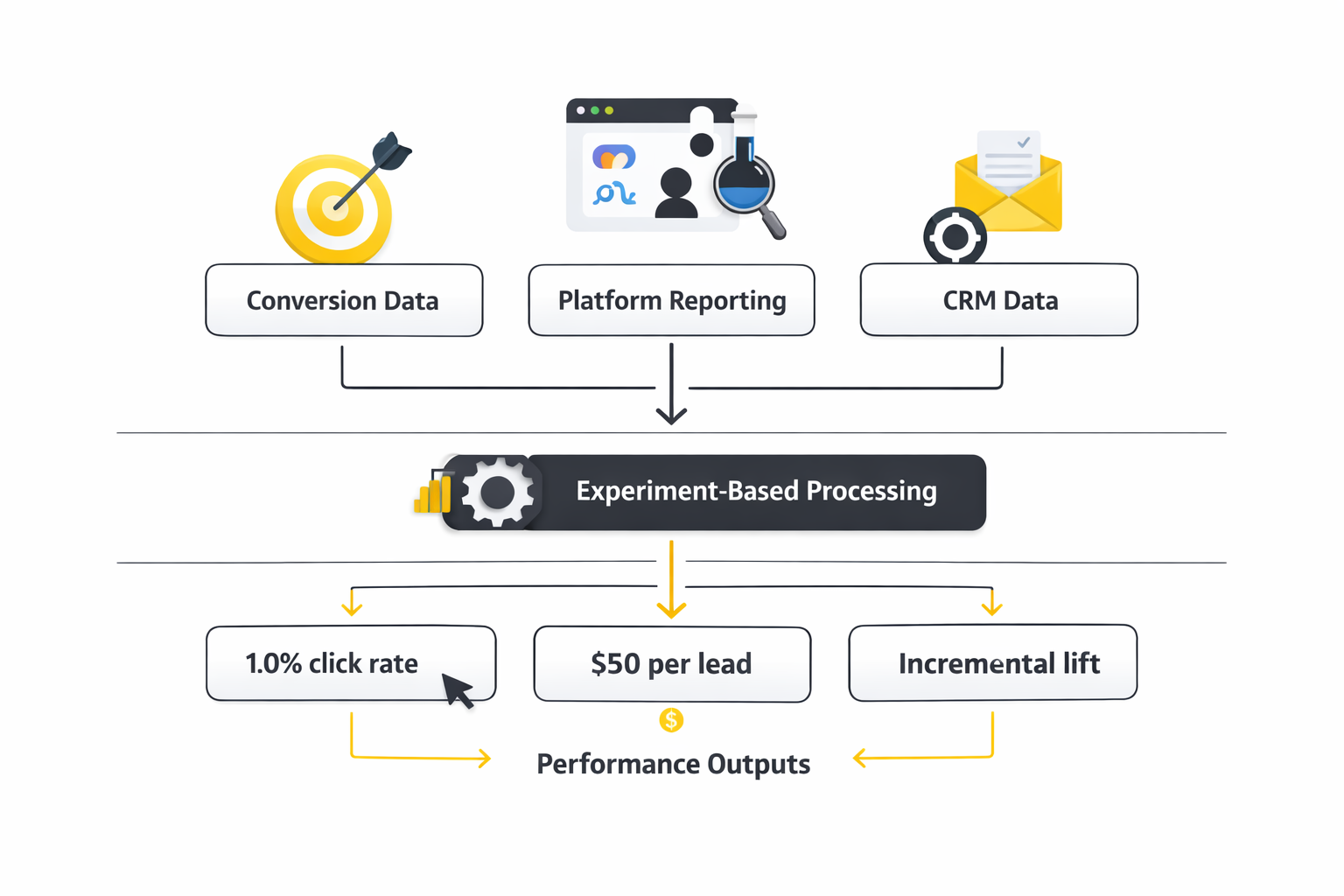
If you only remember one thing from this complete guide, make it this: social media advertising for small business gets easier when you stop chasing platform tricks and start running a repeatable system.
- Pick one outcome per campaign: one clear win condition you can measure and improve.
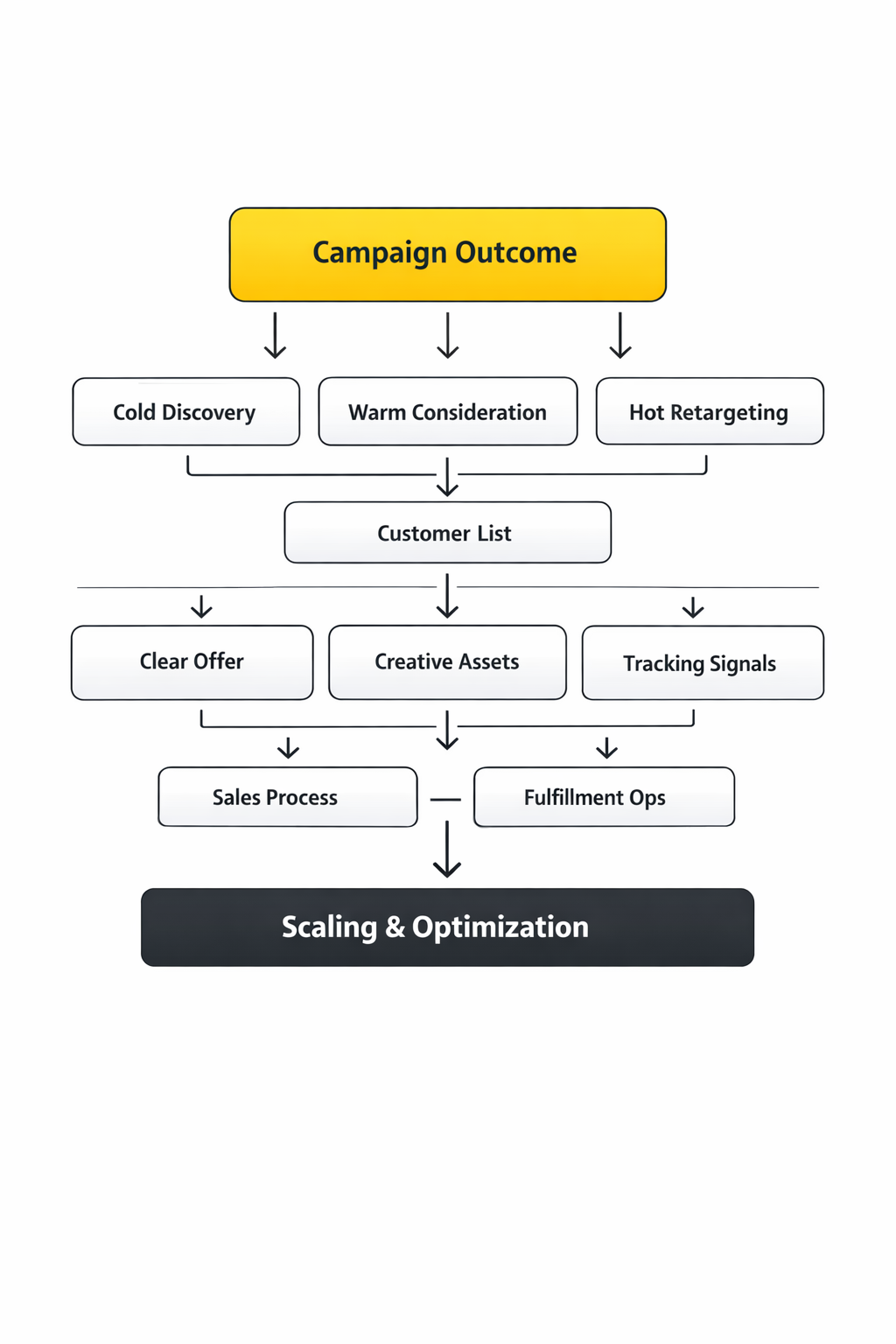
- Match the audience to intent: cold discovery, warm consideration, hot retargeting, and existing customers each need different messaging.
- Make the offer instantly clear: people should understand “why this” and “why now” in seconds.
- Ship creative in packs: build throughput so you’re never dependent on one “hero” ad.
- Protect measurement quality: send reliable signals and validate impact with experiments when attribution gets noisy.
- Build operational follow-through: leads and orders only matter when the business can respond fast and deliver consistently.
That ecosystem mindset is what turns paid social into something you control—rather than something that randomly works or randomly fails.
FAQ – Built For a Complete Guide
1) How much should I budget for social media advertising for small business?
Start with what you can sustain for at least 4–6 weeks without panic-editing daily. A smaller stable budget usually teaches you more than a bigger budget you keep changing. If you’re tracking purchases or qualified leads reliably, increase spend gradually once you have a creative pack that’s holding performance.
2) Which platform should I start with: Meta, TikTok, LinkedIn, or something else?
Start where you can produce native-looking creative consistently and where your customer already spends time. If you have strong visuals and can move fast, TikTok can be powerful. If your audience is broad and you want mature targeting and retargeting, Meta is often the first stop. If you sell B2B services or high-consideration offers, LinkedIn can be worth it.
3) Should I use lead forms or send people to my website?
Use lead forms when your biggest risk is friction and your follow-up system is fast. Send traffic to your website when you need more qualification, more context, or stronger conversion events the platform can learn from. The best choice is the one that creates real pipeline, not the one that produces the cheapest “leads.”
4) What metrics matter most early on?
Early on, focus on whether you’re earning attention and whether the offer makes sense: creative engagement, click quality, landing page behavior, and the first conversion event that indicates intent. Then move quickly into lead quality or purchase profitability once volume is stable.
5) Why do my ad platform results not match Google Analytics?
Attribution models differ, devices differ, and privacy constraints limit what each tool can see. Treat platform reporting as an optimization lens and analytics as a journey lens. When the gap becomes a decision problem, that’s when incrementality testing becomes valuable.
6) Do I need server-side tracking?
Not always on day one, but many small businesses eventually benefit from it when measurement gets fragile. Server-side event sharing exists to reduce dependence on browser limitations, using options like Meta’s Conversions API or TikTok’s Events API.
7) How often should I refresh creative?
Refresh before performance collapses, not after. If frequency rises and engagement softens, you’re heading toward fatigue. A weekly or biweekly “creative pack” rhythm keeps social media advertising for small business stable because you’re always feeding the system new options.
8) Is it better to target broad or narrow interests?
In many cases, broad works when your offer and creative are strong and your conversion signal is reliable, because platforms can learn who converts. Narrow targeting can still help when you have a very specific niche or limited budget, but it can also cap learning. The practical approach is to test broad discovery alongside one or two clear intent-based segments and compare outcomes.
9) How do I know if ads are actually adding new customers or just “taking credit”?
That’s the point of incrementality: compare outcomes with and without ads through holdouts or lift studies. Meta supports lift studies through its lift framework, and TikTok provides guidance on Conversion Lift Study as an experiment-based approach.
10) What’s the fastest way to improve results without increasing budget?
Improve the conversion path and the offer clarity. A faster page, a clearer promise, fewer steps, and stronger proof often beat “new targeting.” If clicks are coming but conversions aren’t, the bottleneck is usually after the click.
11) When should a small business hire help instead of doing it alone?
Hire help when mistakes become expensive: when spend is meaningful, when measurement is unclear, when creative output can’t keep up, or when lead follow-up is breaking. The best operators don’t just “run ads”—they design the system so learning compounds over time.
12) What should I watch out for as I scale?
Three common traps show up as budgets rise: creative fatigue, tracking fragility, and operational bottlenecks (slow response time, limited inventory, fulfillment delays). If you scale spend faster than your system can handle demand, growth will feel like chaos instead of momentum.
Work With Professionals
If you’re serious about building a reliable engine—rather than endlessly restarting campaigns—working with a focused marketplace can save you weeks of back-and-forth and a lot of “maybe this person can do it” interviews.
MARKEWORK.com is built as a marketing-only marketplace where companies and marketers communicate directly, without commissions or project fees, and handle contracts and payments independently. Their “Why Us” page makes the positioning clear: less friction, clearer listings, richer profiles, and direct conversations.
Here’s the part most freelancers feel in their gut right now: opportunity is everywhere, but signal is messy. Even outside any single platform, the wider market shows huge volume—Upwork alone lists 8,000+ open Marketing & Sales freelance jobs, while Remote Rocketship shows 6,000+ marketing openings in Europe. Upwork’s current job count and Remote Rocketship’s openings snapshot are a reminder that there’s no shortage of demand—what’s scarce is a clean path to the right clients.
That’s why a focused marketplace matters. Instead of fighting through generalist noise, you can present yourself with proof, rates, and clear specialization, then talk directly with decision-makers who already know they need marketing help. MARKEWORK.com also keeps pricing simple through subscription plans rather than taking a cut of your earnings, with monthly options listed for marketers on their pricing page.
Imagine the version of your career where you don’t spend your best hours chasing leads that were never a fit. You build a profile that sells your specialty in minutes. You apply to roles that match what you actually do. You negotiate directly, keep your earnings, and turn your pipeline into something you can predict—without paying a platform tax every time you close a deal.
If you want a cleaner path to remote clients who need paid social, lifecycle, SEO, content, analytics, and growth operators, start where the marketplace is designed for marketing work from the ground up:
 Filip Konecny Enterprises