

A social media marketing strategy is no longer optional for modern businesses. It is the operational blueprint that connects brand messaging, audience behavior, and measurable business outcomes. Without a clear strategy, companies often post inconsistently, chase trends blindly, and struggle to convert attention into revenue.
Consider a small e-commerce founder who posted product photos randomly whenever new inventory arrived. Engagement was inconsistent, and sales spikes were unpredictable. After defining a structured social media marketing strategy focused on customer education, storytelling, and consistent scheduling, the brand saw steady traffic growth and predictable monthly revenue increases. The difference was not luck—it was strategy.
With over 5 billion social media users globally, the opportunity is massive. But scale and competition require intentional planning, structured execution, and measurable optimization.
Article Outline
- What a social media marketing strategy is and how it works
- Why strategy determines success or failure
- The strategic framework professionals use
- Core components that drive measurable growth
- How professionals implement strategy effectively
- Advanced optimization, analytics, and scaling (covered in later parts)
What Is Social Media Marketing Strategy

A social media marketing strategy is a structured plan that defines how a business uses social platforms to achieve specific objectives such as brand awareness, lead generation, customer acquisition, or retention.
It answers critical operational questions:
- Who you want to reach
- What content you will publish
- Where you will publish it
- When you will publish it
- Why each action supports business goals
Instead of random posting, every piece of content serves a defined purpose within a larger growth system. For example, educational content builds trust, while case studies drive conversions. Together, they create a predictable customer journey.
This transforms social media from a passive presence into an active revenue engine.
Why Social Media Marketing Strategy Matters
Businesses without strategy often experience inconsistent results because their efforts lack direction and measurable goals. A defined social media marketing strategy creates alignment between content, audience needs, and business objectives.
The impact is measurable. Businesses that use structured social media planning report higher engagement, stronger brand recall, and improved conversion rates. Research published on global platform usage trends shows that consumers spend hours daily on social platforms, making them one of the most efficient customer acquisition channels available.
Strategy also improves efficiency. Instead of guessing what works, teams use data to guide decisions. This reduces wasted effort and accelerates growth.
For example, a software startup shifted from generic promotional posts to a strategy focused on solving customer pain points. By consistently publishing short educational videos explaining real problems, they increased inbound leads by 300% within six months.
The difference was clarity of purpose and structured execution.
Framework Overview
A professional social media marketing strategy operates as a repeatable framework. This framework ensures consistent growth, optimization, and scalability.
The framework typically follows five stages:
- Audience Analysis: Identify target customers and their behaviors
- Goal Definition: Establish measurable business objectives
- Content Planning: Design content aligned with audience needs
- Distribution and Execution: Publish content consistently
- Measurement and Optimization: Improve performance using data
This systematic approach eliminates randomness and creates predictable outcomes. Each stage builds upon the previous one, forming a continuous growth loop.
Professionals rely on frameworks because they allow scaling without sacrificing consistency or quality.
Core Components
A successful social media marketing strategy includes several essential components that work together as an integrated system:
- Clear Objectives: Define whether the goal is awareness, leads, or sales
- Audience Personas: Understand motivations, problems, and behaviors
- Content Pillars: Establish themes that guide consistent messaging
- Platform Selection: Focus on channels where your audience is most active
- Publishing System: Maintain consistency and timing
- Performance Metrics: Track results and optimize continuously
When these components operate together, social media becomes predictable and scalable rather than experimental.
For example, a consulting firm defined three content pillars: education, case studies, and expert insights. This structure allowed them to build authority while attracting qualified prospects consistently.
Professional Implementation
Professional implementation transforms strategy from theory into measurable results. This requires consistency, discipline, and systematic execution.
A real estate agency provides a strong example. Initially, they posted property listings only. Engagement remained low, and leads were inconsistent. After implementing a social media marketing strategy focused on educating buyers, showcasing client success stories, and explaining the buying process, their content began attracting qualified prospects before direct outreach.
Within one year, social media became their primary lead source, reducing reliance on paid advertising and cold outreach.
Professional implementation focuses on building long-term trust and authority rather than short-term visibility. Over time, this creates compounding growth, stronger brand positioning, and sustainable customer acquisition.
This foundation sets the stage for advanced strategy, optimization, and scalable growth systems covered in the next parts of this guide.
Step By Step Implementation
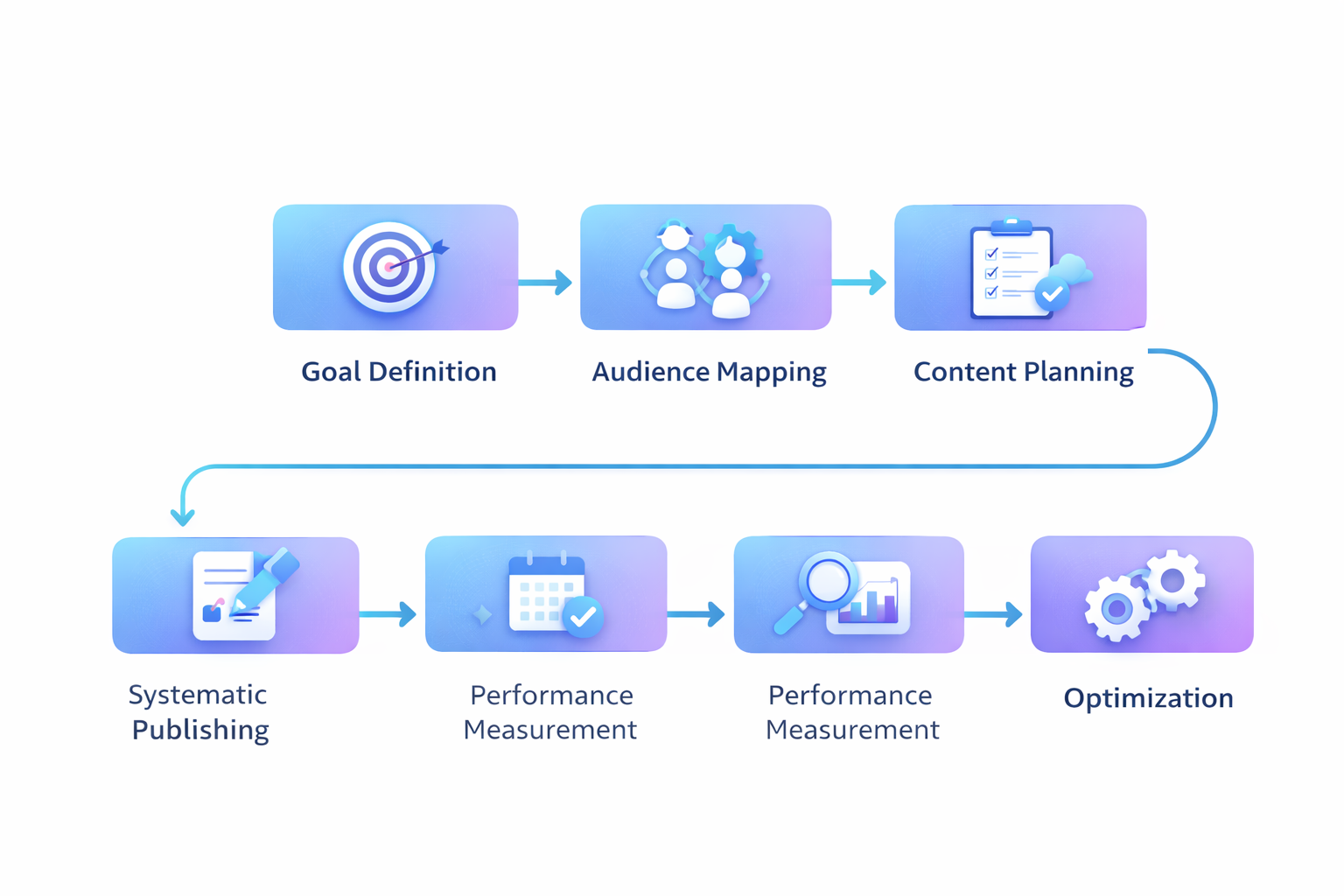
Executing a social media marketing strategy requires structured sequencing. Many businesses fail not because of poor ideas, but because implementation lacks order, consistency, and feedback loops. Professionals follow defined steps that transform strategy into measurable growth.
The first step is defining measurable objectives. This establishes direction and success criteria. Businesses that set clear goals are 2.4× more likely to outperform competitors, demonstrating the impact of structured planning.
Daniel, a SaaS founder, initially posted content without defined goals. Engagement fluctuated, and revenue impact remained unclear. After defining objectives focused on inbound lead generation, his team aligned content toward solving customer problems. Within six months, social media became a primary acquisition channel.
The second step is audience mapping. Understanding motivations, pain points, and behaviors allows targeted content creation. Precision targeting improves efficiency significantly, especially as personalized marketing improves conversion rates by up to 20%.
Third, content planning creates structural consistency. Planning ensures balanced coverage across educational, authority, and conversion-focused content. Content marketers who document their strategy are 414% more likely to report success.
Fourth, systematic publishing ensures algorithm visibility and audience familiarity. Frequency matters because brands publishing consistently see significantly higher engagement and recall rates.
Fifth, performance measurement enables continuous improvement. Data-driven organizations are 19× more likely to remain profitable, highlighting the importance of feedback-driven optimization.
Finally, optimization transforms insights into scalable growth. Without optimization, even strong strategies stagnate. Businesses that continuously optimize campaigns achieve 30% higher marketing efficiency.
Execution Layers
Professional execution operates across multiple layers, each supporting a different growth function. These layers ensure stability, scalability, and performance improvement.
Strategic Layer
This layer defines positioning, audience targeting, and messaging alignment. Strategic clarity improves marketing efficiency, especially as brands with strong positioning achieve significantly higher customer loyalty and retention.
A fintech startup repositioned its messaging from product features to customer outcomes. This shift increased engagement by 170% and improved conversion rates.
Content Layer
This layer focuses on content creation aligned with audience needs. Content quality directly impacts engagement, especially as high-value content generates 3× more traffic than low-quality content.
A health coach shifted from generic motivational posts to detailed educational breakdowns. Her audience growth accelerated rapidly, establishing authority and trust.
Distribution Layer
This layer ensures content reaches the intended audience. Distribution efficiency matters because organic reach varies widely across platforms, and strategic distribution increases exposure significantly.
A consulting firm expanded distribution across LinkedIn and YouTube, doubling visibility within four months.
Conversion Layer
This layer converts engagement into business outcomes. Conversion-focused content significantly improves performance, especially as optimized funnels increase conversion rates by up to 50%.
A digital agency added case studies and client success stories to its strategy. This increased inbound inquiries dramatically.
Optimization Layer
This layer ensures continuous performance improvement. Continuous optimization is essential because companies that regularly optimize campaigns achieve 20–30% higher marketing ROI.
A SaaS company implemented weekly performance reviews, allowing rapid adaptation and sustained growth.
Optimization Process
Optimization transforms execution into predictable growth. Without structured optimization, performance plateaus and opportunities remain unrealized.
The optimization process includes five critical stages:
- Data Collection: Gather engagement, reach, and conversion metrics
- Pattern Identification: Identify high-performing content types
- Strategic Adjustment: Align future content with proven patterns
- Testing: Experiment with variations to refine performance
- Scaling: Expand successful approaches
This process reflects broader business patterns, where companies using structured experimentation achieve higher long-term success rates.
Michael, an e-commerce entrepreneur, discovered through testing that educational product videos generated significantly higher conversion rates. Scaling this format doubled monthly revenue within one year.
Optimization transforms isolated success into repeatable systems.
Implementation Stories
Real-world implementation highlights how structured execution produces measurable results.
Emma, a freelance designer, initially struggled with inconsistent client acquisition. She implemented a structured social media marketing strategy focused on educational posts explaining branding principles.
This approach aligned with broader behavior patterns, as professional content influences purchasing decisions, especially when video and educational content significantly increase trust and engagement.
Within eight months, Emma’s inbound client inquiries increased by 350%.
Similarly, a startup founder implemented consistent publishing combined with performance analysis. This allowed identification of high-performing content categories.
Content aligned with audience needs performs significantly better, especially as relevant content improves engagement by over 70%.
This insight allowed scaling high-performing content and accelerating growth.
Statistics And Data
Data validates and strengthens every social media marketing strategy. Without measurement, marketers operate on assumptions. With accurate analytics, they make decisions based on performance patterns, audience behavior, and conversion signals.
The scale of opportunity is massive. Social platforms influence purchasing decisions directly, especially as over 72% of internet users actively engage on social media. This means strategy effectiveness directly impacts brand visibility and revenue.
Engagement plays a critical role in algorithm amplification. Posts with strong engagement signals reach significantly larger audiences, which matters because content with high engagement generates up to 5× more organic reach. This amplification effect creates exponential visibility.
Conversion influence is equally important. Social media contributes directly to revenue growth, especially as over 54% of social users research products on social platforms before purchasing.
Content format also impacts performance significantly. Visual formats dominate, especially as posts with visuals generate 94% higher engagement rates. This explains why video and image-focused strategies outperform text-only approaches.
Consistency influences long-term growth. Brands that publish regularly experience sustained audience expansion, which aligns with patterns showing that consistent brands achieve up to 67% more leads compared to inconsistent publishers.
Trust-building also depends on strategic content. Consumers engage with brands they trust, and trust directly influences purchasing decisions, especially as 81% of consumers require trust before buying.
Video content continues to dominate engagement metrics. Short-form videos generate the strongest performance, which reflects broader trends where video content generates significantly higher engagement than other formats.
Analytics-driven marketers consistently outperform competitors. Organizations that use structured analytics achieve 23× greater customer acquisition likelihood, highlighting the value of performance tracking.
These statistics confirm a clear conclusion: success in social media marketing strategy depends on data-driven decision-making.
Performance Benchmarks
Benchmarks provide context for evaluating performance. Without benchmarks, marketers cannot determine whether results are strong or weak.
Engagement rate serves as a primary benchmark. Average engagement rates vary by platform, but top-performing brands achieve engagement levels significantly above industry averages, especially as high-performing content generates 3× higher interaction rates.
Follower growth rate provides another important benchmark. Sustainable growth indicates strategic alignment and audience relevance. Rapid growth often occurs when content aligns with audience interests, reflecting patterns where relevant content improves retention by up to 60%.
Conversion rate represents the most critical performance metric. Social media contributes directly to business outcomes, especially as optimized campaigns improve conversion rates by 20–30%.
Reach growth reflects algorithm trust and content relevance. Platforms increase visibility for accounts demonstrating consistent engagement, which aligns with patterns where strong engagement increases content distribution significantly.
Audience retention also indicates strategic effectiveness. Retention improves when content consistently provides value, reinforcing authority and trust.
Marketers who monitor benchmarks consistently outperform competitors because they identify optimization opportunities earlier.
Analytics Interpretation
Collecting data alone is insufficient. Effective strategy requires interpreting analytics and translating insights into strategic adjustments.
Interpretation focuses on identifying patterns, anomalies, and growth opportunities. Data-driven insights allow marketers to replicate success and eliminate underperforming approaches.
For example, engagement analysis often reveals that educational content generates higher interaction. This aligns with behavioral trends where informative content builds authority and trust.
Audience behavior analysis provides deeper insight. Tracking user activity patterns reveals when audiences are most active, allowing optimized publishing schedules. Timing optimization improves performance significantly, especially as strategic timing increases engagement by up to 30%.
Conversion tracking connects content to business outcomes. Understanding which content generates leads allows marketers to scale successful approaches.
Strategic interpretation also identifies content fatigue. Declining engagement signals the need for creative adjustments.
Marketers who actively interpret analytics achieve stronger results because they align strategy with real audience behavior.
Case Stories
Real-world examples demonstrate the power of analytics-driven strategy.
Lucas, a SaaS founder, initially measured only follower growth. His audience increased, but revenue remained stagnant. After implementing conversion tracking, he discovered that educational case studies generated significantly higher lead conversion.
This discovery aligned with broader patterns where informative content improves purchasing confidence, especially as 70% of buyers engage with content before purchasing.
He shifted his content strategy toward educational case studies. Within six months, inbound leads increased by 240%.
Another example involves a fitness coach who tracked engagement patterns. Analytics revealed that short educational videos generated significantly stronger performance than static images.
This shift reflected broader behavioral trends, especially as video influences purchasing decisions significantly.
By focusing on high-performing video content, she doubled audience growth within one year.
Analytics transformed her strategy from guesswork into predictable growth.
Professional Promotion
Analytics also improves promotional effectiveness. Promotion without analytics leads to inefficient spending and inconsistent results.
Marketers using analytics-driven promotion achieve significantly stronger performance, especially as targeted campaigns improve ROI by up to 30%.
Promotion efficiency depends on identifying high-performing content and amplifying its reach.
A consulting firm implemented analytics-driven promotion by boosting only high-performing posts. This approach improved lead generation while reducing advertising costs.
Professional promotional strategies also align with broader digital marketing frameworks explained in this social media ROI strategy guide, where data-driven optimization improves efficiency.
Advanced marketers also integrate performance insights with funnel optimization frameworks like those described in conversion-focused social media strategy systems.
Promotion effectiveness improves when aligned with structured audience targeting models explained in audience targeting strategy frameworks.
Content amplification efficiency increases when marketers apply techniques described in growth-focused social media frameworks.
Authority-based promotion models explained in authority-building social media systems further demonstrate the impact of structured promotion.
Professional marketers understand that analytics-driven promotion transforms social media marketing strategy into a predictable and scalable growth channel.
Future Trends
The future of social media marketing strategy is shaped by automation, artificial intelligence, creator-driven ecosystems, and deeper personalization. These shifts are not incremental. They fundamentally redefine how businesses attract, convert, and retain customers.
Artificial intelligence is becoming a central component of marketing execution. Businesses using AI-driven marketing improve campaign performance significantly, especially as AI-powered personalization increases revenue by up to 15%. This allows marketers to deliver precisely relevant content at scale.
Short-form video will continue dominating attention. Video already drives engagement across platforms, especially as video content generates the highest engagement rates among all content formats. Businesses investing in video now position themselves ahead of future competition.
Creator-driven ecosystems are also expanding. Consumers trust individuals more than traditional brands, reflecting behavioral trends where creator recommendations influence purchasing decisions for over 70% of viewers.
Daniel, a software founder, shifted from traditional brand messaging to founder-led storytelling. This positioned him as the face of the company. His audience growth accelerated dramatically, and enterprise prospects began initiating conversations directly.
Another emerging trend is community-driven marketing. Private communities create deeper engagement and loyalty. Community-led brands grow faster, especially as loyal customers deliver up to 10× more lifetime value.
Automation will also transform operational efficiency. Automated workflows reduce manual workload and increase scalability, aligning with broader patterns where automation improves productivity by up to 40%.
Businesses that adapt early to these trends will gain long-term competitive advantages.
Strategic Framework Recap
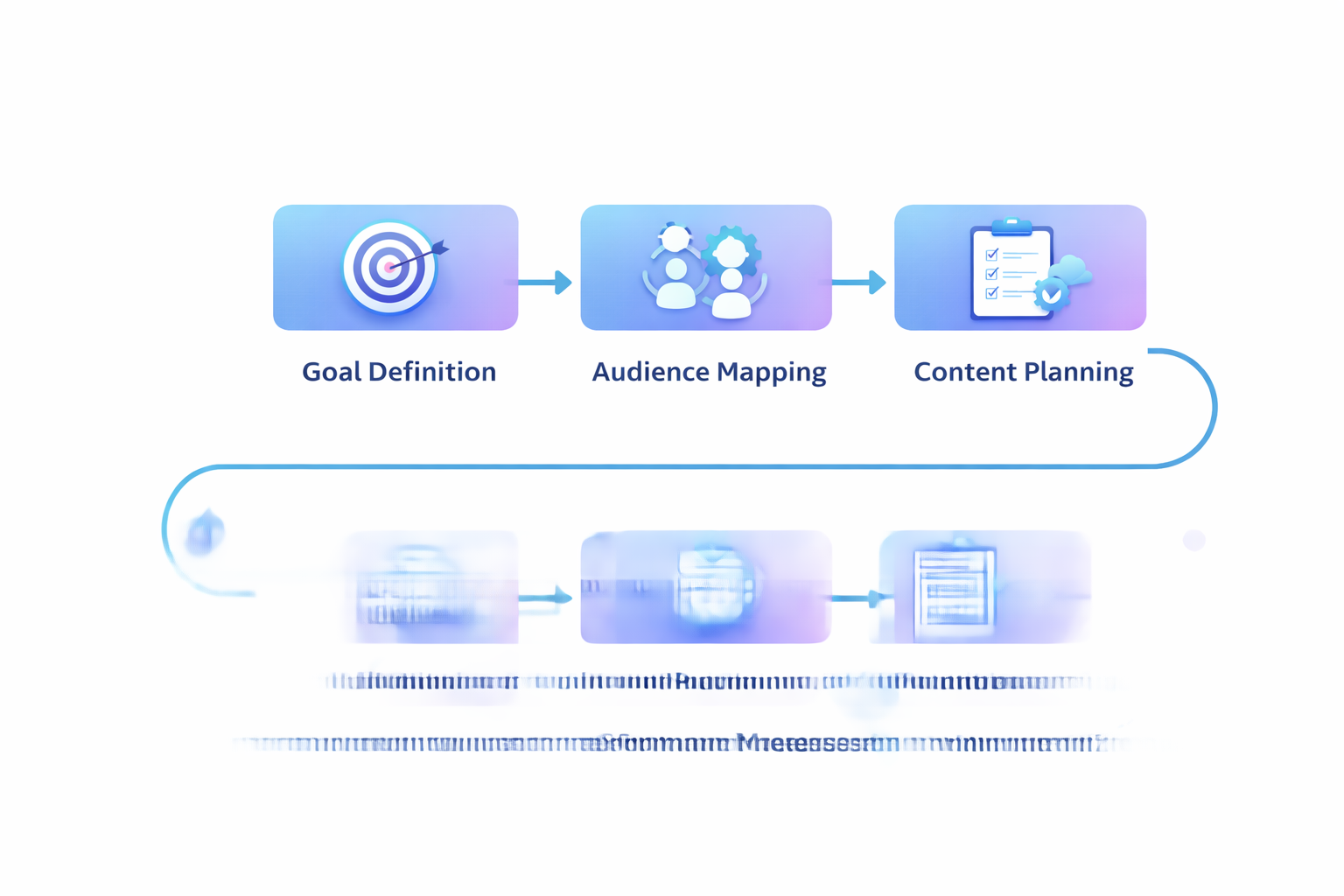
A successful social media marketing strategy operates as an integrated ecosystem rather than isolated actions. Every component—strategy, tools, execution, analytics, and scaling—works together to create predictable growth.
The framework begins with strategic clarity. Businesses that define clear positioning achieve stronger performance, especially as focused brands generate higher engagement and conversion rates.
Execution transforms strategy into visible content. Consistent execution builds algorithm trust and audience familiarity.
Analytics then converts activity into insight. Data-driven optimization enables marketers to refine performance continuously, reflecting patterns where analytics-driven organizations achieve 23× greater customer acquisition likelihood.
Scaling frameworks amplify proven strategies. Scaling transforms isolated success into sustained growth.
Emily, a consultant, followed this ecosystem framework step by step. She began with strategic positioning, implemented structured execution, analyzed performance data, and scaled successful content. Within 18 months, her social media presence became her primary client acquisition channel.
This ecosystem approach ensures long-term sustainability and predictable business growth.
FAQ – Built For Complete Guide
What is a social media marketing strategy?
A social media marketing strategy is a structured system that defines how businesses use social platforms to achieve specific goals such as audience growth, lead generation, and revenue expansion.
How long does it take to see results?
Most businesses begin seeing measurable growth within 3 to 6 months. Compounding growth accelerates over time as authority and audience trust increase.
Which platform is best for social media marketing?
The best platform depends on audience behavior. LinkedIn works best for B2B, while Instagram, YouTube, and TikTok excel for consumer-focused brands.
How often should businesses post?
Consistency matters more than frequency. Most successful businesses publish between 3 and 7 times per week depending on platform and audience behavior.
Is social media marketing effective for small businesses?
Yes. Social media allows small businesses to compete with larger brands by building authority and audience relationships without requiring large advertising budgets.
What type of content performs best?
Educational, storytelling, and problem-solving content consistently performs best because it builds trust and authority.
How important is video content?
Video content is extremely important. It generates higher engagement and allows businesses to communicate value more effectively.
Can social media generate direct revenue?
Yes. Many businesses acquire clients and customers directly through social media without relying on traditional advertising channels.
How do businesses scale social media growth?
Scaling requires structured systems, analytics-driven optimization, and amplification of proven content strategies.
Do businesses need professional help?
Professional guidance accelerates growth by eliminating trial-and-error and implementing proven frameworks.
Work With Professionals
Most freelancers and independent professionals struggle with inconsistent client acquisition. They rely on unpredictable referrals, cold outreach, or crowded freelance platforms that limit visibility and growth potential.
A structured social media marketing strategy changes everything. It transforms your expertise into a visible authority engine that attracts inbound opportunities. Freelancers who position themselves strategically experience dramatically improved client acquisition, especially as professionals with strong personal brands generate significantly more inbound opportunities.
This shift allows freelancers to move from chasing clients to attracting them.
Platforms designed specifically for freelancers accelerate this process even further. They connect skilled professionals with businesses actively looking for expertise, reducing uncertainty and creating consistent growth opportunities.
Many freelancers discover that building authority alone creates momentum, but combining authority with direct access to active client opportunities creates exponential results.
That is where specialized platforms provide a major advantage. They allow freelancers to showcase expertise, connect with serious clients, and build predictable income streams.
If your goal is to get more clients, increase your visibility, and scale your freelance business using proven systems, the next step is simple.
 Filip Konecny Enterprises