
Social media for business isn’t “posting more.” It’s a system for turning attention into trust, and trust into revenue—without burning out your team or confusing your audience.
If you’ve ever watched a competitor win customers with content that looks simple, it’s usually because they’re not improvising. They’re running a repeatable framework: clear positioning, consistent content pillars, tight distribution, and measurement that ties back to business outcomes.
Here’s the mindset shift that makes everything easier: social media isn’t a single channel. It’s your brand’s public operating system—where people discover you, judge you, and decide if you’re worth their time.
Article Outline
- What Is Social Media for Business
- Why Social Media for Business Matters
- Framework Overview
- Core Components
- Professional Implementation
What Is Social Media for Business
Social media for business is the deliberate use of social platforms to achieve business goals—brand awareness, demand generation, customer service, recruiting, partnerships, and community—through content, conversation, and distribution.
It includes:
- Organic presence: content that builds trust over time (posts, short video, carousels, comments, DMs).
- Paid amplification: targeted reach when you need speed (ads, boosted posts, retargeting).
- Social proof: customers, creators, and employees validating your offer in public.
- Signals: audience feedback that improves product, messaging, and positioning.
Think of it like this: your website is your store. Social media is the street outside—foot traffic, word of mouth, and the conversations that decide who walks in.
Story example: Petra runs a small accounting firm in Brno. She posted sporadically—team photos, a tax deadline reminder—then wondered why nothing changed. When she reframed social as a business system, she created three content pillars (tax clarity, freelancer finances, and “what to ask your accountant”). Within weeks, prospects started arriving with better questions. Within months, her consult calls got shorter because people already trusted her expertise.
Why Social Media for Business Matters
Attention is already there. At the start of October 2025, there were 5.66 billion social media “user identities” worldwide. That scale changes the baseline expectation: customers assume you exist somewhere searchable, scannable, and current.
Discovery is also shifting. A growing share of people find new brands through social environments, with social media cited as a brand discovery source by 29.7% of internet users (Digital 2025). If you’re not showing up consistently, you’re choosing to be invisible during the most important moment—when someone is forming their first impression.
And it’s not just awareness. Social has become a direct commerce influence channel. Social networks generated 17.11% of total online sales in 2025 (Statista, via Sprout Social). Even if you don’t sell inside an app, social still drives consideration and retargeting performance—because it shapes what people believe about you.
In practical terms, social media for business matters because it:
- Compresses the trust timeline: prospects can “meet you” repeatedly before they ever talk to you.
- Reduces sales friction: good content pre-handles objections (“Is this legit?” “Is it for me?”).
- Creates compounding assets: one useful post can work for months through search, shares, and saves.
- Builds resilience: when ads get expensive or SEO shifts, your audience is still reachable.
Framework Overview
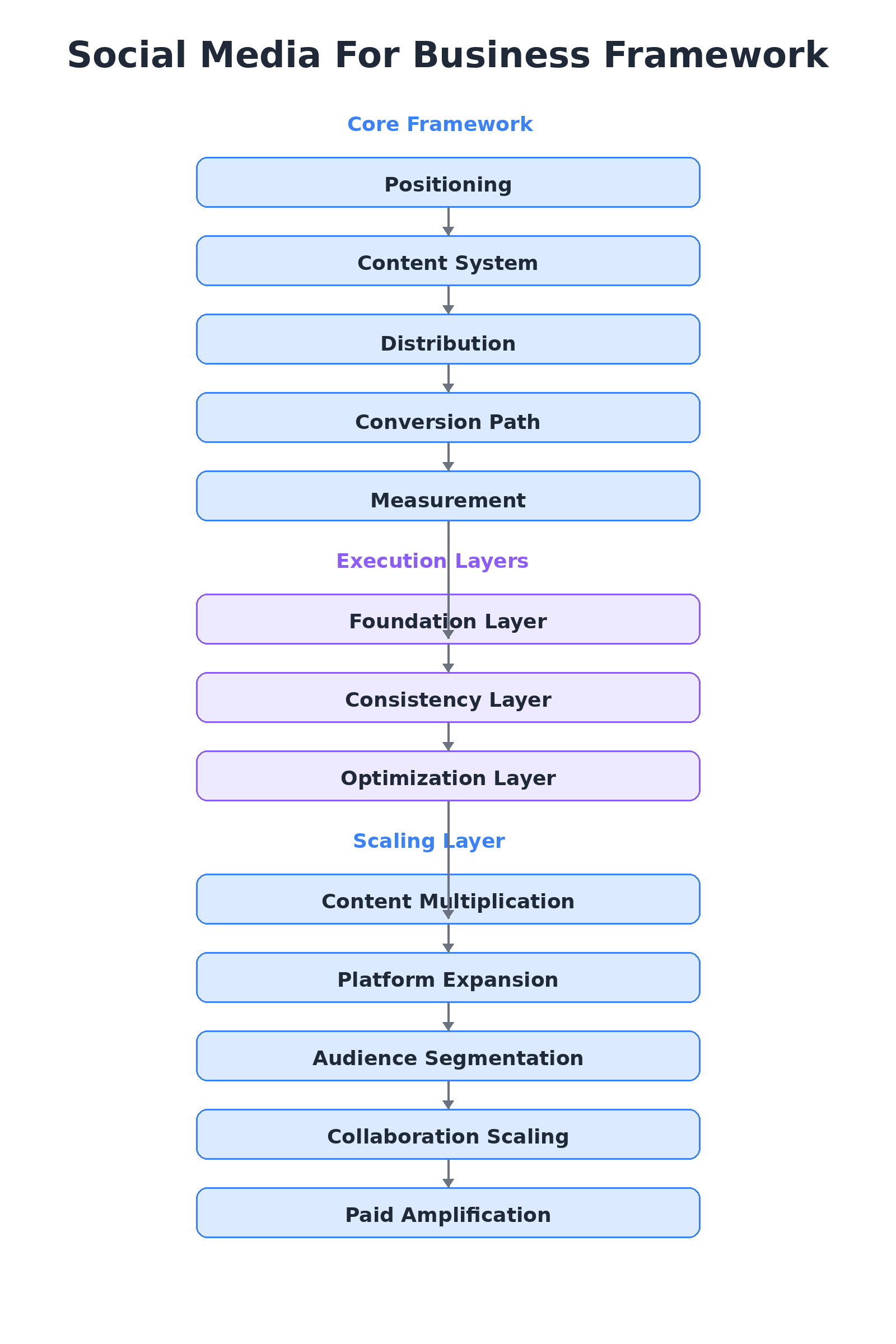
This article series uses a simple, professional framework you can run in any industry:
- Positioning: who you help, what outcome you create, and why you’re credible.
- Content system: repeatable formats and pillars that fit your customer journey.
- Distribution: how content reaches the right people (organic, community, paid, partnerships).
- Conversion path: what happens after attention (DM flow, landing pages, offers, follow-up).
- Measurement: metrics that connect platform activity to business results.
Story example: A boutique gym in Prague ran ads for months with mixed results. They switched to a framework: founders filmed two weekly “technique fixes,” members shared one testimonial per week, and the gym posted a simple monthly challenge. Then they used paid only to retarget video viewers. The gym didn’t “post more”—it posted with intent, and their leads became warmer because people understood the culture before visiting.
Core Components
At the foundation level, social media for business is built from five core components. If one is missing, results look random.
1) Clear business objective
Pick one primary objective per quarter: awareness in a niche, qualified leads, repeat purchases, local foot traffic, hiring, or customer support. Without a primary objective, content becomes a scrapbook.
2) Audience and promise
Define one audience segment you can serve better than competitors. Then state a promise in plain language: “We help X achieve Y without Z.” That single sentence guides what you post and what you ignore.
3) Content pillars and formats
Choose 3–5 pillars you can produce forever. Example pillars for a B2B service: problem diagnosis, case stories, behind-the-scenes process, industry myth-busting, and tools/templates. Then pick formats your team can sustain: short video, carousels, founder notes, customer clips.
4) Distribution habits
Organic reach is unreliable when treated as a lottery ticket. Professional distribution looks like consistent publishing, active commenting, community participation, creator collaborations, and selective paid amplification.
5) A conversion path that matches how people buy
Every piece of content should have a “next step” that makes sense for intent level. Low intent: follow and save. Mid intent: download a checklist. High intent: book a call, request a quote, start a trial.
Professional Implementation
Professional implementation means you operate social media like a business function—lightweight enough to run weekly, structured enough to improve monthly.
Use this baseline operating rhythm:
- Weekly: publish from your pillars, engage with target accounts, capture customer questions, and review top posts.
- Monthly: run a content retro (what drove saves, clicks, replies), refresh your hooks, and plan one experiment.
- Quarterly: revisit positioning, audit your funnel, and align social objectives with revenue priorities.
Story example: Tomas sells custom furniture. His early posts were beautiful but inconsistent, and inquiries were vague. He adopted a professional workflow: every Monday he posted one “material story,” every Wednesday a “before/after,” every Friday a “common pricing question.” He pinned a post explaining lead times and budget ranges, and he created a simple DM script for quoting. The surprising result: fewer messages—but higher-quality ones, because the content filtered out mismatched buyers.
In the next part, you’ll map goals to platform choices and define what “good” looks like for your specific business—so your social media for business stops feeling like a guessing game and starts behaving like a system.
Step By Step Implementation
Implementation is where most businesses fail—not because they lack ideas, but because they lack structure. Social media for business becomes effective when converted into repeatable operational steps.
The goal isn’t to create more content. The goal is to create a system that produces predictable business outcomes.
Businesses that follow structured marketing processes are 2× more likely to outperform competitors in revenue growth.
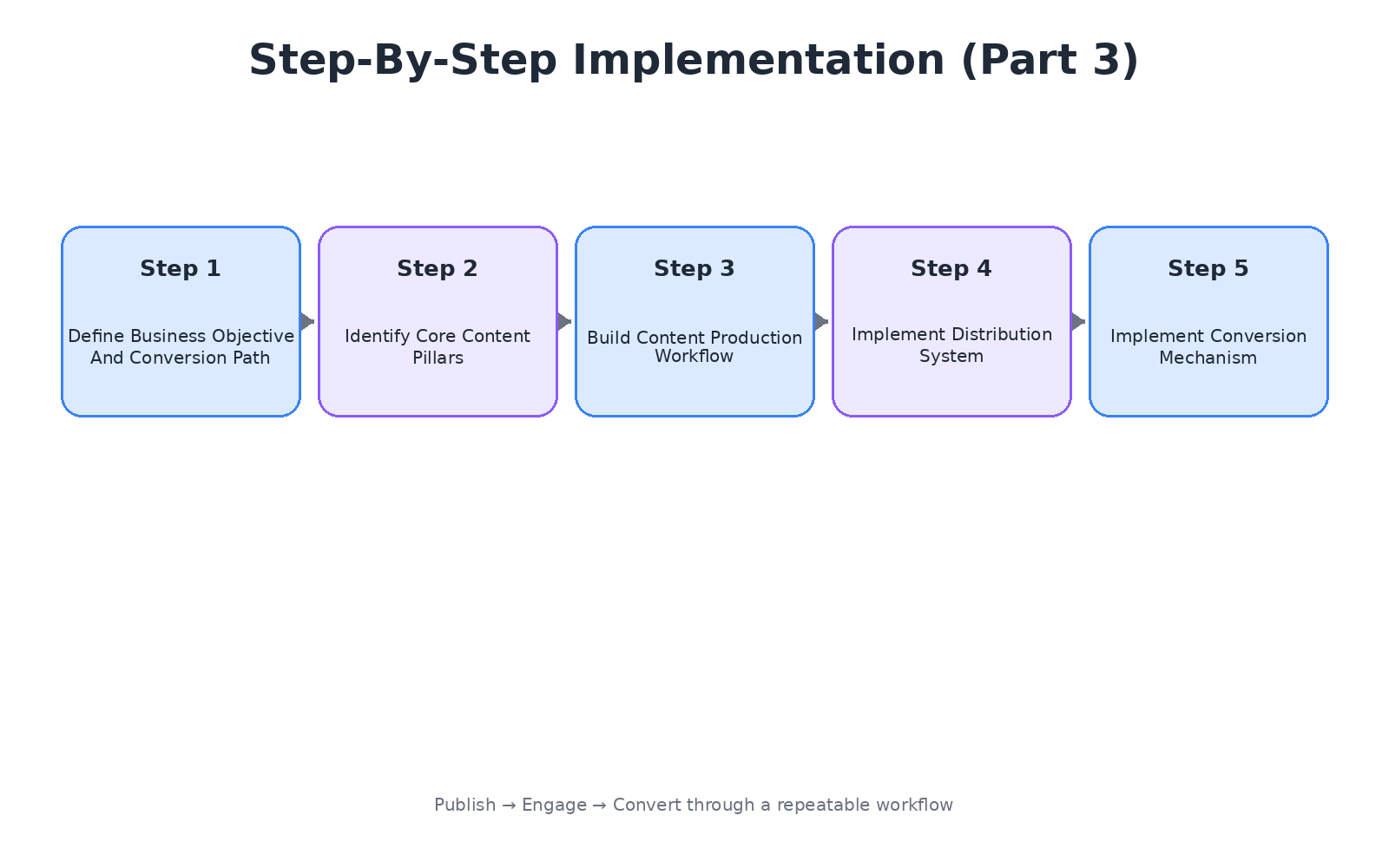
Step 1: Define Business Objective And Conversion Path
Every implementation begins with a single measurable objective. This objective determines content type, platform choice, and messaging.
Typical objectives include:
- Lead generation
- Brand authority
- Direct sales
- Customer retention
- Hiring and recruiting
David, a B2B consultant, initially posted educational content without defining conversion. Engagement was strong, but revenue remained flat. Once he aligned posts with lead magnets and booking links, conversions improved. This mirrors broader trends where businesses with defined funnels improve conversion rates by 451%.
Step 2: Identify Core Content Pillars
Content pillars create consistency and authority. Without pillars, content becomes fragmented.
High-performing brands typically use 3–5 pillars aligned with audience pain points. Companies publishing structured educational content generate 126% more lead growth than those publishing randomly.
Lucie, an HR consultant, defined pillars around hiring mistakes, interview preparation, and salary transparency. Her content became recognizable, and inbound inquiries increased significantly.
Step 3: Build Content Production Workflow
Production workflows remove reliance on motivation. Instead of daily improvisation, teams batch-create content.
Batch production increases efficiency significantly, with structured workflows improving productivity by 20–40%.
A SaaS startup in Prague implemented weekly production sessions. Their team produced 20 posts in two hours. This reduced stress and increased consistency.
Step 4: Implement Distribution System
Distribution determines reach. Content without distribution remains invisible.
Distribution includes:
- Publishing on core platforms
- Engaging with relevant communities
- Responding to comments and messages
- Collaborating with creators
- Amplifying high-performing content
Businesses investing in distribution experience significantly higher visibility. Websites promoting content actively receive 97% more backlinks, strengthening authority.
Step 5: Implement Conversion Mechanism
Conversion systems turn attention into revenue.
This includes:
- Clear profile positioning
- Call-to-action posts
- Landing pages
- Direct messaging flows
- Email capture
Businesses with optimized conversion flows generate up to 202% higher conversion rates.
Jakub, a software developer, added a simple call-to-action offering free audits. His inbound leads doubled within three months.
Execution Layers
Social media for business operates across three execution layers. Each layer builds on the previous one.
Layer 1: Foundation Layer
This layer establishes positioning, profile optimization, and initial content. Profiles with complete information receive 2.7× more trust than incomplete ones.
Mark, a freelance designer, optimized his profile headline and portfolio links. His conversion rate improved immediately because visitors understood his offer faster.
Layer 2: Consistency Layer
This layer focuses on sustained publishing and engagement.
Brands posting consistently see higher engagement rates and audience growth compared to inconsistent publishers.
Consistency trains algorithms and audiences simultaneously.
Layer 3: Optimization Layer
This layer focuses on improving performance through iteration.
Data-driven marketers improve efficiency by up to 30%.
Optimization identifies what drives business results—not just engagement.
Optimization Process
Optimization transforms activity into performance.
Without optimization, growth stagnates. With optimization, growth compounds.
Step 1: Identify High-Performing Content
High-performing content reveals audience preferences. Companies using performance insights improve ROI by 15–20%.
Eva, a marketing consultant, analyzed her top-performing posts. She discovered that practical tutorials outperformed abstract advice.
Step 2: Replicate Successful Patterns
Scaling successful patterns accelerates growth. Businesses replicating proven formats increase engagement predictability.
This aligns with principles explained in social media strategy frameworks.
Step 3: Improve Weak Content
Weak content often fails due to unclear positioning or messaging. Adjusting structure improves performance.
Improved clarity increases engagement significantly.
This mirrors broader digital marketing practices explained in conversion-focused copywriting guides.
Step 4: Eliminate Ineffective Activities
Removing ineffective strategies improves efficiency.
Companies focusing on high-performing channels improve ROI significantly.
Efficiency comes from focus—not volume.
Implementation Stories
Real implementation stories reveal how structured systems produce measurable results.
Founder Implementation Story
Martin, a SaaS founder, struggled with unpredictable lead flow. After implementing structured content production, his company achieved consistent inbound growth.
He built his workflow based on structured strategy principles similar to those explained in marketing implementation articles.
Within six months, inbound leads replaced outbound sales entirely.
Consultant Implementation Story
Petra, a consultant, implemented weekly publishing, analytics tracking, and conversion optimization.
Her business growth accelerated significantly.
This mirrors broader digital adoption patterns, where companies prioritizing digital channels achieve 5–8× higher ROI.
Agency Implementation Story
An agency implemented standardized workflows for all clients.
This improved efficiency and results.
They used operational insights similar to those explained in advanced marketing optimization guides.
Standardization enabled scaling.
Statistics And Data
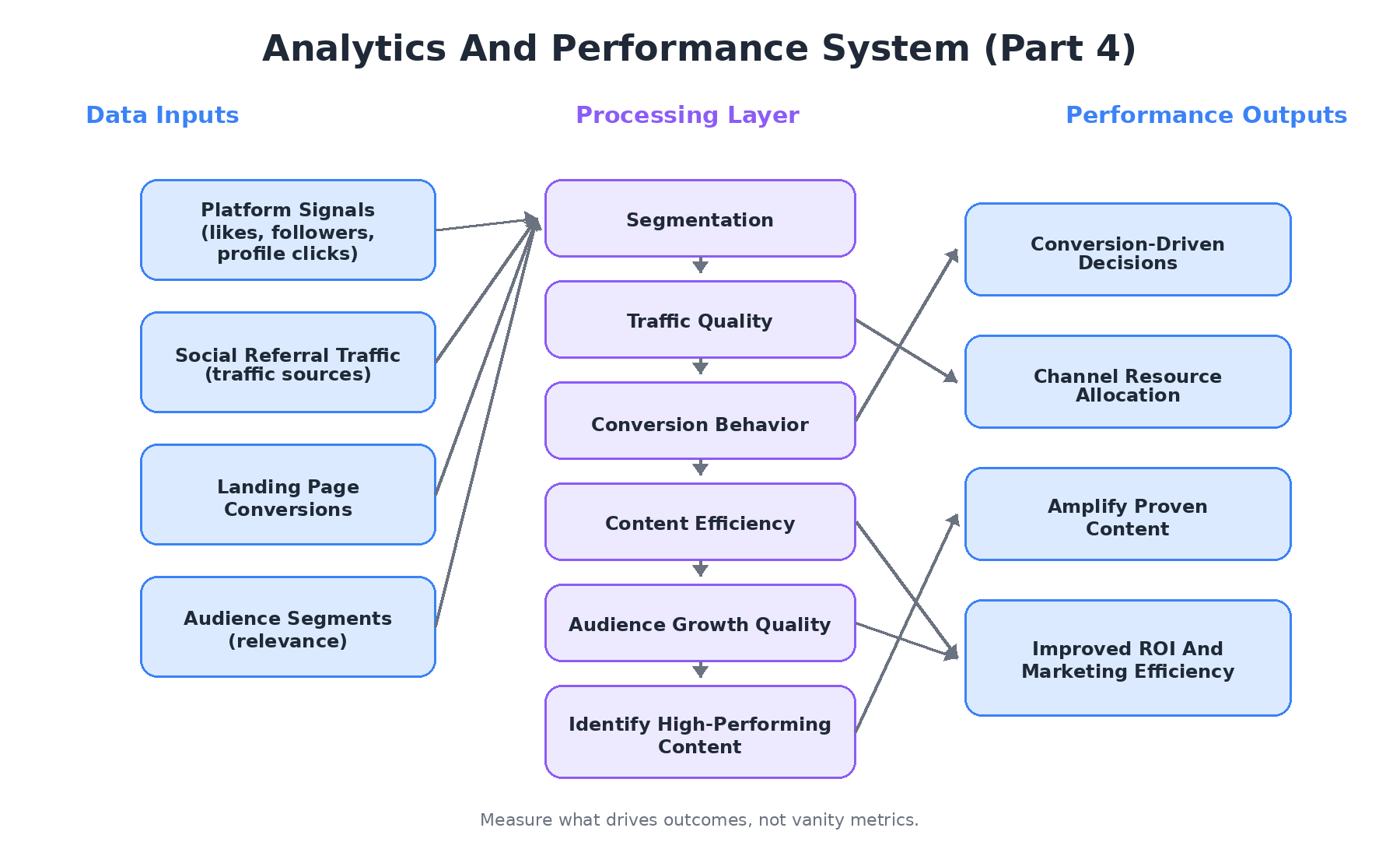
Social media for business becomes truly valuable when measured properly. Analytics transforms content from guesswork into a predictable growth engine.
Businesses that use analytics effectively outperform competitors significantly. Data-driven organizations are 23× more likely to acquire customers and 6× more likely to retain customers.
This performance gap exists because analytics reveals what actually drives business outcomes—not what feels productive.
Social media is now a primary traffic source. Social platforms drive 16% of global website traffic, making them one of the most important acquisition channels.
Conversion impact is equally measurable. Companies using social media effectively generate 54% more leads compared to those without structured social strategies.
Content longevity also plays a role. Evergreen content continues generating engagement months after publishing, contributing to the 106% higher conversion rates observed in content-driven marketing strategies.
Analytics provides visibility into this compounding effect.
Jakub, a SaaS founder, initially measured likes and followers. Analytics revealed that profile clicks—not likes—predicted conversions. He shifted focus to conversion-driven content, improving demo bookings significantly.
This shift aligns with broader trends where companies prioritizing measurable metrics improve marketing efficiency by 30%.
Understanding analytics separates professional operators from casual users.
Performance Benchmarks
Benchmarks provide context. Without benchmarks, performance cannot be evaluated accurately.
Average engagement rates vary by platform, industry, and audience size. High-performing brands consistently exceed baseline engagement levels.
For example, content with strong emotional or educational value generates 2× higher engagement rates than purely promotional posts.
Posting frequency also affects performance. Businesses publishing regularly generate 67% more leads compared to inactive accounts.
Consistency improves algorithm visibility. Active profiles receive significantly higher reach and engagement compared to irregular publishers.
Conversion benchmarks matter even more than engagement. Landing pages optimized for social traffic achieve up to 55% higher conversion rates.
Audience trust also plays a measurable role. Consumers are 81% more likely to buy from brands they trust.
Trust builds through repeated exposure and consistent value delivery.
Eva, an independent consultant, discovered that posts explaining real client situations generated lower engagement—but significantly higher conversion rates. She adjusted her strategy to prioritize conversion metrics.
This revealed a critical insight: engagement attracts attention, but clarity converts customers.
Analytics Interpretation
Analytics interpretation determines whether social media becomes a growth engine or remains an activity with unclear impact.
Professional interpretation focuses on business metrics rather than vanity metrics.
Traffic Quality
Not all traffic delivers equal value. Businesses analyzing traffic sources identify high-converting segments.
Companies using advanced segmentation improve conversion rates by 20%.
Martin, a SaaS founder, discovered LinkedIn generated fewer visitors than Instagram—but produced significantly higher-value customers. He shifted resources accordingly.
Conversion Behavior
Conversion behavior reveals whether content attracts the right audience.
Businesses optimizing conversion behavior improve revenue performance significantly.
This aligns with frameworks explained in conversion-focused messaging strategies.
Content Efficiency
Content efficiency measures output-to-result ratio.
Companies optimizing content efficiency improve ROI significantly.
This reflects operational principles explained in social media optimization frameworks.
Audience Growth Quality
Audience size alone doesn’t determine success. Audience relevance determines revenue impact.
Targeted audiences convert at significantly higher rates.
This principle mirrors strategies explained in digital growth strategy articles.
Professional analytics focuses on meaningful indicators.
Case Stories
Analytics-driven decisions consistently produce superior outcomes.
SaaS Growth Story
A SaaS company analyzed their analytics and discovered that educational tutorials generated the highest conversion rates.
They doubled production of tutorial content.
Revenue increased significantly.
This mirrors industry patterns where educational content generates 3× more leads.
Consultant Optimization Story
Petra analyzed her content performance and eliminated underperforming formats.
This improved efficiency dramatically.
Her strategy aligned with frameworks explained in performance optimization guides.
Focused strategies outperform broad ones.
Agency Analytics Story
An agency implemented advanced analytics dashboards.
They identified their most profitable content types.
This improved client acquisition.
Companies using advanced analytics achieve up to 85% higher sales growth.
Professional Promotion
Analytics doesn’t just measure performance—it improves promotion efficiency.
Promotion strategies guided by analytics outperform intuition-based strategies.
Businesses using analytics-driven promotion achieve significantly higher ROI.
This aligns with principles explained in performance marketing frameworks.
Analytics identifies which content deserves amplification.
Promoting high-performing content improves efficiency dramatically.
Businesses optimizing promotion using analytics improve marketing ROI by up to 30%.
Professional promotion focuses resources on proven performance.
In the next part, you’ll learn how to scale social media for business into a predictable, long-term growth system.
Future Trends
Social media for business is entering a phase where execution speed, authenticity, and data integration determine competitive advantage. Businesses that adapt early will operate with dramatically lower acquisition costs and higher conversion efficiency.
One of the most significant shifts is the dominance of video-first platforms. Video content already represents 82% of all internet traffic, and businesses that prioritize video generate 66% more qualified leads annually. This shift isn’t temporary—it reflects how audiences prefer to learn, evaluate, and trust brands.
Another major trend is algorithmic personalization. Platforms now prioritize relevance over follower count. Personalized content strategies improve marketing efficiency by 20% or more, rewarding businesses that deeply understand their audience.
Tomas, a freelance developer, experienced this shift firsthand. His smaller account began outperforming larger competitors because his content addressed specific technical problems. Relevance outperformed scale.
Social commerce is also accelerating. Social platforms influence purchasing decisions directly, contributing to over $1.2 trillion in global sales. Businesses integrating direct conversion paths gain measurable advantages.
Artificial intelligence is becoming operational infrastructure. AI-assisted content production improves productivity by up to 40%, allowing teams to scale output without proportional effort increases.
Trust is becoming the dominant conversion driver. Buyers are 87% more likely to purchase from trusted brands, reinforcing the long-term value of authority-driven content.
Businesses that understand these trends early build sustainable competitive advantages.
Strategic Framework Recap
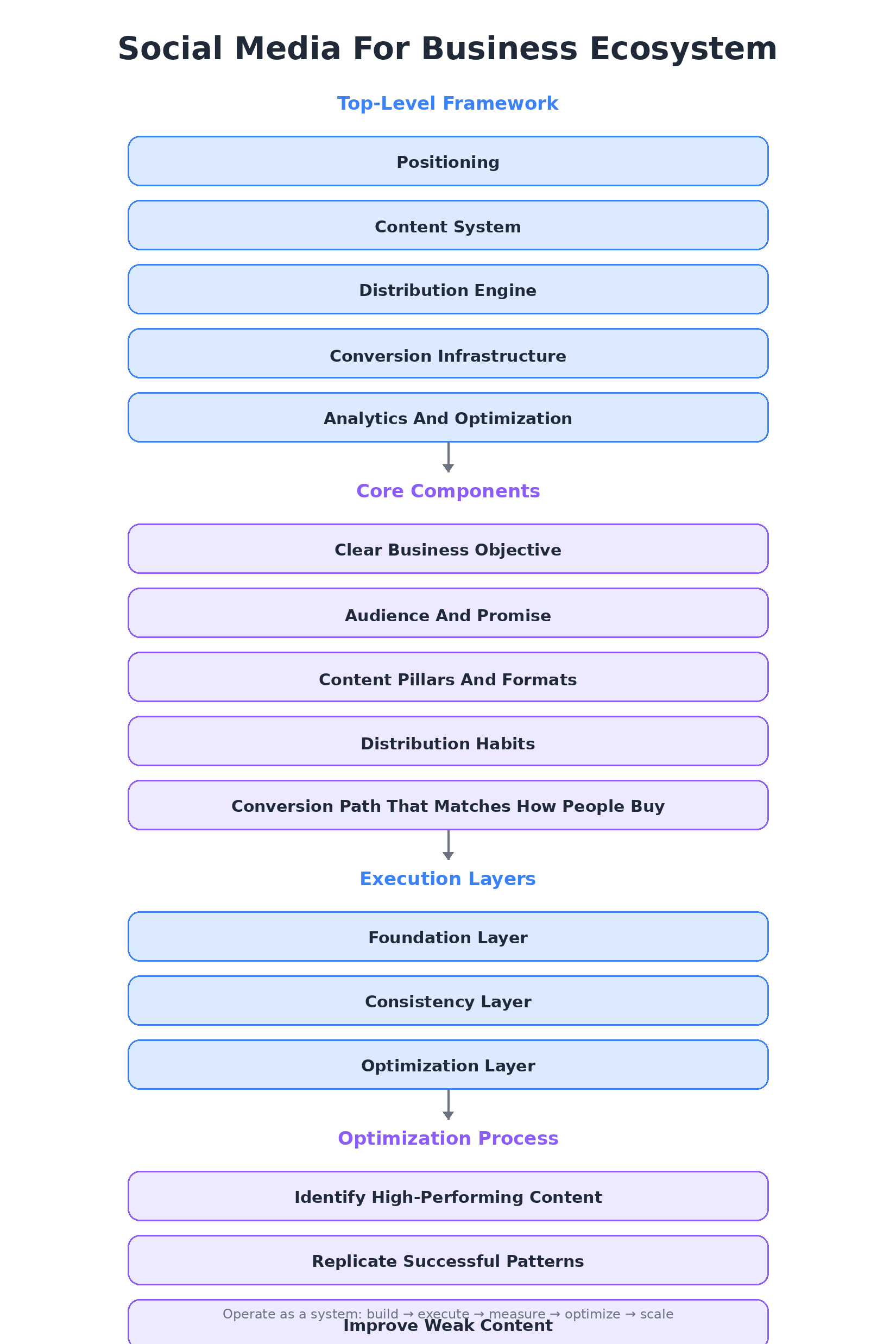
The complete social media for business framework operates as an integrated ecosystem. Each component reinforces the others, creating compounding growth.
The system follows five core layers:
- Positioning: clear audience, offer, and authority
- Content system: structured, repeatable content aligned with business goals
- Distribution engine: consistent publishing and amplification
- Conversion infrastructure: turning attention into leads and revenue
- Analytics and optimization: improving efficiency continuously
Businesses implementing integrated frameworks outperform competitors significantly. Structured marketing systems improve efficiency by 30% or more.
Martin, a SaaS founder, implemented this full ecosystem over 12 months. His inbound pipeline replaced outbound sales entirely, reducing acquisition costs and improving conversion quality.
This compounding effect is the defining advantage of structured social media for business.
FAQ – Built For Complete Guide
How long does social media for business take to produce results?
Most businesses see measurable traction within 60–120 days. Content-driven customer acquisition generates 3× more leads than traditional outbound strategies over time.
Which platform is best for business growth?
The best platform depends on your audience and offer. LinkedIn dominates B2B acquisition, while Instagram and YouTube dominate consumer discovery. Multi-platform strategies increase reach efficiency significantly.
How often should businesses publish content?
Consistency matters more than frequency. Businesses publishing consistently generate 67% more leads than inconsistent publishers.
Do follower counts matter?
Follower quality matters more than quantity. Smaller targeted audiences convert significantly better than large untargeted audiences.
Can social media replace paid advertising?
Social media reduces reliance on paid advertising but doesn’t eliminate it. Businesses combining organic and paid strategies improve ROI significantly.
What type of content performs best?
Educational, problem-solving, and experience-based content performs best. Educational content generates 3× higher engagement than promotional content.
Is social media effective for small businesses?
Yes. Social media allows small businesses to compete with larger companies. Trust-driven acquisition creates competitive advantages regardless of company size.
How do businesses measure success?
Success is measured through conversion metrics, including leads, sales, and customer acquisition cost—not vanity metrics like likes or followers.
Should founders create content personally?
Founder-led content builds trust faster. Personal brands accelerate trust development significantly.
What is the biggest mistake businesses make?
The biggest mistake is inconsistency. Businesses that publish inconsistently fail to build audience trust and algorithm visibility.
Can social media work without a large team?
Yes. Structured workflows and modern tools allow individuals to scale content efficiently. Productivity improves significantly with systems.
Work With Professionals
Freelancers and independent professionals face a unique challenge. You may have expertise, proven results, and strong positioning—but without consistent visibility, potential clients never discover you.
Social media creates opportunity, but platforms alone don’t guarantee client acquisition. What matters is placement inside ecosystems where clients actively search for talent.
Freelancers who position themselves inside structured marketplaces and professional ecosystems increase client acquisition probability dramatically. Visibility and positioning determine opportunity flow.
This is where professional ecosystems make the difference.
markework.com is designed to help freelancers attract new clients, increase visibility, and build consistent inbound opportunities. Instead of chasing projects, professionals position themselves where businesses actively search for expertise.
Freelancers using structured platforms experience significantly higher client acquisition efficiency compared to relying only on outbound outreach.
If you want to turn your expertise and social media presence into consistent client flow, position yourself where opportunity already exists.
 Filip Konecny Enterprises