

The modern business environment runs on attention, and attention lives on social platforms. Companies of every size compete for visibility, credibility, and customer trust in feeds that update every second. With over 5 billion people using social media globally, these platforms are no longer optional marketing channels. They are primary engines for brand discovery, customer engagement, and revenue growth.
This shift has created demand for professionals who understand how to turn social platforms into predictable business assets. A social media consultant provides the expertise to align brand identity, audience behavior, and platform algorithms into a cohesive strategy. Instead of random posting or inconsistent messaging, businesses gain a structured system that produces measurable outcomes.
For many organizations, the difference between stagnant growth and scalable success lies in having a clear, professionally guided approach. A social media consultant bridges the gap between business goals and platform execution, ensuring every action contributes to long-term performance.
Article Outline
- What Is a Social Media Consultant
- Why a Social Media Consultant Matters
- Framework Overview
- Core Components
- Professional Implementation
- Advanced Analytics and Optimization
- Building a Sustainable Social Ecosystem
- Long-Term Strategic Integration
- Common Mistakes and Best Practices
- Scaling with Professional Support
- FAQ and Professional Resources
What Is a Social Media Consultant

A social media consultant is a strategic professional who helps businesses plan, execute, and optimize their presence across social platforms. Their role extends beyond publishing posts. They analyze audiences, develop messaging frameworks, align social efforts with business objectives, and continuously refine performance.
Unlike internal managers who may focus on daily operations, consultants provide an external, strategic perspective. They identify inefficiencies, uncover missed opportunities, and design systems that produce consistent growth. Their work often includes platform selection, content strategy development, performance analysis, and integration with broader marketing initiatives.
For example, a growing e-commerce brand struggling with inconsistent engagement hired a consultant who discovered their audience responded strongly to educational content rather than promotional posts. After restructuring the content strategy, engagement increased significantly and customer acquisition costs dropped.
Why Matters
Social media has evolved into a core component of the customer journey. Buyers research brands, compare options, and evaluate credibility directly through social platforms. A weak or inconsistent presence creates uncertainty, while a strategic presence builds confidence and accelerates purchasing decisions.
Businesses with strategic social media execution often outperform competitors because they create continuous touchpoints with their audience. Research published in the Sprout Social Index shows consumers are significantly more likely to buy from brands they follow and engage with on social platforms.
A social media consultant ensures these touchpoints are intentional and aligned with business objectives. Instead of isolated posts, every interaction becomes part of a coordinated system designed to build authority, trust, and conversion momentum.
Framework Overview
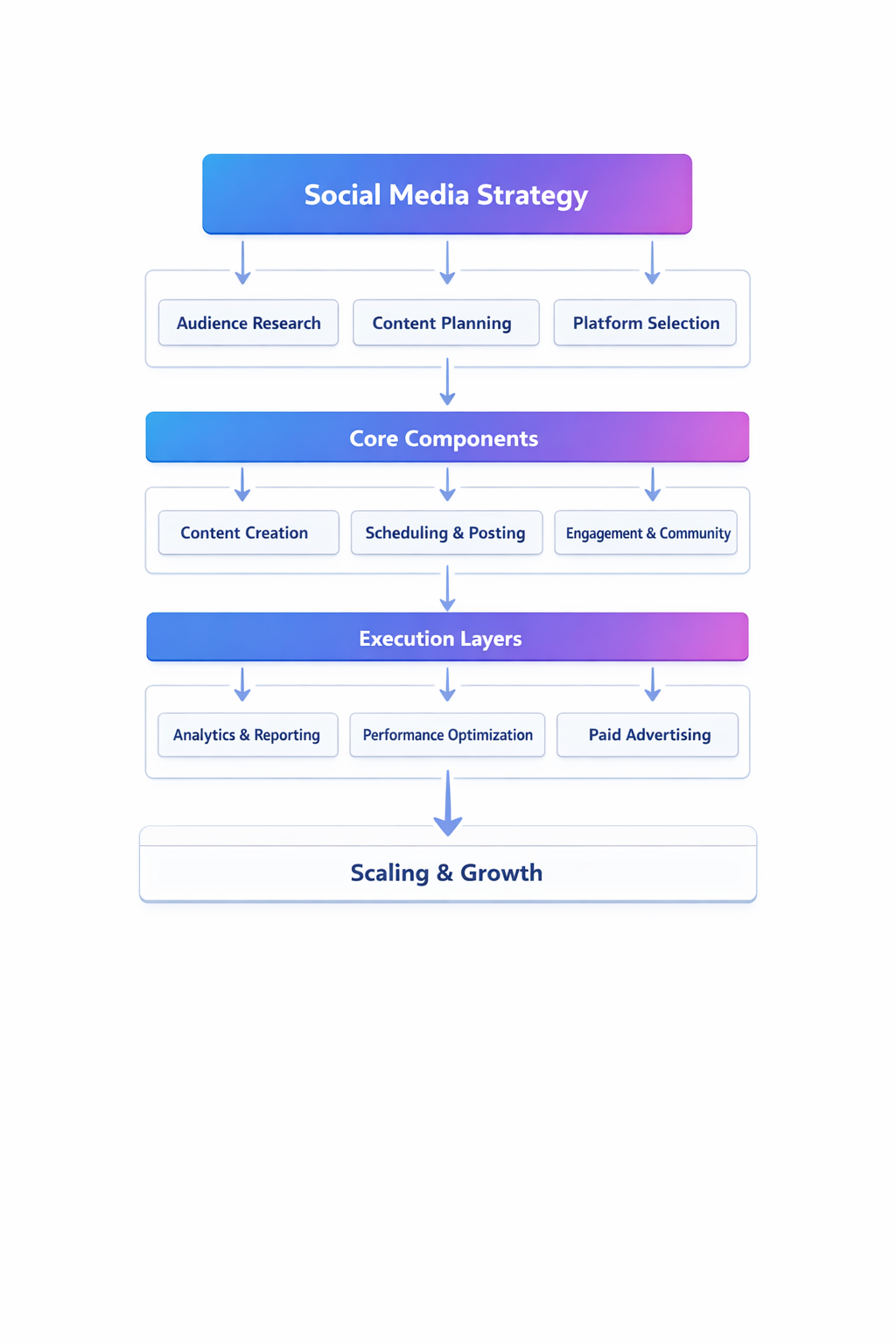
Professional consultants operate using structured frameworks rather than guesswork. These frameworks provide repeatable processes that ensure consistent results. They begin with research and strategy, move through content and execution, and end with analysis and optimization.
The framework connects business objectives with audience psychology and platform mechanics. This ensures that every action contributes directly to measurable outcomes such as brand awareness, lead generation, or customer retention.
Without a structured framework, businesses often rely on inconsistent posting patterns, reactive decisions, and subjective assumptions. A consultant replaces uncertainty with a predictable, scalable process.
Core Components
A professional social media consultant focuses on several essential components that form the foundation of sustainable growth:
- Audience Analysis: Identifying customer demographics, motivations, and behavioral patterns.
- Platform Selection: Choosing platforms that align with business goals and audience behavior.
- Content Strategy: Developing messaging that builds authority, trust, and engagement.
- Brand Positioning: Ensuring consistency in tone, visuals, and communication style.
- Performance Measurement: Tracking key metrics to evaluate effectiveness and guide improvements.
- Optimization Systems: Continuously refining strategy based on real performance data.
Each component contributes to a unified system that transforms social media from a time-consuming activity into a reliable business asset.
Professional Implementation
Implementation is where strategy becomes reality. A consultant translates high-level plans into practical execution, ensuring consistency and alignment across all activities.
Consider a regional fitness studio that struggled to attract new members despite posting regularly. A social media consultant analyzed their content and discovered it focused primarily on class schedules rather than customer outcomes. The consultant introduced transformation stories, educational videos, and expert tips. Within months, engagement increased dramatically, and membership inquiries rose as the brand became recognized as an authority.
This transformation illustrates the core value of professional guidance. Instead of simply increasing activity, the consultant improved relevance and strategic alignment. Every post began contributing to trust-building and conversion.
Professional implementation ensures social media becomes a structured growth channel rather than an unpredictable experiment. This foundation prepares businesses for advanced optimization, scalability, and long-term digital success.
Step By Step Implementation
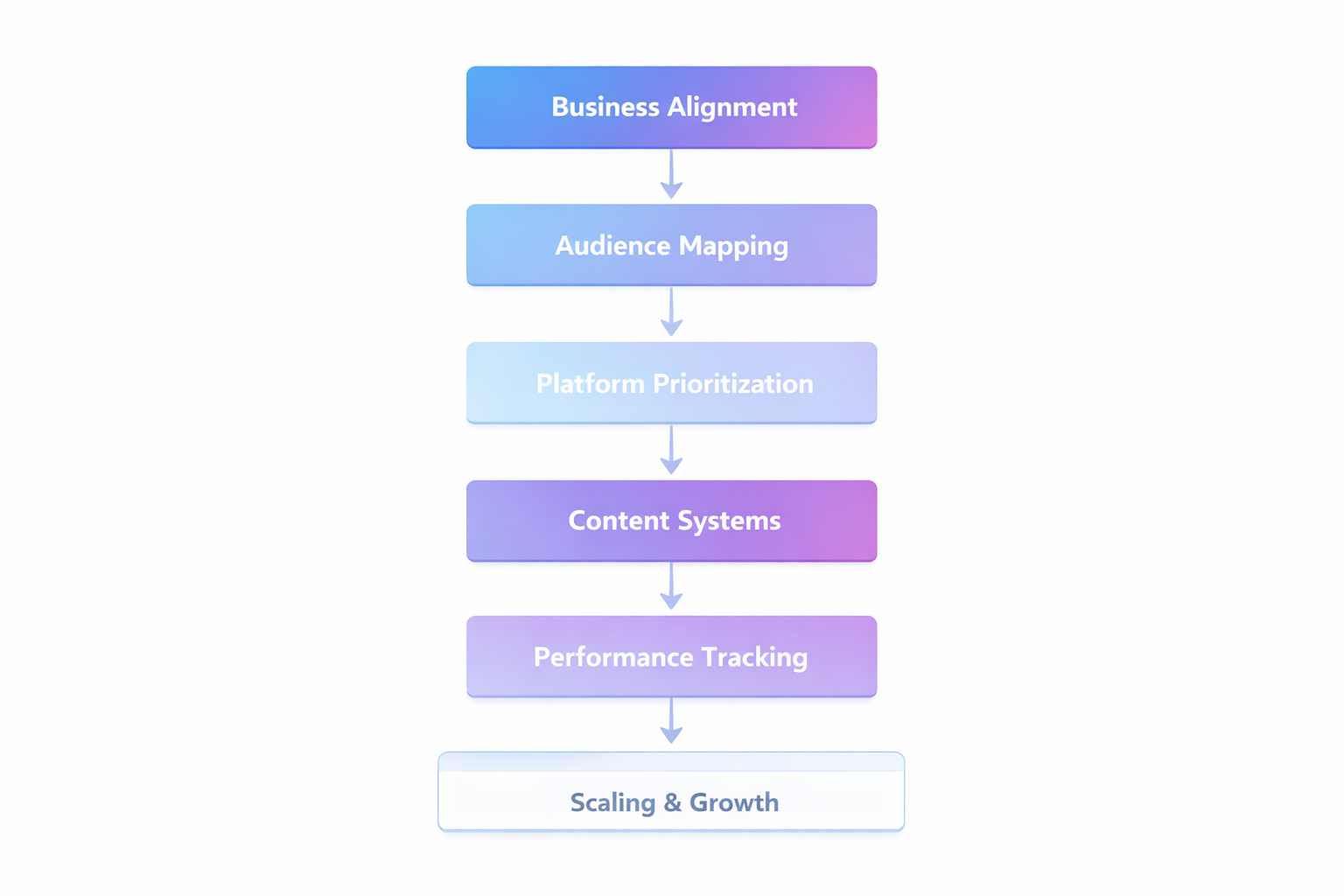
Implementation is where a social media consultant transforms strategic planning and tools into real, measurable business outcomes. This process follows a structured sequence designed to minimize risk and maximize performance predictability.
The first step begins with business alignment. A consultant identifies revenue goals, customer acquisition targets, and positioning requirements. This ensures social media supports measurable growth objectives rather than vanity metrics. Businesses with documented strategy are 313% more likely to report success, illustrating the importance of structured planning.
The second step focuses on audience mapping. Consultants analyze behavioral patterns, interests, and content preferences. This allows messaging to match real audience motivations. This precision matters because 76% of consumers expect brands to understand their needs, and failure to meet this expectation reduces engagement.
The third step involves platform prioritization. Instead of spreading efforts across all platforms, consultants identify where target customers are most active. Social media usage varies significantly, with platform engagement exceeding billions of active users, but each platform serves different behavioral roles.
The fourth step establishes content systems. Consultants design repeatable workflows for content creation, scheduling, and publishing. Companies using structured workflows improve efficiency dramatically, with automation improving productivity by up to 30%.
The fifth step integrates performance tracking. Every content piece becomes measurable, enabling continuous improvement. Data-driven companies outperform competitors significantly, with 23 times greater customer acquisition likelihood.
Consultants often integrate these processes with broader systems such as strategic growth planning, performance marketing frameworks, and content optimization methods.
Execution Layers
Implementation operates across multiple layers, each responsible for transforming strategy into consistent execution.
Strategic Layer
This layer defines positioning, messaging, and audience targeting. It ensures all activities align with business objectives. Strategic alignment improves marketing effectiveness significantly, supported by evidence that companies with aligned strategies achieve 72% higher profitability.
For example, a SaaS consultant working with a CRM startup repositioned their messaging from technical features to business outcomes. This shift increased inbound interest because the messaging aligned with customer priorities.
Operational Layer
This layer manages content production, publishing schedules, and engagement workflows. Operational efficiency ensures consistent visibility, which is essential because consistent brand presence improves recognition. Brand consistency increases revenue by up to 33%.
A consultant working with a real estate agency implemented structured publishing workflows, allowing the team to maintain continuous engagement without operational overload.
Engagement Layer
This layer focuses on conversations, community interaction, and relationship building. Engagement strengthens trust and improves customer retention. Customer retention increases profits significantly, with 5% retention improvements increasing profits by up to 95%.
Consultants guide engagement practices to ensure interactions reinforce authority and credibility.
Measurement Layer
This layer tracks performance metrics, identifies patterns, and informs optimization decisions. Companies actively measuring performance improve ROI significantly, supported by evidence that businesses using analytics achieve 126% higher profit improvement likelihood.
Consultants integrate measurement with internal systems such as advanced marketing frameworks and consulting methodologies.
Optimization Process
Optimization ensures continuous improvement. Social media performance evolves based on audience response, platform algorithms, and market conditions.
The optimization process begins with performance analysis. Consultants evaluate engagement, reach, and conversion metrics. These insights guide strategic adjustments.
The second stage involves testing variations. Consultants experiment with content formats, messaging approaches, and publishing schedules. Controlled experimentation improves performance reliability, supported by evidence that companies running experiments achieve up to 30% higher marketing effectiveness.
The third stage involves scaling successful elements. High-performing content patterns are replicated and expanded.
The fourth stage involves eliminating ineffective approaches. Removing low-performing strategies improves efficiency and ROI.
This systematic refinement aligns with behavioral realities, as consumer attention spans are limited. Online users form impressions in under 0.05 seconds, making optimized messaging essential.
Consultants refine strategies continuously using insights from systems such as conversion optimization frameworks and data-driven compliance systems.
Implementation Stories
Real-world implementation demonstrates how structured consulting produces measurable transformation.
Martin, founder of an online fitness coaching business, struggled to generate consistent leads despite regular posting. His social media consultant implemented structured audience targeting and content sequencing. Instead of random motivational posts, the strategy introduced educational content, client transformations, and expert positioning.
Within months, engagement increased and lead generation improved. This outcome reflects broader behavioral trends, with 70% of consumers preferring educational content over promotional messaging.
Another example involves Petra, owner of a regional e-commerce brand. Her consultant implemented performance tracking systems that identified high-performing content formats. Video content became the primary growth driver. Video effectiveness continues to dominate digital engagement, with 91% of businesses using video as a marketing tool.
By focusing on video-based storytelling, Petra’s brand experienced substantial audience growth and increased customer acquisition.
Consultants often integrate external strategy with internal systems such as localized marketing implementation and strategic execution planning.
Statistics And Data
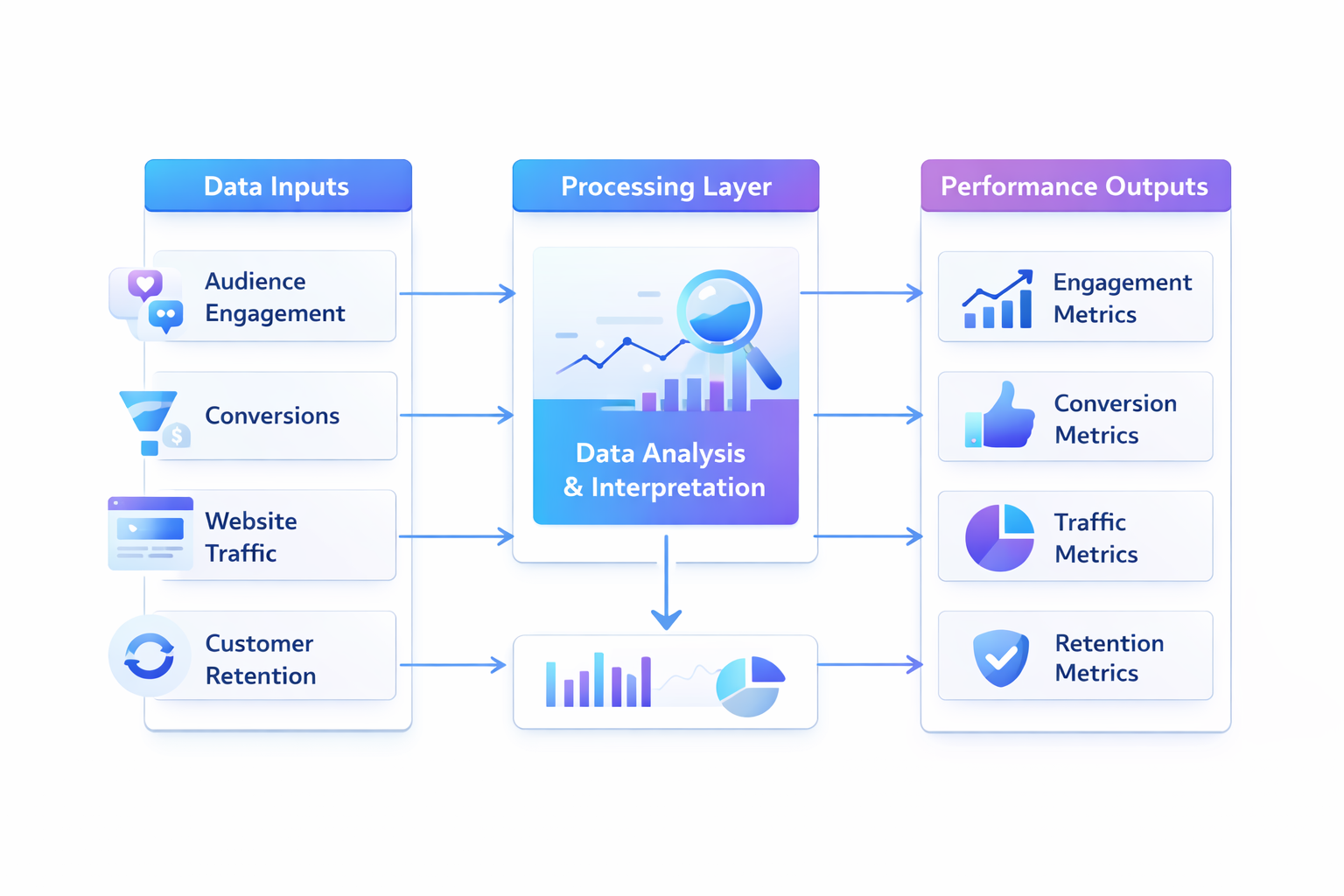
Analytics transforms social media consulting from intuition-driven activity into measurable business infrastructure. Every interaction, impression, and conversion generates data that allows consultants to evaluate effectiveness and refine performance.
The scale of social media makes analytics essential. Platforms influence buying decisions directly, with 54% of social media users researching products on social platforms. This means performance metrics directly reflect potential revenue opportunities.
Engagement metrics provide early indicators of success. Content with higher engagement signals stronger audience alignment. Posts with strong engagement generate significantly more reach because algorithms prioritize content with proven relevance. This creates exponential visibility growth when properly optimized.
Consultants also track conversion metrics. Social media directly contributes to purchasing decisions, with over 40% of consumers discovering new brands through social platforms. These discovery interactions form the foundation of future revenue.
Traffic metrics provide another critical perspective. Social platforms contribute substantially to website traffic, with social media driving over 16% of total website traffic globally. Consultants analyze how effectively social engagement translates into deeper customer interactions.
Retention metrics also matter significantly. Customer retention improves profitability dramatically, supported by evidence showing increasing retention by 5% can increase profits by up to 95%. Social media plays a key role in maintaining ongoing customer relationships.
Consultants integrate analytics insights with strategic frameworks such as performance optimization models, conversion-based growth strategies, and engagement optimization methods.
Data also reveals how content formats influence performance. Visual content dominates engagement patterns, with video generating 1200% more shares than text and images combined. Consultants use these insights to prioritize high-impact formats.
Trust metrics further reinforce social media importance. Brand trust strongly influences purchasing decisions, with 81% of consumers requiring trust before buying. Analytics helps consultants measure and strengthen this trust through engagement patterns.
Performance Benchmarks
Benchmarks provide context for evaluating performance. Without benchmarks, metrics lack meaning. A social media consultant compares performance against industry standards to identify strengths and improvement opportunities.
Engagement rate is one of the most important benchmarks. Typical engagement rates vary by industry and platform, but performance significantly above average indicates strong audience alignment.
Conversion rate benchmarks are equally important. Social media conversion rates vary, but optimized campaigns outperform baseline performance significantly. Well-optimized social campaigns improve conversion rates substantially compared to unstructured efforts.
Customer acquisition cost provides another essential benchmark. Businesses optimizing social media strategies reduce acquisition costs because organic engagement reduces dependence on paid advertising. Paid acquisition costs continue rising, with digital advertising costs increasing by over 10% annually.
Audience growth rate is another key indicator. Consistent audience growth signals effective positioning and content relevance. Strong brands achieve predictable growth patterns through structured consulting strategies.
Consultants compare performance benchmarks using proprietary frameworks and resources such as strategic marketing models and growth optimization systems.
Brand recall also serves as an indirect benchmark. Social media significantly influences brand memory, with consumers remembering video content at significantly higher rates. Consultants use this insight to guide content prioritization.
Analytics Interpretation
Raw data alone has limited value. Interpretation transforms data into actionable insights. A social media consultant analyzes patterns, identifies correlations, and recommends strategic adjustments.
One key interpretation involves identifying high-performing content themes. Content that consistently generates engagement reveals audience priorities. Consultants expand these themes to strengthen brand authority.
Another interpretation focuses on audience segmentation. Different audience groups respond differently to content. Consultants tailor messaging to maximize relevance and engagement.
Timing analysis provides additional insight. Publishing schedules influence performance significantly. Optimized timing increases visibility and engagement.
Consultants also analyze conversion pathways. Understanding how social media interactions lead to purchases allows optimization of the customer journey. Social media plays a key role in purchase decisions, with over 70% of consumers influenced by social media when buying.
Consultants refine interpretation using frameworks such as consulting strategy models, performance analysis systems, and data governance frameworks.
Interpretation enables continuous improvement. Businesses that actively analyze marketing data outperform competitors significantly, supported by evidence showing data-driven organizations achieve substantially higher profitability.
Case Stories
Real-world case studies illustrate how analytics-driven consulting produces measurable transformation.
Jakub, founder of a SaaS analytics startup, struggled with low engagement despite regular posting. His social media consultant analyzed performance metrics and discovered his audience preferred educational tutorials rather than promotional posts. After restructuring content, engagement increased dramatically.
This outcome aligns with behavioral patterns showing 70% of consumers prefer learning about products through content rather than advertising.
Another example involves Lenka, owner of an e-commerce skincare brand. Analytics revealed that customer testimonials generated significantly higher engagement and conversions than product-only posts. Her consultant implemented testimonial-focused campaigns, increasing customer acquisition.
This reflects broader consumer trust behavior, with 98% of consumers reading online reviews before buying.
A third case involved a consulting firm that struggled to attract qualified leads. Analytics revealed LinkedIn produced the highest-quality prospects. By focusing efforts there, lead quality improved and conversion efficiency increased.
This outcome reflects platform-specific performance differences, with LinkedIn generating 277% more leads than other major social platforms in B2B environments.
Consultants integrate analytics insights with broader strategic frameworks such as regional strategy adaptation and long-term growth planning.
Professional Promotion
Analytics-driven promotion allows social media consultants to amplify successful strategies. Instead of promoting all content equally, consultants focus resources on proven high-performing content.
This selective amplification improves efficiency and ROI. Optimized campaigns outperform average campaigns significantly. Targeted promotion increases conversion efficiency while reducing unnecessary costs.
Paid promotion also benefits from analytics guidance. Consultants identify which audience segments respond best and allocate resources accordingly. This precision improves advertising efficiency, supported by data showing targeted advertising improves conversion performance significantly.
Promotion strategies also integrate organic and paid approaches. Combining both methods creates stronger results than using either approach alone.
Consultants ensure promotion aligns with strategic positioning, performance metrics, and long-term business objectives. This ensures social media contributes directly to sustainable business growth.
The next stage explores ecosystem development and scaling strategies that allow consultants to transform social media into a complete growth infrastructure.
Future Trends
The role of a social media consultant continues evolving as platforms, algorithms, and user expectations shift. The next generation of consulting will rely heavily on predictive analytics, AI-assisted optimization, and ecosystem-level strategy integration.
Artificial intelligence is already transforming content optimization and audience targeting. AI-driven personalization improves marketing efficiency significantly, with businesses implementing AI seeing up to 40% productivity gains. Consultants who integrate AI-driven analytics gain the ability to predict performance outcomes before campaigns launch.
Video-first ecosystems will continue dominating platform engagement. Short-form video consumption continues accelerating, with users watching over 95 minutes of video content daily. Consultants increasingly prioritize video-native strategies to align with consumption behavior.
Private communities represent another major shift. Public feeds face increasing competition and declining organic reach. In contrast, owned communities provide stable engagement environments. Community-driven brands achieve stronger retention and higher lifetime customer value.
Search integration within social platforms is also expanding. Younger audiences increasingly use social platforms for discovery, with over 40% of users using social platforms for search purposes. This transforms social media into a hybrid discovery and search channel.
Consultants also integrate broader growth systems using strategic resources such as long-term growth strategy frameworks, audience acquisition models, and authority positioning infrastructure.
Automation will further reduce operational workload. Marketing automation already improves operational efficiency, with businesses reporting 451% increases in qualified leads when implementing structured automation systems.
Consultants who adapt to these trends gain competitive advantage, allowing their clients to maintain visibility, authority, and growth in increasingly competitive digital environments.
Strategic Framework Recap

A social media consultant operates within a structured ecosystem that integrates strategy, execution, analytics, and scaling into a unified growth system.
The process begins with strategic foundation. This stage defines positioning, audience targeting, and platform prioritization. Businesses with clear positioning outperform competitors because clarity improves trust and recognition.
The second stage involves system implementation. Consultants deploy tools, workflows, and publishing systems that ensure consistent execution. Structured execution improves efficiency and enables scalability.
The third stage focuses on analytics and optimization. Consultants analyze performance data, identify patterns, and refine strategies. Data-driven organizations achieve significantly higher growth rates and operational efficiency.
The fourth stage involves scaling infrastructure. Consultants expand reach, optimize conversion pathways, and multiply high-performing content. Scaling transforms social media into a predictable growth engine.
The final stage integrates ecosystem-level strategy. Social media connects with broader marketing infrastructure, including conversion funnels, audience ownership systems, and long-term brand positioning.
Consultants integrate this ecosystem using strategic resources such as advanced consulting frameworks, professional implementation systems, and data governance standards.
This ecosystem approach ensures social media contributes directly to measurable business growth rather than operating as an isolated marketing activity.
FAQ – Built For Complete Guide
What that’s social media consultant do?
A social media consultant develops strategy, implements systems, analyzes performance, and optimizes social media presence to achieve measurable business objectives such as lead generation, brand authority, and customer acquisition.
How is a social media consultant different from a social media manager?
A consultant focuses on strategy, system design, and optimization, while managers typically execute daily operational tasks such as posting and responding to comments.
When should a business hire a social media consultant?
Businesses benefit most when scaling growth, entering competitive markets, launching new products, or improving inefficient social media performance.
How long does it take to see results?
Initial improvements often appear within weeks, while significant business impact typically develops over several months as optimization and scaling take effect.
Which platforms deliver the best results?
The most effective platforms depend on audience behavior and business objectives. Consultants identify optimal platforms through strategic analysis.
Can small businesses benefit from consulting?
Yes. Structured consulting provides clarity, efficiency, and scalability, allowing small businesses to compete effectively with larger competitors.
How do consultants measure success?
Consultants track metrics such as engagement, conversions, customer acquisition cost, and revenue contribution to evaluate effectiveness.
Do consultants work with internal teams?
Yes. Consultants often collaborate with internal teams to implement strategies, transfer knowledge, and ensure long-term sustainability.
Is social media consulting suitable for SaaS companies?
SaaS companies benefit significantly because social media supports authority building, trust development, and lead generation.
What industries benefit most?
Consulting is valuable across industries including SaaS, e-commerce, consulting, coaching, healthcare, and professional services.
Is organic growth still possible?
Yes. Structured strategy, authority positioning, and optimized content enable sustainable organic growth even in competitive environments.
Can consulting reduce advertising costs?
Yes. Optimized organic performance reduces reliance on paid acquisition, improving overall marketing efficiency.
Work With Professionals
Thousands of skilled professionals struggle to find consistent clients despite having valuable expertise. At the same time, businesses actively search for experienced specialists who can help them grow their digital presence and revenue through social media.
This gap creates a powerful opportunity. Freelancers who position themselves correctly and connect with the right platforms gain access to a continuous stream of qualified client opportunities.
Marketers, consultants, and social media specialists who join professional ecosystems dramatically increase their visibility and client acquisition potential. Freelancers using specialized platforms improve their chances of securing consistent work, building authority, and scaling their careers.
Platforms designed specifically for freelancers help eliminate uncertainty. Instead of chasing unpredictable leads, professionals gain access to businesses actively seeking their expertise.
Markework provides an environment where freelancers can showcase their expertise, connect with clients, and build sustainable consulting careers. It helps professionals transition from inconsistent client acquisition to predictable growth.
If you’re ready to grow your consulting career, increase your client base, and unlock new professional opportunities, explore the platform and start building your future today.
 Filip Konecny Enterprises